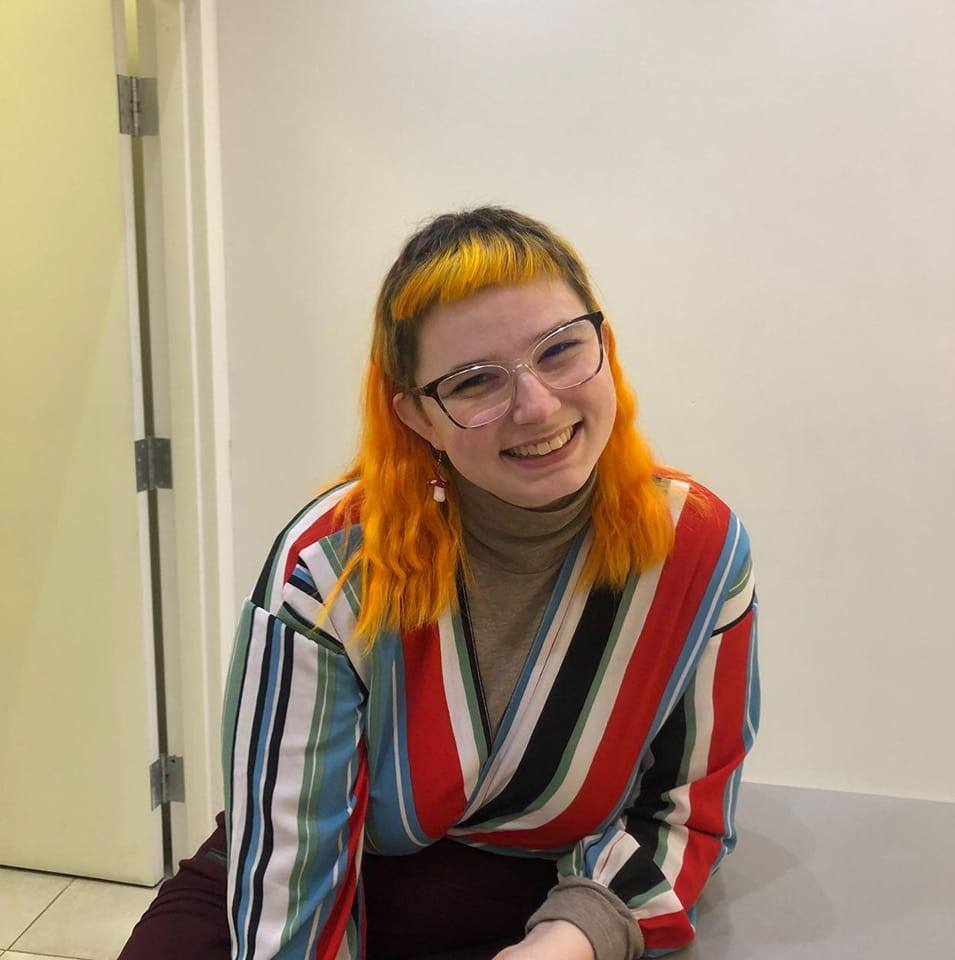
🙂
- Cats
- Fun clothes
- Coffee
- Writing in point form
- Movies
- Video games
- Learning new things
- Sleeping in
🙁
- Writing in prose/full sentences
- Taking photos of myself
- Meeting new people (sorry, it’s stressful)
- Dairy/Eggs
- Early mornings
The Artist is Present, Reflections on Marina Abramovic
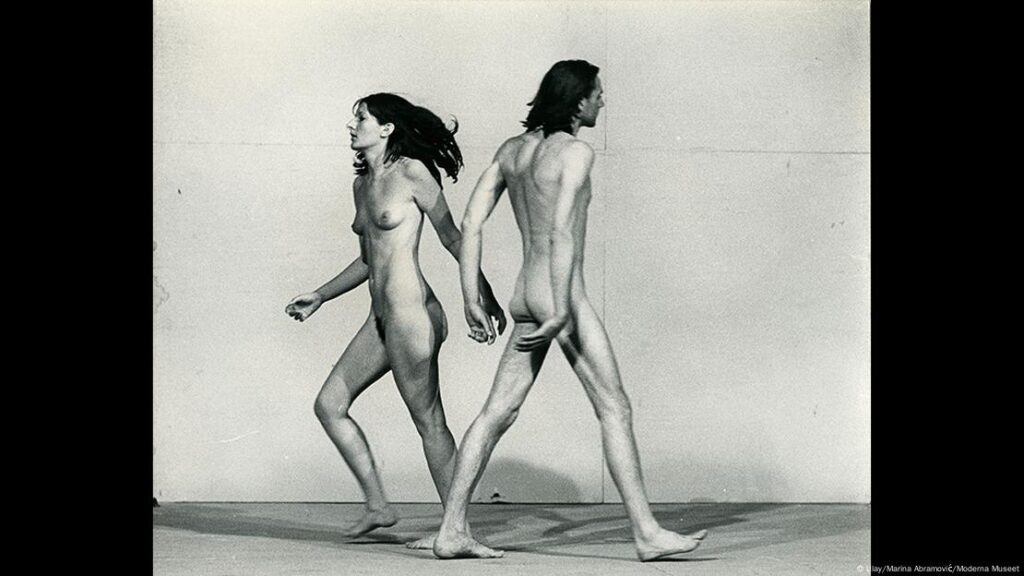
What have you learned about features of performance art based on Abramovic’s work? Name a few key features according to her precedents. Include an image to illustrate. Consider her quote, “When you perform it is a knife and your blood, when you act it is a fake knife and ketchup.
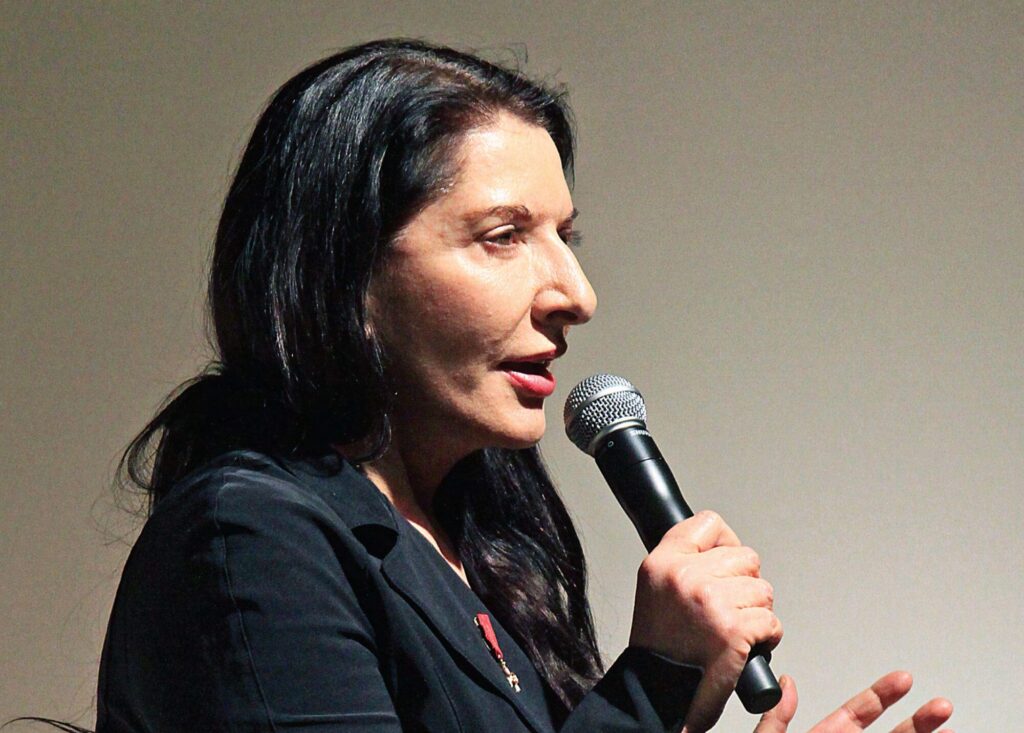
“An artist should not turn himself into an idol”
Through An Artist’s Life Manifesto, Marina Abramovic offers a look into the some of the ideology behind her creative process. This is not only the performance of an artist’s manifesto, or a speech given at a prestigious art event. An Artist’s Life Manifesto is the performance piece that Abramovic is performing throughout her life. While insisting an artist should not be deified, Abramovic’s raw charisma makes it nearly impossible not to fall in love with her throughout The Artist is Present (2012). Her methods of sharing her performances involve leading a workshop that involves no sleep and no food, reminiscent of a cult leader. Although she claims suffering is necessary for an artist, she also admonishes depression as not productive to the artist. Her presentation of her ideals, as well as the content of her ideology itself, seems completely contradictory and feeds into the suffering artist trope. However, I can’t help but feel myself drawn to her complete sincerity. Much like a performance is performed with real blood, An Artist’s Life Manifesto is a true distillation of Marina Abramovic’s approach to performance, since she lives by those words, contradictions and all, every day.
3. Discuss the ways performance art resists many museum and commercial artworld conventions. How does Abramovic solve/negotiate some of these challenges, and do you find these compromises add to, or undermine the ideas at play in her work?
Performance art resists the many conventions of the commercial art world through its ephemeral, and accessible nature. It is difficult to contain a performance piece in an archival section of the museum as a tax shelter, for starters. The accessibility of performance art defies the canon of the single genius of an artist, instead making the viewer aware of how important the work behind the art is, as opposed to some finished “masterpiece” that looks effortless hundreds of years removed from its original labour of creation. Abramovic still manages to find commercial success in the conventional art space by commodifying her own work, using archival footage, and presenting it through a highly sanitized, curated exhibits.
Although it could be argued it undermines the meaning of her work, I don’t believe it does. As a person, Abramovic is very open about her indulgences in couture, and does not pretend to live the life of a poor tortured artist. Although she has been lauded for her feminist messaging, she has been open about the fact that she did not intend to attach any sort of “political” messaging to her art. For her, everything is just reality, and reality is performance.
Make a Kilometre Blog Post
Originally this project was going to look very different. I hate how much waste is produced by my work, and I’m interested in the idea of garbage we consider “recyclable” but is not actually feasibly recyclable and ends up in landfill anyway, like receipt paper, cardboard covered in tape, etc..
Here I am collecting and sorting my materials
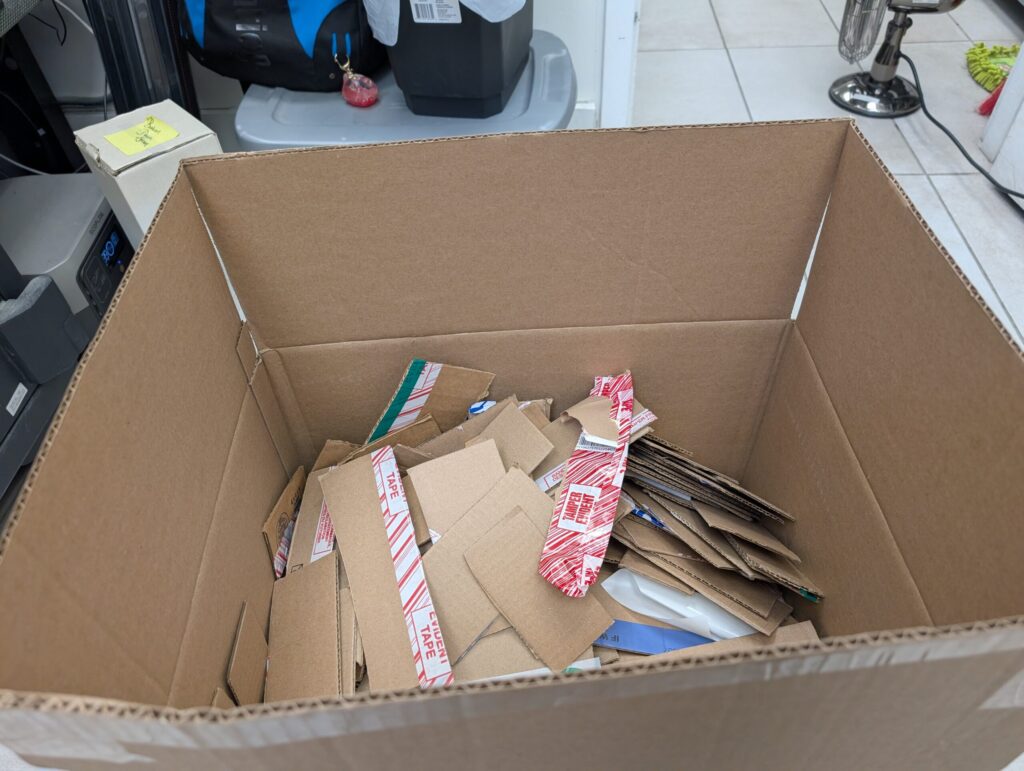
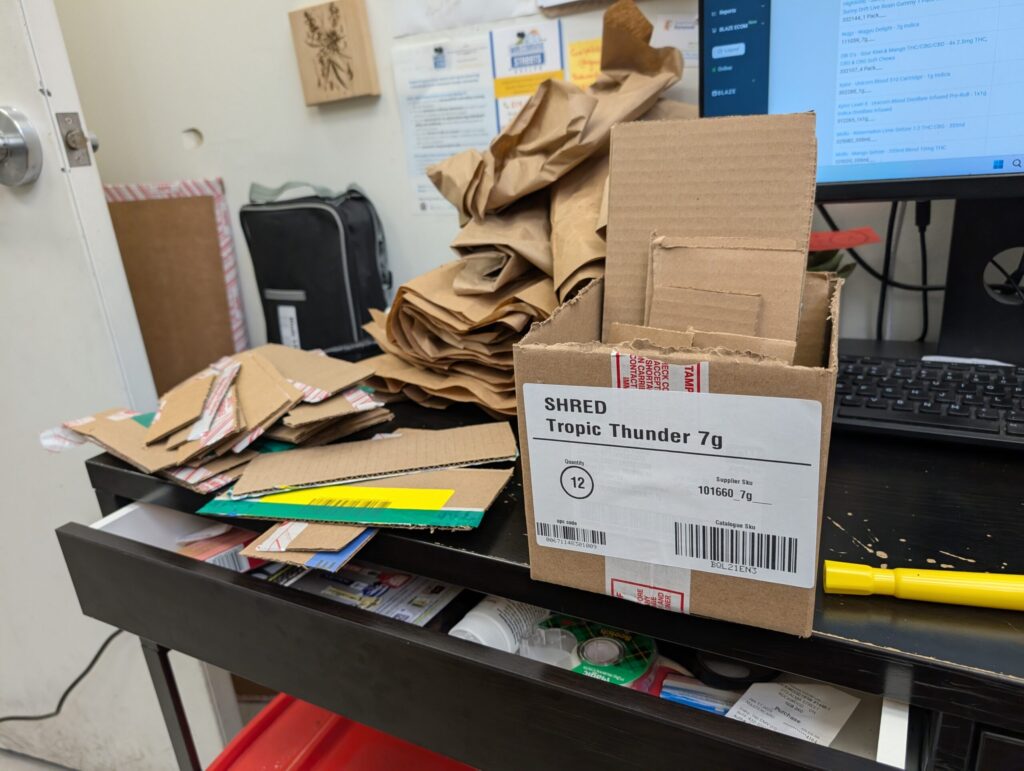
However, the original vision (creating a 1km snake of trash) soon became too time-consuming and physically exhausting so I had to pivot. I had originally thought to call this project the “Paper Trail”, which made me decide to switch to a walking project.
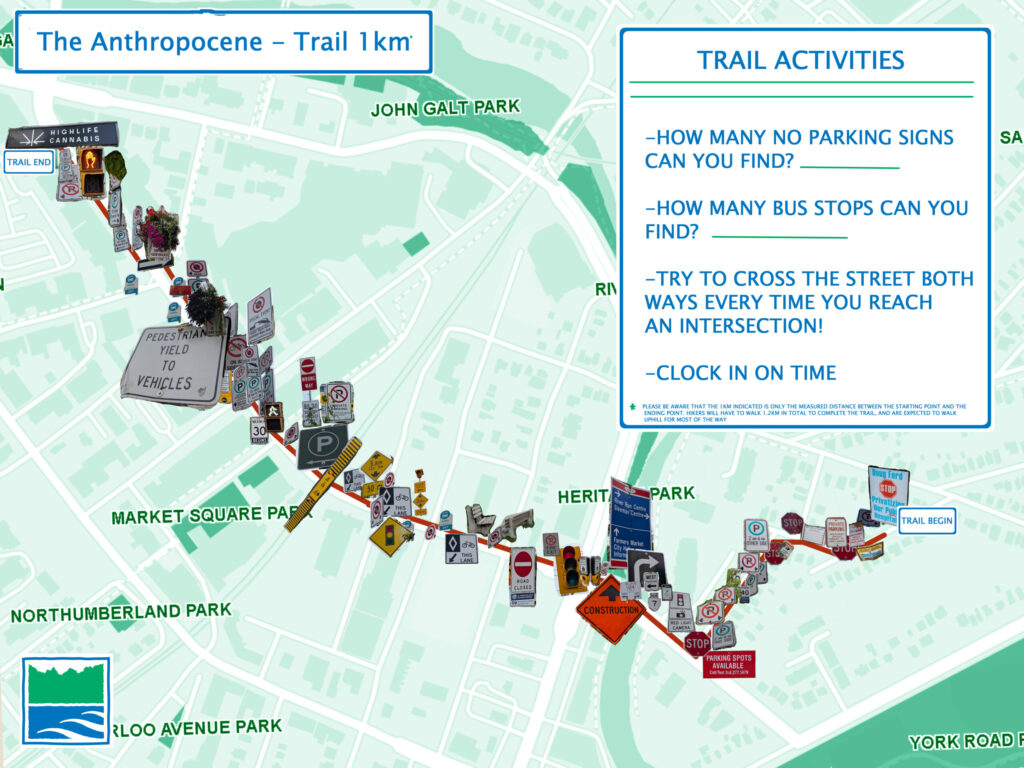
Since the walk to my work from my house is one I complete on a near daily basis, I wanted to incorporate that. After measuring, I found that it was 1.2km away (according to Google maps), but I wanted to find a way to make the whole trip 1km.
While I figured out a way to cheat the distance in a meaningful way that was still true to the assignment I decided that I would take photos of all the road signs I could on my next walk to work and hopefully something would come from that. As I walked, I was blown away by just how often I found myself needing to stop to take a photo of a sign. I have linked the google drive of all the raw images of the photos here
Here are my rough notes for when I just had my photos taken:
- consolidate my photos into a presentable format
- find a screenshot/formal way of showing how you measure the 1km from your house to Highlife
- show how the distance changes based on the walking route you need to take
- compare that to the time added/subtracted from a trip depending on what mode of transportation you are taking
- spend time on the Guelph Map site again (blegh) and use the measurement tool to prove it’s exactly 1km that you are measuring and take a screenshot of it vs the measurement of your route
- move all photos to computer done
- create the “trail” map based on the maps that are on google maps, trail maps etc as a sort of tongue in cheek commentary with the traffic signals/car first infrastructure being the “sights” to see
- maybe make it a brochure??
Since I was making a commentary of infrastructure, I decided to use the City of Guelph website’s resources to measure the distance between my house and my work, and was provided with my desired results.
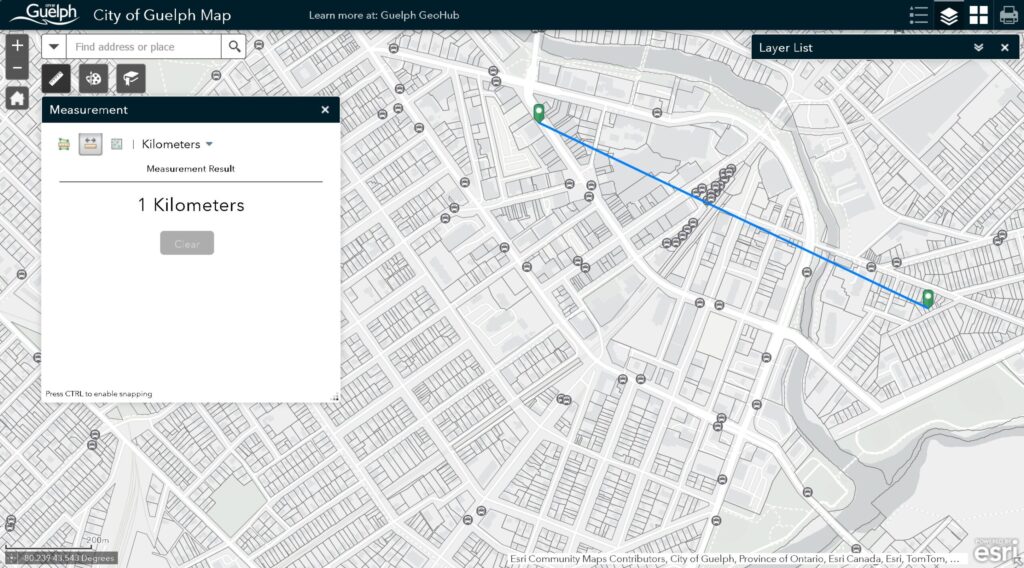
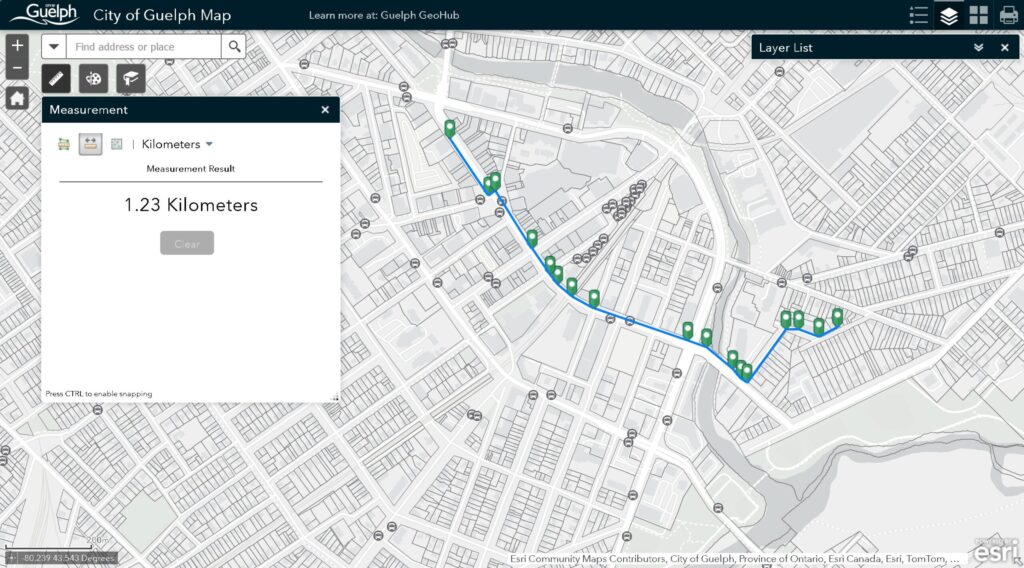
Next I took the second map and created a huge file in Clip Studio Paint and began digitally collaging to created the desired effect of placing the signs onto their corresponding points on the map. Here is a WIP of the map
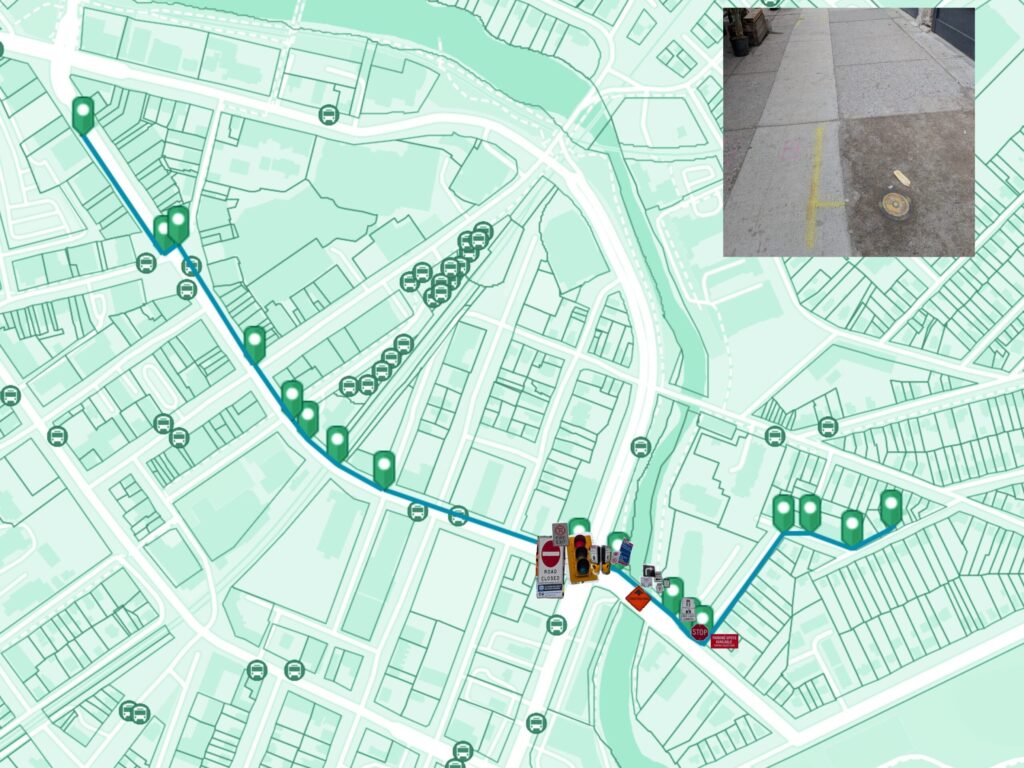
Next I searched on the Ontario parks website and pulled up the logo to be able to colour match the correct tones to make it looks as official as possible (though I’m no graphic designer) and found a high quality photo of the Ontario Parks logo to include in my trail map, then I downloaded a more simplified version of the map I was using to create my trail from the city of Guelph website as well and lined up the trail and the map, and was finally happy with the final result!
In total the project took about 10 hours
NYT ARTICLE REFLECTION
1. Describe the work discussed in the article and the unique challenges – as well as the unique gifts- that come with attempting to archive personal movements?
One of the unique challenges with archiving movement is that it will never be an exact 1:1 recreation. In the practice of archival, the wish (I would assume) is to preserve the closest proximity to the truth of the present (at the time) moment archived. This is to say, the purpose of a photo for archival purposes of a building is to capture as accurate a depiction as possible of what said building looked like at the time the photograph was taken. Movement is difficult to duplicate person to person as an exact recreation since no two people have the exact same build, diet, centre of gravity, etc.. This presents as a unique challenge which raises the question, how successful can one person be at archiving another’s movement?
One of the unique gifts can be best described with a direct quote from the article:
One morning, [Berkhout] woke up in a fetal position,
hands clasped between her knees, although she usually sleeps with her limbs stretched out in a line. The pose belonged to a Ghanaian woman in her 40s whom she had interviewed the year before. “That’s Dora,” she thought.
I’m undiagnosed, but I’m basically 90% certain I’m somewhere on the autism spectrum, which means I spend a lot of time rehearsing my behaviour or mirroring it from other people. For example, my laugh is considered my own by my peers, but it’s actually a blend of my father’s and different celebrities I looked up to over the years. I love that as someone who feels the need to constantly copy other’s to keep up the appearance of normalcy, I am also carrying on the memory of those people, and even taking a bit of them onto myself.
2. Discuss one or two examples of movements in the article – what strikes you about them?
When the child was sitting restlessly, I was so stricken by the natural way in which they moved around, which when mirrored became so performative. I thought it was interesting how such a small body (the child’s) took up so much emotional space by simply… being restless. As well, in imitating the movements, the dancer took on a childlike appearance, despite the fact that she did not change anything specific about her clothing, her make up or anything else, it was just the body language that regressed her age.
3. Describe the habitual movements/unconscious gestures, tics, etc. of 3 people you know well. How do individual body parts move, and how does the whole body interact? What about facial expressions, and emotional valence of the movement? How does body type inform the movement? What do these examples of small movements mean and imply?
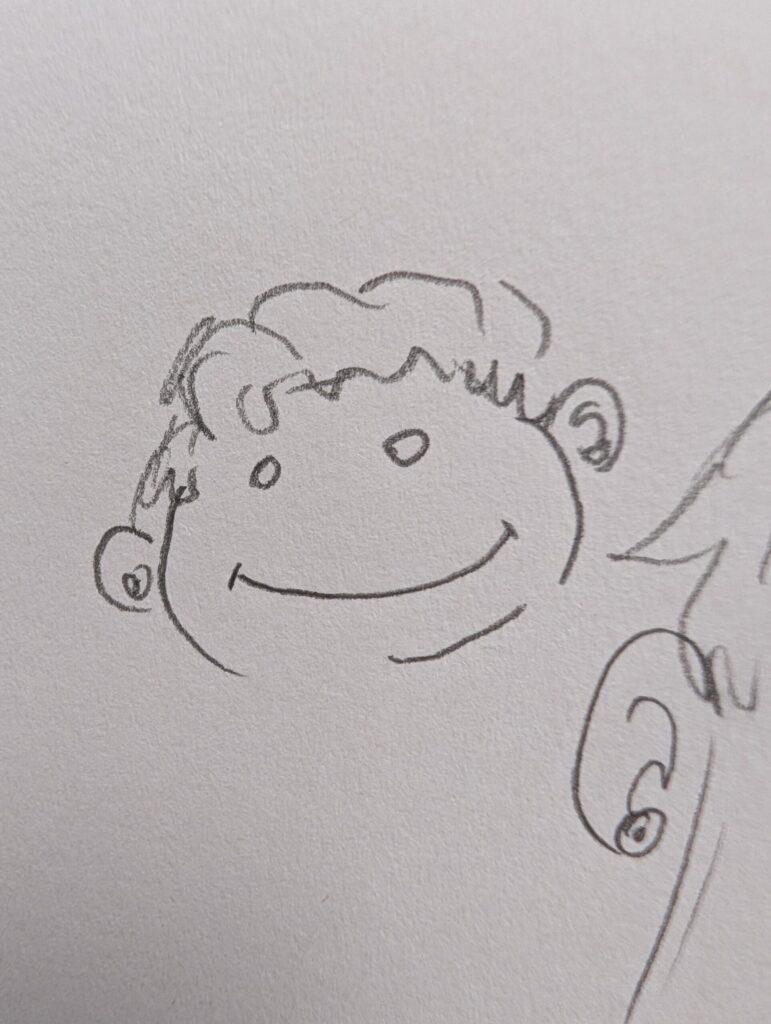
My best friend Kris has a specific small smile they do when they feel awkward, but also happy. It’s kind of like the smile of a little kid who has a secret and is thrilled about having the secret. When they smile like this, the smile rarely reaches their eyes, but it doesn’t feel like an unfriendly smile. Most pictures of them, they are wearing this smile.
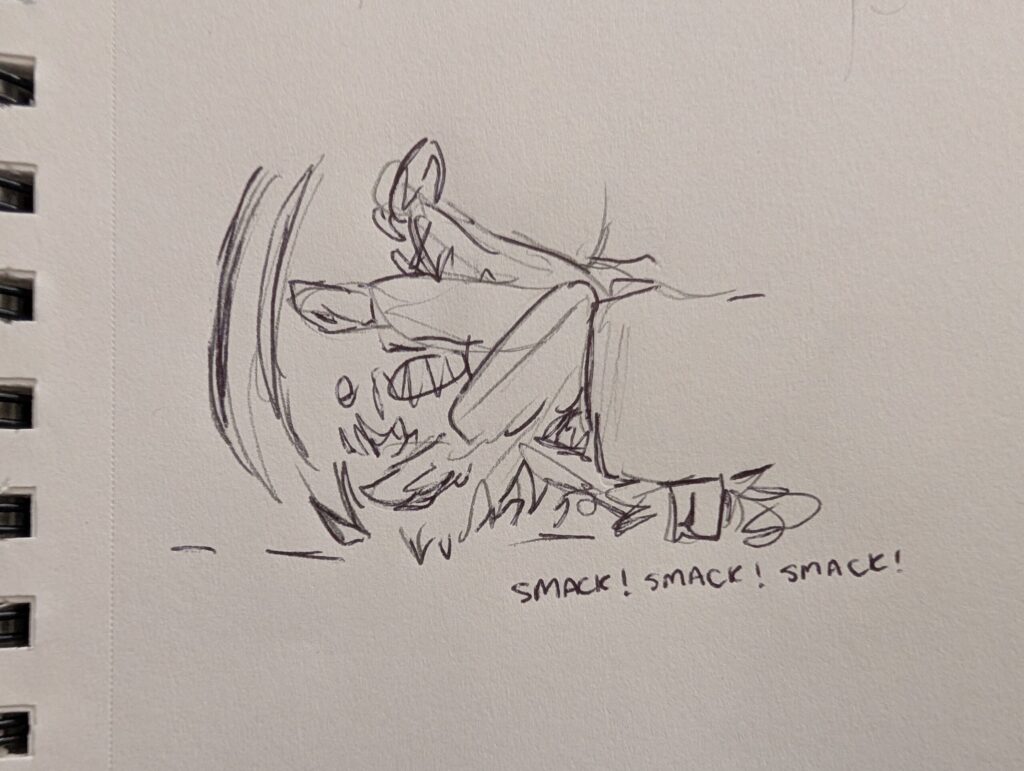
The same person (Kris) also has a habit of smacking their feet on the ground over and over again as a form of self-stimulation. It feels like an explosion of movement, contained but only for so long before the their feet are flying up and down and hitting the floor with a hard thud! As we live in the upstairs of our current house, I am always worried we are disturbing the neighbours downstairs, but I’ve become more chill about ever since we started living over our landlord.
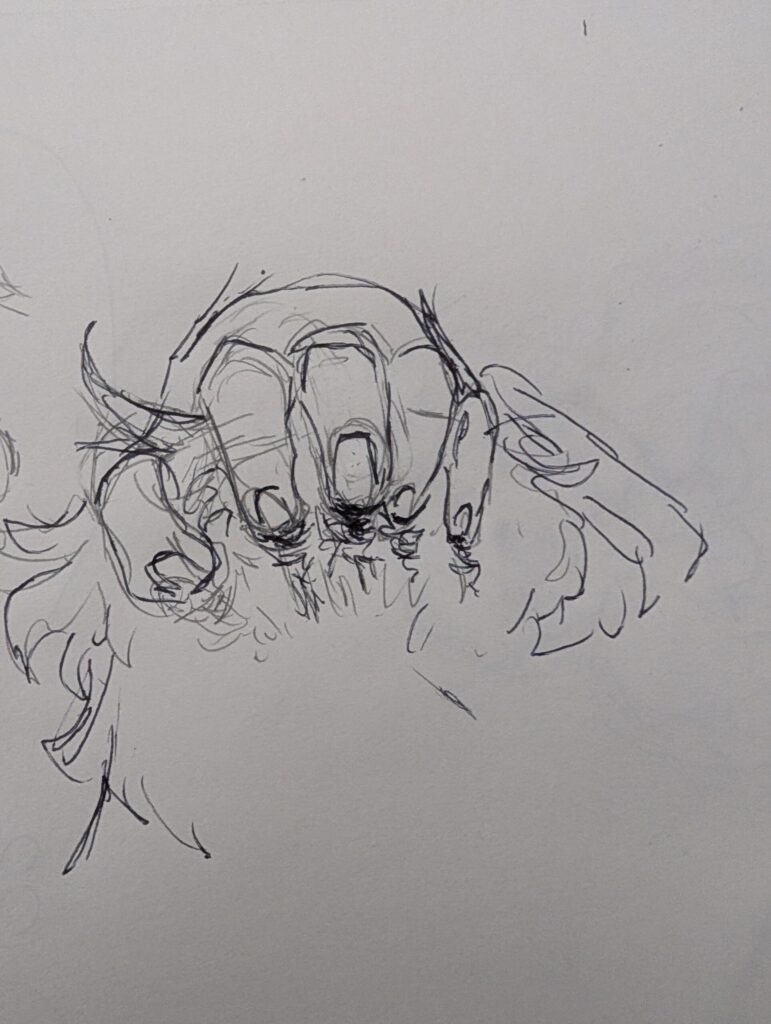
My other room-mate, Roan, has a habit of scratching his scalp when overwhelmed, or frustrated. He runs his fingernails through his hair with so much force and speed, sometimes I worry he’ll draw blood.
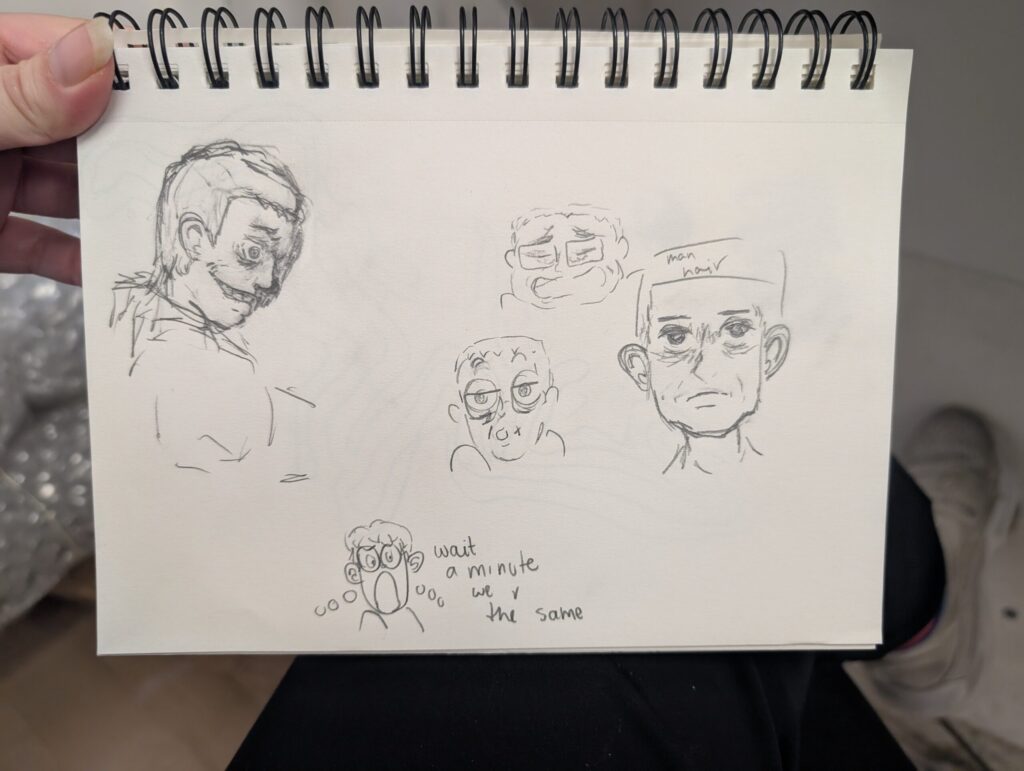
My dad is very expressive, whether he is trying to contain his emotions or not. Something specific to him that I’ll never forget is when he gets really angry at traffic and just starts laughing to break his own tension. It always used to terrify me when I was younger because of the cognitive dissonance of the emotion and the action and I’ve unfortunately picked up the habit myself (though I don’t drive).
Field Trip Reflections
In his essay, “The Work of Art in the Age of Mechanical Reproduction”, Walter Benjamin argues against technology capable of “reproducing” copies of art, such as photography, because it cannot replicate the aura of a piece of art. I would not consider myself an avid museum enjoyer, I find the Western art canon lackluster, and have only understood this feeling of “aura” in front of the Mona Lisa. That is, until experiencing Reworldlings.
Bison Survival Story Robe, Adrian Stimson
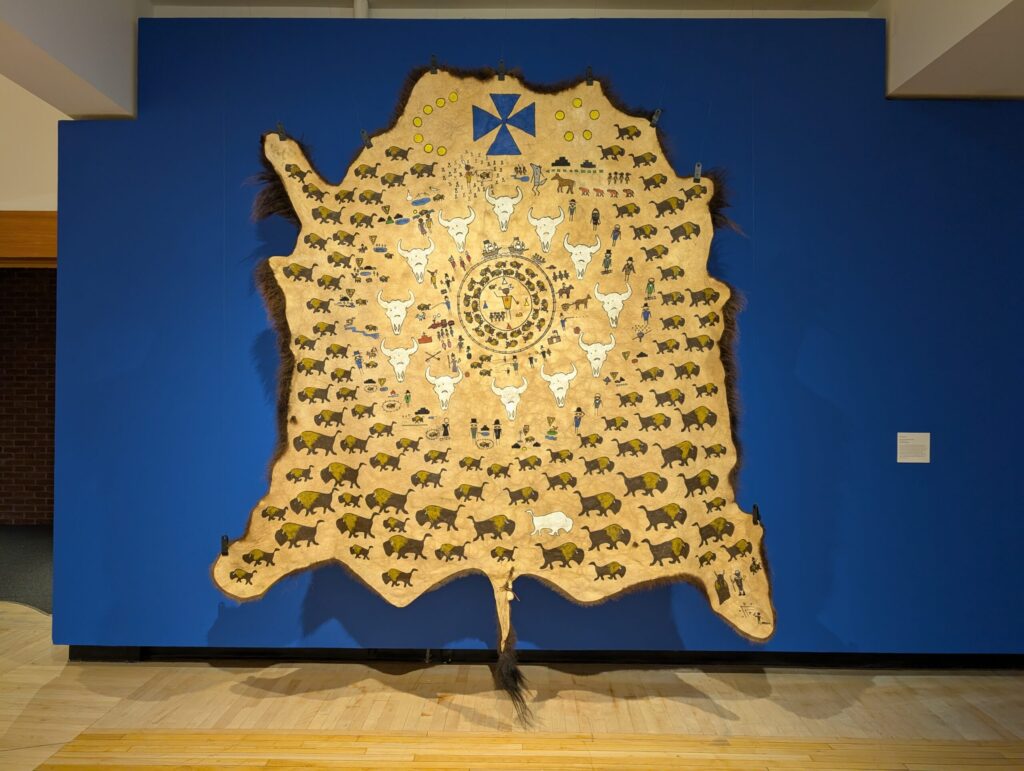
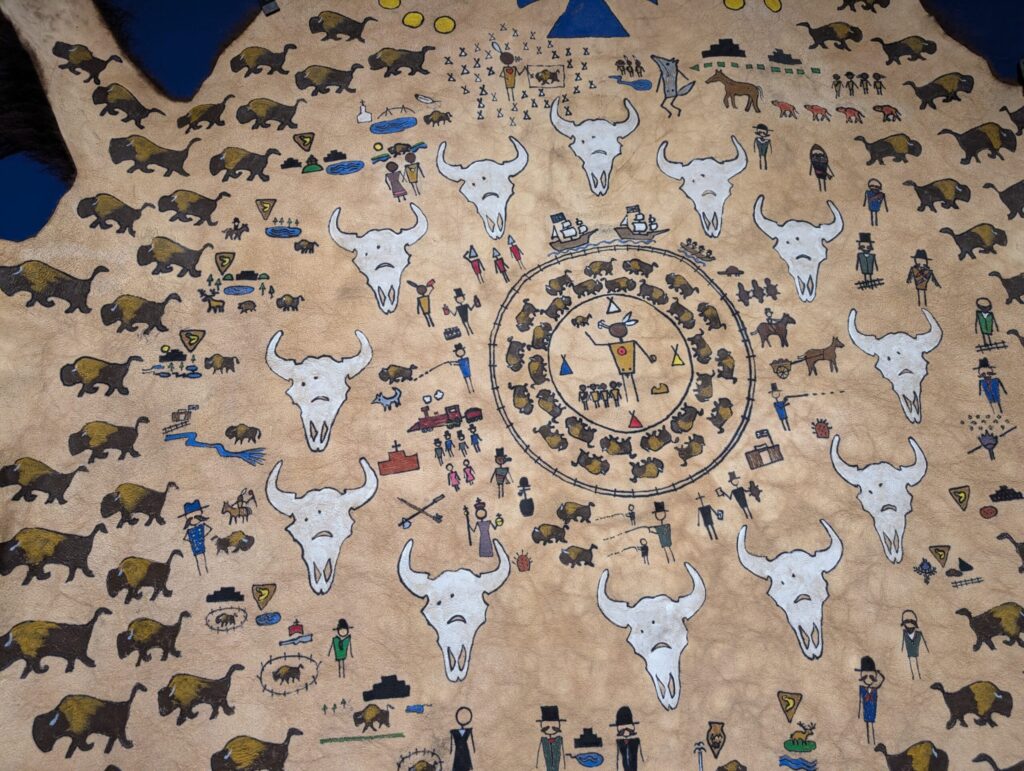
Almost every piece from the exhibit brought me to tears, and none exemplifies this concept of aura in an artwork more than the Bison Story Survival Robe. Coming face to face with a piece of traditional Blackfoot art that was created so recently is indescribable.
The size of the bison hide, the story itself being told in the round so that it never ends, imagery that is universally recgonizable- everything blends into a masterpiece that makes the Mona Lisa feel kitsch.
I feel truly lucky to live so close to the Art Gallery of Guelph, and to have a professor who is so invested in the world of conservation through a land-back perspective.
Nalliunet | Seasons (detail from Upinngasåk), Glenn Gear
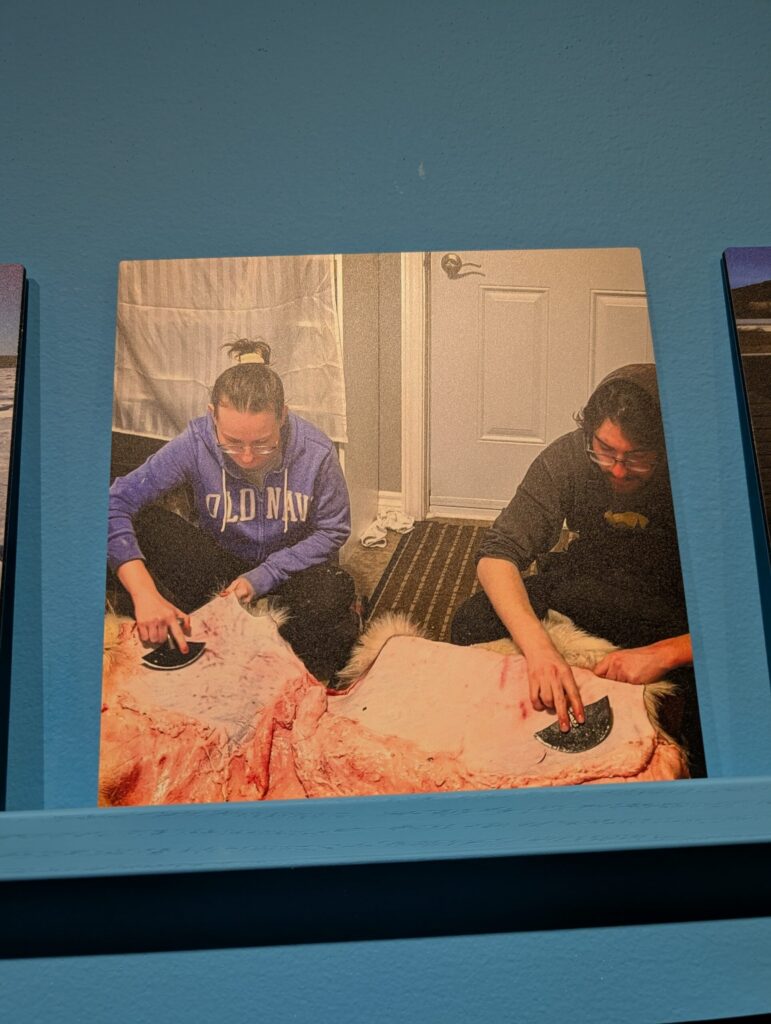
The modern setting juxtaposed with the traditional activity of the image. I stood in front of this photo for at least five minutes on my second visit to the museum, trying to to decipher the emotions that sprang up in me. The story of resilience, of holding on to traditional practices and the willingness to still share and pass on the knowledge after all this time. A lot of these thoughts come to mind when I see this specific photo.
The “new build” home backdrop screams out to me, along with hair scrunchies, Old Navy and Batman hoodies. Most images of Indigenous cultural practices are contained to a fetishized version crafted by colonial settlers hellbent on reinforcing the image of the “noble savage”.
This photo tells a completely different story. One of traditional practice alongside a trip to the mall. It forces me to think of preservation and my relationship to the Earth as less black and white, and as was the hope for the exhibit, represents the concept of the “natural” world and the “human” world being less separate than the Western world depicts.
ONE FEAT THREE WAYS
I dreaded this assignment when I heard it was a group project. I’m so glad I was wrong.
Originally I wanted to really push myself with this, and get out of my comfort zone, but during our discussions we landed on Olivia as our performer and I realized that, as someone who did theatre all throughout high school, as well as a program in college- how uncomfortable would it really be for me to be in front of the camera? Olivia as the performer was definitely the right move she brought a vulnerability to the camera that made our final product feel overly intimate and voyeuristic in the best way possible.
As well, the conceit of the video really came through the process. Originally, we wanted Olivia to contort herself into a specific uncomfortable shape, but after the first test recording we found it so evocative the way she was trying to get comfortable on the hard surface of the table- both Lakyn and I said it reminded us of how we feel lying in bed, and checking in with Olivia, it didn’t just look it, it seemed as though she really did feel it.
Once we had the raw footage Olivia and I narrowed down which clip we wanted to animate, and then we exported our frames and each did a digital rotoscope animation. I had a really good time doing the animation, and it was so fun picking colours and seeing the way Lakyn overlayed our animations together.
I really love this group and this project was an amazing experience!
For my self grade, I’d give myself an 8/10
There wasn’t a lack of care, but there was a lack of effort due to unnecessarily high expectations put on myself, which resulted in me definitely slacking on my blog posts and writing them out last minute.
Reflections on Pauline Oliveros
What comes to mind when I think of listening with my whole body are the sensations that specific sounds arouse in me. Sudden sharp sounds like a book slamming on a table resonates through my chest and stomach- aftershocks of an initial scare feel like a low buzz of electricity humming its way to my extremities, and there is always the itchy discomfort in my right ear that will persist until it transitions into a high pitched ringing. I also think of my nervous tick of checking railroad tracks while walking along them for vibrations. I know the sound of the approaching train travels faster through the metal tracks than the air, alerting my hands before my ears of my impending doom. On the other end of the same spectrum, there is the incompatibility of my sense of hearing with my other senses. When listening to something very important, I will unfocus my eyes and try to channel all my mental energy towards my sense of hearing and comprehension, in the hopes I will be able to listen properly.
I rarely think of listening in terms of play, and Oliveros is inspiring me to try and think less seriously about sound. My main association with sound is dialogue, something I tend to be slightly on edge for in fears of saying the wrong thing during a conversation. I will obsessively practice what I want to say in my head before saying it during a lull in the conversation, making it difficult to hear anything at all surrounding me over the sound of my own thoughts. Moving forward, I’m hoping I can be open to just accepting sounds as they are, instead of how I think they should sound. I want to be less focused on finding the “right” sounds, or the “right” quality to a sound, and instead enjoy a sound for what it already is and represents. My obsession with getting things correct has been a barrier to not just my creativity, but communication as well. Sometimes, people do not have a deeper meaning to their words, but I am still wont to decipher what is being left unsaid, and what response is expected of me (as opposed to simply responding).
Pauline Oliveros inspires me to think of the different ways that listening can manifest. There is no one specific way to listen, with just your ears. Listening as a full body experience is something I am looking forward to exploring through my life going forward.
Audio Art: Title Needed
Reflections on Audio Assignment
This assignment was difficult for me. I have a really hard time stepping out of my comfort zone, and audio production was definitely outside of my comfort zone.
Initially, I had difficulty just coming up with a premise for the work. I was dreading the actual slog of editing so much, I didn’t even start to think conceptually until halfway through the assignment. I’m starting to notice a pattern in my work-flow, wherein I put off the actual getting started until it’s so late that I end up submitting a piece that could use a few more rounds of review, instead of starting my work and going from there.
The process was difficult, since it awoke emotions in me I didn’t realize were there. Or it might be more accurate to say, I thought I had conquered. It’s hard to make a deeply personal piece of art without getting lost in the process- it’s especially hard when you only have a week of turnaround and you’ve already invested so heavily in it emotionally.
I can see myself revisiting audio art, whether it be the music production I dabbled in or something more cinematic, but for now, I am just focusing on making it through the rest of the semester.
I tend to place much higher stakes on assignments than necessary. One of these days I’ll finally learn that perfect is the enemy of finished but I can still feel myself wanting to dip back into the studio for another round of revisions…
Conceptual Artist Proposal
From the artists shown, I take great inspiration from Adrian Piper and her Calling Cards, as well as her work in performance art wherein she dresses in drag and reads excerpts from her diary on a loop while recording herself walking through the streets of New York City.
I similarly feel that people will share opinions with me that they should keep to themselves, and struggle to navigate these scenarios. Similar to Piper’s calling cards, I want to create a large identifier that will both poke fun at how commodified queer identity has become under late stage capitalism while at the same time being stigmatized.
IDEAS:
- custom name tag
- screen printed shirt
- spray water bottle
- customize a shirt with marker/acrylic paint
Conceptual Portrait: Tattoo Designs
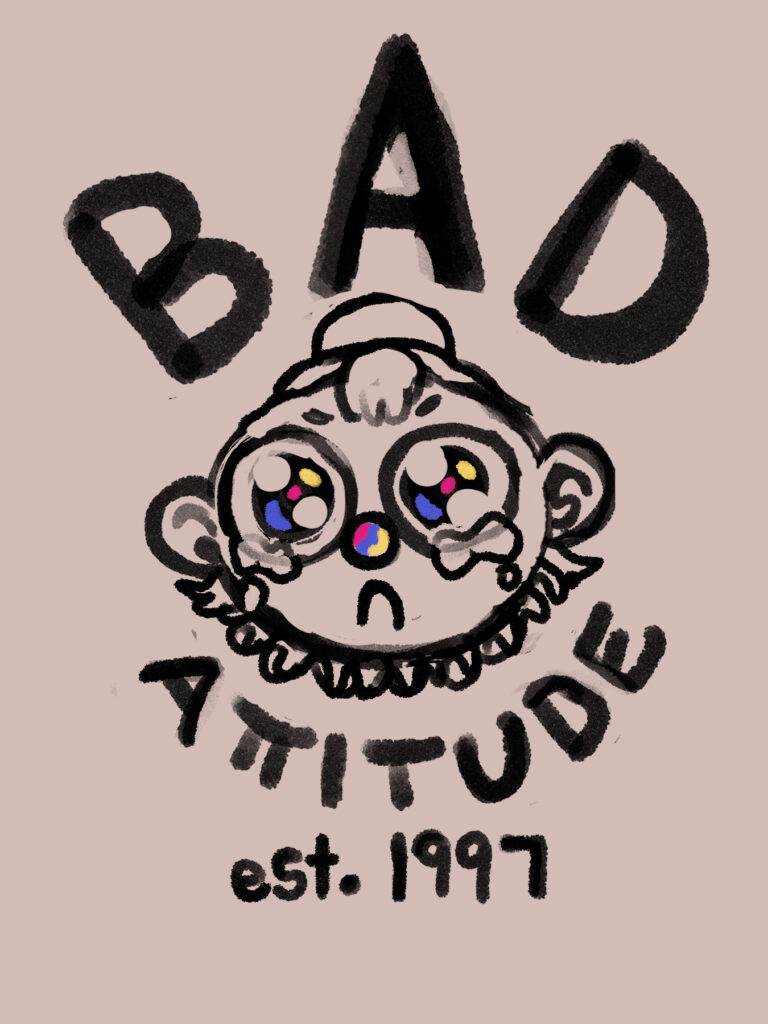
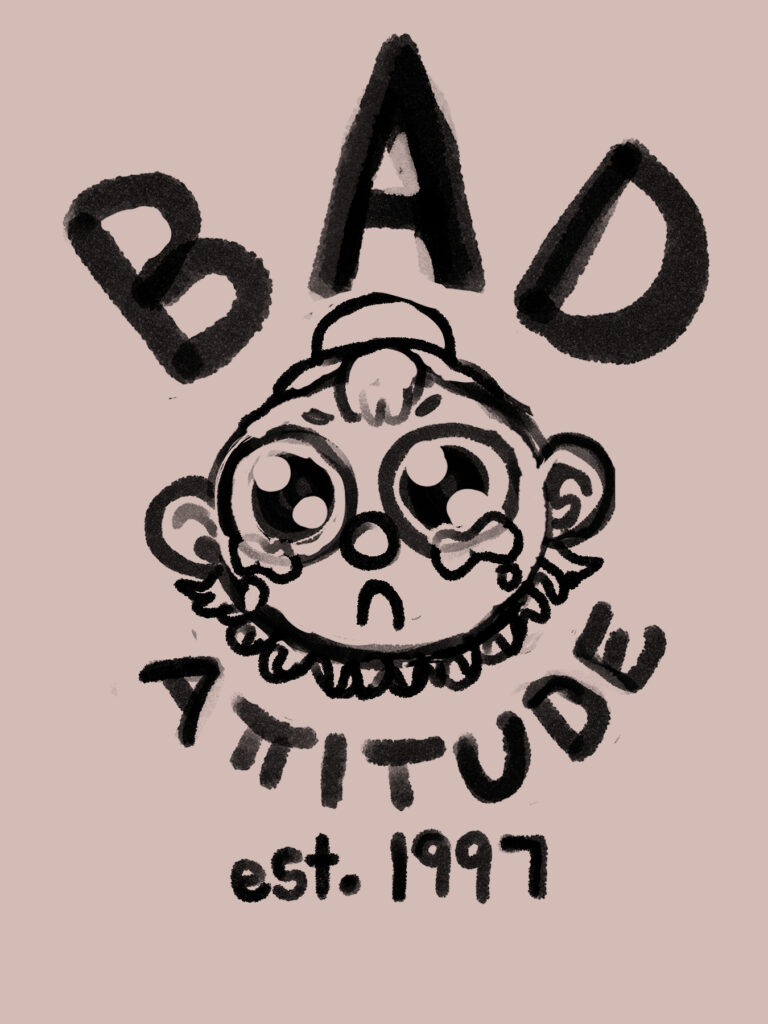
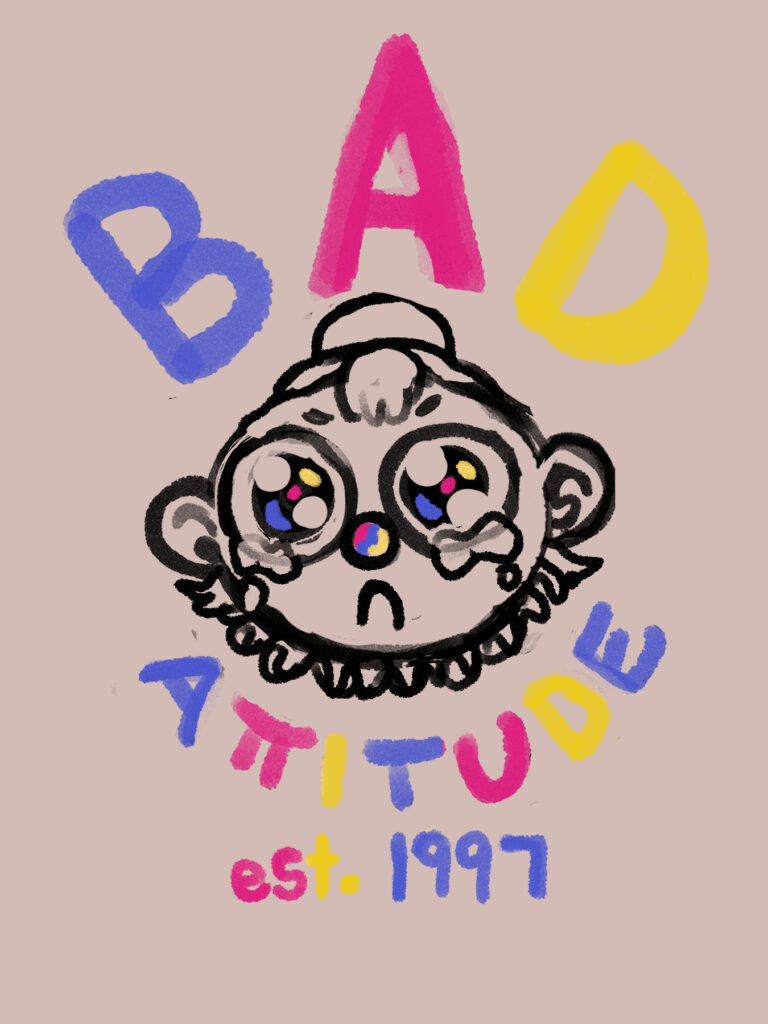
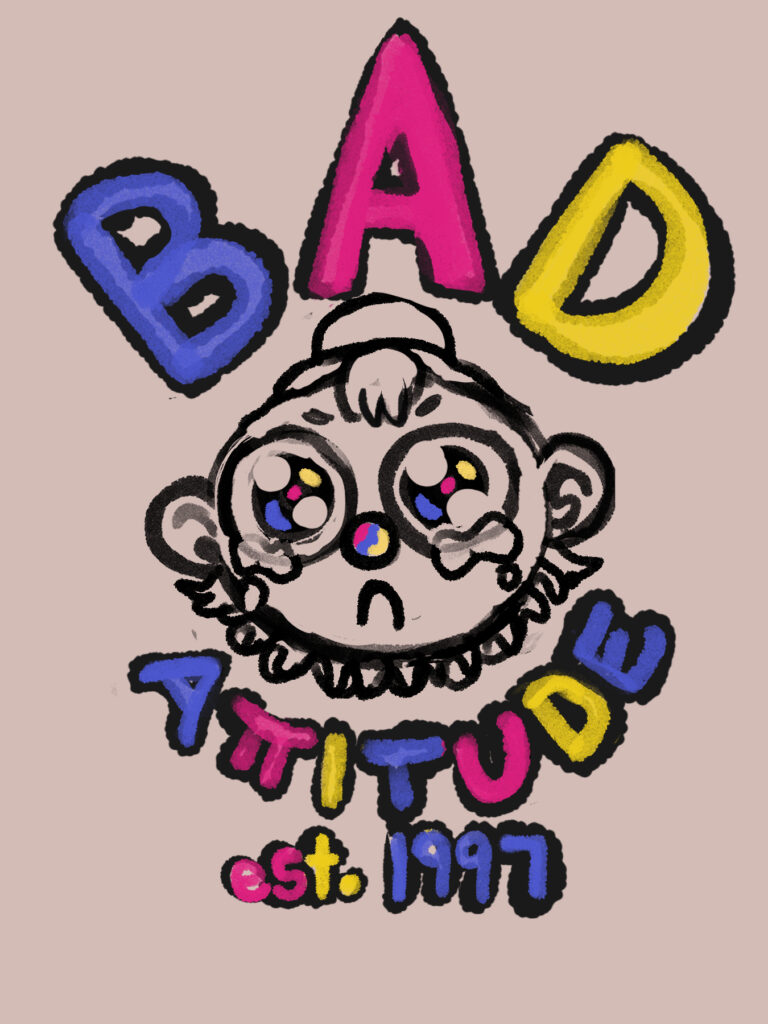
Yes I really do plan to get this tattoo (the background colour is my skin tone colour picked from an image of myself)
To Do:
- Get in touch with an artist
- Clean up design
Reflection on Portrait: A Sad Clown
It’s difficult to give a complete and honest reflection of the process o this piece, since it doesn’t feel complete.
I haven’t heard back yet from the artist I first reached out to, so I am moving on and looking into other artists. In the meantime, I’ve been thinking back on what led to the decision of a tattoo.
There are several reasons I wanted to design a tattoo as a conceptual portrait for myself. First, no two tattoos can be the same thanks to the medium itself. The fact that tattoos go on human skin and each person is a unique canvas of their own makes tattoos feel like a conceptual portrait already. I also have been working up the courage towards my second tattoo.
In terms of design, I wanted something that was cute and seemed child-like. I have a very young face and am often talked down to and underestimated. It’s hard sometimes not have a chip on your shoulder when everybody continues to treat you like you’re a ten year old who couldn’t possibly know anything, but when I embrace “childish” aesthetics it reminds me that these feelings aren’t new. I did know more than I was given credit for as a child and deserved respect. There is nothing unique about me and my struggle to earn respect. Instead, the issue is in how most societies still treat women as second class citizens- and that’s not even getting intersectional.
I wanted the design to look like a brand, which is why the lettering curves around the figure. I was mostly inspired by the nondescript branding of fast fashion items that include the year of the company’s establishment (I was born in 1997, thus est. 1997).
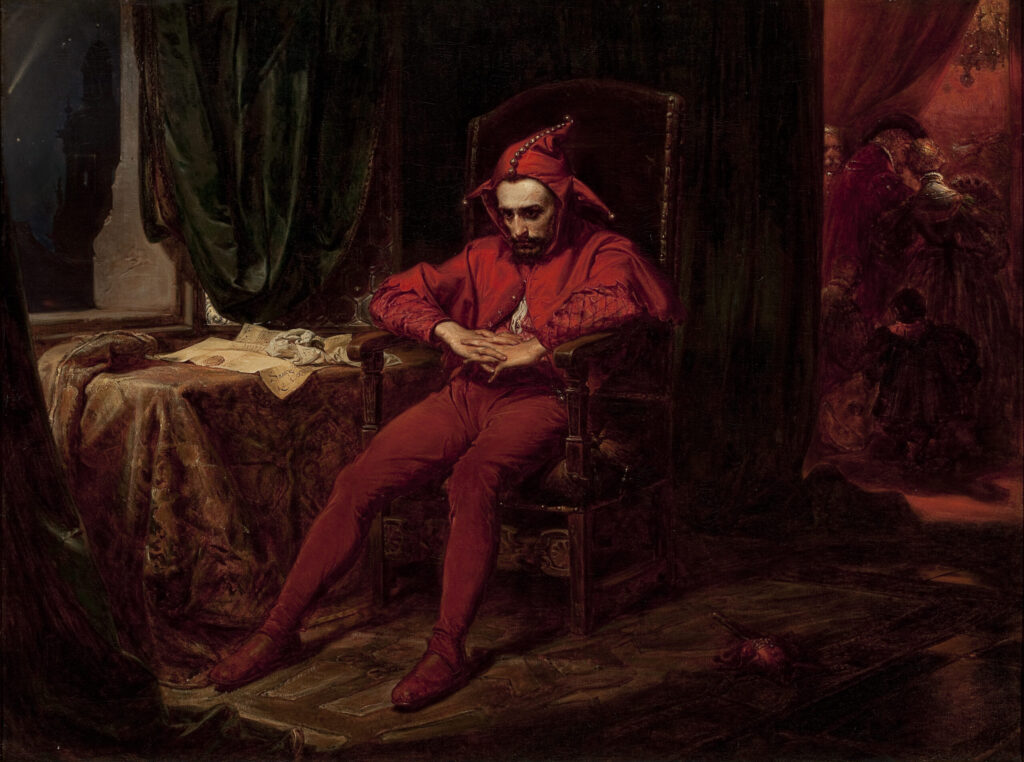
Finally, the clown is meant to embody me. I have been told I have resting bitch face, or that I look miserable all the time, while also being described as bright and funny and brave for my outfits. Like Matejko’s Stańczyk I exist for the enjoyment of others, to brighten the mood and keep the party going. Isolated though, I’m haunted by my own powerlessness beyond imploring those with real power to try and think before acting, all while being laughed out of the room for fear of execution if taken too seriously.
Self Grade: 8/10
It’s hard to say why I’m giving myself this grade but I think I worked hard to think about what is something that embodies myself. It is hard to give the full 10 without receiving the tattoo itself so I’ll have to keep you up to date.
Making a Zine
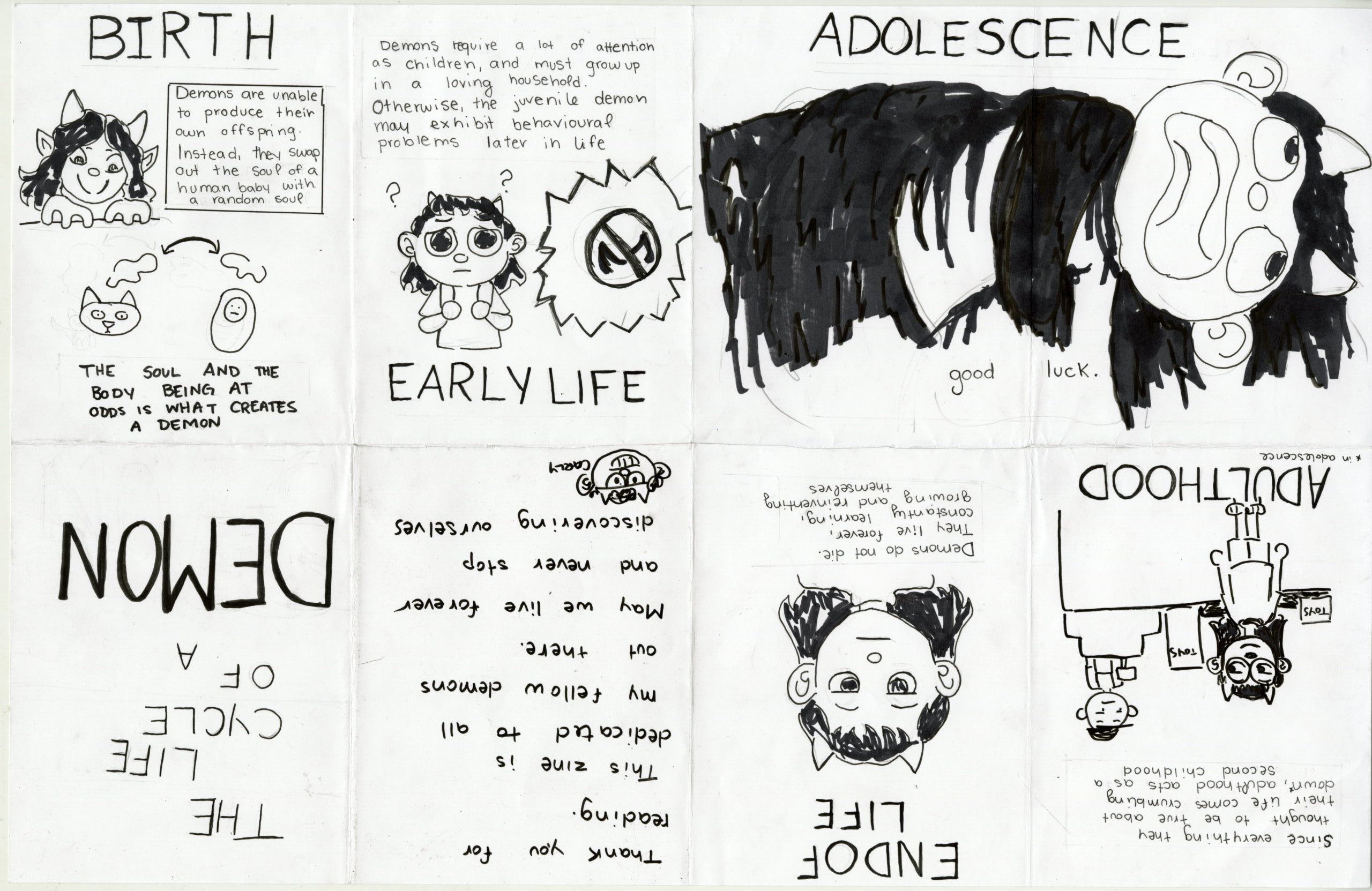
I love making zines. I’m not always the best at time management though. I have a difficult time picking one topic and sticking to it, especially with how process based most of my art is.
I wanted to touch on topics like leaving the church and the difficulties of living your life with a specific belief set and then having to essentially start over and become a completely new person. However, I’m still getting my footing on allegorical writing and I just really wanted to draw some cute pictures.
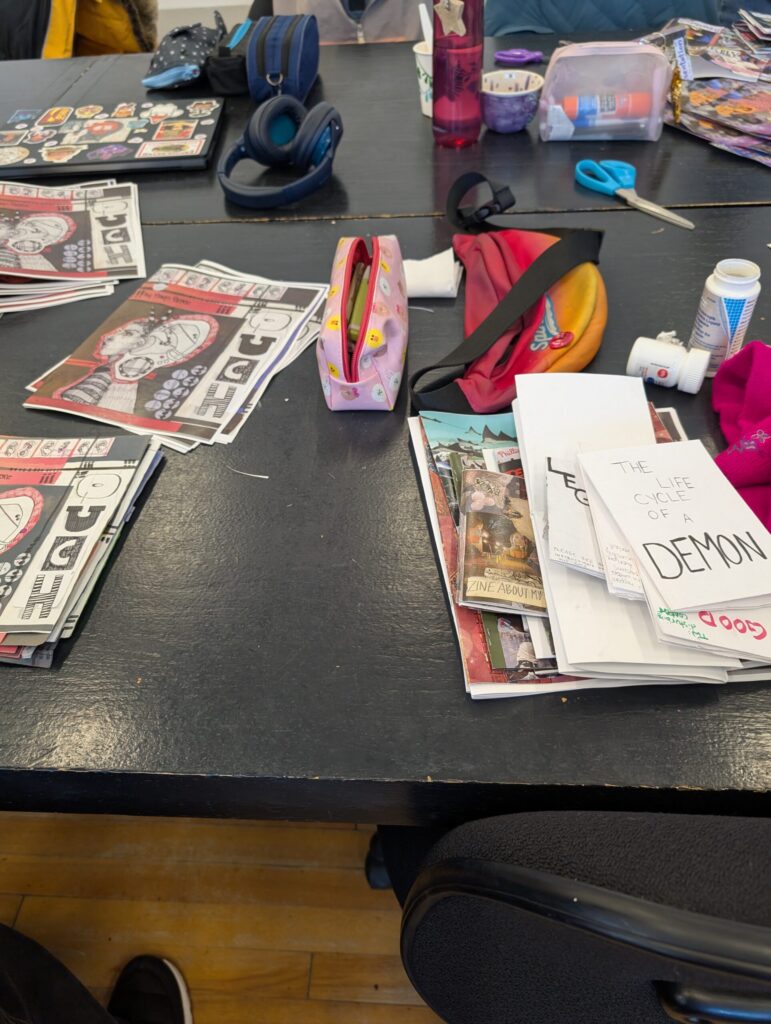
To be honest, I misunderstood what the zine party was meant to entail and thought more people would be working to wrap up their zines before the end of class. I was streeeesssed when I was realized I was wrong and SWEATING trying to get it finished.
I landed on the life cycle of a demon because it felt straightforward and easiest to do in a single sitting because of how behind on time I was. I originally wanted to work digitally, but unfortunately the pen for my laptop/tablet died on Wednesday so I pivoted to hand-made.
To be honest, I think I want to revisit this idea once it has marinated a little better. However, as far as a zine, I think it’s fine.
I still had a great time making it though.
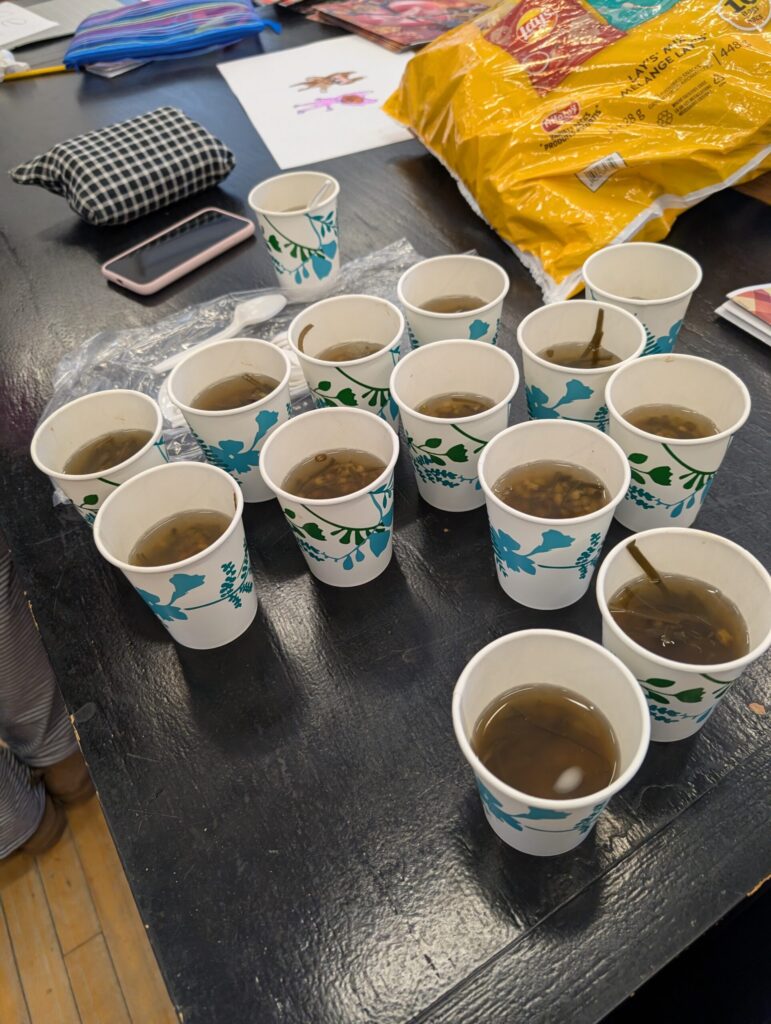
The final day of class was also amazing and I had a wonderful time going through everybody’s zines. I loved seeing the different approaches, and getting a little intimate glimpse into people’s lives.
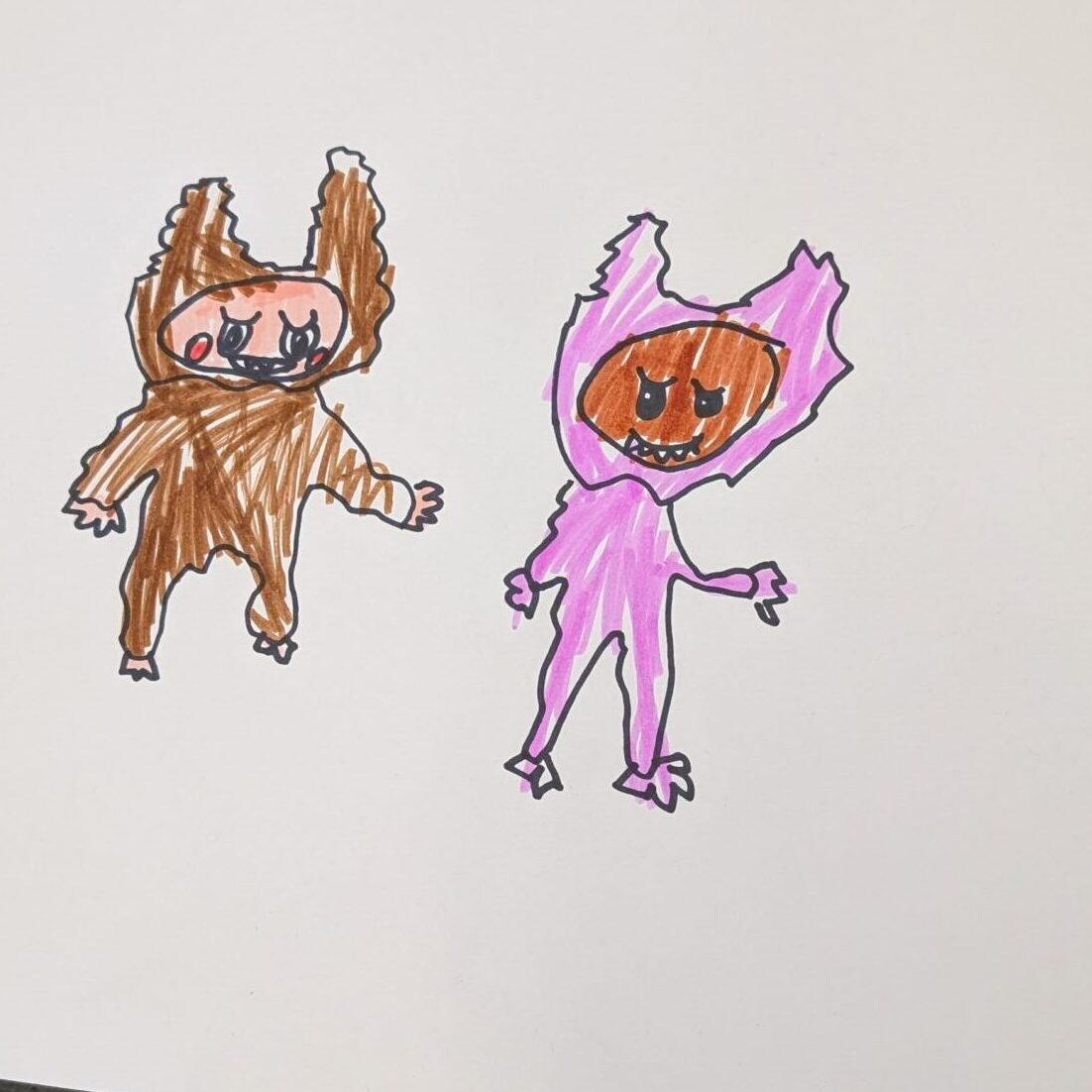
Side note: these labubus rule