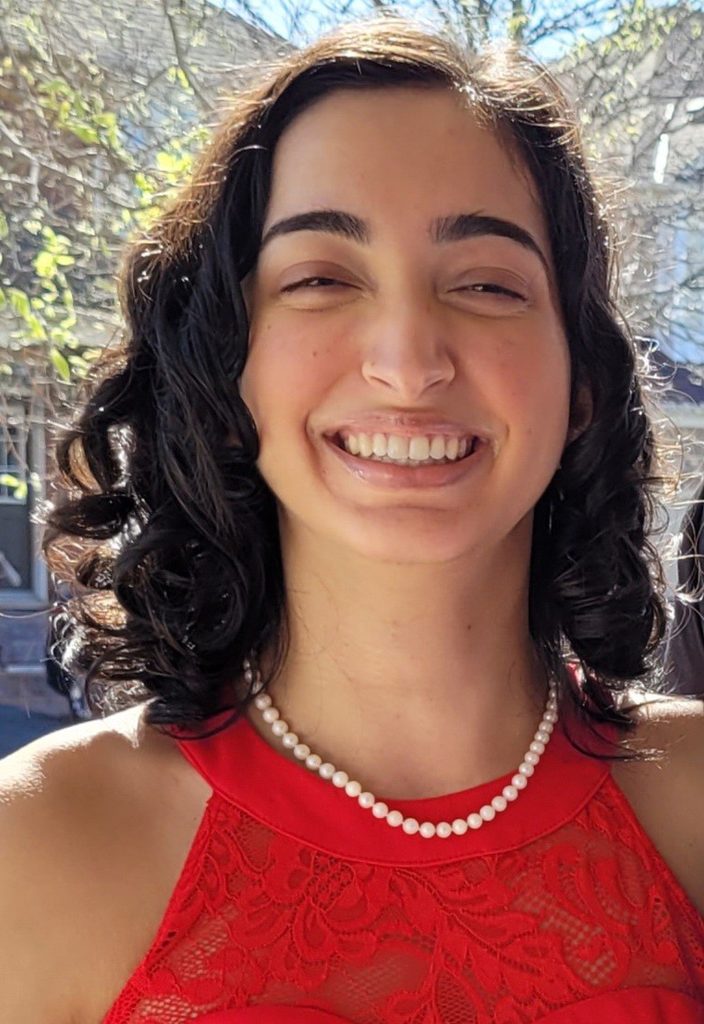
Hi, I am a second-year student majoring in Studio Art and Psychology. I am taking this course because I hope to become an Art Therapist after my master’s degree and want to experiment with more media while strengthening my skills in video editing and performance art.
1 Km Project
Two Paths
Grace Gaebel
Two Paths is a mix of physical and virtual recordings of my journeys through campus on two separate days, capturing my heart rate, emotions, pace, and the time it takes me to travel 1 km across campus. I tracked this information through my watch, fitness app (VeryFit) and documented myself through video as well as through photos. The purpose of capturing this experience on two separate days is to show a contrast in my emotions, weather conditions, technological tracking, and the time it takes me to trek across campus, and to see how my emotions reflect my steps. In a gallery setting, this would be displayed as a wall installation—a large grid of visual maps and biometric graphs paired with audio recordings or printed large-scale personal representations (drawings) of my path through an emotional lens.
Critique
1. Did I measure a precise kilometre and can I prove it?
Yes. I measured and tracked the exact 1 km distance across campus using my watch, which recorded my precise step count, timing, and route. The complete path is digitally documented through the VeryFit app tracking log.
2. Is my idea creative or thought-provoking?
Yes. After completing each walk and viewing the route on the VeryFit app, I recreated my own emotional visual representation of the path. The creativity comes from directly contrasting the cold, technological capture of my trek against my internal, subjective emotional experience of it.
3. Do my materials/media match my concept?
Yes. I intentionally combined virtual and physical media to connect technology and human emotion. Using my watch, phone, and app provided the hard digital data, while drawing out the lines on paper created a physical representation of my inner state.
4. Can I present it clearly in under 5 minutes?
Yes. I organized my documentation into a clear, visual video format incorporating images of my data, drawings, and routes, allowing me to present the entire project smoothly in under 5 minutes.
5. Can I reflect on what I learned and how this kilometre makes us think differently?
Yes. I learned that physical distance is nuanced and open to interpretation depending on how it’s measured. By mixing physical drawings with technological tracking, the project shows that 1,000 metres is not just a number. The KM represents my emotions—like stress, anxiety, or feeling relaxed—that directly changed my physical pace, heart rate, and even whether I chose a direct or winding path across campus. It makes us think differently about the monotonous actions of walking through campus and actually gives you the chance to slow down and think about your every step instead of the busyness of life, as well as practice mindfulness. A kilometre changes based on whether it is being recorded by an app or actually felt by the person walking it, proving that technological tracking only tells half the story.
Marina Abramovic
The Artist is Present
Q. 1
When watching the documentary, my first impression was definitely a mix of shock and admiration at how far Marina Abramović pushes her body for art. To be honest, I found the nudity and self-harm pretty startling, and at times it felt like too much for performance art—crossing a line into unnecessary physical risk. On the other hand, I really admire her piece The Artist Is Present. Sitting across from strangers and holding motionless eye contact for three months straight takes unbelievable mental discipline, concentration, and passion. However, it’s also problematic because of the extreme physical toll it takes on her body. Trapped in one spot for hours without moving, dealing with intense physical discomfort and no bathroom breaks in front of an audience, it makes viewers question the unethical side of her piece.
Another work I found really interesting was The Lovers, where she and Ulay walked from opposite ends of the Great Wall of China. What was originally planned as a romantic reunion and marriage turned into a bittersweet 90-day walk that ended up being a funeral for their relationship. The piece faced many major problems, including taking eight years of legal battles with the Chinese government just to get permission, along with enduring harsh physical terrain. Instead of a happy reunion, through the harsh terrain it ended up being a very sad goodbye, which shows that legal troubles and physical exhaustion can completely change the original intentions of the performance.
Q. 3
Her performance art resists traditional museums because you can’t buy, sell, or hang a temporary live action on a wall when the artwork is literally a person’s body in the moment. Marina Abramović gets around this by hiring 30 young artists to re-perform her iconic past works and selling photo and video documentation. I think having those young performers re-enact her pieces is a great compromise—it lets her almost relive her art through them and gives a new audience the chance to experience it live. Even though re-performing these raw pieces in a clean museum can feel a bit staged since she herself is not re-enacting it, these compromises ultimately add to her work, because without documentation and re-enactments, performance art would just fade away and be forgotten.
One Feat, Three Ways
Breaking Point: Video 1
Breaking Point: Video 2
Breaking Point: Animation
One Feat, Three Ways Critique
Title: The Breaking Point
What was the main idea or inspiration behind the work?
Our inspiration was to take an everyday action of a person catching an object. Our idea was to demonstrate that, through the action of catching objects, we often bite off more than we can chew. In our videos, the objects are often dropped, representing the physical action of taking on more than we can, to the point in which we need to surrender and drop the objects to easily capture more without getting overwhelmed.
What were you trying to communicate or explore?
In this work, we are trying to communicate a feeling of being overwhelmed and faced with task after task, in this case, objects. When the objects are missed or dropped, it represents the times we struggle and are completely overwhelmed. In our videos, when we show multiple objects in our hands, we are also representing that we actually can handle a lot, but there is almost always a breaking point.
Why did you choose this subject or idea?
We chose this subject because it felt interesting to explore the action of trying to catch and hold onto items as much as we could before having to drop some to take on more.
What do you want viewers to think, feel, or question?
We want our viewers to feel the overwhelm and relate to it. We also wanted it to give an effect of absurdity with the random objects we were throwing while keeping straight faces.
Did your original idea change throughout the process?
Slightly. At the start, I thought it would be more about catching and passing objects, but I feel like it evolved into a deeper approach of capturing and trying to hold onto as many things as we possibly could.
What techniques or methods did you use?
We used different camera angles like wide shots, close-ups, full-body shots, and three-quarter view shots. We also used a reversing technique in our editing process to demonstrate the process of the object coming back into our hands only to be let go again.
What challenges did you encounter while making the work?
We really struggled at a point with figuring out which camera angles would be most effective, how specifically we wanted to edit our videos, and which ideas we should dismiss. We also had an extremely hard time agreeing on the right title that fit our videos and action.
How did you solve problems or experiment with different approaches?
We eventually came to an agreement on what angles and editing choices would be most effective by rewatching the footage together as we were editing.
Space: How does the work occupy or interact with its surroundings?
Since the objects are being thrown to the person—with the person throwing also present in the video—the object flies at the person through an in-frame entrance, and the performer is usually centered or off to the side.
Scale: How does the size affect the viewer’s experience?
Presented at a close, intimate perspective, the scale makes the viewer feel a direct sense of physical proximity. Because the framing focuses tightly on the body and hands, the impending drops and fumbles feel immediate and personal.
What do you think worked particularly well?
After rewatching our videos, I feel like the camera angles worked pretty well, along with the reverse effect of the objects coming back into my hands.
What part of the artwork are you most satisfied with?
I really like the camera angles and the use of absurd objects.
What was the most challenging part?
Narrowing down our creative choices and figuring out the right angles and editing approach amidst the struggles of production.
What would you change or improve if you did it again?
If we did it again, we might use more meaningful props—though it was difficult to find meaningful props that were not small and fragile. It would also be interesting to test different Foley sound effects for the falling objects or even try entirely different actions.
NYC Dance
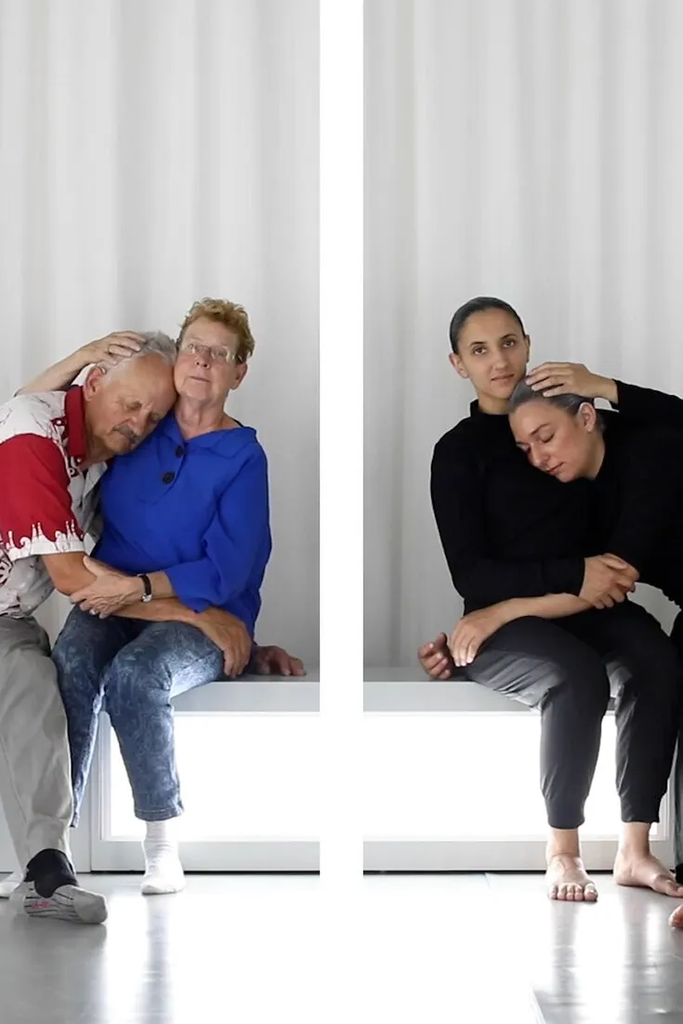
In the article “Turning the Gestures of Everyday Life Into Art,” Zoey Poll details choreographer Katja Heitmann’s performance project Motus Mori (“movement that is dying out”). In this project, a team of trained dancers acts as a living archive, seeking to collect and preserve thousands of gestures anywhere from kissing and sleeping to unconscious fidgets. Additionally, some challenges they face are the toll it takes on the dancers, as rigorous training and holding a precise memory of those actions cause physical wear and tear on their muscles. Another challenge is that the donors want a perfect, slow-motion version of themselves and the memory rather than an imperfect version of their physical habits. In contrast, the unique gift it presents is preserving human intimacy in dance rather than in videos or pictures, making it deeply emotional to the individual. It also provides comfort in grief and loss to reminisce on the memories and mannerisms of their loved ones.
Two examples of movements in the article that stand out are the sentimental hairline kiss and the everyday habits of Katja Heitmann’s late father. What strikes me about the hairline kiss is how such a small, tender action between two people can be preserved and turned into art. On the other hand, the gestures of Heitmann’s father—like scratching his scalp or pulling in his stomach when passing a studio mirror—show how small habits become deeply emotional after someone passes away. Since he only left behind official government tax filings, having dancers preserve his movements created a much more human memory of him. What strikes me about both examples is how these simple, everyday actions carry so much personal meaning and hold a deeper emotional connection than pictures or written records ever could.
Person 1 (Myself): Every night when I get ready for bed, I do a full-body shake, almost like a sudden shiver that has happened consistently since I was a kid. The movement starts at the top of my head and travels all the way down my frame to my feet, making my whole body tremble in a rigorous motion for a few seconds. My slighter frame makes the movement look sharp and sudden, as my shoulders tense up and my face briefly tightens as the shiver passes through. The emotional valence feels like an automatic physical reset right before sleeping. Looking at this habit, it makes me wonder why my body has kept this nightly ritual for so long and what subconscious purpose it serves.
Person 2 (My Dad): My dad consciously picks and scratches his ears, moving his finger in a jagged circular motion around all the grooves and edges of his outer ear. His larger frame and bigger hands make the movement look deliberate and grounded as his arm stays bent close to his head. His face usually relaxes, showing an expression of comfort and deep satisfaction once the itch or nervous urge is satisfied. The emotional valence is a sense of soothing relief, even though it is an unhealthy habit that can cause sores or ear infections. What is most interesting and funny about this small movement is that I’ve caught myself doing the same thing, implying how we can subconsciously inherit unique physical mannerisms and habits from the people who raised us.
Person 3 (My Mom): My mom often rests her hand on her face, holding her thumb under her chin while placing her index finger horizontally across her philtrum. Her whole upper body stills as her hand anchors against her jaw, making her smaller frame look composed and focused. Her facial expression usually becomes still and contemplative, giving off an emotional valence of deep thought, focus, or quiet reflection. What makes this habit humorous is that resting her index finger over her upper lip makes it look like she has a little mustache. This small gesture implies a moment of internal focus, showing how people physically anchor themselves when processing thoughts or taking a pause in everyday conversation.
Art

Field Trip
Delcy Morelos
Omblingo
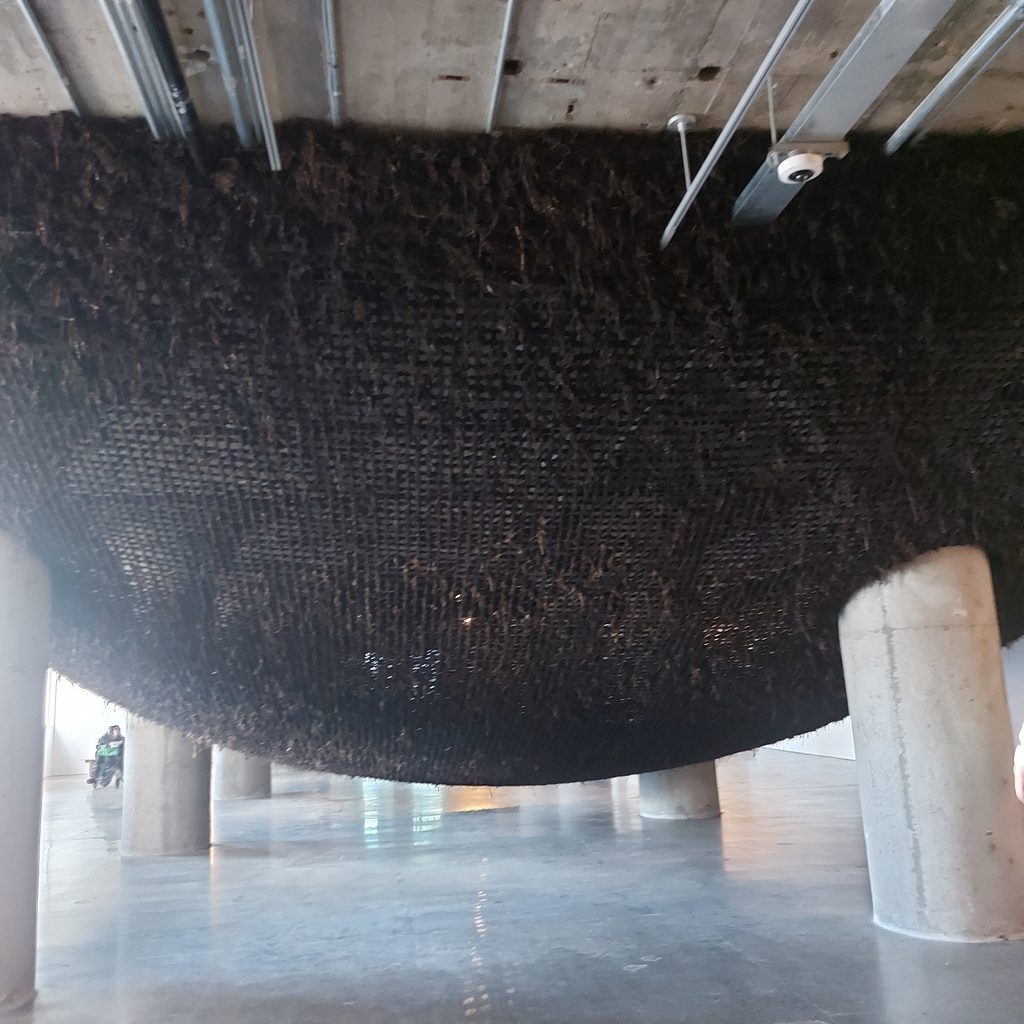
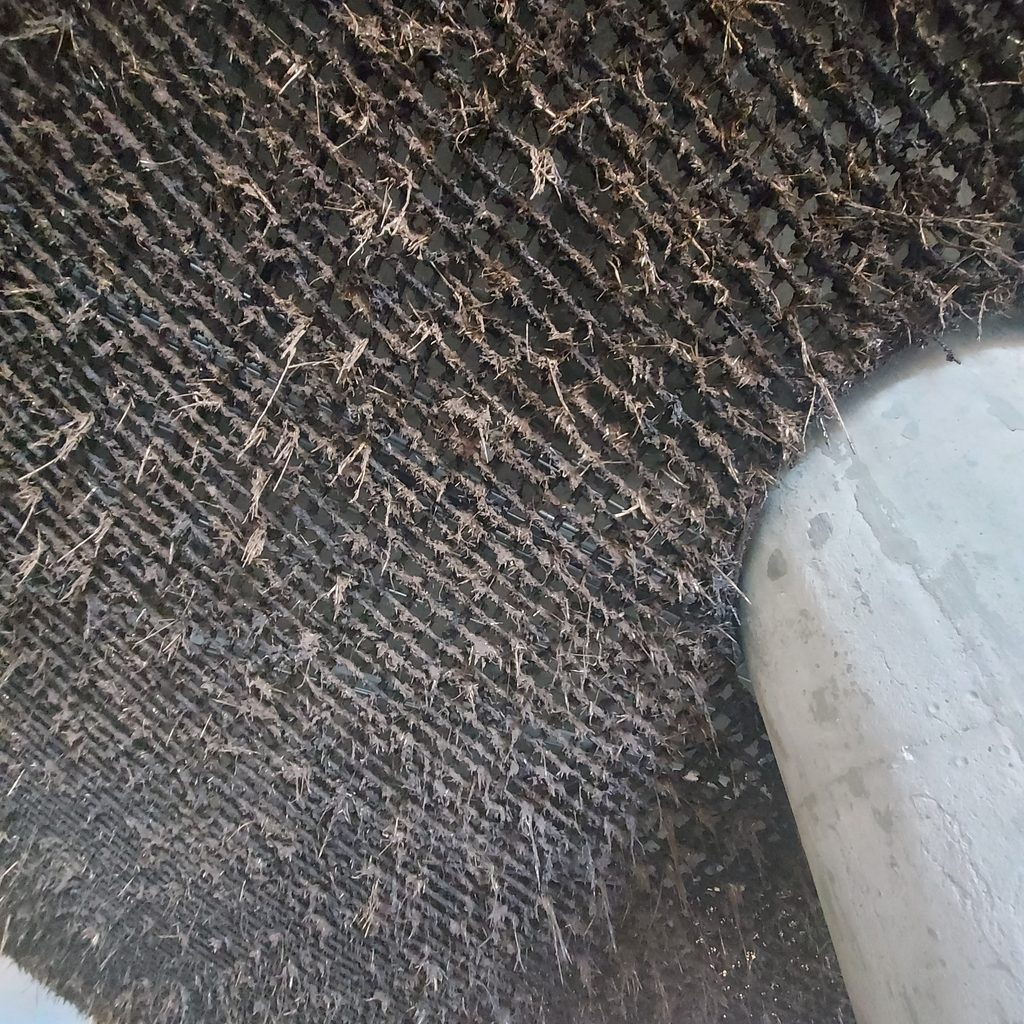
Visiting MOCA Toronto and experiencing Delcy Morelos’s massive installation Ombligo in person was striking because of its sheer scale. The work completely commands the room, and walking all around it allowed me to take in its incredible detail and wonderful, earthy scent. Just seeing it up close gave me a strong sense of wonder and a deep appreciation for the amount of time and physical labour it must have taken to build something of that magnitude.
This installation connects deeply to my own studio research and performance practice, particularly in how it handles physical presence, duration, and sensory interaction. In my current performance projects, I am exploring the concept of pushing an action to its maximum potential—such as capturing random objects and recording every single instance of them from multiple viewpoints. Interacting with Ombligo felt very similar to that studio process because it proved that art doesn’t have to be static, flat, or small to carry meaning. Instead, I learned that a piece can be dynamic, multisensory, and interactive, and that experiencing a work with all your senses gives you a much deeper understanding than just looking at something from a distance.
Rouzbeh Akhbari
Of Wool and Diesel
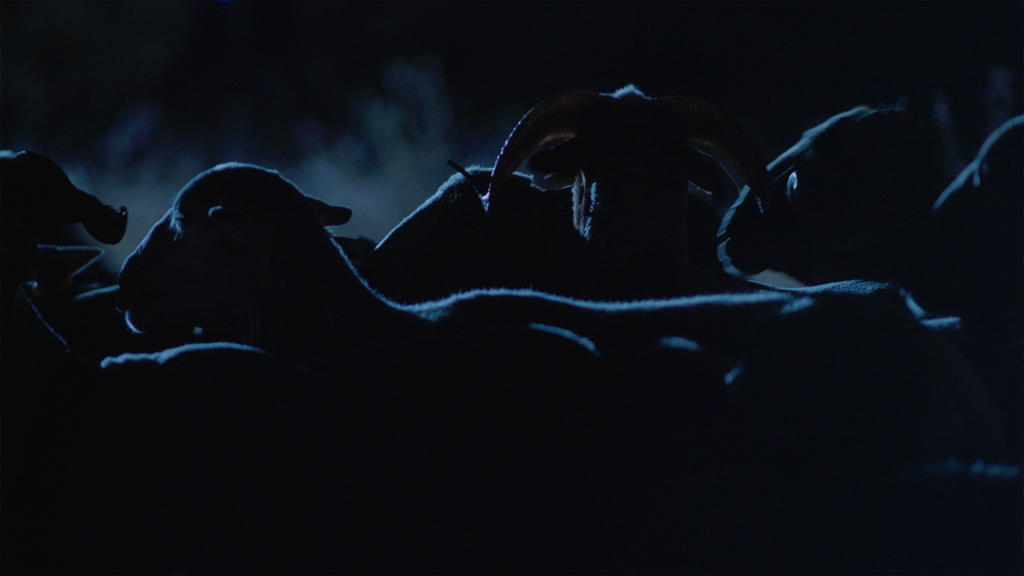
When I visited the exhibition at Mercer Union, Rouzbeh Akhbari’s multi-media installation Of Wool and Diesel was really engaging because all the different elements came together. I liked how the handheld postcards you could take, the video projection, and the handcrafted wool rugs on the floor worked together to fill the space and fit the overall scene. For me, the atmosphere and environment of the pieces matter just as much as the artworks themselves, and this installation did a great job of making the whole room feel cohesive.
This approach relates strongly to my own research interests and studio practice, especially around video work, installation design, and environmental presentation. I absolutely loved the videography, particularly the specific scenes where the camera was attached right to the side of a boat with water spraying against it, the top-down views of sheep eating from a trough, and the 3D video animations. Studying how Akhbari builds a complete spatial and visual experience taught me a lot about how video art doesn’t just exist on a screen, but can be deeply integrated into the physical space and mood of a room to shape how a viewer takes it all in.
Audio Art
Echoes of Silence ——- Grace Gaebel





Source: Xeno-canto
Critique
For this audio project, Echoes of Silence, my primary inspiration came from Joel Sartore’s Photo Ark, translating his mission of documenting endangered species before it’s too late into an auditory medium. Sourcing recordings from Xeno-canto, I wanted these bird calls and wing flaps to act as fragile pieces of evidence—reminding us of what we are at risk of losing forever.
I chose to let the audio gradually fade into complete, heavy silence. I applied my piece to Pauline Oliveros’ principles of deep listening; I wanted listeners to physically feel the suffocating weight of emptiness when the sounds disappear, as well as the overwhelming presence when all their calls and songs combine together, highlighting that once these species are gone, they cannot be brought back.
In a physical gallery setting, I envision a multi-room installation. Visitors would first encounter isolated listening booths dedicated to individual birds before moving into a separate, highly resonant room where the full piece echoes and pans all around them. This spatial design forces the audience to slow down, confront the absence, and truly listen to the gravity of extinction.
Reflection Questions: Pauline Oliveros
In a chaotic, labour-intensive society where everyone is often self-centred, many people choose to listen only passively because they believe their time shouldn’t be wasted. What Pauline Oliveros wants us to do instead is actively and deeply listen: to pause, take in our surroundings, reflect, and escape from the busy world. By approaching sound as a form of play and research, deep listening changes our understanding of connection, communication, and creativity.
Deep listening changes our understanding of connection and creativity by the way we are able to interact with sound in a space and feel every part of it. Whether it’s deep rumbling vibrations we can feel in our chest or ambient surrounding noise coming from all directions. It shows that creativity is endless in terms of what you can do and express with sound in space.