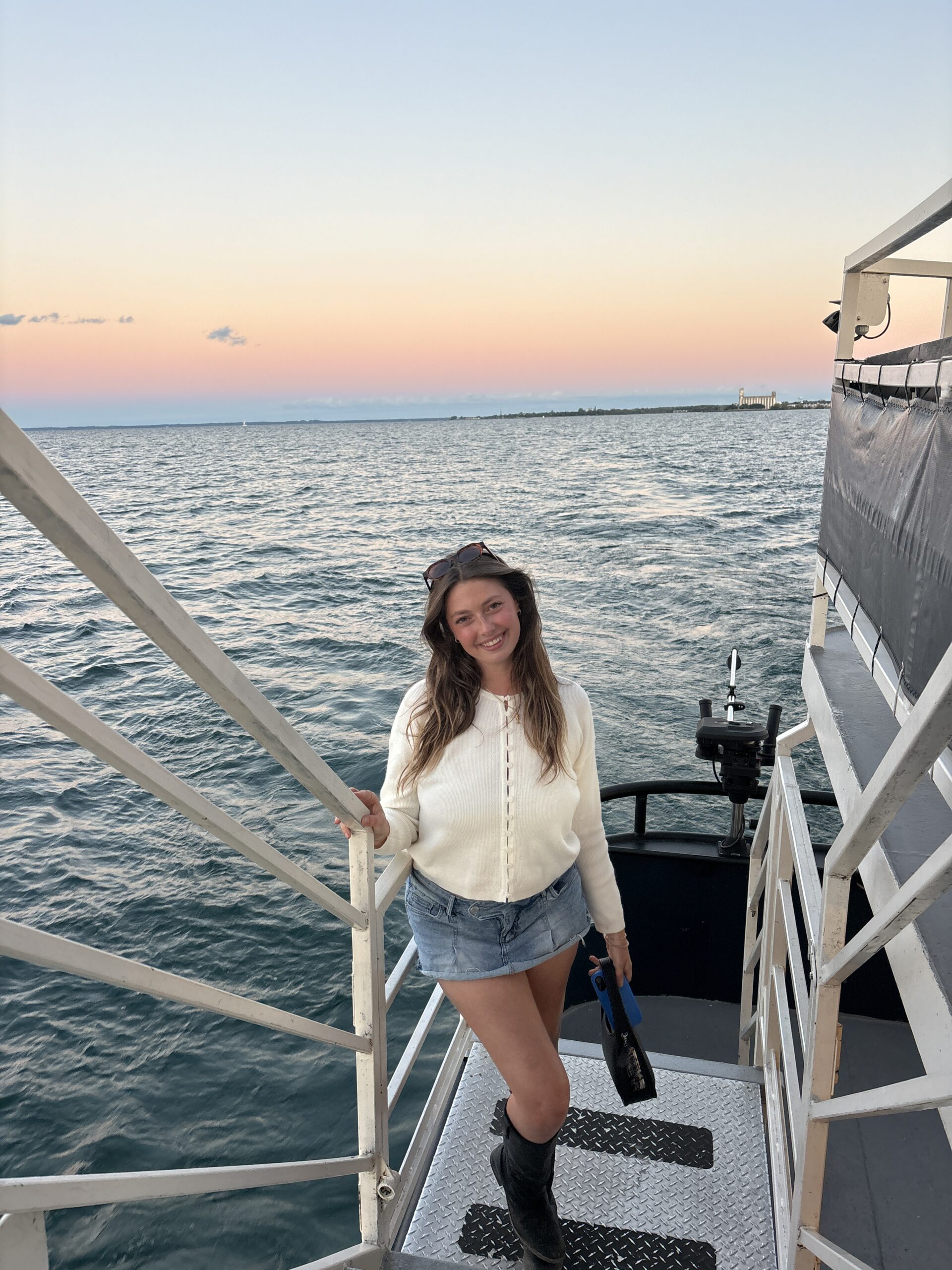
A little about me! I am in the Creative Arts, Health and Wellness program, I love the summer time, you will always find me on the water! I want to become a High school art teacher after I finish this program & a little fun fact I have a diploma in Interior Design from Fanshawe collage!
ONE KILOMETRE
At first, I thought about a kilometre as simply a measurement, but I wanted to explore it in a way that felt more personal. Since I listen to music whenever I walk, I decided to use songs as a way of measuring my kilometre. I also created a cardboard bouquet to give the project a physical form.
How I Did It
I walked exactly 1 kilometre while listening to music. I didn’t create a playlist beforehand. Instead, I let the first song I chose determine what played next. As I walked, I tracked the distance covered during each song.
The songs became different sections of the kilometre:
- Cardigan – 279.7 metres
- Wildest Dreams (Taylor’s Version) – 256.4 metres
- All of Me – 313.5 metres
- Let Her Go – 150.4 metres
Together, these songs added up to exactly 1 kilometre.
After completing the walk, I created a cardboard bouquet. Each flower represented part of the journey and became a physical reminder of the experience.
The Final Piece
For my final artwork, I created a YouTube video using an image of my cardboard bouquet and combined it with the songs from my walk. The total length of the video matches the total time it took for the songs that made up my kilometre.
Rather than showing the walk itself, I wanted the audience to experience the kilometre through sound and reflection. The bouquet acts as a visual record of the journey, while the music recreates the experience and emotions I felt during the walk.
What I Learned
What I learned is that a kilometre is not just a number or a distance on a map. It can be experienced in different ways. By measuring my kilometre through music, I started thinking about distance through time, emotion, and memory instead of just physical space.
The songs helped shape my experience of the walk, and the bouquet turned that experience into something I could see. The YouTube video brought everything together by combining the visual and audio parts of the project into one final piece.
In the end, my kilometre became a mix of sound, memory, movement, and making. Instead of simply measuring a kilometre, I transformed it into an experience that could be listened to and reflected on by other people.
This version better reflects what you actually ended up creating, rather than the original plan. It shows the evolution from the walk, to the bouquet, to the final video, which demonstrates your process and understanding of the project.
The link is posted below
Marina Abramovic’s
1. What are some of your first impressions of Marina Abramovic’s performance works?
My first impressions of Marina Abramovic’s artwork were that it was daring, bold, and very different from other types of art I have seen before. I felt that she was always trying to convey a deeper message to her audience rather than just creating something for people to look at. One thing I really admired was how fully she immersed herself in her work. She seemed completely committed to every performance and was willing to push herself physically and emotionally to get her message across.
Some of my favourite works were Imponderabilia, where two naked bodies stood in a doorway and visitors had to walk between them, and The Artist Is Present, where Abramovic sat across from strangers and connected with them through eye contact. I thought The Artist Is Present was especially powerful because it takes a lot of courage and strength to make yourself vulnerable in front of so many people. I also found Imponderabilia interesting because standing naked in front of that many people requires not just physical confidence but mental strength as well.
I think some of her performances could be seen as controversial. For example, some of her pieces involved self-inflicted pain, such as using a whip on herself. Viewers could see the pain she was experiencing, which can make people uncomfortable. However, I think that is also part of what makes her work powerful. The audience is not just watching art; they are experiencing those emotions alongside the artist. While some people may think her work goes too far, I believe that somebody has to push boundaries in order for art to evolve. If it wasn’t Abramovic doing it, then who would have?
2. What have you learned about features of performance art based on Abramovic’s work?
From watching the documentary, I learned that performance art is more about creating an experience than creating a physical object. The artist’s body often becomes the artwork itself, and the audience plays an important role in how the performance is experienced.
Some key features of performance art that I noticed in Abramovic’s work are vulnerability, endurance, audience participation, and authenticity. Abramovic constantly put herself in situations where she was emotionally and physically vulnerable. She also pushed herself to her limits, which showed a lot of endurance. In works like The Artist Is Present and Imponderabilia, the audience was not just observing the artwork but actually becoming part of it.
One quote that stood out to me was, “When you perform it is a knife and your blood, when you act it is a fake knife and ketchup.” To me, this means that performance art is real. The emotions, experiences, and sometimes even the pain are genuine. The artist is not pretending or acting as a character. Abramovic wants the audience to experience something authentic, and I think that is what makes her work so powerful.
3. Discuss the ways performance art resists many museum and commercial artworld conventions.
Performance art resists many traditional museum and art world conventions because it is not something that can easily be bought, sold, or collected like a painting or sculpture. A performance only exists while it is happening, which makes it difficult to preserve.
Abramovic has found ways to work around this challenge by documenting her performances through photographs, videos, documentaries, and museum exhibitions. This allows people who were not there to still learn about and experience her work.
Personally, I think these compromises add to her work rather than take away from it. Without documentaries and museum exhibitions, I probably never would have discovered Abramovic’s work in the first place. Even though watching a performance on a screen is different from experiencing it in person, I still think it helps preserve the artwork and allows more people to connect with it. I think Abramovic has done a good job balancing the temporary nature of performance art with the need to share it with future audiences.
New York Times Reflection
1. Describe the work discussed in the article and the unique challenges, as well as the unique gifts, that come with attempting to archive personal movements.
The article talks about Katja Heitmann’s project Motus Mori, which collects people’s everyday movements and habits. Instead of using videos or photos, dancers learn the movements and keep them alive by performing them. The project includes things like the way people walk, fidget, stand, sleep, or react when they’re nervous.
What I found most interesting is how hard it is to save something as personal as movement. A lot of these habits happen without people even noticing, so they can be difficult to capture. Since the dancers rely on memory, there’s also a chance that some movements could change over time. At the same time, I think that’s what makes the project special. It saves little parts of people that can’t really be captured in photos or documents. These small movements can show someone’s personality, feelings, and experiences. It made me realize that being human is about more than information and data. Even the smallest habits can tell a story about who we are.
2. Discuss one or two examples of movements in the article. What strikes you about them?
One movement that stood out to me was Mahat Arab’s habit of cracking the knuckles on his left hand when he feels anxious. This caught my attention because I think everyone has some kind of nervous habit. We usually don’t think of these habits as part of our identity, but they can actually say a lot about us. It also made me think about the little things I do without realizing it.
Another example was Chandra Merx’s habit of raising their eyebrows when rushing or lost in thought. I usually connect raised eyebrows with being surprised, so it was interesting to learn that the same movement can mean something different for someone else. It made me realize that body language can be very personal, and the same gesture can have different meanings depending on the person.
3. Describe the habitual movements, unconscious gestures, tics, etc. of 3 people you know well.
One person I know is always tapping their foot when they are concentrating. Their legs bounce under the table, and they lean forward when they’re focused on something. Their faces usually look serious while they’re working. To me, it seems like the movement helps them concentrate and keep their mind active.
Another person I know always plays with their hair when talking. They keep tucking it behind their ear without even noticing they’re doing it. They also tilt their head when listening to people. These little movements make them seem interested in the conversation and easy to talk to.
The third person often crosses their arms when they’re thinking about something. They become really still except for small changes in their posture. Their eyebrows pull together while they think. Some people might see crossed arms as a negative thing, but because I know them well, I see it as a sign that they’re carefully thinking things through.
After reading this article, I started paying more attention to the little movements people make every day. They might seem unimportant, but they can reveal a lot about someone’s personality and the way they move through the world. What I liked most about Motus Mori is that it focuses on things people usually overlook and shows that even small gestures can be meaningful.
Field Trip Blog Post
Location: Art Gallery of Guelph (AGG)
For this field trip, I visited the Art Gallery of Guelph (AGG), located beside the University of Guelph campus. While exploring the gallery, two artworks stood out to me: Nadia Myre’s Nothing by Accident (2024) and Evan MacDonald’s Honey Harbour, Georgian Bay (1953). Although these works are very different, both created meaningful experiences and encouraged me to reflect on history, memory, and personal connection to place.
Artwork 1: Nothing by Accident (2024) by Nadia Myre
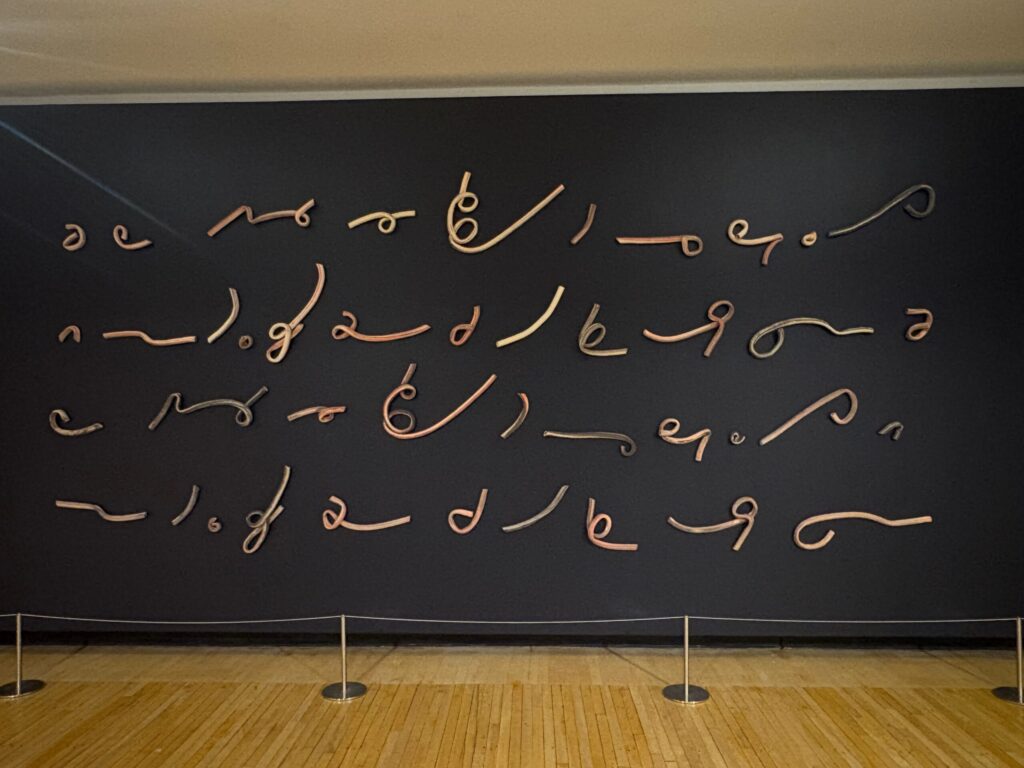
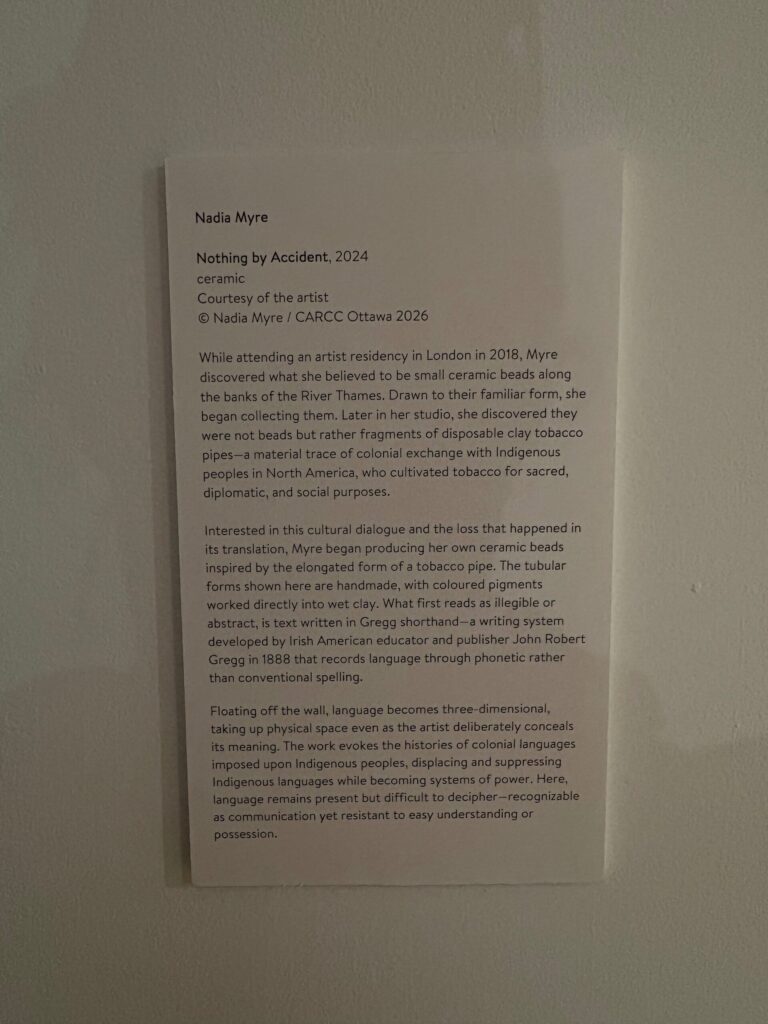
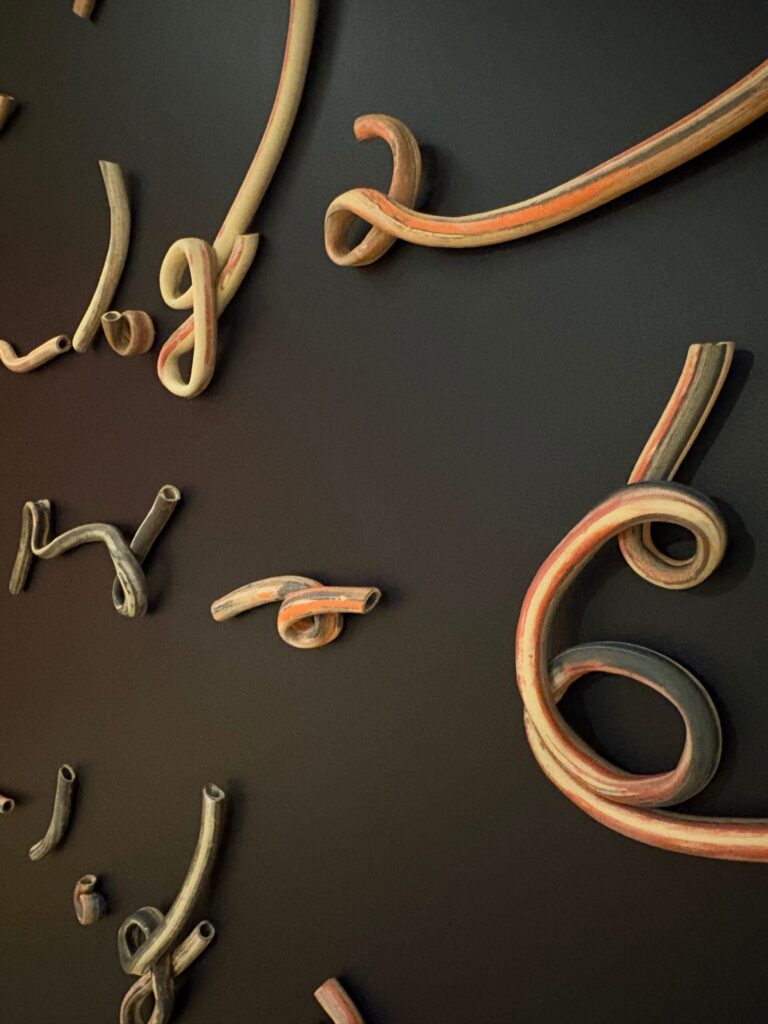
The first artwork that caught my attention was Nothing by Accident. What initially drew me to the piece was the incredible amount of detail and the unusual way it was displayed across the wall. At first, I did not know what the installation was made of, which made me even more curious. The ceramic forms stretched across the dark wall like a language or code, and I found the placement of each piece especially interesting. Every shape seemed carefully positioned, creating a sense of movement and rhythm throughout the installation.
As I stood looking at the artwork, I kept wondering what the artist was thinking about while creating it. I thought about where the inspiration came from and what each individual form might represent. After reading about the artwork, I learned that it explores language, colonial history, and Indigenous experiences. Understanding the meaning behind the work made me appreciate it even more.
What I noticed most was that the artwork looked like writing, even though I could not read it. This made me think about how language can connect people while also creating barriers to understanding. I learned that art does not always need to be immediately understood to be meaningful. Sometimes the experience of questioning and reflecting is what makes the artwork powerful.
This work is relevant to my own interests because I am interested in how art can communicate ideas and emotions. I enjoy art that encourages viewers to think deeply and create their own interpretations. Nothing by Accident showed me how materials, placement, and form can tell a story without relying on traditional images or words.
Artwork 2: Honey Harbour, Georgian Bay (1953) by Evan MacDonald
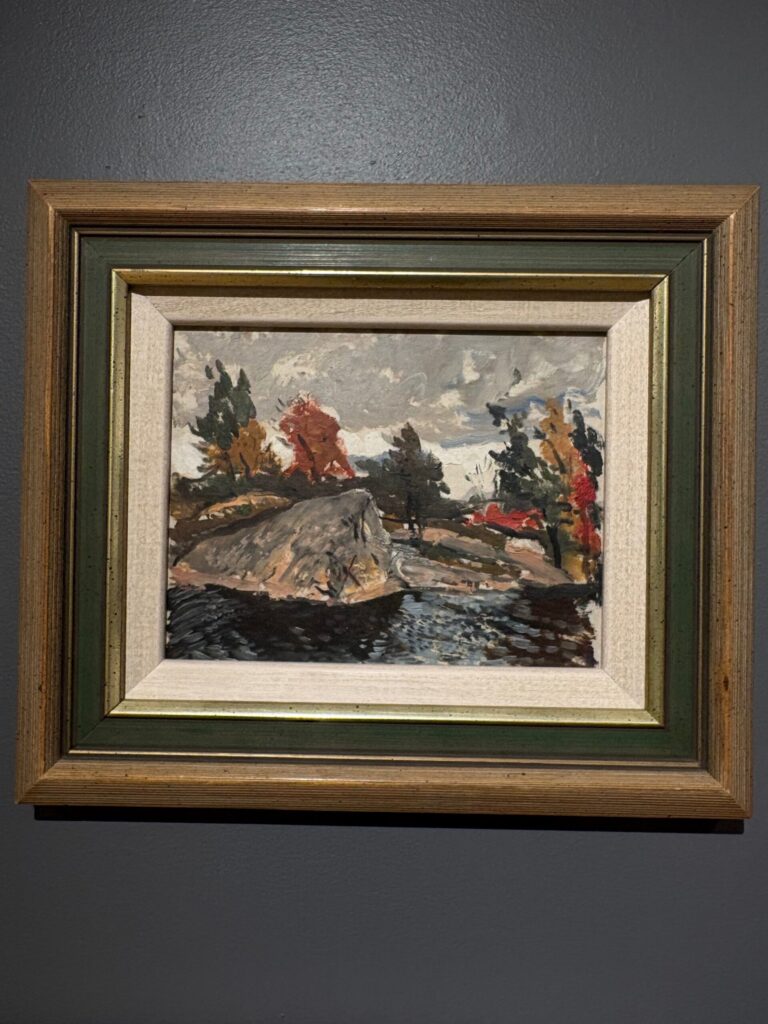
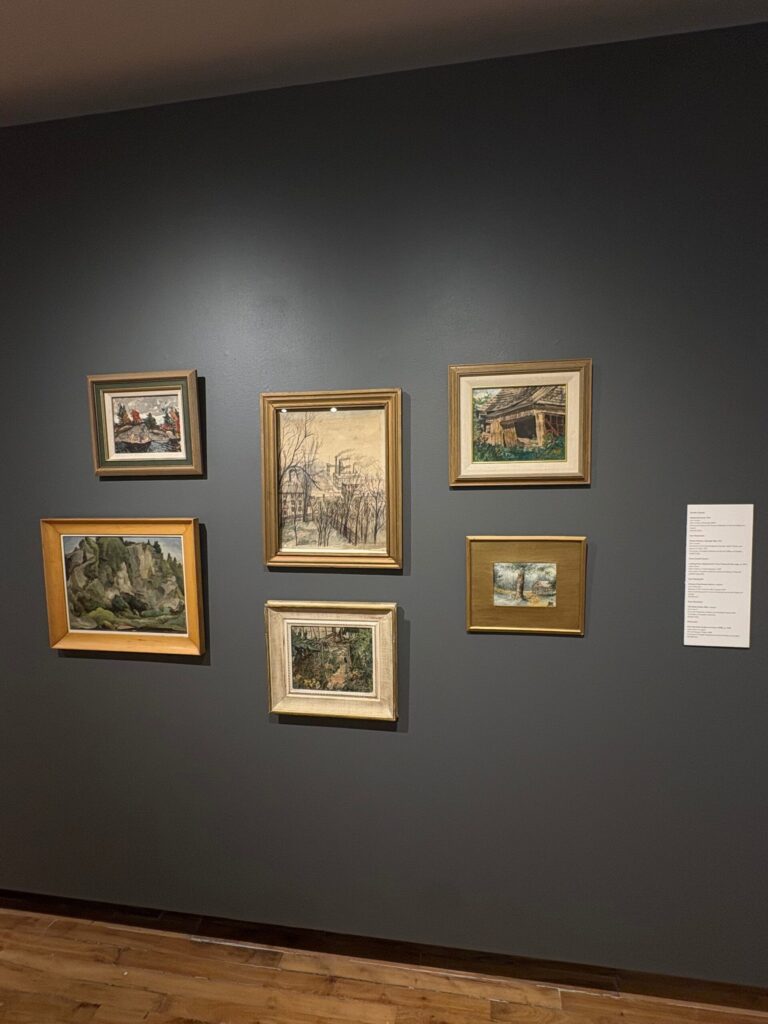
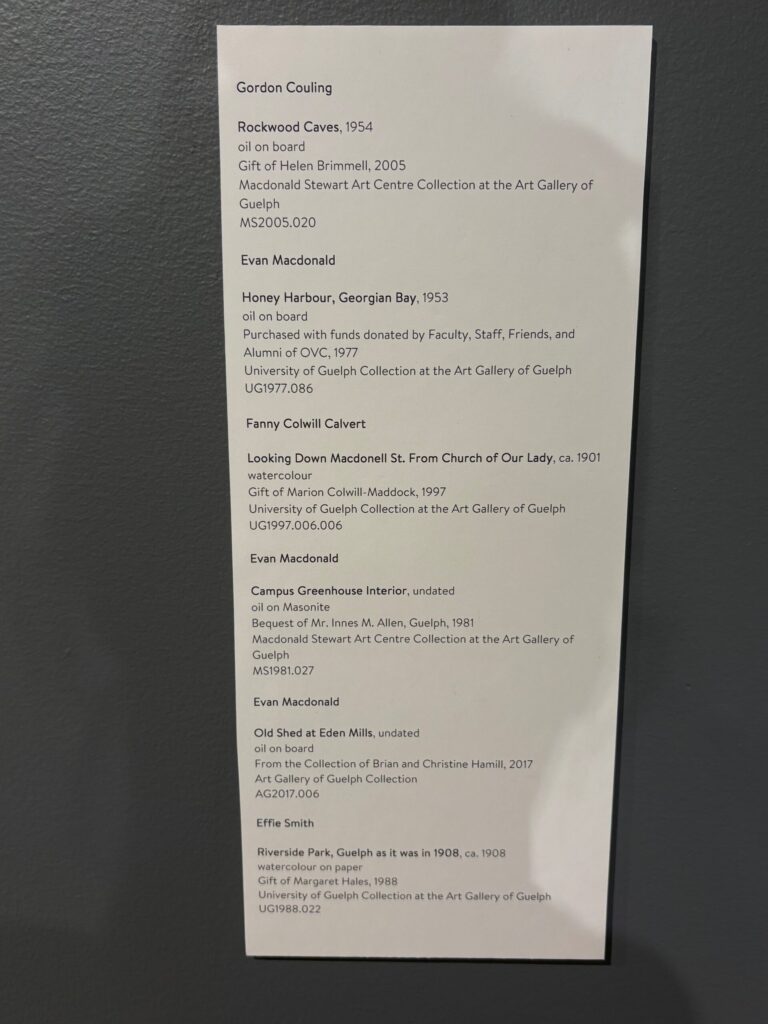
The second artwork that caught my eye was Honey Harbour, Georgian Bay. I discovered this painting near the end of my visit on the second floor, where several landscape paintings were displayed together. As soon as I saw it, something about it felt familiar.
The painting immediately reminded me of Honey Harbour, a place I have visited many times while spending summers with friends and family friends at their cottages. Looking at the painting brought back memories of being out on the water, sitting in a small fishing boat with my lure dragging behind me. I remembered the feeling of the wind in my hair and spending long summer days enjoying nature.
What stood out to me most was the rocky shoreline. The rocks, trees, and water looked very similar to what I remember seeing during my visits. The moment I looked at the painting, I felt a strong sense of comfort and familiarity because it represented a place I had personally experienced. It was almost like looking at a photograph from one of my favourite memories.
This artwork is relevant to my own interests because it demonstrates how art can preserve places and memories. It reminded me that landscapes are more than just scenery. They hold personal experiences, emotions, and stories. Even though the painting was created many years ago, it still connected with my experiences today.
From this artwork, I learned that art can create powerful emotional connections. A simple landscape painting was able to transport me back to meaningful moments spent with people I care about. It reminded me how strongly places can become connected to memories.
Reflection
My visit to the Art Gallery of Guelph was a valuable experience because both artworks encouraged me to think in different ways. Nothing by Accident challenged me to think about language, history, and communication, while Honey Harbour, Georgian Bay connected me to personal memories and experiences.
The biggest takeaway from this gallery visit was that art can have different meanings for different people. Some artworks teach us about history and culture, while others help us reconnect with important memories and places. Both pieces left a lasting impression on me and showed me how art can inspire curiosity, reflection, and emotional connection. Through this experience, I gained a greater appreciation for how artists communicate ideas and how viewers bring their own experiences and interpretations to a work of art.
One Feat 3 Ways
Reflection
For this project, our concept was The Sound of Movement. Our feat focused on the connection between music and movement. We invited participants to walk into the frame, put on a pair of headphones, and dance or move freely to music that only they could hear. When the music stopped, they would walk out of the frame and the next participant would enter. An important part of our concept was that the audience could not hear the music. Instead, viewers only heard the sounds created by the body and movement, such as footsteps, clothing shifting, and other subtle noises. This encouraged the audience to focus on the gestures and movements of each participant rather than the music itself. I wanted viewers to imagine what song each person might be listening to based on the way they moved. The project explored how movement alone can communicate personality, rhythm, and energy.
Creating the project in three different formats helped me understand how the same idea can be transformed through different approaches to video art. The one-shot video focused on performance, framing, and allowing the action to unfold naturally without editing. For our sequence video, we wanted to build on the feedback we received during our critique. We were encouraged to use more editing techniques, so we experimented with a variety of tools in DaVinci Resolve. We used split screens, mirrored effects, trimming, picture-in-picture phone frames, and additional footage that was not included in the one-shot version. We wanted the final edit to feel fun, energetic, and visually engaging. The sequence reminded me of a Just Dance video or a dance music video because of its fast pace, colourful edits, and moments of comedic relief. For the rotoscope animation, Xavain drew the dancing character approximately 95 times, and we turned the drawings into a stop-motion animation. We also used cropped photographs of each participant and arranged them into a colourful pop-art grid inspired by Andy Warhol. I learned that repetition and looping can make an ordinary gesture feel much more interesting and expressive.
One of the biggest challenges we faced was during filming. Our first recording was filmed vertically and used a different performer, which did not fit the assignment requirements, so we had to reshoot the project. Although this was frustrating at first, it ultimately improved our final result. We found two new participants, improved our lighting, adjusted our focus, and received help with our camera setup. We were also able to film using two different cameras, which gave us more options when editing. Looking back, I think one of our greatest strengths was our willingness to experiment and respond to feedback. If I were to do the project again, I would spend more time planning camera angles before filming and continue exploring more advanced editing techniques. Overall, this project changed the way I think about video art. I learned that even a simple action can become meaningful when it is repeated, edited creatively, and viewed through different formats. It showed me how sound, movement, performance, and looping can completely change the way an audience experiences a gesture.
Audio – Airport