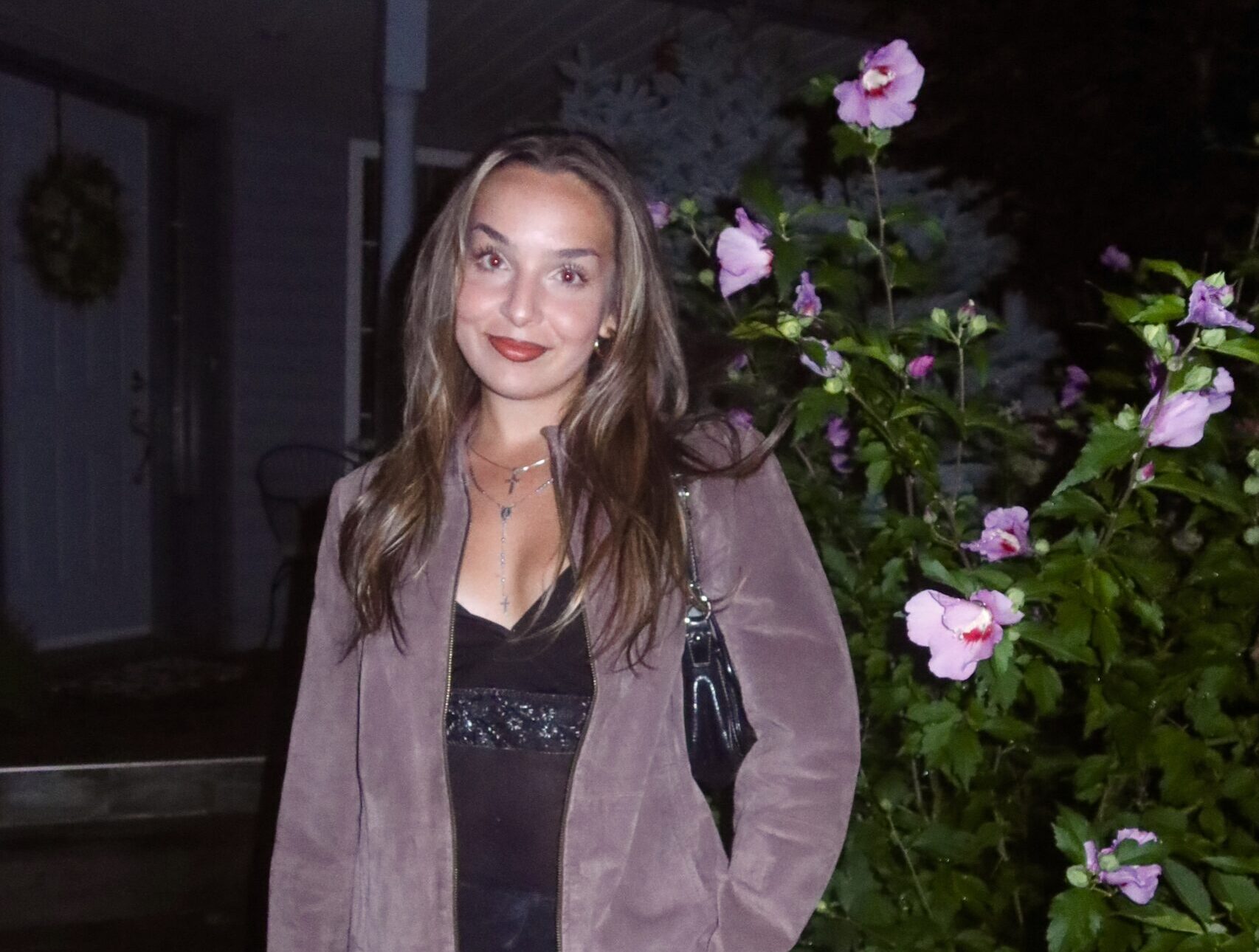
About Me
- Main practices: Oil painting, photography, fashion and journalism
- My birthday is March 9, 2004
- I started Monarch Magazine in my third year, and just launched it as a business! My goal is to grow it into a large scale media platform that offers vintage and sustainable brands the same exposure that large companies receive from mainstream fashion magazines. We are also starting to sell our own curated vintage collections 😉
- Graduating June 2027
- Currently commuting, but lived in Guelph for three years
Why experimental?
As a fifth year student taking this class, admittedly I’m taking it because I need to graduate. I have practically no experience doing experimental work, so while it’s not necessarily something I gravitate to, I’m taking it as a challenge to expand my horizons. I’ve been feeling a bit stagnant in my studio work and have been looking for new opportunities to experience creative breakthrough, and so I feel that this is going to be a great way to achieve that.
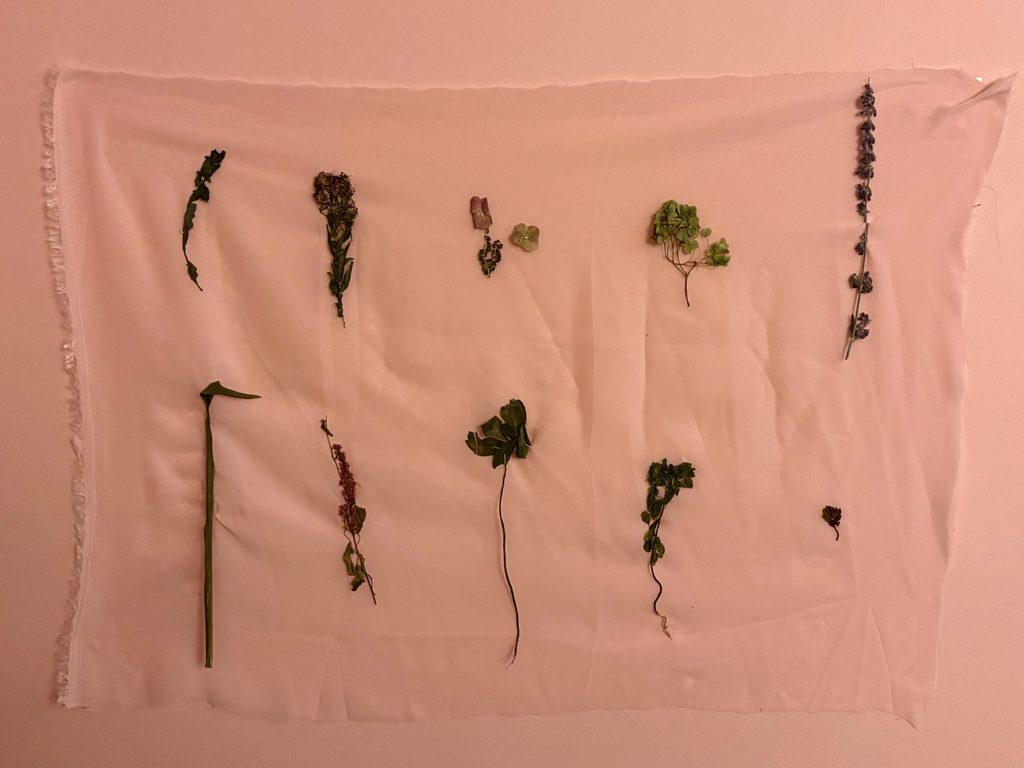
Spending time in nature feels like the default habit of maintaining a peaceful life. Most of my creative inspirations and personal breakthroughs have occurred in solidarity with plants and trees and sounds in replacement of spoken word. Florals have been a long-standing staple in my practice—out of all the manufactured beauty that we’re sold in the material world, nature possesses a sort of beauty that can’t be measured up to. I find myself using flowers as markers of time, distance, location, and experience. For this assignment I took a walk through the arboretum, and every 100 metres collected a flower or plant that helped me keep track of the journey. At the end I pressed the plants, and sewed them into a square of sheer pink chiffon material equally as delicate. Seeing these plants onto one small square of fabric helps put into perspective how small our experiences are, how fleeting the moment remains, yet their beauty remains significant to the overarching picture.
I initially had the idea for the assignment a few days before my Great Grandmother passed away. It took a while for me to realize the irony of the concept, as it gave clarity to, in very simple terms, this struggle of time passing that I didn’t realize I was at odds with. Every journey has a beginning and an end point, and the cycle continues regardless of how we feel about it. What is in our control is our perspective, and it’s important that in our (hopefully) 80 years of life, that we pay deeper and greater attention to the flowers rather than the fact that they will inevitably come to an end.
Q. 1
What are some of your first impressions of Marina Abramovic’s performance works, based on the documentary? Use an image/example of one or two works to describe aspects you admire, and aspects you might agree are problematic?
I really didn’t think I’d have much to say about Marina’s work. Over the years I’ve encountered many of her pieces, with only a small handful being remarkable enough for me to care for. Without context I was unimpressed, though the documentary has revealed that I have much more in common with Marina than I would’ve imagined. Despite our very different approaches to practicing art, I feel a certain closeness to her based on shared heritage and similarities in upbringing.
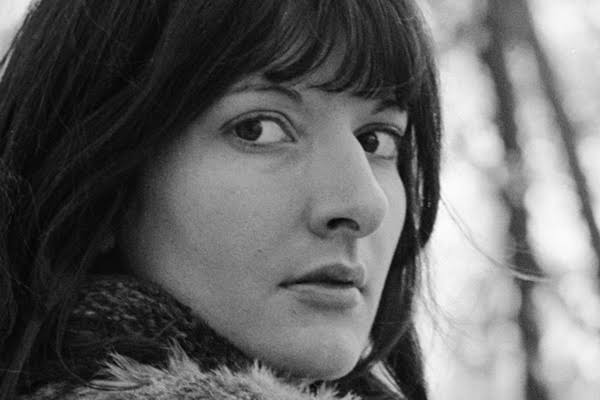
Growing up ex-Yugo, it’s often difficult to relate to people who were not raised within a similar culture. Hearing the simultaneous pain and appreciation she has for her upbringing is a staple of Balkan reminiscence, and one that feels like a read on my own life. There aren’t many famous artists from that part of the world, and so it is quite inspiring to see someone who grew up with very similar and suffocating cultural expectations, do something incredibly unorthodox.
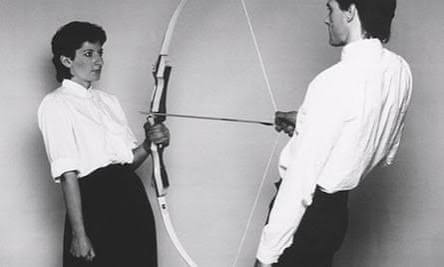
There’s one piece in particular that elicits both positive and negative emotions for me. The 1975 Thomas Lips performance where she slices the pentagram into her lower stomach and Ulay kisses the wounds I find to be equally disturbing and tender. Watching the blood pour out of her open wounds is a difficult watch for me—personally speaking, I don’t deal with gore well. The self-harm element is quite gruesome, even for performance art. It can be incredibly triggering for those who struggle with self-harm and suicidal ideation, and I don’t think it’s a matter that should be depicted in art so freely.
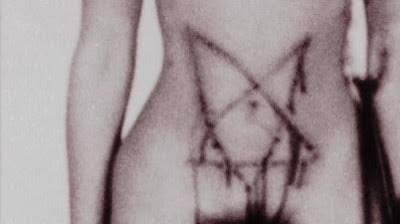
Regardless of the context, publicly slicing into your skin and having someone come and kiss it better is irresponsible—there are people who would see that and perceive it as romantic, something to strive for. In reality, it is quite twisted and should not be normalized as a way of achieving “raw” and “real” intimacy.
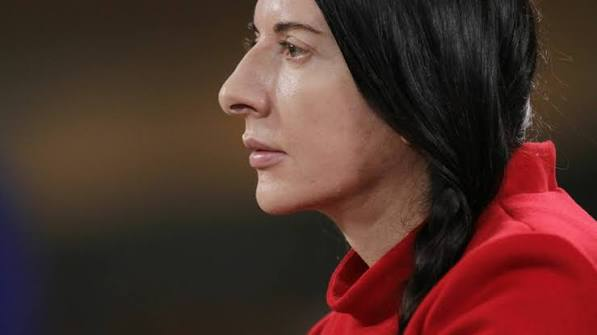
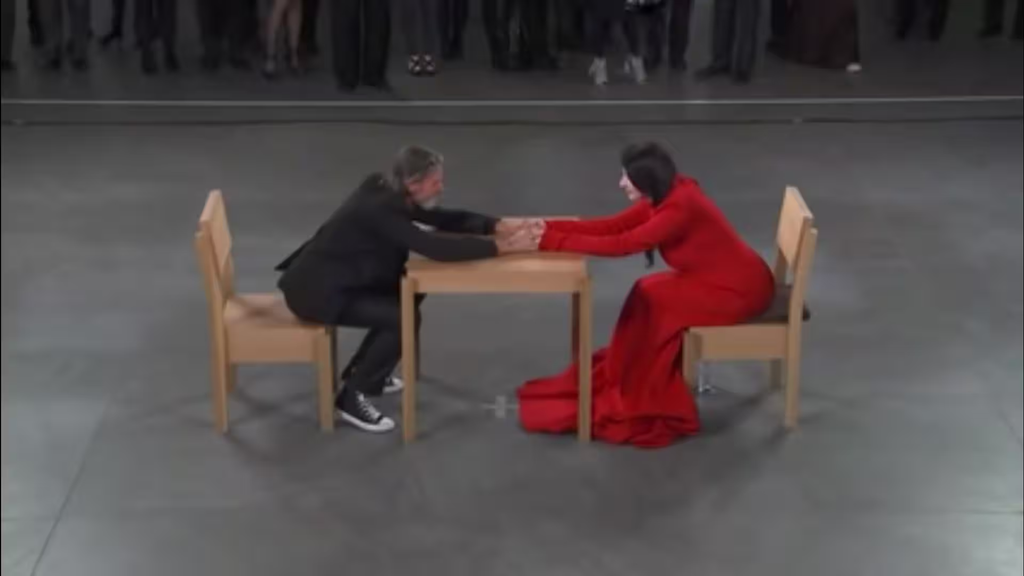
However, I do appreciate the relationship Marina forms with her audience through her works, especially The Artist is Present. It is a beautifully raw exhibition that forges a relationship between Marina and her spectators, and I cannot think of another artist capable of such a feat.
Q. 2
What have you learned about features of performance art based on Abramovic’s work? Name a few key features according to her examples. Include an image to illustrate. Consider her quote: “When you perform it is a knife and your blood, when you act it is a fake knife and ketchup.”
I watch Marina perform her art, and it is evident that the experience is raw. There is one take and no option for a redo—everything is unfolding before the eyes of the viewer to bear witness to the process of creation. While theatre maintains similar elements, the actor approaches the performance by putting on someone else’s skin, versus claiming full ownership as the person initiating the performance.
Oftentimes in theatre there is a distance between the actor and their character. It is obvious to the viewer that their behaviours and mannerisms are exaggerated, out of character, and do not entirely belong to them. While performance art is also exaggerated, the mechanisms feel intrinsic to the artist conducting them. It is a form of expression that comes from deep within, reflecting the artist’s inner world outward via its methodology.
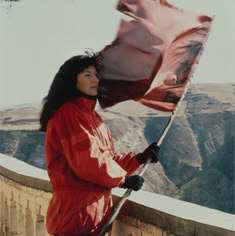
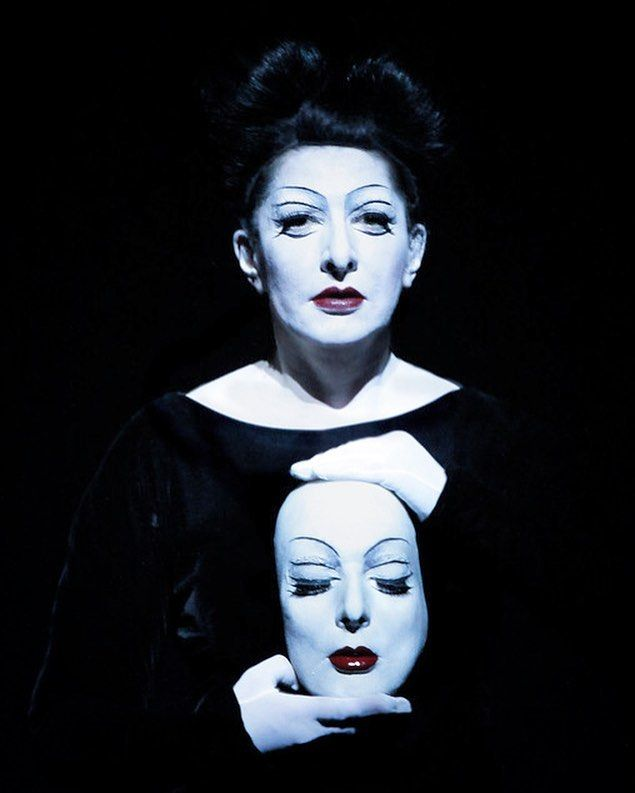
I see this in the immediate shift in Marina’s work from her Great Wall Walk to the 2011 performance of The Life and Death of Marina Abramović. The Great Wall Walk concludes Marina’s life of extremity and performance art categorized by its physically demanding exhibitions, and in this pivotal drama she officially waves goodbye to the life she lived with Ulay for twelve years. Her theatre performances are without the physical torture and personal sacrifices that were a longtime staple in her performance art; though eventually she resumed with the vulnerable performance-art approaches, they never featured the same gore and physical hardship that her early works did.