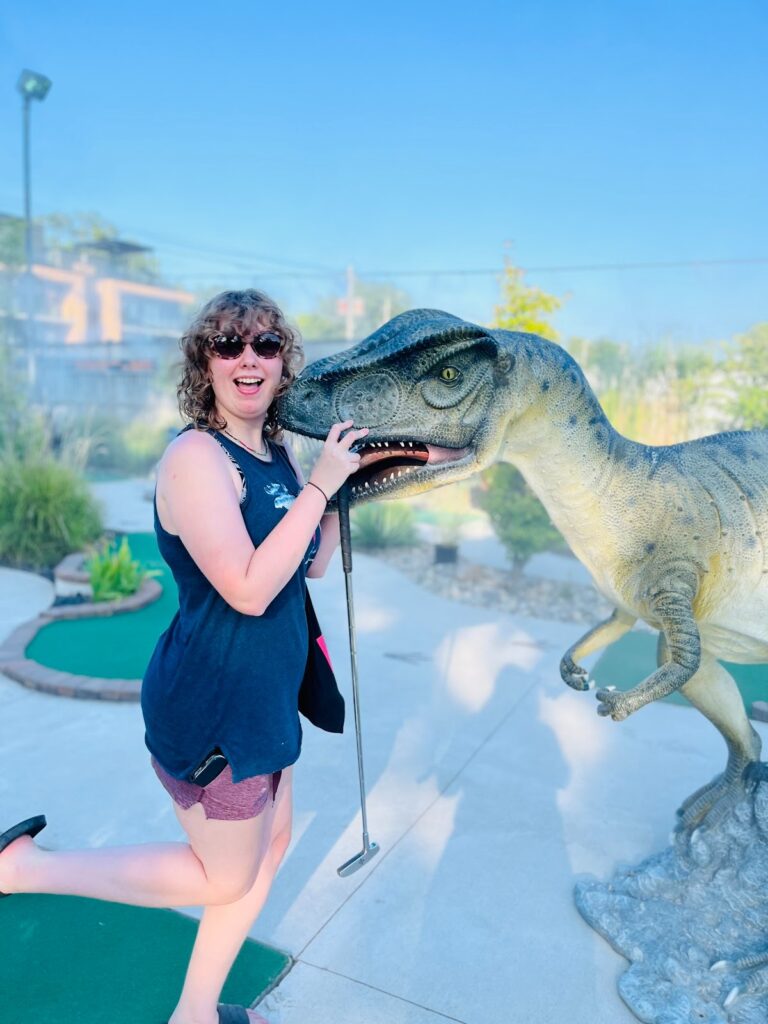
Hi, I’m Audrey a second-year studio art major on the varsity fencing team. I love doing sports like swimming or skiing also I have two cats.
Why did you decide to take this program? What do you hope it helps you do or become?
The reason why I chose Guelph’s program is firstly because it was recommended to me to several people, one being my high school art teacher and an artist I know who went here and told me I would be a good fit for me. The program allows me to continue pursuing art along with other academic studies like history which I find is necessary to gain a more well-rounded education but also just because I like learning different things. Additionally, although there are programs like Guelph, I could have gone to I found the community like atmosphere I felt from this place which I found welcoming. I hope this program eventually allows me to get a better understanding of what I want to become in the future and to get a BA, so I have more options for my future.
The Artist is Present Documentary
What are some of your first impressions of Marina Abramovic’s performance works, based on the documentary? Use an image/example of one or two works to describe aspects you admire, and aspects you might agree are problematic?
Some of the first impressions I got from the documentary on Abramovic’s performance works made me uncomfortable and I felt several of her works made me feel sick. A large amount of nudity is a part of her performance art which makes me feel uncomfortable seeing but the part of her art that makes me feel the most uncomfortable is the violence and harm she puts herself through. The acts of violence that was shown being done to Abramovic to herself and by others makes me feel extremely disturbed at the actions. While it’s definitely admirable that she’s tough enough to even do any of this stuff showcasing human endurance. One of the pieces of Abramovic that I find worrying is her performances in the Rhythms (1973-74) where these specific pieces brought physical harm to herself to do. In Rhythm 10 she plunged a knife between her fingers only stopping after cutting herself 20 time while in Rhythm 5 she lay in a wooden star that was set in fire where she eventually passed out due to a lack of oxygen.
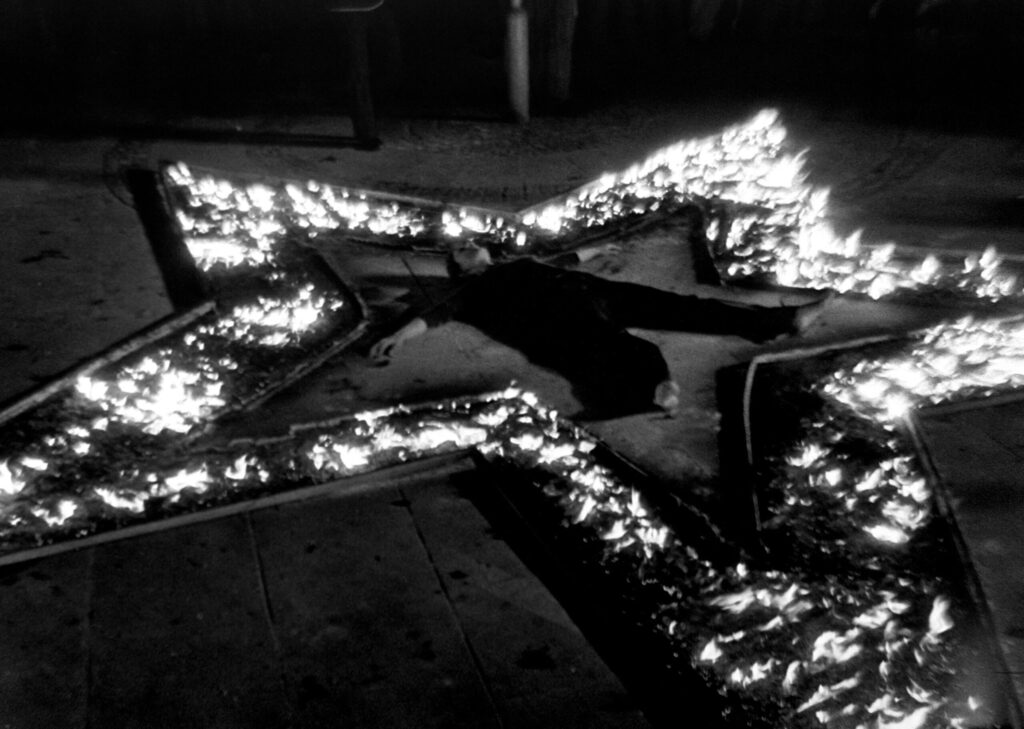
In Rhythm 0 Abramovic laid out 72 different items for the members of the audience to use any of these objects. Some of the items provided were items like a pen, bell, rose, bandages which are relatively harmless but other items were chains, saw, axe, and a loaded gun. While the beginning of the performance started relatively tame though still something I find to be inpatriate it quickly turned more and more violent,
“When a loaded gun was thrust to Marina’s head and her own finger was being worked around the trigger, a fight broke out between the audience factions.” – Mc Evilley
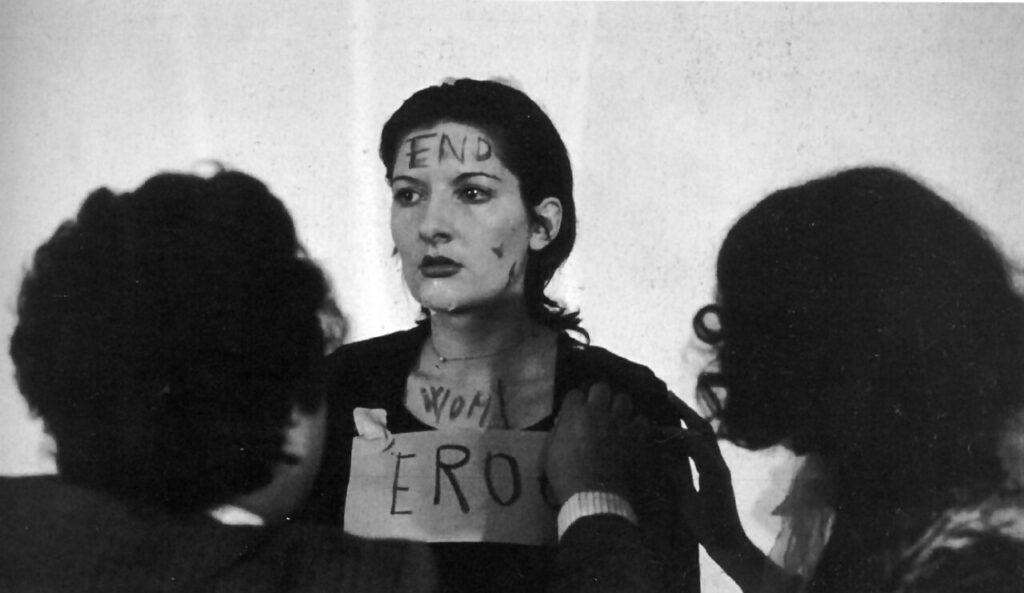
What have you learned about features of performance art based on Abramovic’s work? Name a few key features according to her examples. Include an image to illustrate. Consider her quote, “When you perform it is a knife and your blood, when you act it is a fake knife and ketchup.”
To me this quote means that what Abramovic work is the real connection between the audience and herself as well the real pain and discipline she uses to create these performances. That performance art should be real no using fake blood or knives like in acting where the audience knows everything is performed. While in performance art it’s supposed to bring out a real sense of discomfort that the Abramovic is could bring real harm to herself in the process of the performance. I think a really good example of this is the pain Abramovic had to endure for The Artist is Present performance where people were able to genially connect with her in a real way that wasn’t just superficial and performance.
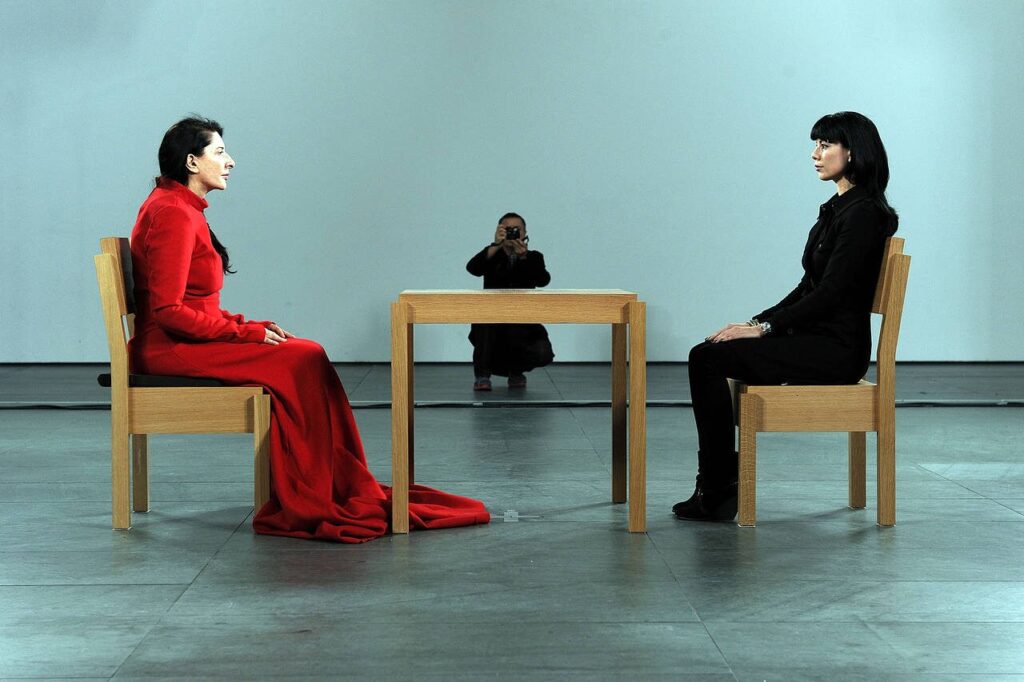
Discuss the ways performance art resists many museum and commercial artworld conventions. How does Abramovic solve/negotiate some of these challenges, and do you find these compromises add to, or undermine the ideas at play in her work?
Performance art pushes the boundaries of what has been considered art. Usually art is something physical that can be displayed in art museums however with performance art usually requires immediate interaction with the audience which questions the conventional way art has a physical object. Performance art asks the audience to sometimes even become a part of the art which can be seen in performance. Abramovic is able to do this with her audience, challenging them to interact with her art even when it makes audiences uncomfortable. However, she also is able to work with these museums by documenting her performance art through videos allowing a much wider audience able to experience her art.
1 Kilometer Project
The Kilometer Hunt
For this project I wanted to focus on something that I could do physically, and my initial ideas were sports related or perhaps to make something physical. But I decided that my ideas to make something physical would be too expensive and there would just be not enough time. I didn’t really like my initial sports ideas very much and could not think of how I would execute them. The idea I eventually decided to do was a kilometer walk of wildlife. Basically, the original idea was to look for animals and take pictures of them. Due to it being winter the chances of finding and spotting animals lessened, so I decided to look for any traces of life in the winter.
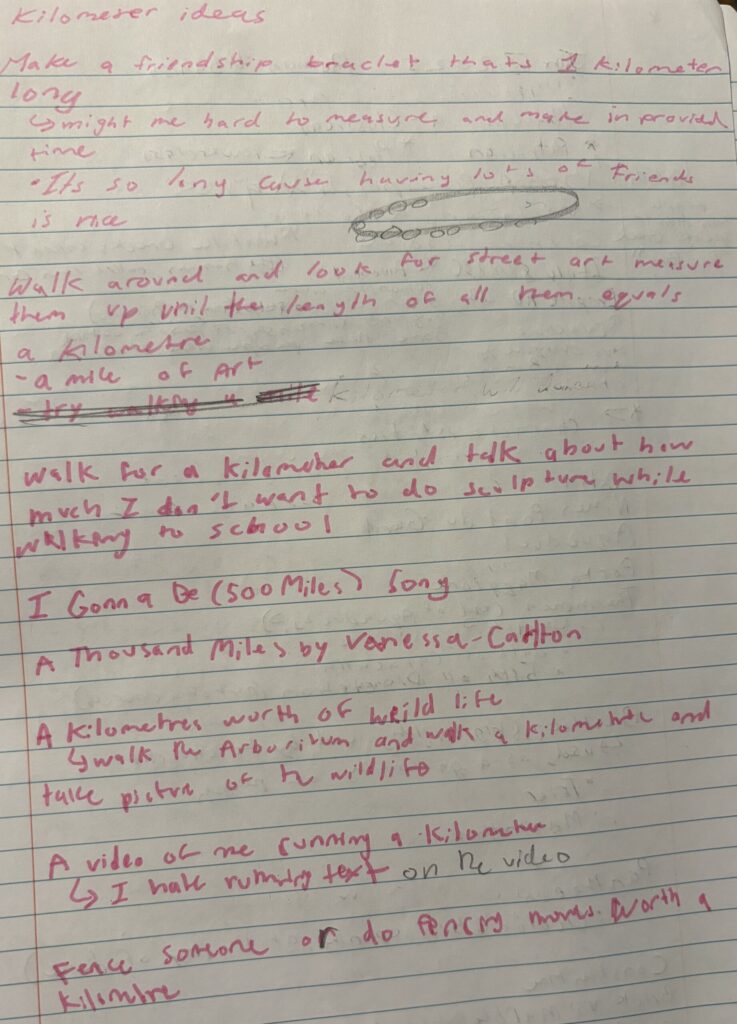
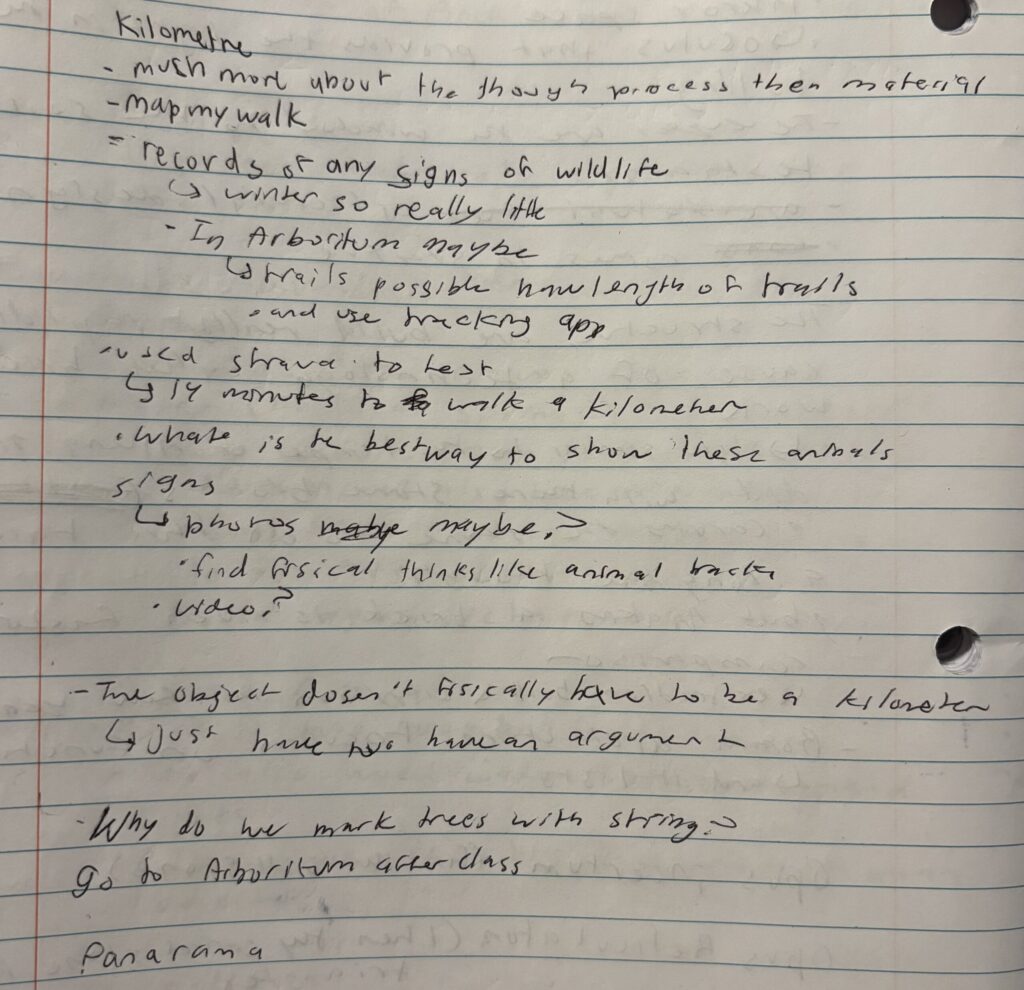
The process to actually execute my idea involved me to actually be able to see any signs that animals were there, which meant I needed to go to a place that is abundant with animals despite it being the winter and involved me having to be more observationally aware on my kilometer walk. I decided to walk in the arboretum which is known to be a haven to wildlife and offers a diverse range of habitats for these animals. Initially I blindly walked through the Arboretum and didn’t really have a plan taking pictures of trees and videos of noises I heard but soon found it to not be what I wanted as my final piece.
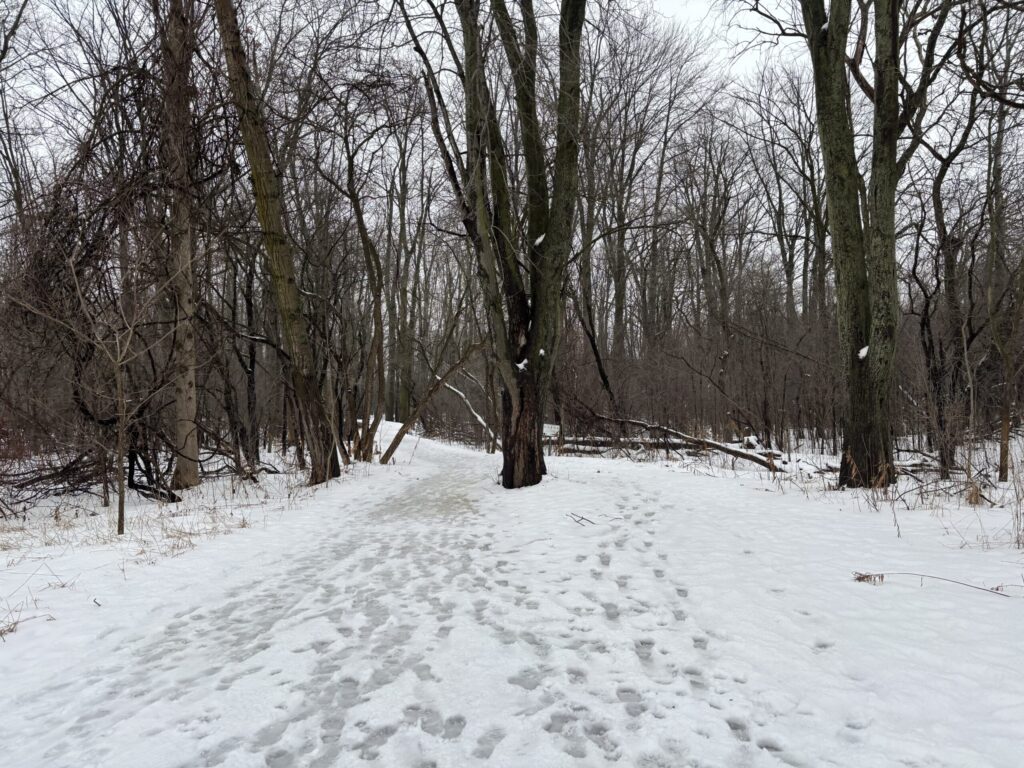
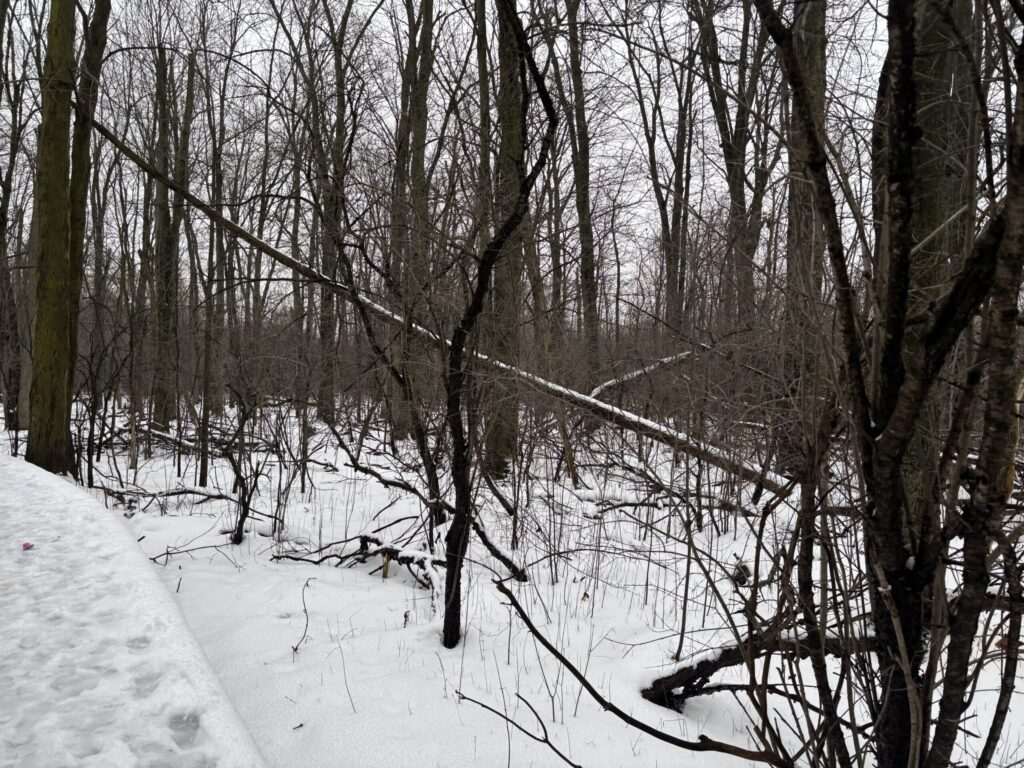
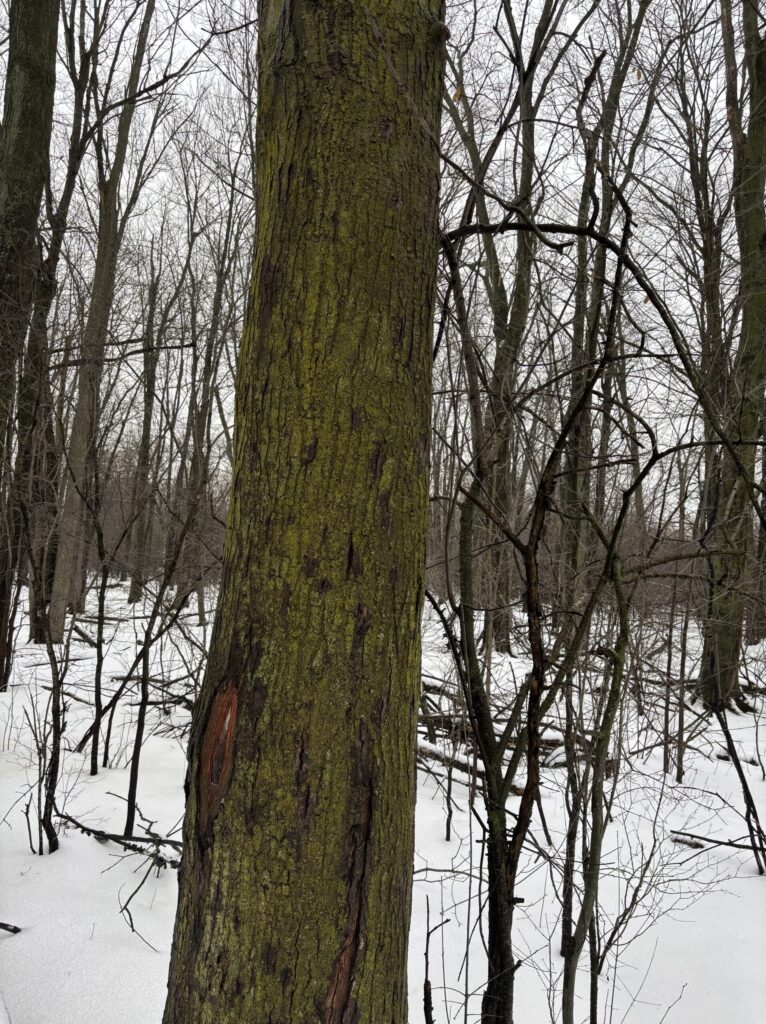
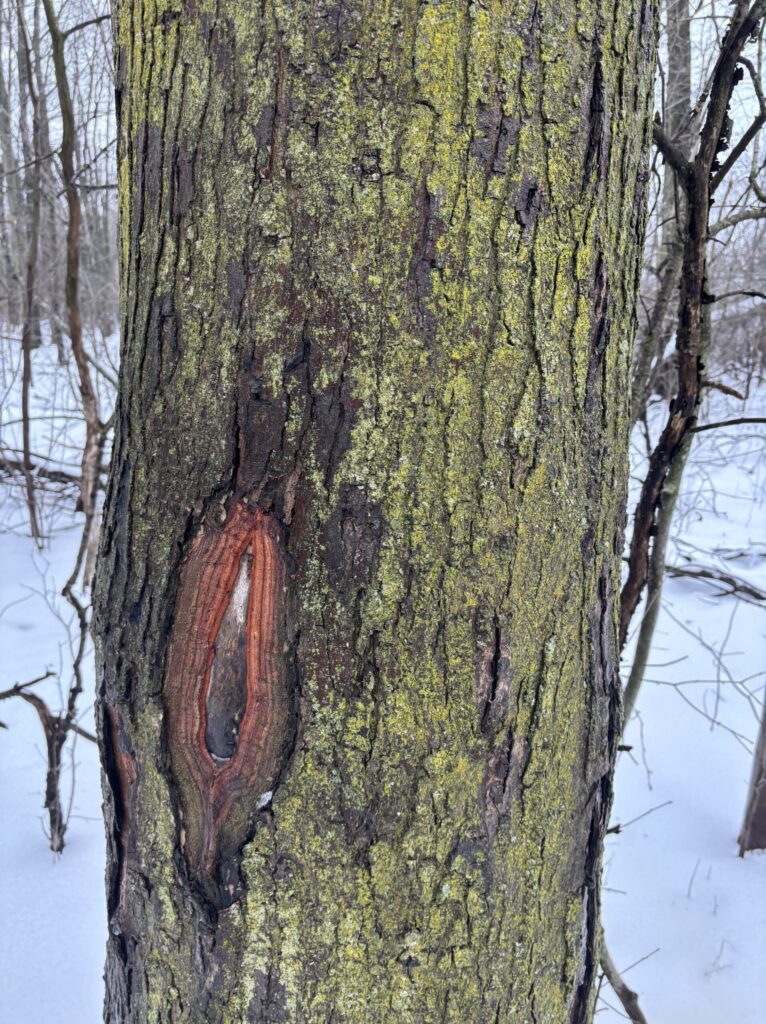
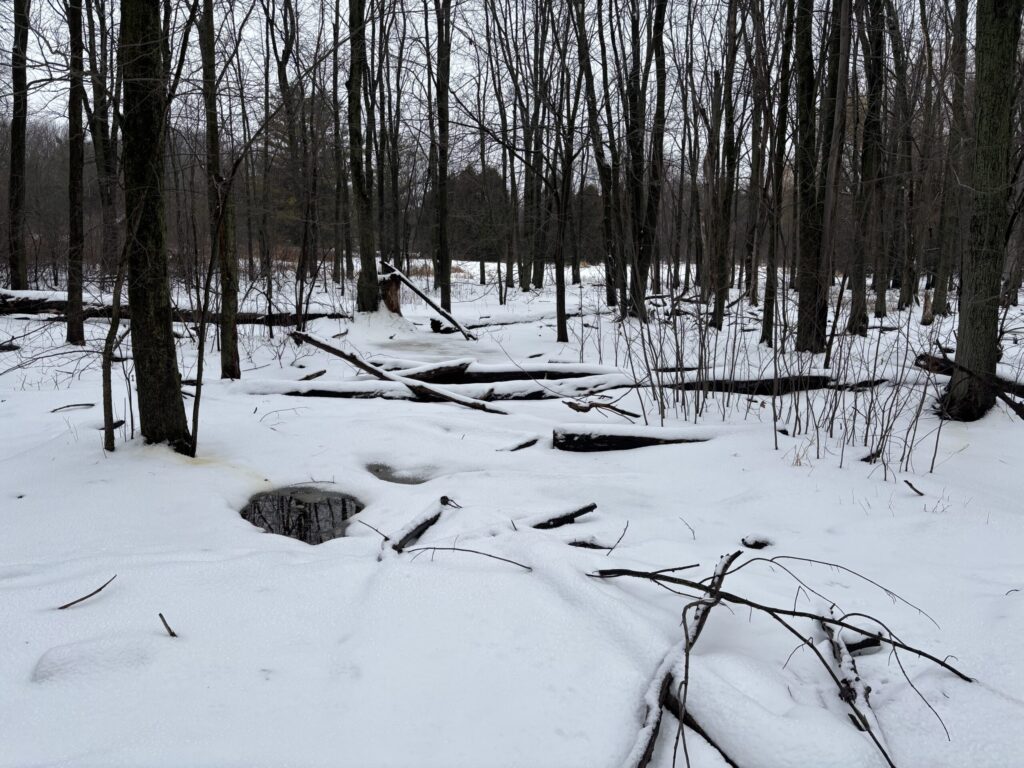
To increase my chances of finding wildlife I decided to use some methods that hunters will use in the winter to hunt their prey. Firstly, I went to the part of the arboretum with lots of wetlands that would eventually lead me to a small lake, as all animals need food and water even during the winter. I thought that would be my best bet for finding any wildlife in winter and on the way, I was actually going to look for signs of wildlife using the fresh snow to look for any animal tracks from walking around in the snow. As a way of showing the wildlife I found I decided to document these footprints by taking pictures of them as I didn’t want to destroy the tracks by touching them. What I wound up with is that the animal tracks were in fact more concentrated where any water was.
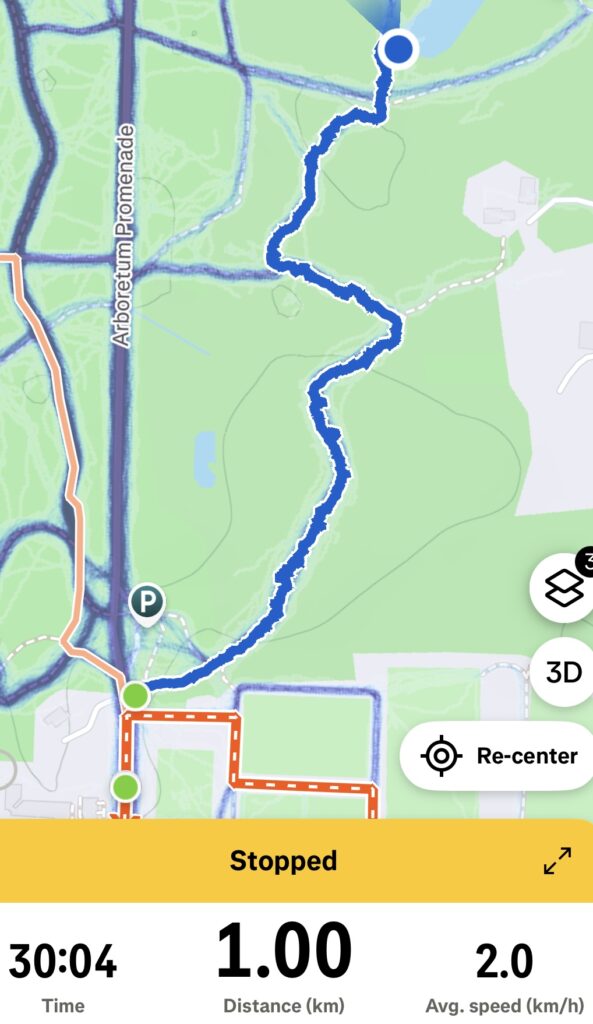
To track my walk while looking for signs of wildlife I used the Strava app to measure my walk in the arboretum to exactly 1 kilometer and to help me not get lost. At the end of my walk, I had found a variety of different animal footprints from rabbits, birds, and other wildlife like foxes.
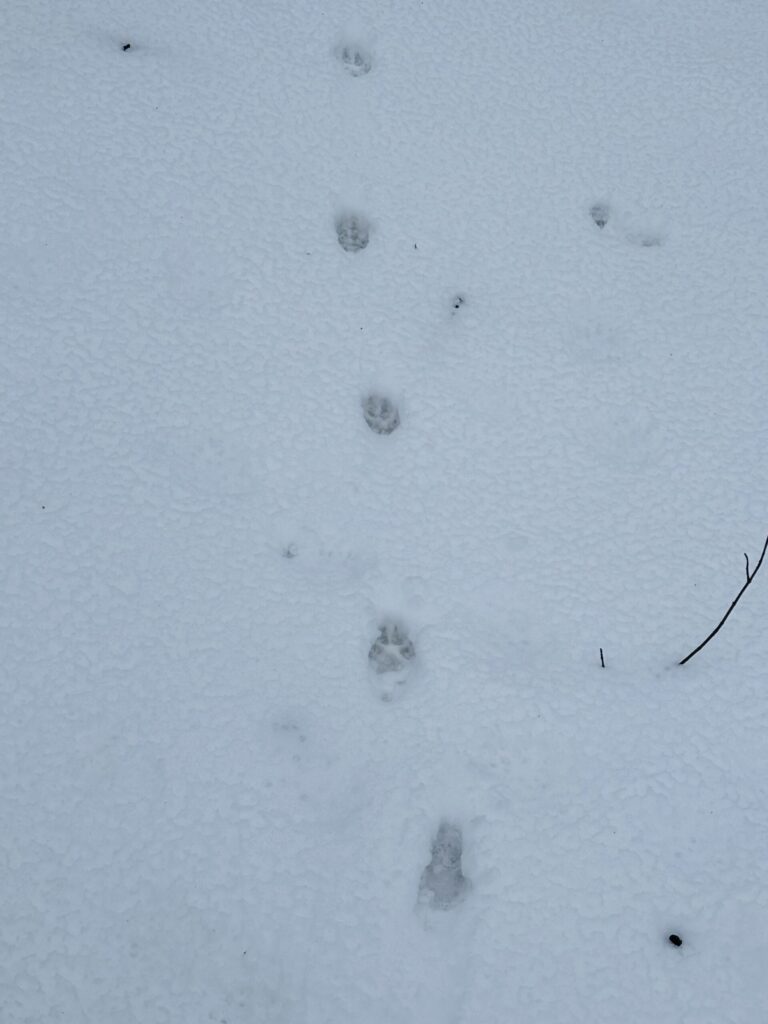
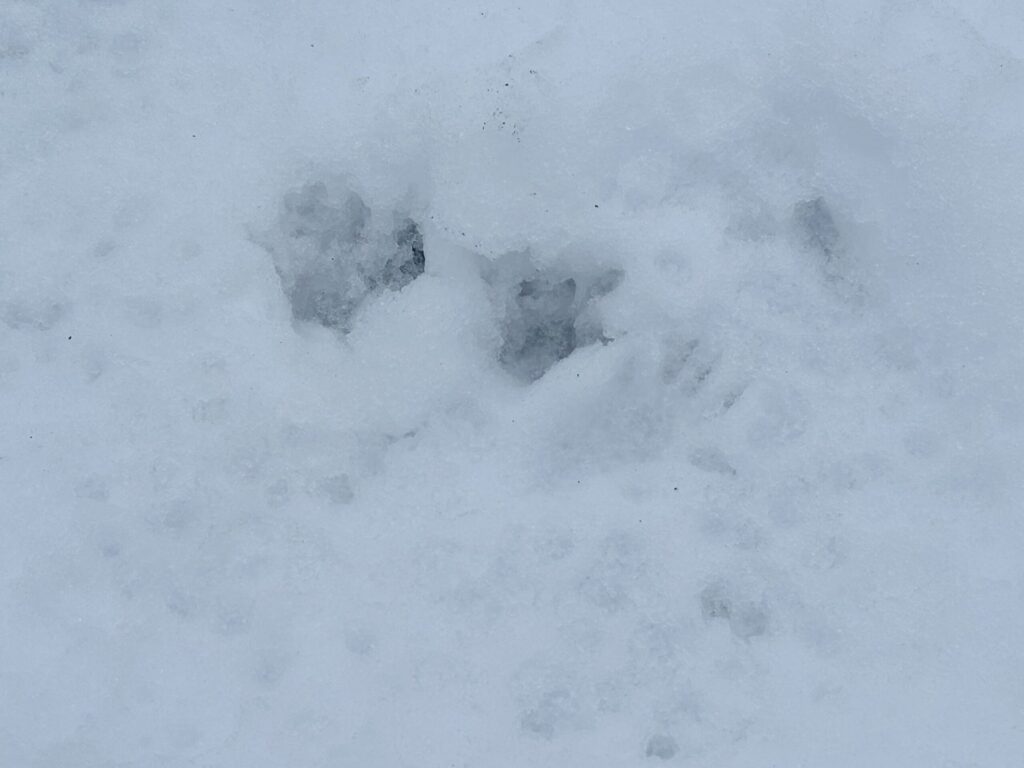
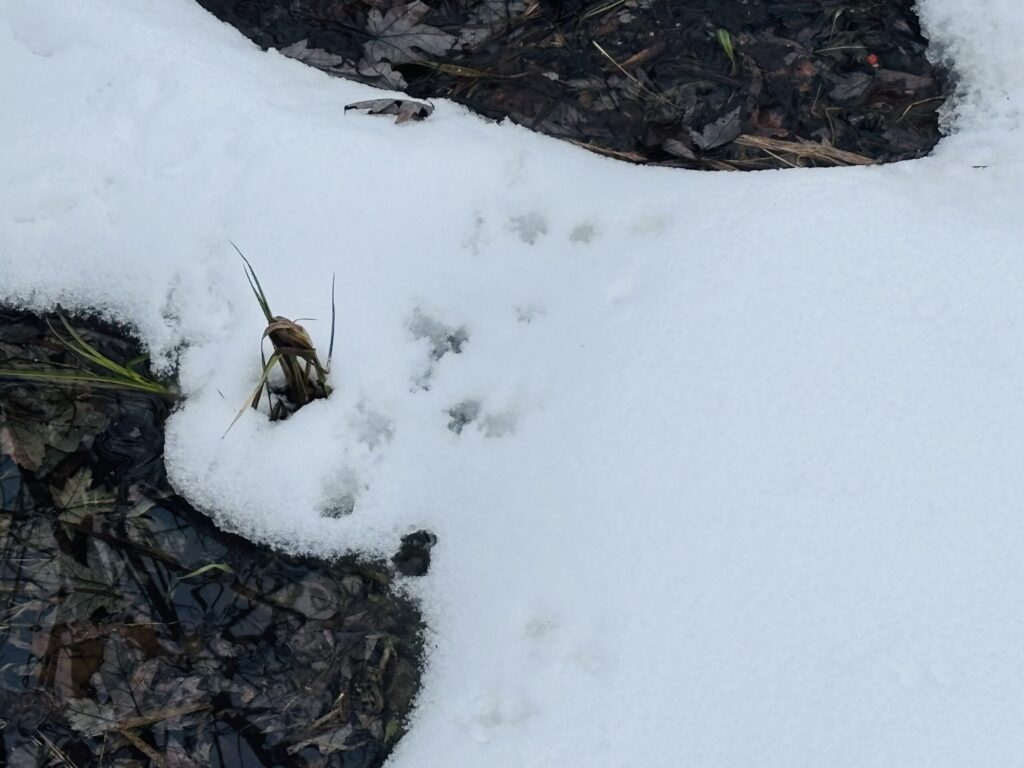
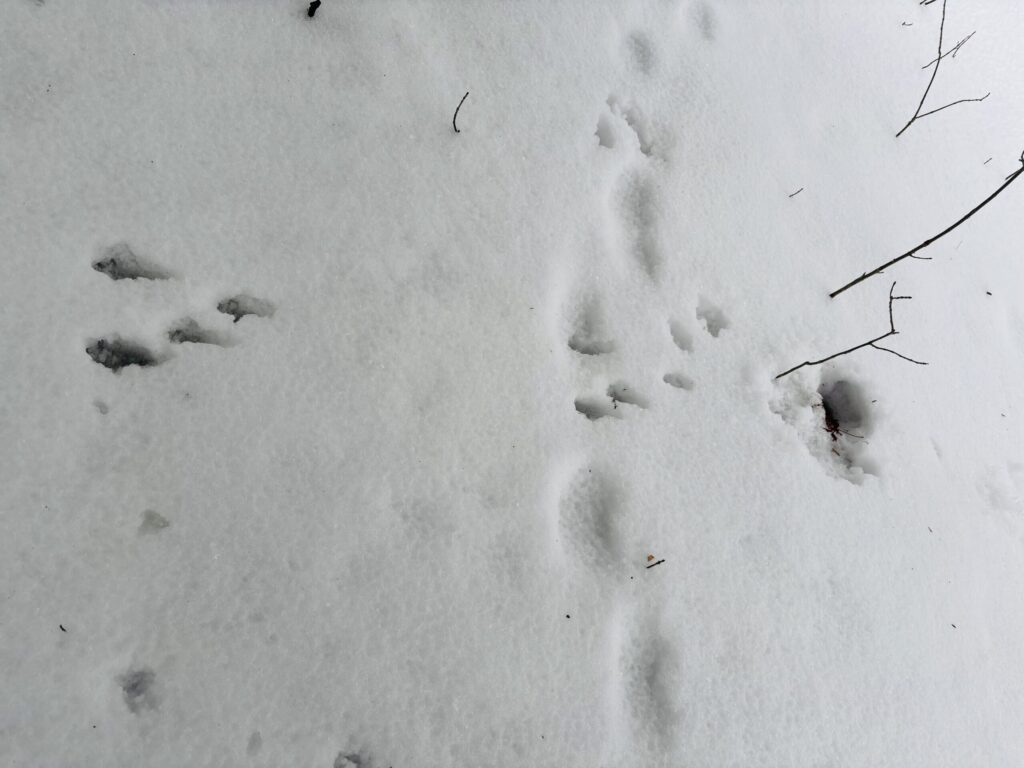
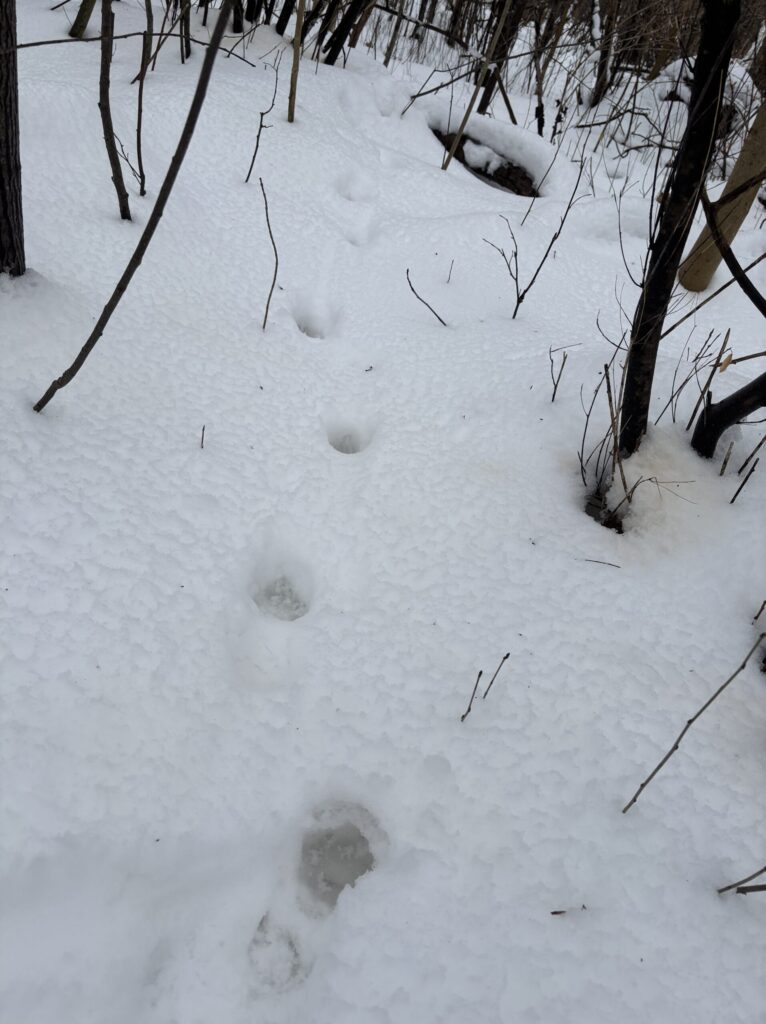
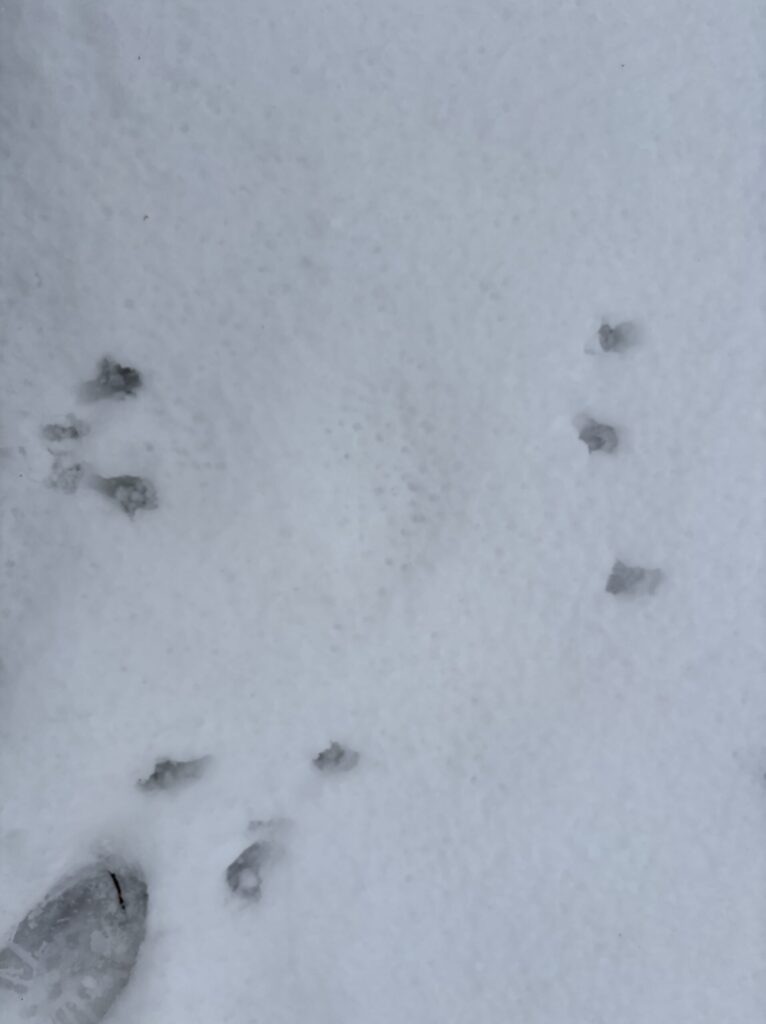

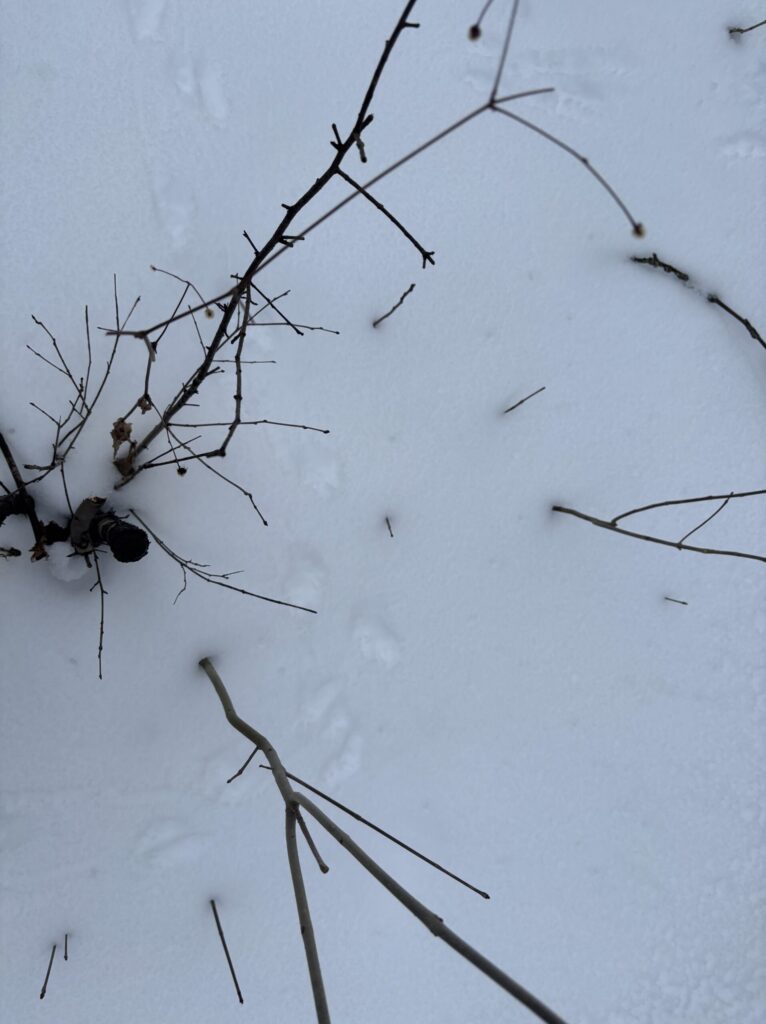
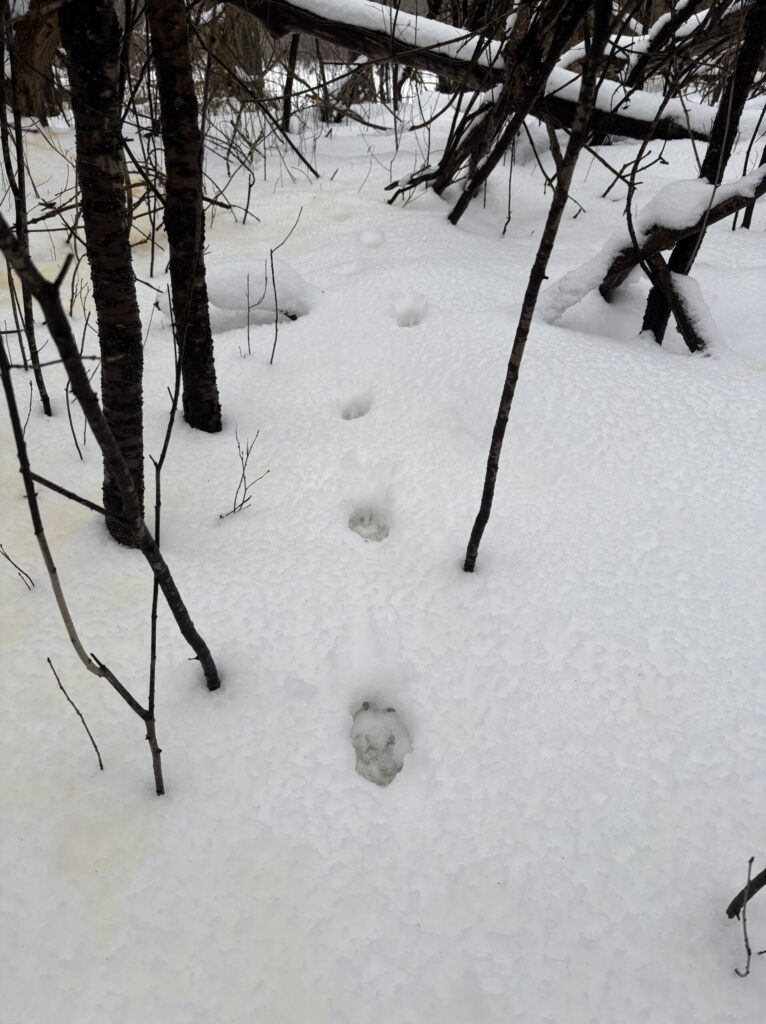
My final piece was created after gathering up all the photos I took on the walk and decided to use the best-looking ones to me and make them into a sort of collage or quadriptych to show the different places the animals where and the variety that were there. Initially I thought to make all the photos black and white but decided to go against it to emphasize the idea that life still persists even in the winter rather than it being bleak and gray.
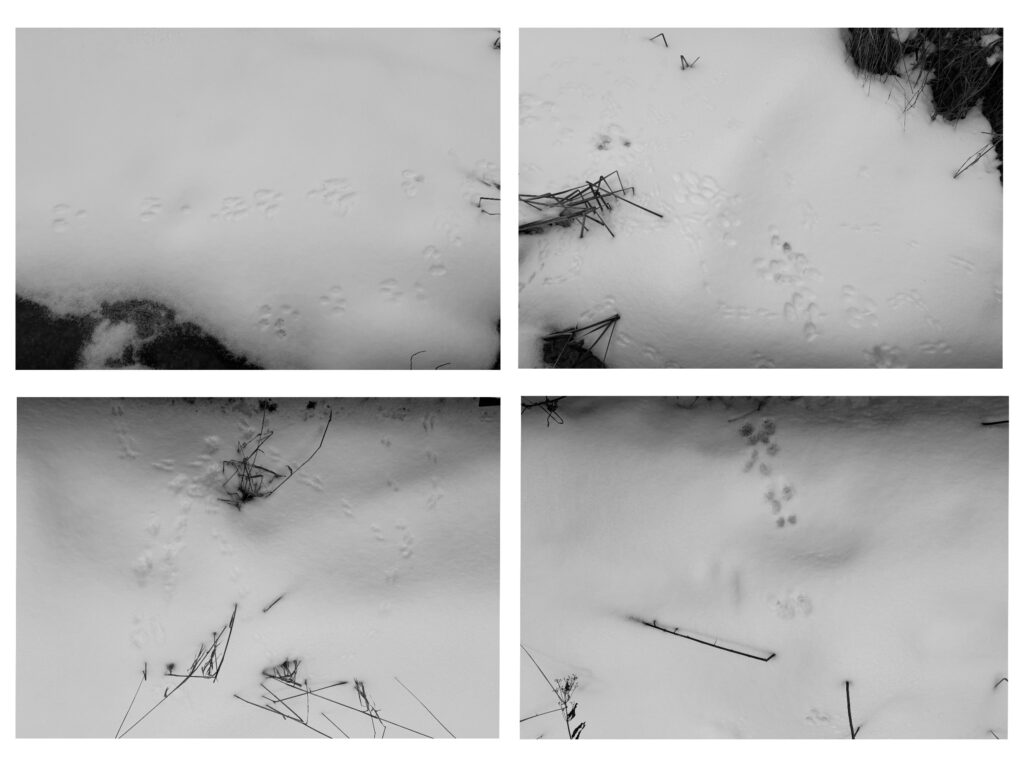
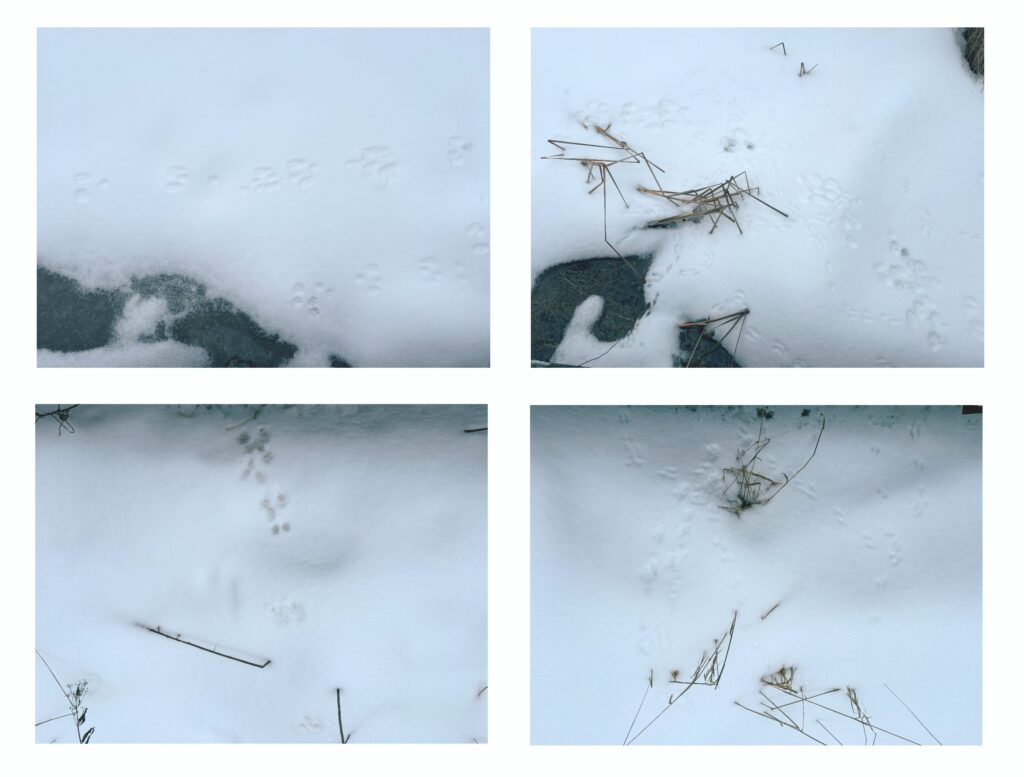
I chose this idea of finding wildlife specifically because I wanted to really challenge my observational skills to spot these tracks and not mistake them for just water that had warped the snow. To see if I could really pay attention to the environment around and that even in the dead of winter life still lives on even if it might be harder to see.
Final Image for the Kilometer Project
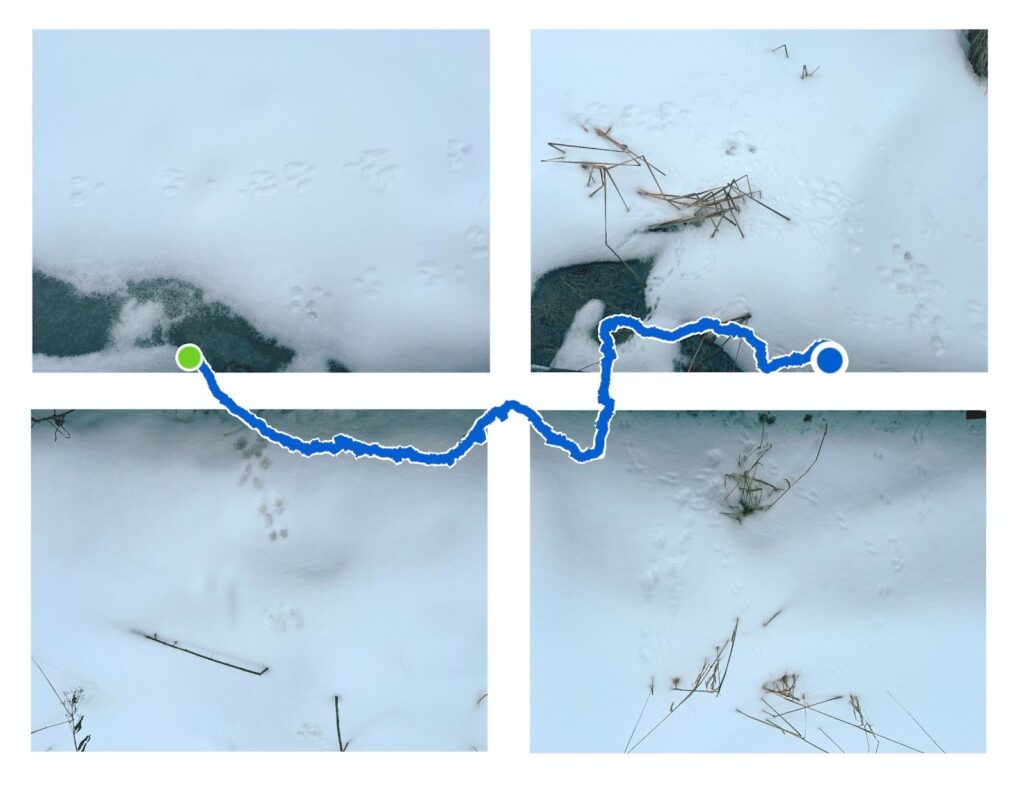
Then in the end I choose my 4 favorite images from the photos I took and using the Strava app I overlaid my own trail on top of my images to show my own path on top of the animals. If I were to ever show it in a gallery, I would most likely print the work as it is to hang it up.
Blog Questions NYT article
1. Describe the work discussed in the article and the unique challenges – as well as the unique gifts- that come with attempting to archive personal movements?
The work is a collection of people’s individual movements from how they walk to how they stand, basically a collection of people’s mannerisms. The artist behind this work, Katja Heitmann, believes that everyone has a movement that’s exclusively theirs and her project Motus Mori relies on a group of 10 dancers to record these individuals’ movements through copying them. As Heitmann decided against photographing it or filming only having one card per donor which leaves the dancers to record the movements through muscle memory. The entire challenge that seemed to have come up through this art is that people volunteering their movements to Heitmann were sometimes tempted to perform their ideal selves by sitting up straighter and not being truly authentic to themselves. One of the unique gifts that seemed to have come out of this piece of artwork is that these dancers would get to understand the volunteers so well that they would sometimes subconsciously imitate their mannerisms in their own lives.
2. Discuss one or two examples of movements in the article – what strikes you about them?
One example of movement in the article comes from Tjan who discovered from the dancer that interviewed him that he hides his thumbs in his palms which made him realize that the way he moves his body is to take up less space around him. To make himself more seen he has decided to change his wardrobe to be brighter and more colourful so you can’t miss him.
3. Describe the habitual movements/unconscious gestures, tics etc. of 3 people you know well. How do individual body parts move, and how does the whole body interact? What about facial expressions, and emotional valence of the movement? How does body type inform the movement? What do these examples of small movements mean and imply?
My mom has the habit of when she takes off her glasses, she’ll poke herself using the end of her classes on her forehead. For myself, a habit that I often do, usually when I’m happy or I win something I will lift my leg behind me in what I’ve been told is cutesy. You can actually see me doing this pose in one of my photos in the blog. While one of my dad’s mannerisms that I’ve noticed is that he will make an odd face sort of like a surprised face at odd times. To me what these mannerisms imply is that my family is very odd and although not stated I feel a lot of my mannerism we get from each other.
Jan 30th Field Trip
How are these works relevant to your own research interests and practice? What did you notice, learn, or take away from the experience of the works in the gallery?
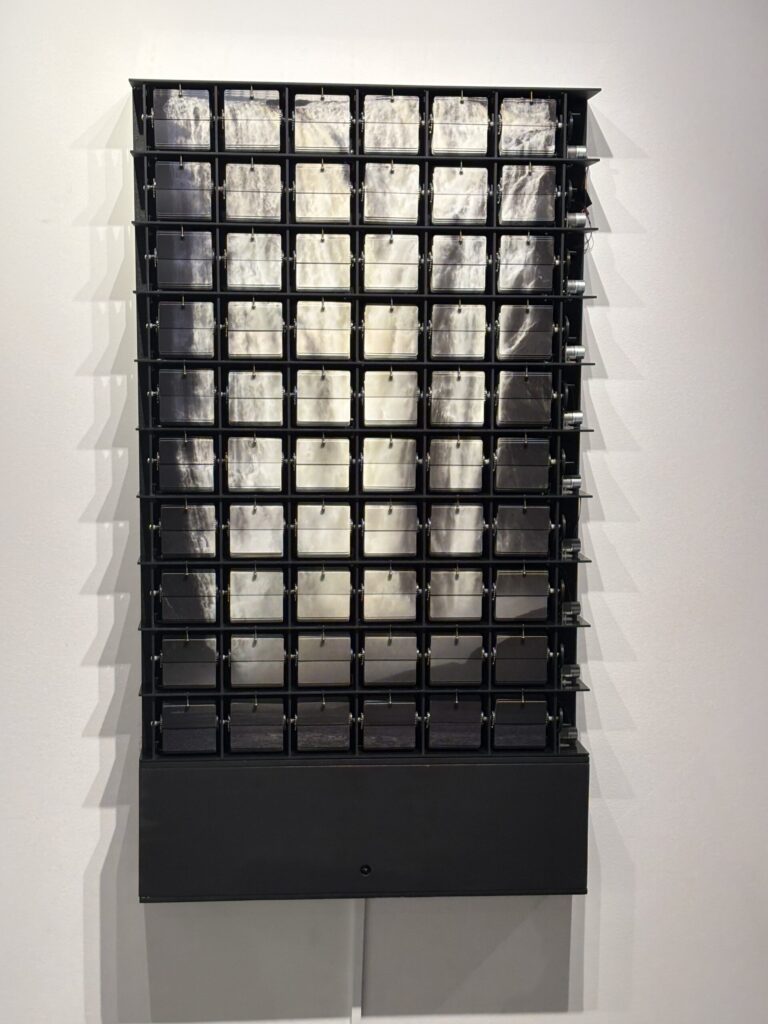
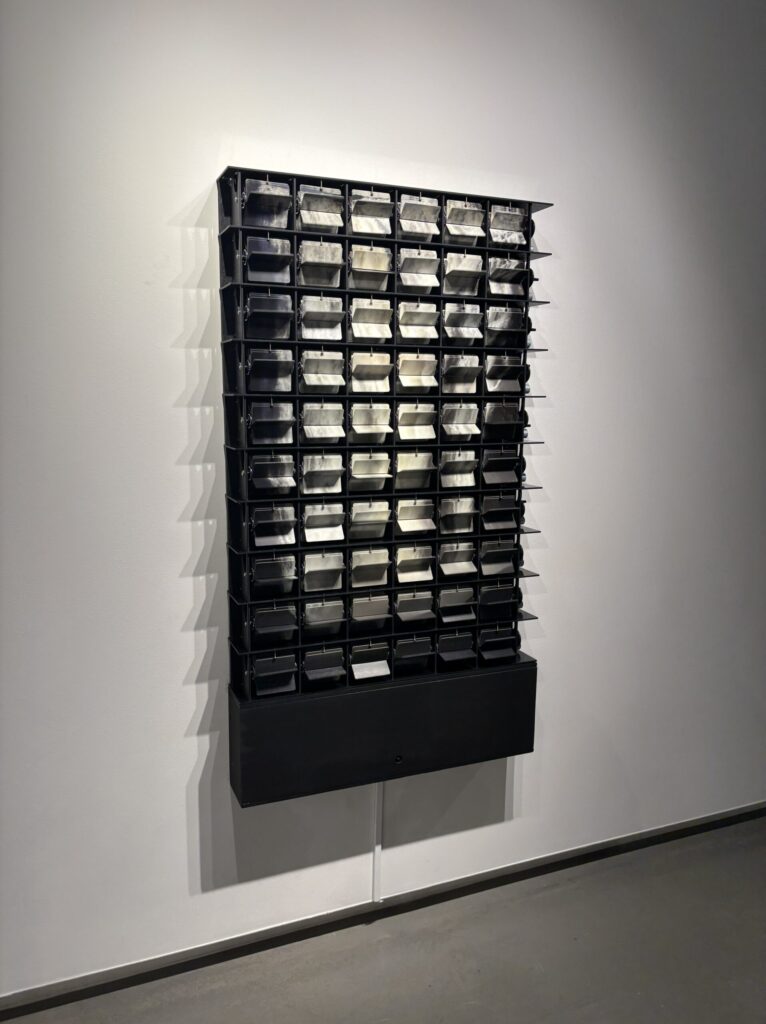
Fall/Chute by Diane Landry
One work I found rather interesting was Fall/Chute by Diane Landry who made a mechanical mural made of motorized flipbooks that recreated a waterfall. The piece would be triggered by any movement which would bring the waterfall to life. The idea of bringing life to something mechanical is something I find really interesting, but what really intrigued me was the idea of water as a legal and spiritual entity.
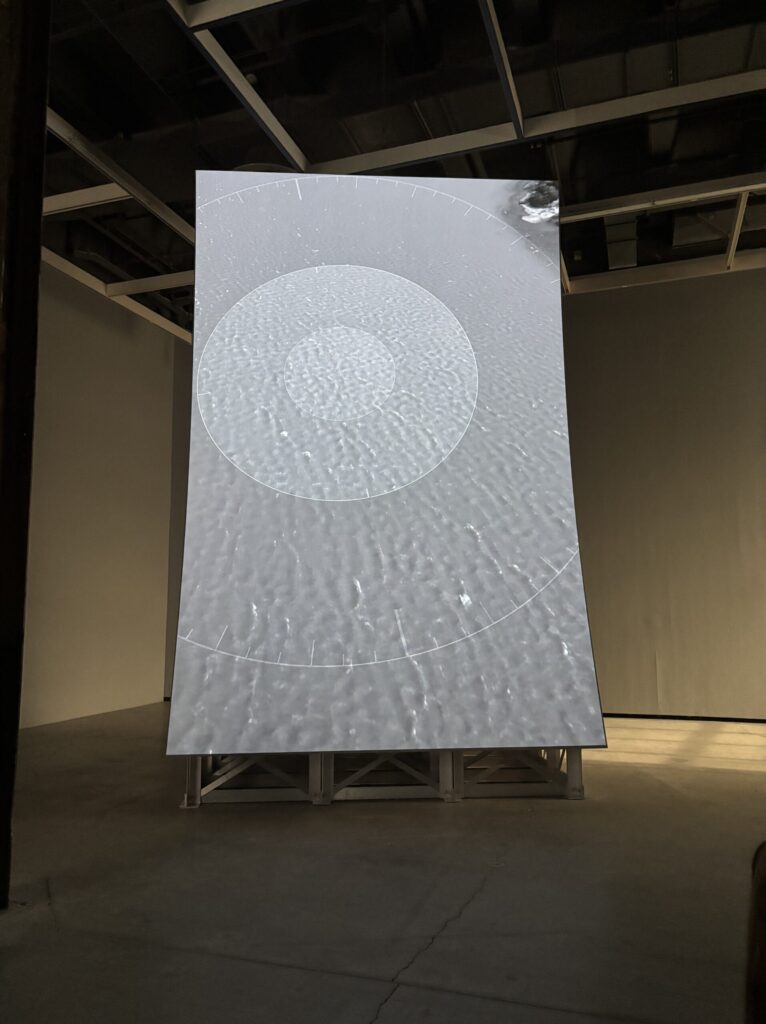
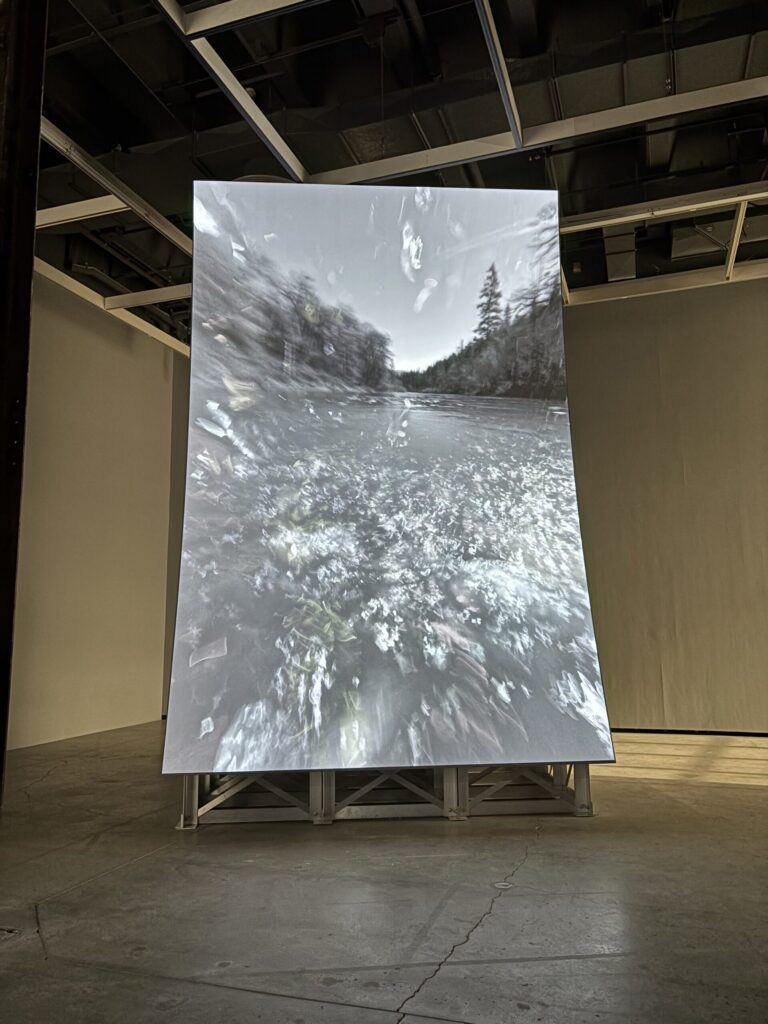
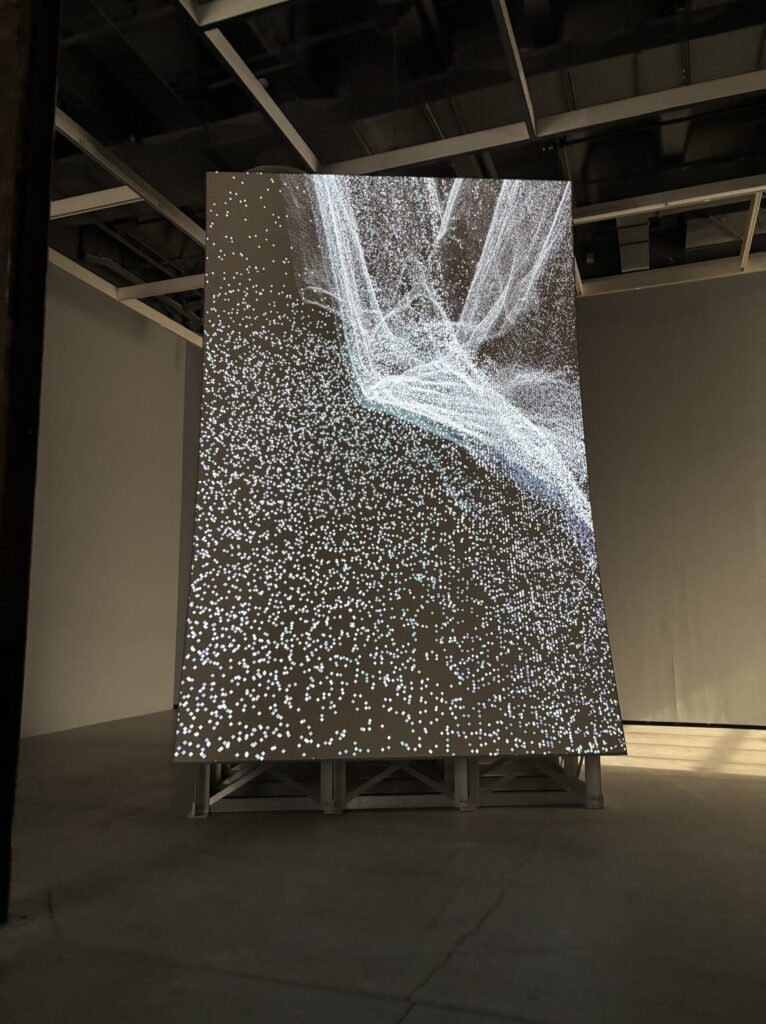
Murder Bar by Lucy Raven
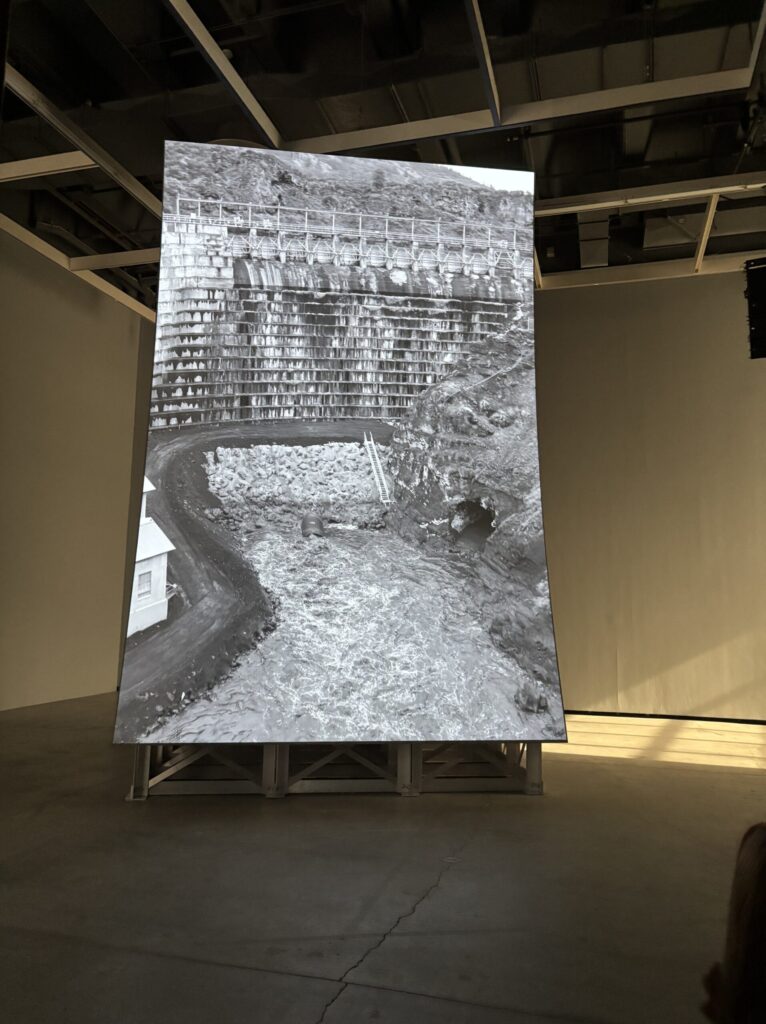
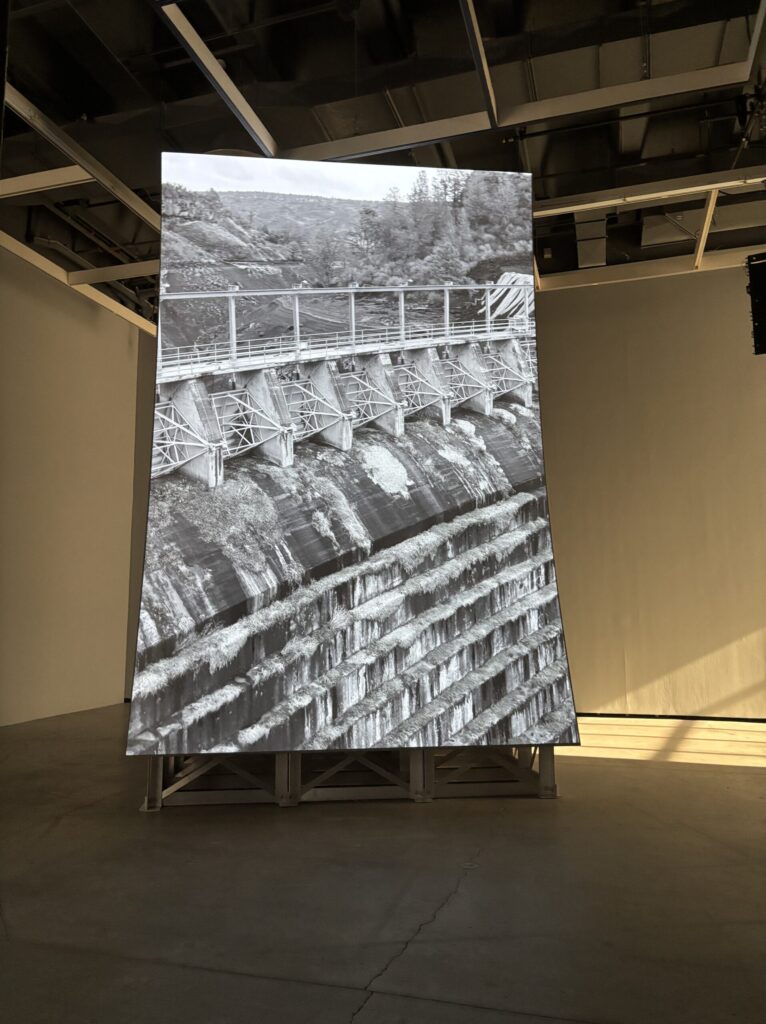
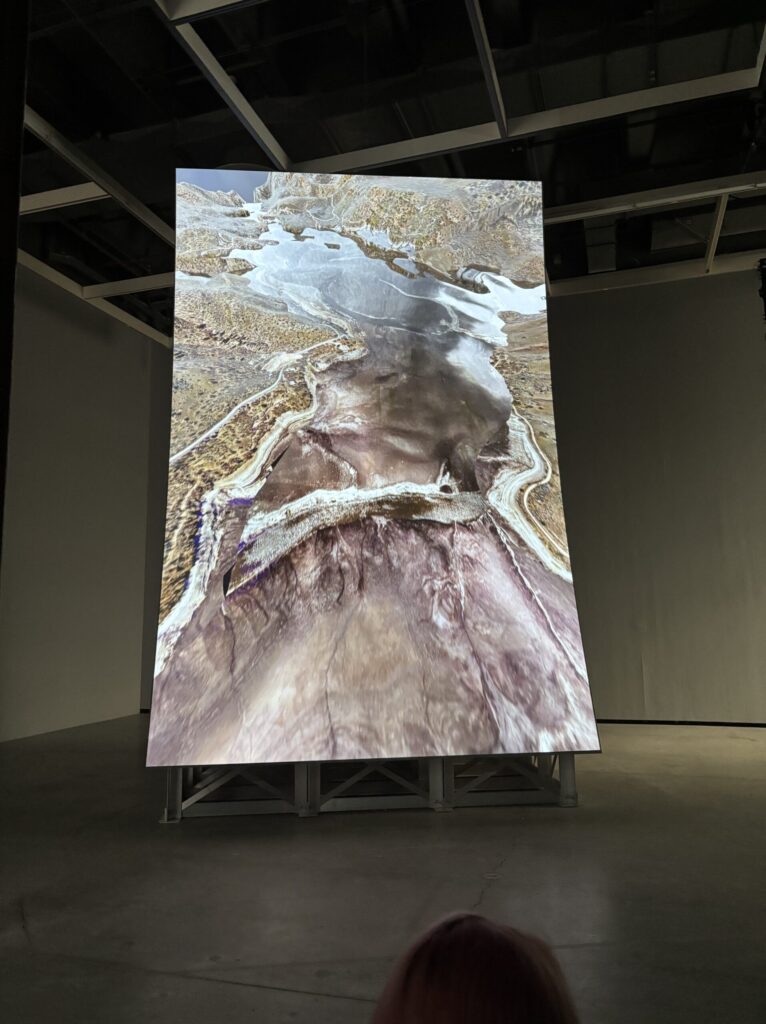
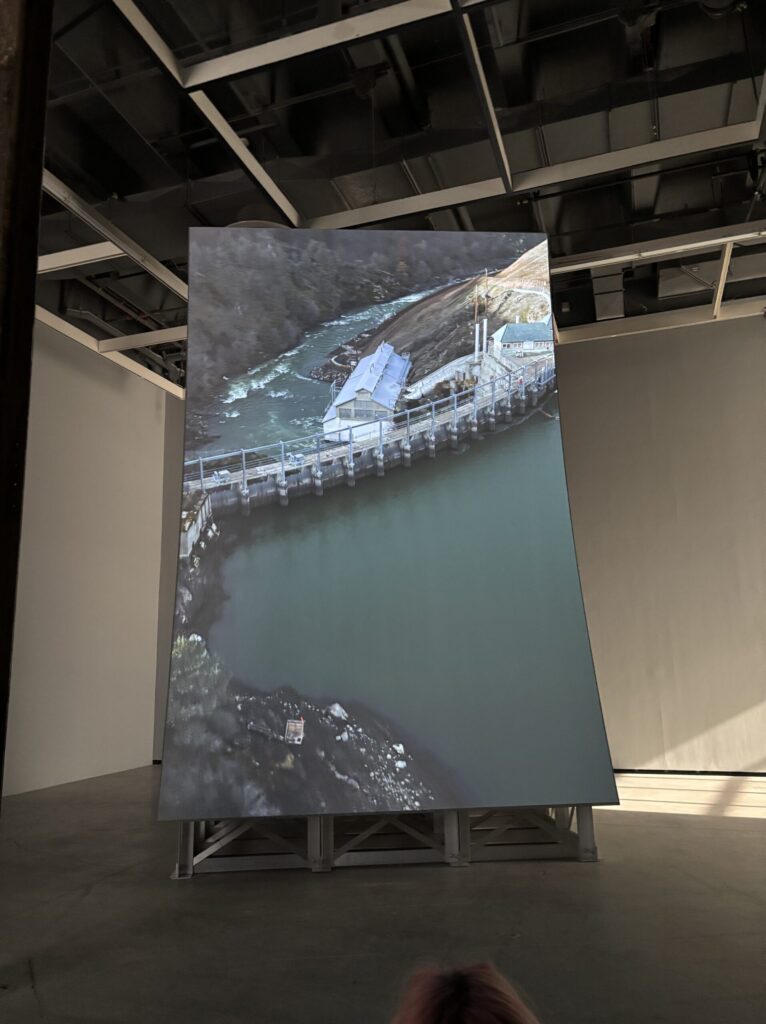
The second work that I thought really stood out to me during the trip was the Murder Bar by Lucy Raven. Here the artist uses aerial and underwater cinematography to record the river flow after being released from a hydroelectric dam along the Klamath River. During the video we get views of sediment being moved around by the water then lifting out of the water again and again. This interests me specifically since I’ve always had a fascination with the environment and especially water related stuff. What I learned from this is that video art can be really impactful.
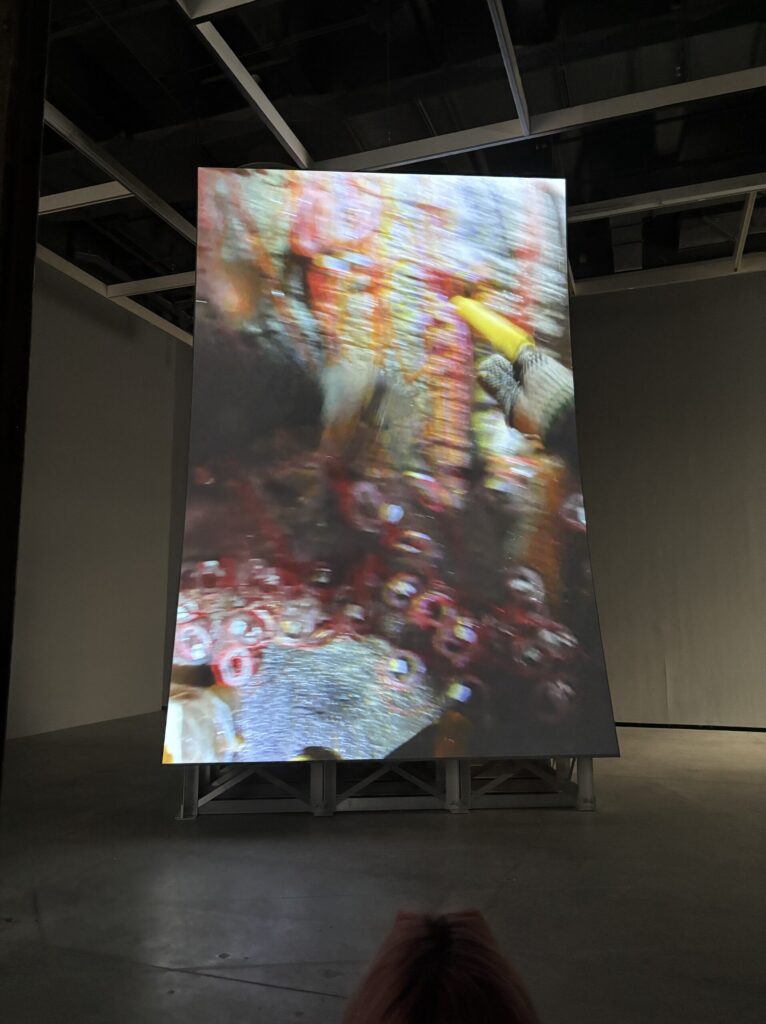
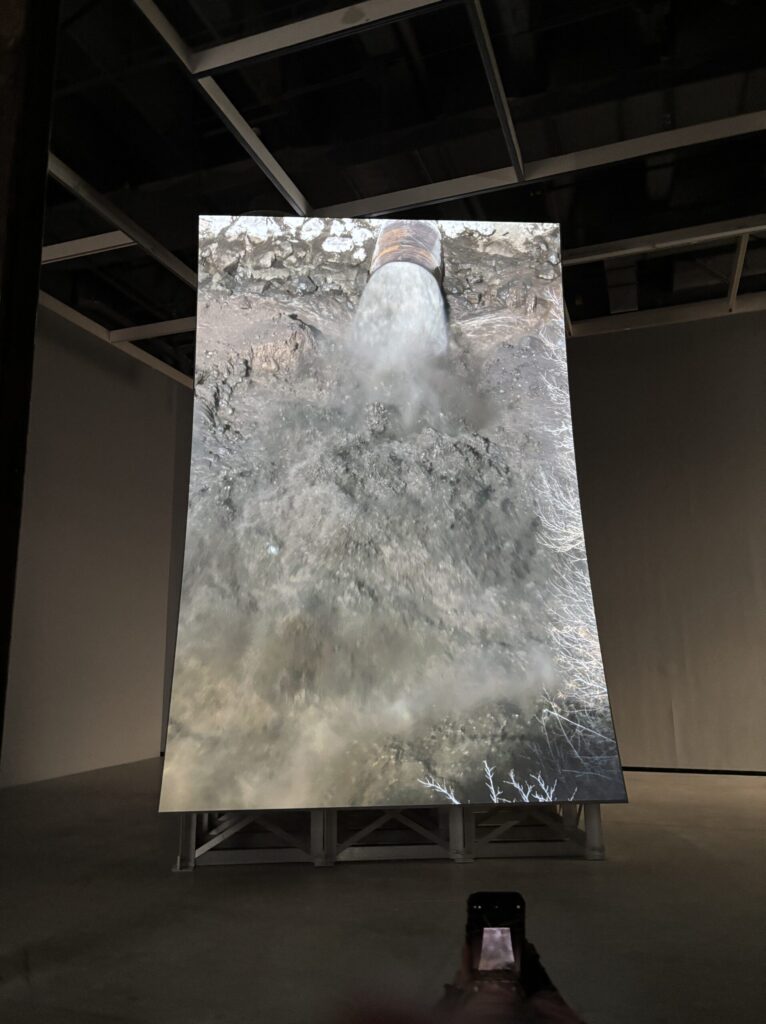
One Feat, Three Ways Video
For this assignment my group came up with several ideas but landed on doing wedgies as our feat. We thought it would be a funny thing to do for our feat. Initially we didn’t really know the way we were going to go about filming it but eventually settled on keeping a serious face to contrast against the absurd feat we were doing to emphasize the absurdity.
Practice/Test Shots
Initially we thought I could wedgie Claire without also being in the shot. One idea was to have Claire face me as I wedgied her from behind but that was quickly dismissed, then we thought we could have me and Claire sideways as I stood off screen and wedgied her. We tried other positions like an aerial view or have Claire wedgie herself however we decided to use a pulley system to do the wedging.
Video 1 – One Shot
In the one-shot video we decided to do a panning shot that started at Claire’s feet and slowly went up until we got the wedgie in the shot. Since we didn’t want me to awkwardly be in the scene, we initially thought that Claire could wedgie herself, however it was hard to do that for a minute. The solution we came up with was to use a pulley system to give Claire the wedgie. Either Claire could wedgie herself with the pulley system or I could, we eventually decided for me to do it. To get the shot we used the stairs, using the railing as the pulley system with me standing at the top of the stairs and Claire underneath with a white backdrop behind her. I then edited the video to add the credits and the title which we named Jolly Jumper as in one shot the pulley looked like a Jolly Jumper.
Video 2 – Edit
In this video we used different shots of Claire being wedgied in different and even some absurd positions. One example being Claire being wedgied as she is spun around as if she were not on the floor.
Video 3 – Animation
This feat we did for the project personally reminded me of a musical that I really like called Nerdy Prudes Must Die by Starkid where one character Ruth Fleming is killed by the ghost/zombie of Max Jägerman who bullied her. Jägerman had died after a prank gone wrong resulting in Ruth and her friends hiding his body to cover it up. Ruth after being finally free from her bully finally starts dreaming of her future and aspirations in the limelight. However, Jägerman comes back to take revenge on Ruth by killing her he does this by wedging her to death.
Ruth’s Death
Just For Once – Nerdy Prudes Must Die Starkid
To me both the musical Nerdy Prudes Must Die and this feat’s video use wedgies as a comedic tool. In our Jolly Jumper videos, we used the idea of a wedgie while Claire kept an emotionless, serious face, to contrast the absurdity of a wedgie, which is often used as a comedic trope in film, against the serious nature of when a wedgie is used as a tool to humiliate and bully people.
Pauline Oliveros
Reflect on your own experiences of listening — to sound, to others, to your environment, or to yourself. How does Oliveros’s idea of deep listening challenge the way you typically give attention? In what ways might listening through your whole body, or approaching sound as a form of play and research, change your understanding of connection, communication, or creativity?
Oliveros’s idea of deep listening is foreign to me personally. They only real time similar to deep listening I experienced is that in high school I had to create a video and couldn’t use copy right music, so I chose to make my own. The basis of it was sounds of rain pouring that I had recorded in front of my house. Usually, I live on a busy street but on that particular day it was really quiet except for the rain. I listened to it a lot, but I also added other sounds on top of it. I approached that sound with intention which is odd for me because I usually like to use music to drown sound out.
Audio Art Assignment
When I was thinking about the project I thought about Pauline Oliveros and the idea of deep listening. Sometimes I will take videos of things I find interesting. One of the many videos I’ve recorded over the years was of a clock ringing its bell. This clock specifically was the Orloj which is an astronomical clock tower in Prague. It is a historical and cultural landmark of the Czech Republic that has a gothic style design. The clock tower has a historic story that is very interesting as well as being an engineering marvel of its time. The Orloj dates back to around the 15th century and according to some legends was created in 1410 by Hanus. Supposedly the city councils at the time, in an effort to maintain the tower’s uniqueness, blinded Hanus so he could not create anything similar. In retaliation Hanus broke the clock mechanism but it was eventually repaired. Whether this was true or not the tower is certainly a mechanical marvel. A more recent historical event for the Orloj revolves around World War II on May 8, 1945, during the Prague uprising against the 7-year rule under the Nazi’s, the clock tower was damaged by the Nazi’s using armored vehicles. The calendar dial on the clock received severe damage as well as many of the figures. However, three years later Vojtěch Sucharda was able to repair the mechanism and the wooden figures.
During a trip to Czechia, I actually got to see the Orloj clock in person and was able to get a recording of the clock ringing.
Using that audio for this project I decided to layer and edit different sounds to create an audio piece that depicted the cycle of peace and war. Starting off with a peaceful start of the bell ringing with the sounds of rain and a group of people watching the clock tower. I even added sounds of children laughing to just try and show how sudden war can occur. Eventually the sounds of explosions go off and the audio becomes quieter until it eventually becomes louder and louder as the clock rings. Leading to more explosions until the audio finally ends using the clock tower ringing with people watching. I was trying to bring people into that moment with the added explosions to evoke the history of war and destruction and a return to peace that occurred.
Test Orloj Audio
Orloj
Conceptual Portait
Artist Inspiration: Kelly Mark
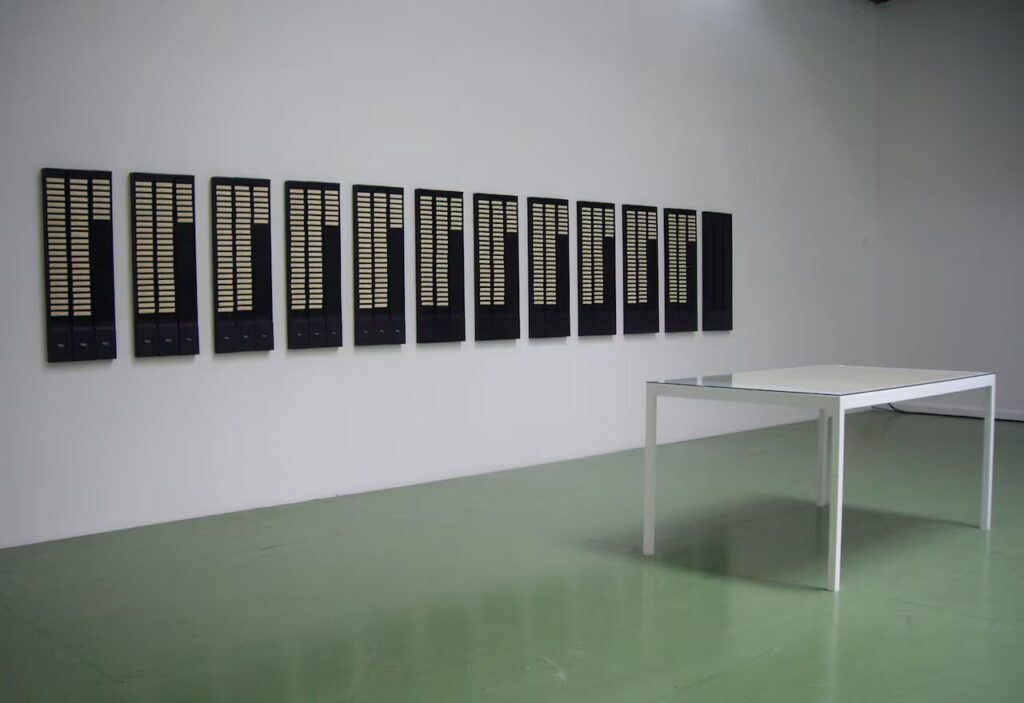
Idea: Show the time I spend at my job last summer use the recording of the time I was there or (ask my employer if the scanner thing that checked me in everyday had took my picture and if it did ask for the images)
Time + Physical Labour = Money
Leave a Reply
You must be logged in to post a comment.