Meet The Artist:
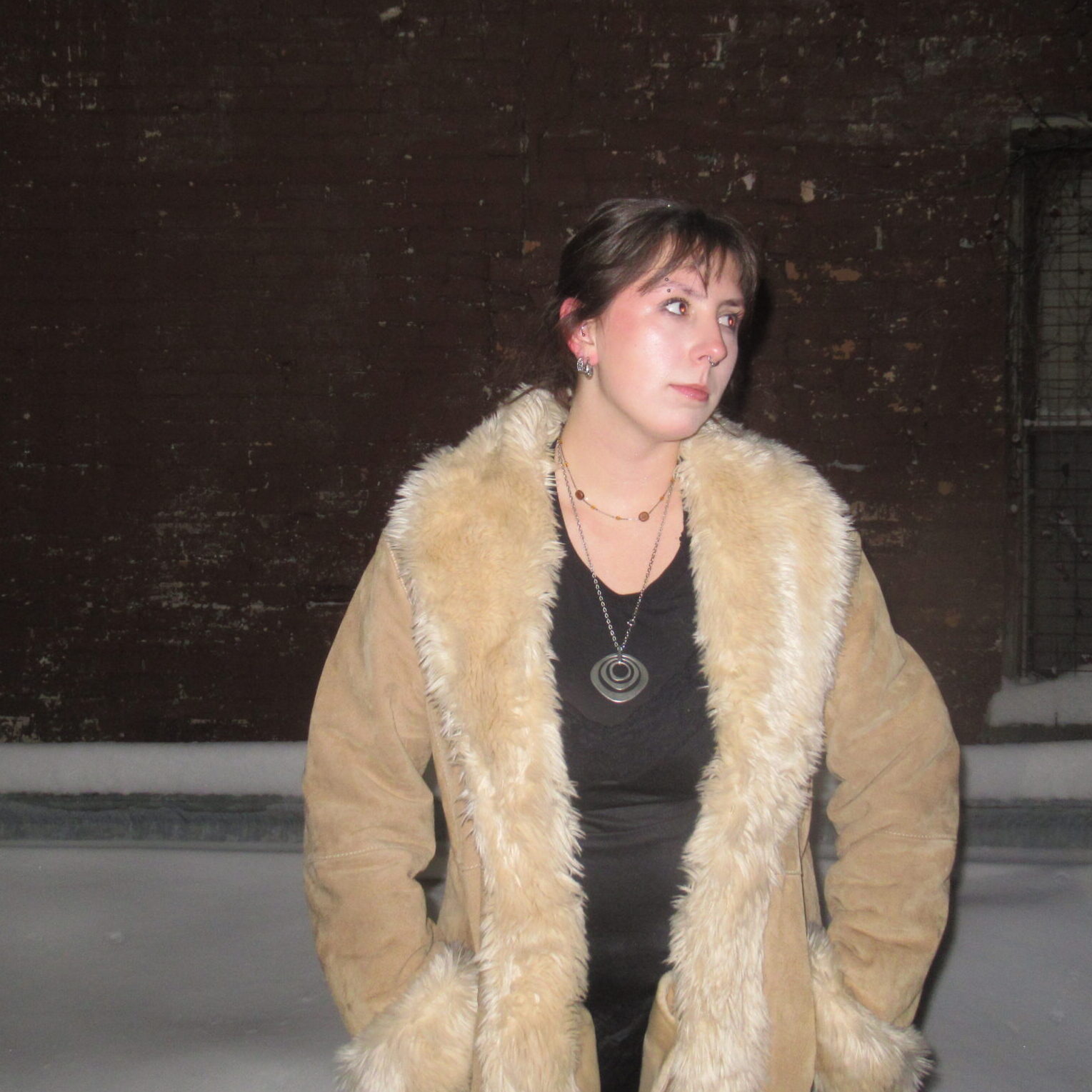
Hi, I’m Leah and I’m in my second year of Studio Art. I enrolled in this program, for I always knew I wanted to pursue art as a career, and I was particularly fond of the size of this program and the tight knit and supportive community it offered. I love exploring mediums and creating pieces inspired by conceptual ideas. I have recently been trying to allow myself to create work based on the process and not the outcome, aiming to further develop my practice and how I am connected to it. Sketches and smaller pieces have been a big part of this experience, but I am excited to apply these goals to bigger pieces throughout this course!
Existing Work:
The Artist is present, Marina Abramovic:
My initial impression of the works by Abramovic tends to fall towards the prevalence of nudity throughout her pieces, which generates a shock factor, especially for people who are not artists. As artists there is a sense of comfortability for the majority with nudity and the human body, but for many people this unavoidable acknowledgement must be given towards the presence of nudity and this often generates a feeling of discomfort, which seems to be a prominent theme of her work.
One of the main factors of her performance that remains the most prevalent to me is the discipline, which functions as the foundation for her pieces. Her pieces are often very demanding both physically and mentally, and that tends to be a very important aspect of her work, for the required discipline allows viewers to be both shocked and uncomfortable. Her discipline allows her to perform through reality, for she forces herself to be physically uncomfortable, which really allows the audience to feel the sacrifice she is making, generating a strong viewer impact.
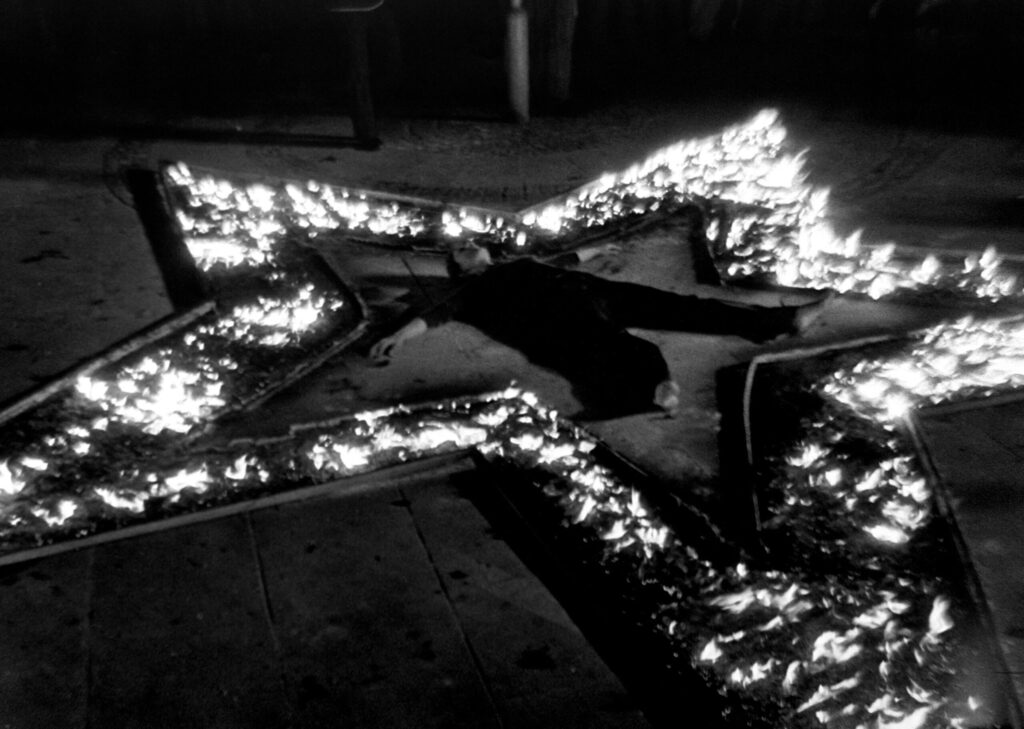
Rhythm 5, Marina Abramovic, 1974
Abramovic challenges museum conventions through the confrontation she pushes upon audiences, for often it is expected that a person would simply wander around a gallery or museum space casually viewing paintings or sculptures, yet Marina works directly against that. She forces the viewer to acknowledge her work directly through the physical presence, creating uncomfortability, for this is not the norm, especially in reference to traditional artwork. Performance art and the body as a medium is very confrontational and forces the audience to directly interact with the piece, yet Abramovic works to create even more uncomfortability within the nudity and jarring discipline in her work, which is what make her pieces so memorable.
762.5 Breaths: One Kilometer
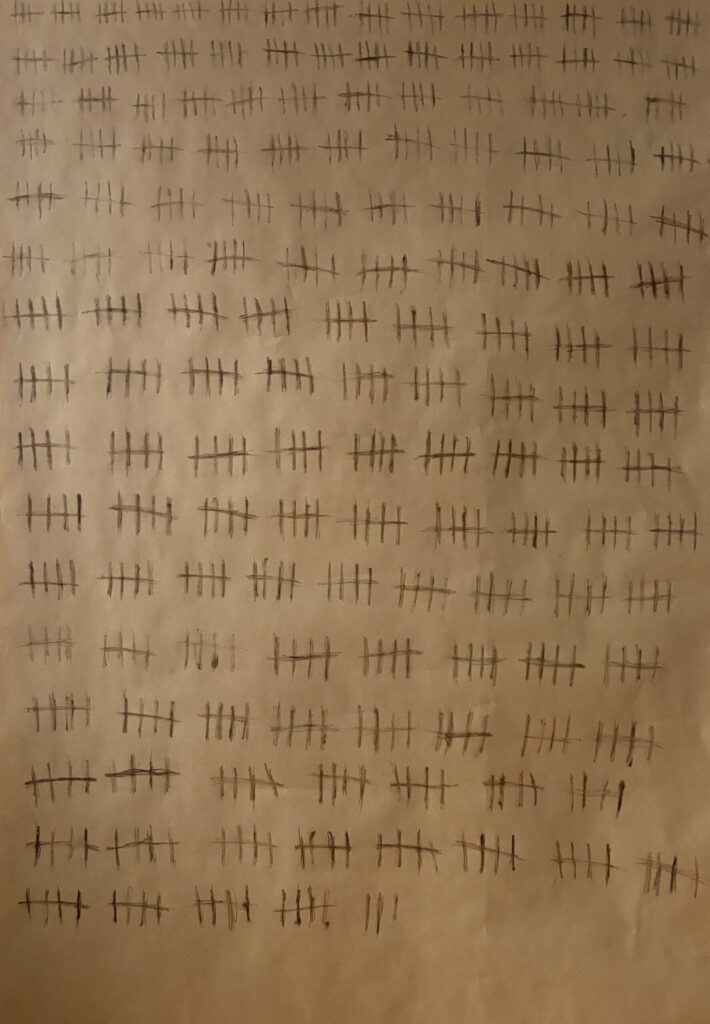
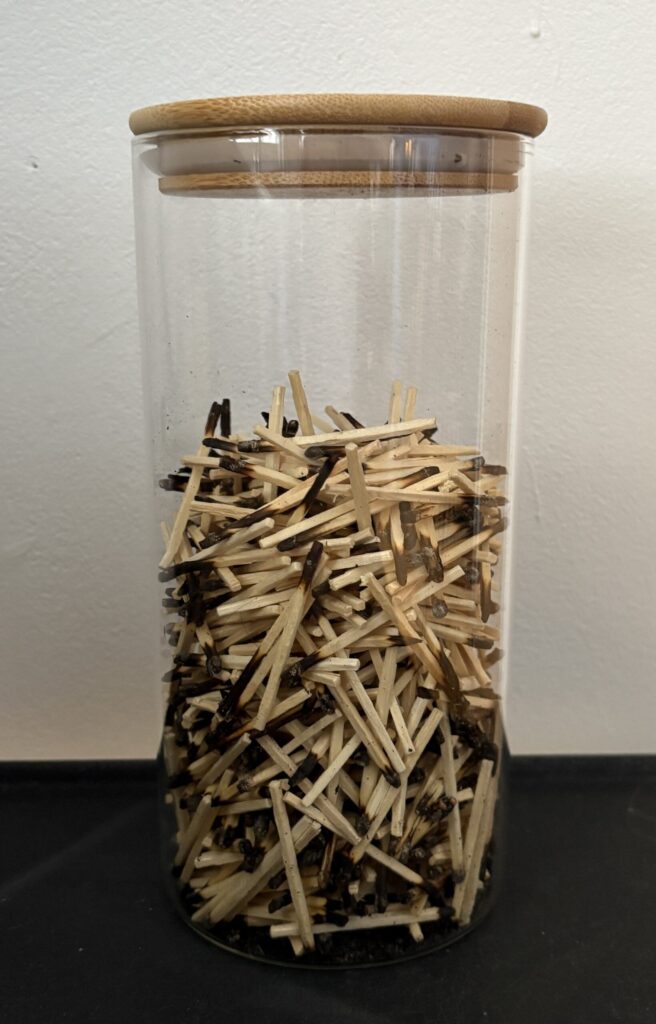
762.5 Breaths: One Kilometer, Leah Tipping, 2026 (paper, matches, jar)
For this piece I decided to measure a kilometer of breath. In order to measure this I had my roommate hold a match and see the furthest distance in which I could blow the match out from, this ended up being 1.3 meters. I then did the math to determine how many times 1.3M goes into 1 kilometer, giving me my final number of 762.5 breaths.
To create this piece I lit and blew out a match to represent each individual breath, and then used the previous lit end of the match to create a tick on my large piece of paper. This allowed me to create a large tally chart, which is equal to 762.5, following me drawing with the match I dropped the burnt match into a glass jar, which I also presented.
My motivation for this piece was my current journey quitting smoking, and how my personal lung health generates a unique amount of breaths for myself and my health. This number is also reflective for me, allowing myself to consider how I am preventing this number of breaths from continuing to grow by quitting. I chose to create a tally chart in addition to just presenting the matches, for the tallys remind me of an incarcerated person counting the amount of days they have been in jail; representative of the inescapable hold smoking has had on me and my life.
I aimed to encourage myself to allow the materials of my piece to more deeply connect with my work for this piece; instead of just picking a medium that I think would be the most appealing visually. I believe that using the matches as my main material has been very productive to my work, and has created depth in my work. Furthermore, this material choice has also further connected my creative process to peace and the motivations behind it. The act of actually sitting down and blowing as hard as I could 762.5 times was powerful, allowing myself to actually physically blow one kilometer. This repetitive motion almost felt like an inverse of smoking, reminiscent of my previous habit of repetitive inhaling, now juxtaposed by this repetitive practice of exhales.
Something I wish I was able to encorperate into the process of this piece is actually blowing the matches out from a consistent distance of 1.3 meters. I think that if I had more time I could have organized having another person assist me with the entirety of this project, having them hold the match at a distance for me to blow, yet th turn around time was unfortunately too short to accomodate this. I considered trying to create a setup that would be able to hold the lit match at the proper distance for me, yet I could not come up with a way to achieve this utilizing the resources accesible to me without creating a fire hazard. Since this was something I could not do, I resorted to blowing as hard as I could in order to still allow my breath to travel the 1.3 meters even if the match was not able to be at that distance.
Portion of process, timelapse
Turning the Gestures of Everyday Life into Art:
Although the performance work that exists within this concept may appear to be easily copied through the real-life human examples that they are able to pull from, the work is actually highly demanding on the performers due to the difficulty of properly conserving these movements. The gift that resides within this concept is the way in which a person’s life can be captured and preserved within their movements, allowing the performers to carry a piece of another person within themselves and their behaviours.
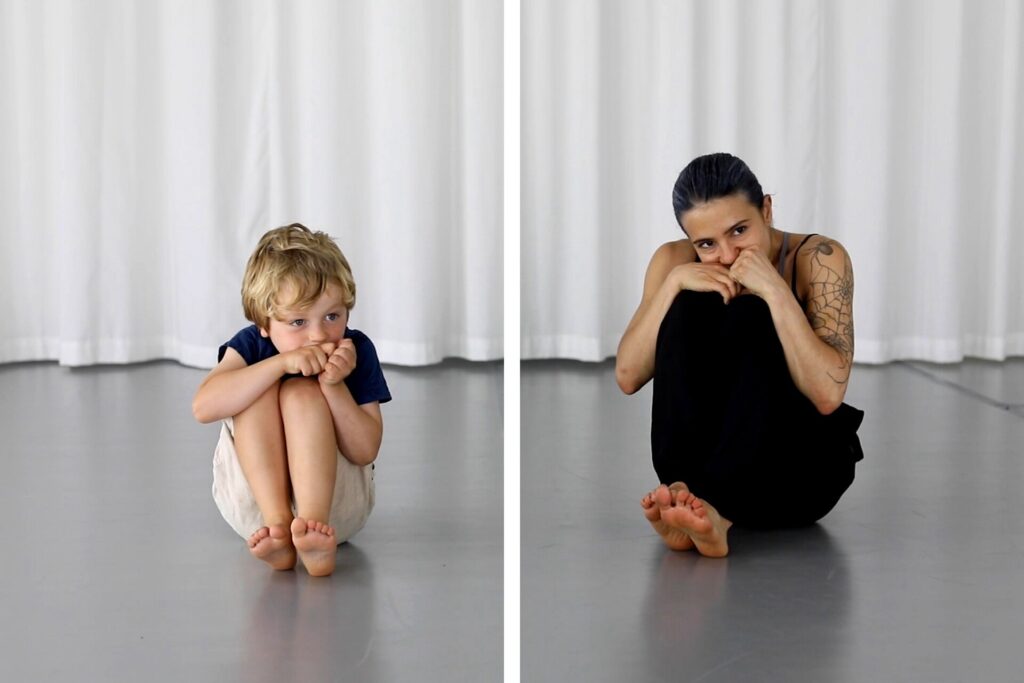
Turning the Gestures of Everyday Life into Art, New York Times (2025)
I find true beauty within humanism that is present within the associations that are made with certain behaviours, allowing memories to be struck up in relation to movement. Examples of this include dancing in relation to ecstasy and twirling your thumbs in relation to boredom. In addition to emotions being connected to movement, specific memories are able to be preserved within these emotions; like dancing in the kitchen with your friends when you had a sleepover that one time or when you were twirling your thumbs when you had nothing to do because your partner broke up. Although these memories may not all be positive they are still an important part of our lives and experiences as humans.
I also have people in my life that have certain ticks or movements that remind me of them and memories I have had with them.
- My father: Who always taps his pointer finger and thumb together, resembling crab claws, whenever he wants to have or try something somebody else is eating
- My boyfriend: Who always paces around a table whenever he is overstimulated or gets fidgety
- My younger brother: Who always twirls his hair whenever he is watching tv (something he has done since he was a child)
AGG Gallery Visit, Body Language (Queer Print Project):
Although this is actually a show that a piece of mine is featured in, I think that the other works within this show are something that has actually really inspired me and my practice at this moment. The curators for this show have been a huge inspiration to me for how they work in increasing the accessibility to art and printmaking; as well as working to cultivate a safe space for queer, trans, and gender non-conforming people. These spaces are especially important considering the current political state of the world surrounding these communities, but also pushes me to want to work to create these spaces in the future after personally feeling their impact.
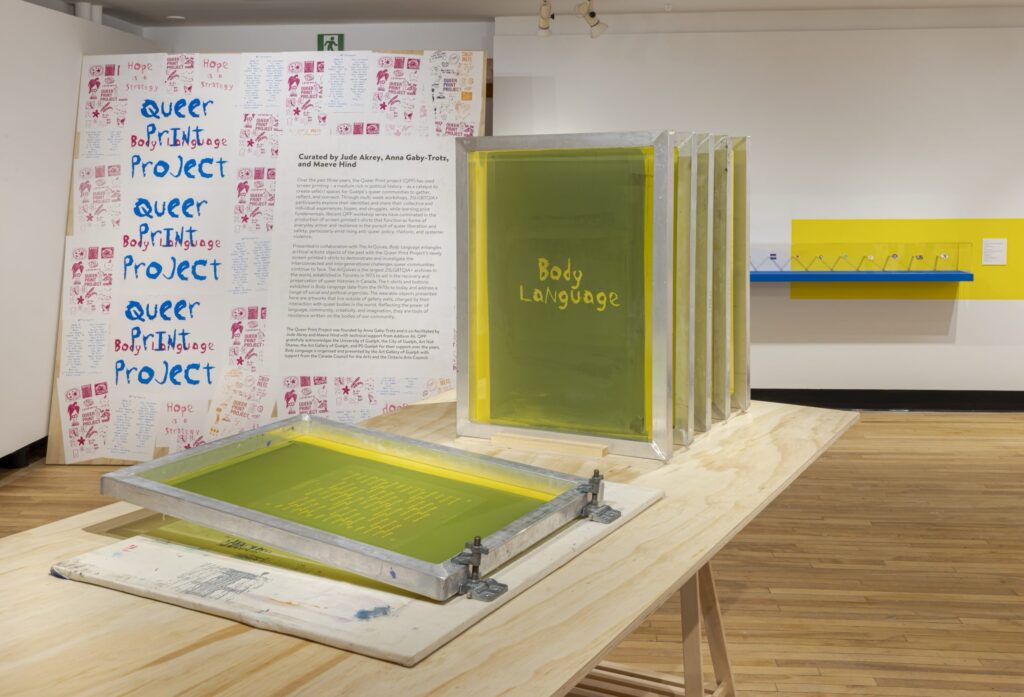
One piece that especially stuck out to me is the silk screens displayed within this show, incorperating the process into the gallery space. I think the process is especially important in this context, for the purpose of queer print is heavily process focused in allowing people to produce work in a safe and supoprtive community. This has acrually allowed myself to further consider how my process appears in my works, and contemplate when this can actually lead the viewers to use this as a way to more deeply connect with my concepts.
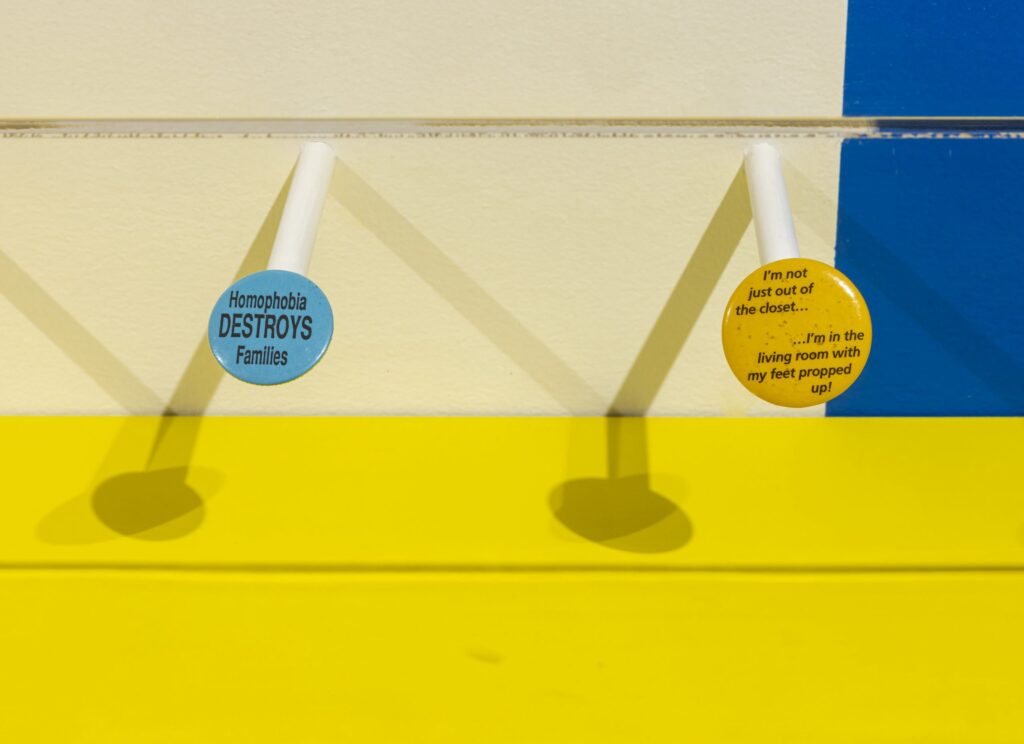
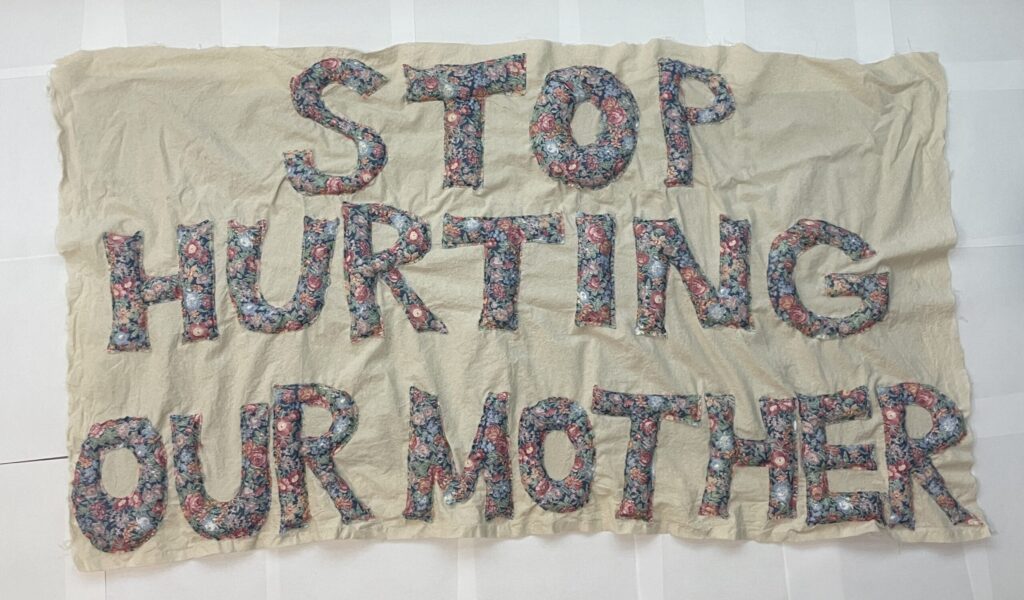
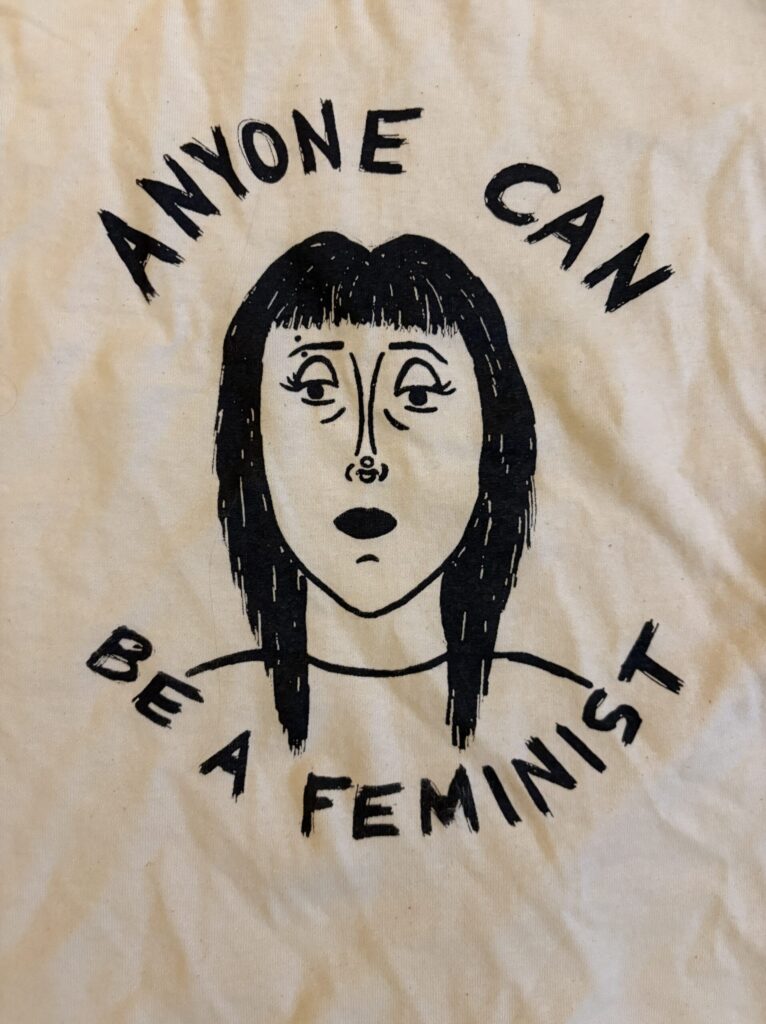
Another aspect of this show that really impacted how I view artwork and my own practice is the buttons displayed throughout. I have made pieces in reference to protest before, but I really enjoyed the presence of functional works. I also really appreciate the comedy that is incorporated within many of these buttons, especially one that says “I’m not out of the closet… I’m in the living room with my feet propped up”. This feels very similar to the type of jokes I tend to make in relation to my own personal experience and trauma, highlighting a way that many queer people cope with the social difficulties that come with being queer.
Bananas Are Berries:
Bananas Are Berries, One Shot, Leah Tipping, Becca Venter, Alaina Coles, 2026 (Video)
Bananas Are Berries, Edited, Leah Tipping, Becca Venter, Alaina Coles, 2026 (Video)
Bananas Are Berries, Animation, Leah Tipping, Becca Venter, Alaina Coles, 2026 (Digital Animation over Video)
For this piece my true intention was to actually have as minimal intentions as possible. Although I have assumed that themes of sexuality and gender would surface due to the choice of bananas and their phallic-like resemblance, I did not want to make this the main focus when creating this piece. Instead, I wanted to allow the work to be unrehearsed and try to avoid pre-determined outcomes. Our one shot does have a flow to it that may come across as rehearsed, yet that was only developed through the many takes this piece required in order to create a technical execution that we were happy with. The only real idea we had going into this piece was prompts of what we would do; (two people eating a banana, eating banana with peel, eating banana with a knife and fork, etc.) avoiding intentionally working to dramatically enhance our reactions, allowing the piece to be raw and human.
When creating our edited piece we knew we wanted to incorporate a variety of variations, but we did not have an exact vision for how we were going to edit them together to create one coherent video. We then had the idea to morph the videos together using human ticks or actions that occurred within multiple of the variations (gagging, biting, etc.). I am really happy with this decision for I think it really highlights the original intention to allow ourselves to perform in a way that was human, focusing on the natural reactions that stem for our humanism. Furthermore, I think these transition choices cultivate a piece that is unpredictable; not always allowing the viewer to know what is happening again. This. really plays into the uncomfortable nature of our work, which was one of our other intentions going into this.
If I were to re-start this assignment again I think I would choose some variety in shot types, for I think some closeups could play further into the unknown as well as the grotesque nature of this piece. I also think that could enhance the technical quality of this piece, allowing our technical choices to be just as interesting as our conceptual ones.
Process of figuring out how to break the banana together, video
Pauline Oliveros:
Pauline Oliveros works to expand sound into more than just an aural experience, but encourages viewers to accept this as a full body experience, engaging people in their entirety. This way of listening allows people to find emotion in sounds, encorerating our surroundings, physical bodies, and our psyche (memories, emotions, experiences, etc).
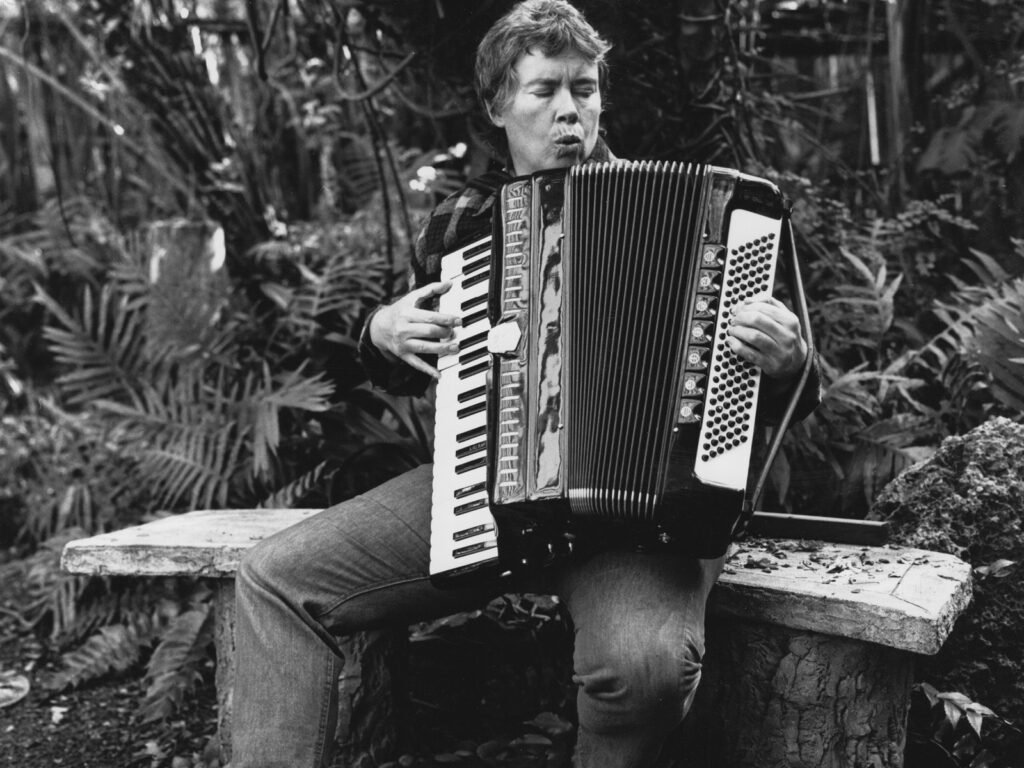
Pauline Oliveros, Playing the Accordian, Photo
Oliveros’ work really inspires me to continue experiment with audio work, and allows me to further reflect on the connection sound often has with memories or emotions. This could be a specific sound (such as yelling) being linked to my own personal trauma and other non-traumatic memories, or the way sounds enact my own emotions. Although this is something I have already experienced in my life, Oliveros allows me to enhance my conciousness of this occurance, leading to deeper connections that can be made to sound; by either reflecting on the past or aiming to make listening a full-body experience throughout my present and future.
Frequencies of Intimacy:
Frequencies of Intimacy, Leah Tipping, 2026 (Audio)
This assignment I really wanted to challenge myself to portray a concept without the use of tangable language. Although I believe language can be very productive in inacting a viewer’s empotions, I wanted to see if it was possible to create a flow of different emotions without directly utilizing language that makes the intended emotions obvious. I also thought that this goal could allow the viewer to enterate aurally triggered emotions in a way that is personal to them; not feeling persuaded to feel a specific way.
My concept stemmed from a stim that my partner often does where he likes to get me to hold a random note and them harmonize to whatever sound I make. Although this just began as one of his stims, this experience has actually grown into something that makes us feel very connected and in tune with one another.
Although the place in which my idea stemmed from already has themes of connection present I wanted to encorperate a more general intention of utilizing layers and different notes in order to create a flowing, changing sound that could cultivate a variety of different emotions. This string of emotions is aimed to speak to the phases in a relationship, for relationships are not stagnent, but are constantly changing. I wanted to include a variety of different emotions (both positive and negative or uncomfortable), for each relationship experiences all kinds of emotions; not just positive ones. My partner and I holding these notes together also speaks to the importance of relationships, for even through the more uncomfortable emotional notes we are still holding them together; even if unsteady. This speaks to a crutial part of relationships, continuing to support one another, especially when things are hard.
I think this piece was very successful in acheiving my goal of portraying a variety of different emotions that are intertwined with one another. I was also very happy with the process of creating this piece, for it was not my main focus or goal in this assignment, yet it ended up fitting really well into my concept. The experience of recording the audio clips with my partner acrually turned into an experience that really allowed us to connect with one another, for he has never collaborated with me in my artwork, but I think this collaboration actually allowed us to further deepen our connection to one another.
I normally like to reflect on things I would like to do differently or that I could improve on, but I am honestly so happy and proud of not only my final piece but my process, and I wouldn’t change anything.
Conceptual Portrait Proposal:
For this assignment, I was originally planning to create a piece that incorporated my previous audio assignment as a portrait of the connection between my partner and me. My goals were to make this into an installation piece that could be interactive with the viewer, incorporating more levels of connection into the work.
I originally planned to make a large-scale installation that would be floor to ceiling with lots of fabric and potentially stuffing in order to be comfortable for the viewer to hug and interact with. I was planning to utilize these audio sensors by Playtronica in order to connect them to the fabric utilizing conductive paint, which would complete the circuit, allowing the audio to play if you were to interact with the work.
Although I began to think that is going to be too labour-intensive, considering the amount of time that we have, and my other problem with this was that I felt that the overall figure of the installation didn’t necessarily have a purpose, except for the fact that it is encouraging physical interaction.
I have now decided that I’m gonna go with more of a ready-made, utilizing a bed with a blanket or comforter on top that I will make conductive by either using conductive paint or copper tape. This applies further to the portrait of me and my partner, where, as I mentioned before, the basis of my piece was inspired by one of his stims, which is often done when we are sitting in bed together. Furthermore, the idea of a ready-made is obviously much less labour-intensive, and overall gives me more time to work on the utilization and figure out the sensors to ensure that the concept is actually able to occur.
Leave a Reply
You must be logged in to post a comment.