
Hello! My name is Claire and I am in my fourth year of studio art. I grew up in Toronto and love trying out new hobbies, especially arts and crafts. When it comes to art, I always try to find new ways to push myself out of my comfort zone. I am interested in making more comedic art that pushes social boundaries. I was recommended to take this class by some of my peers who thought it would be right up my alley.
KM Assignment – Rotating While We Rotate
“Rotating While We Rotate” is a video of me somersaulting that loops 365 (rounded up from 364.5) times. Each summersault is nine feet, meaning the total distance rolled is one kilometer. My vision for this project was for viewers to watch a sped up version of me summersaulting back and fourth from one end of the screen to the other. I intend for it to look silly and bring smiles to people. Initially, this was the whole premise for the project, however, after doing the math and coincidentally needing 365 summersaults I decided to expand on this. Earth rotates around it’s axis once a day and rotates around the sun once every 365 days. Each somersault represents a day in a year. My hopes are that this video reminds viewers that no matter what we’re doing (whether it’s productive or not) we are always moving.
Marina Abramovic
1. What are some of your first impressions of Marina Abramovic’s performance works, based on the documentary? Use an image/example of one or two works to describe aspects you admire, and aspects you might agree are problematic?
My first impression of Abramovic is that she’s very bold and likes to push viewers comfort zones. I admire her ability to connect and expel so much emotion out of her audience just by sitting still in “The Artist is Present” and how she was able to continuing month after month giving every volunteer the same amount of attention. I admire her stubbornness to continue even though it was taking a tole on her mental and physical well being, not once considering quitting as an option. I also admire her dedication in “The lovers” walking for three months straight on the Great Wall of China. However, I do see some problematic aspects to Abramovic’s performances, particularly in her Rhythm 0 (1974) series where she repeatedly whips herself and in another performance cuts herself. I think these performances could easily be misinterpreted as glorifying/glamorizing self harm.
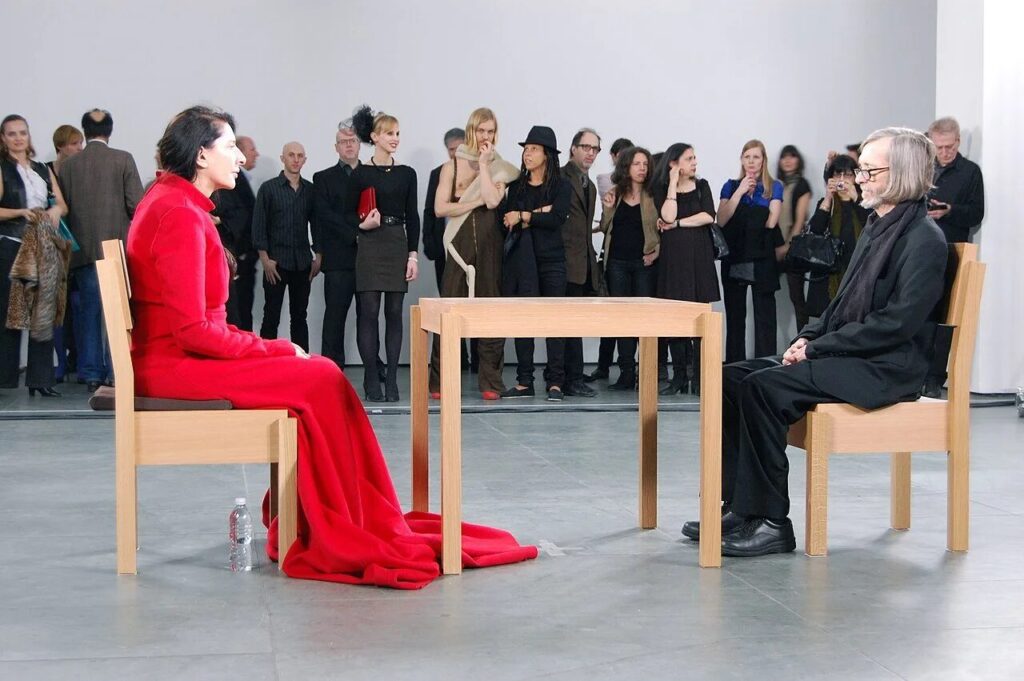
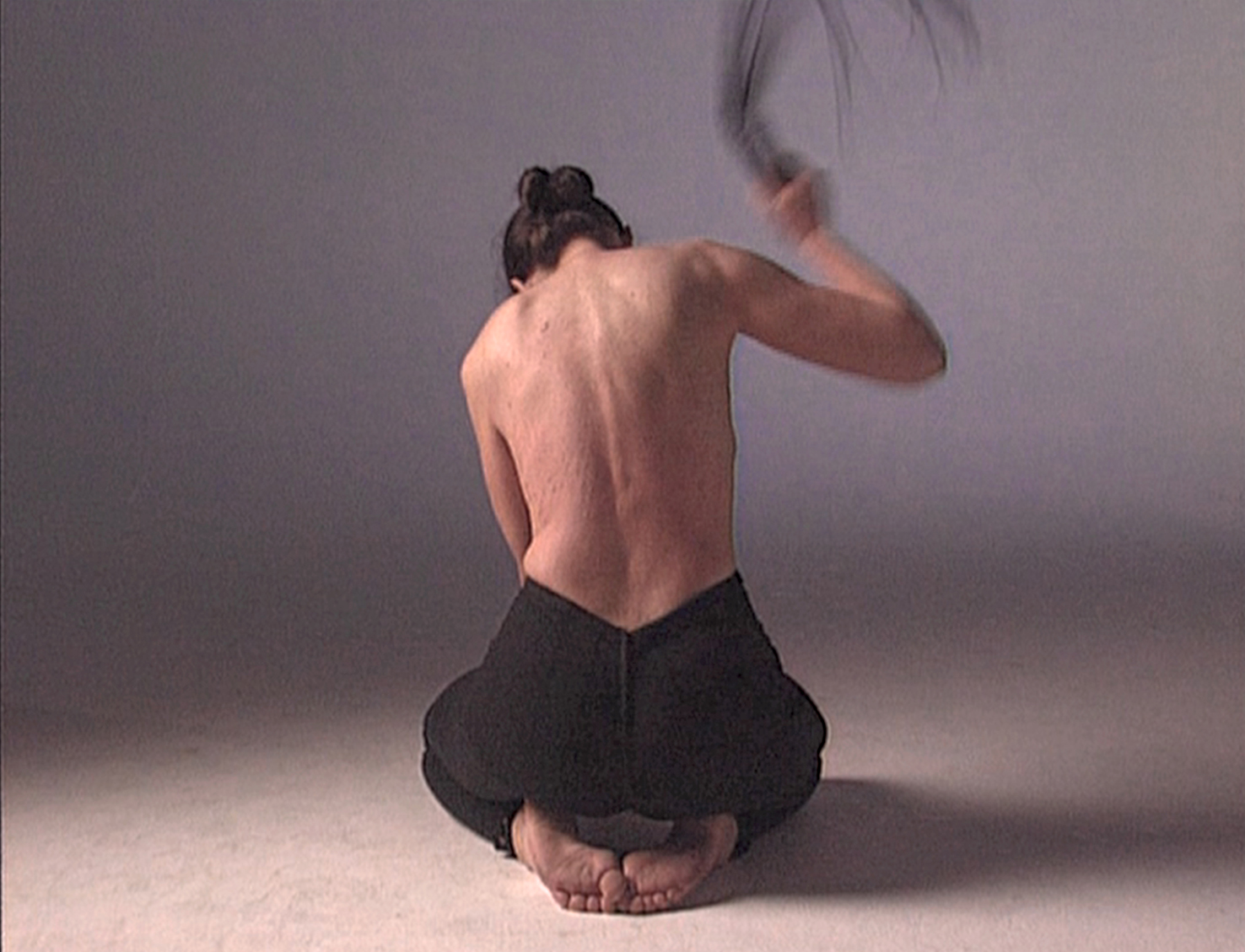
2 . What have you learned about features of performance art based on Abramovic’s work? Name a few key features according to her examples. Include an image to illustrate. Consider her quote, “When you perform it is a knife and your blood, when you act it is a fake knife and ketchup.”
Abramovic’s performances have taught me that the key to performance art is keeping it raw and authentic. During the documentary it was mentioned how David Blaine, a famous magician at the time, was interested in performing with Abramovic. Ultimately they decided against it because Blaine was an illusionist and Abramovic’s persona was being raw and genuine. Lots of her performances also contain aspects of making people feel uneasy. She achieves this by making many of her performances interactive. Whether its by making the audience walk within close proximity of naked models, by maintaining one on one eye contact or inviting them to touch her with various objects.
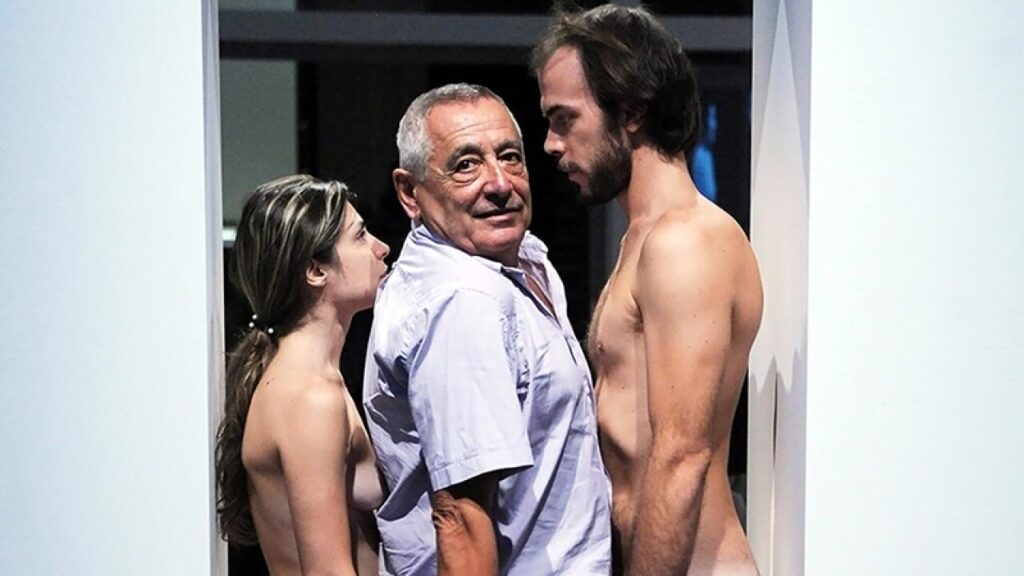
3. Discuss the ways performance art resists many museum and commercial artworld conventions. How does Abramovic solve/negotiate some of these challenges, and do you find these compromises add to, or undermine the ideas at play in her work?
Typically museums and the commercial artworld holds a preference for physical and/or digital pieces of artwork, for example a painting or film. Something that can be easily accessed anytime from almost anywhere. Performance art resists this by being more of a one time experience, being limited in the number of times an artist is able to perform it both physically and financially. This makes performance art more exclusive. Abramovic solved this in “The Artist is Present” by performing all day, everyday for three month straight, this made her performance much more accessible. For example, the documentary featured a man who was waiting in line to experience Abramovic’s performance for the sixth time as well as a woman who had travelled from across the world to see her.
Leave a Reply
You must be logged in to post a comment.