About me!
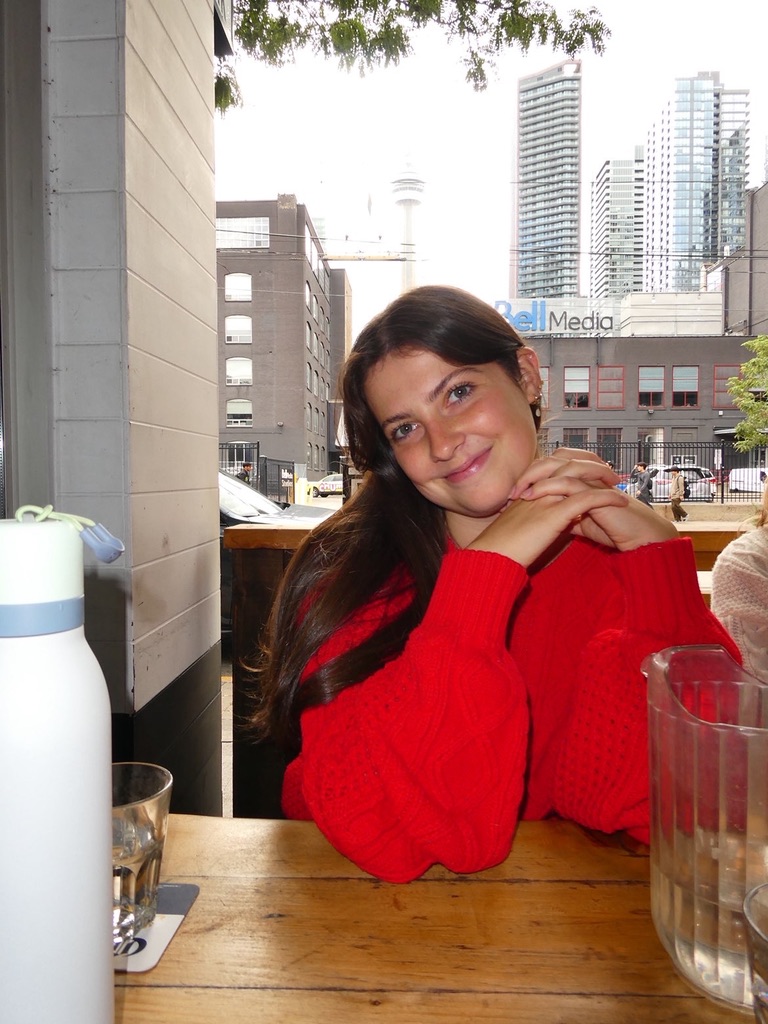
Hi! I am a third year Student, majoring in studio art, and minoring in french and business. Growing up I always wanted to do something creative for my career, for the longest time I wanted to be a hair stylist and I actually ended up doing several professional gigs with hairstyling, including working as an assistant at a hair salon for a year in high school… which confirmed I did NOT want to work at a har salon! Just wasn’t the right environment I was looking for, and I felt I needed a job I could bring more variety to everyday, it just felt too repetitive! I always loved visual arts and had it as a hobby I would experiment with every once in a while but I got really into it in grade 12 when I could finally fit art into my class scheduling. I ended up applying to a variety of art, film, and business programs at different universities, but the studio art program at the University of Guelph really appealed to me and excited me! I also loved the campus! Now Guelph is my favourite place ever, and I am so happy with my program choice, I was definitely meant to explore art more in my life! Something that has also always brought me joy is working with children, although I denied my whole life that I would be a teacher because that’s what both my parents are… of course thats all I ended up wanting to do! Having a variety of art and french courses both excite me for my future career as a teacher, as I would love to have art as a big part of my teaching style, and my love for french will also be beneficial for getting me a job (hopefully). My roommate and I have a dream to open a school one day, run with my interest in business, with a focus on outdoor education, the arts, and helping children with special needs!
Marina Abramovic
1. My first impression of Marina Abramovic’s works was how shocking it was, the level of commitment she had to her work. When she was preparing the actors and herself to be performing 6 days a week, 8 hours a day, for 3 months, I couldn’t believe it was physically possible to accomplish the specifically demanding tasks their bodies had to endure for that long. Especially with Marina’s main sitting performance work, what seems so simple is what I thought would maybe be the most challenging for me. As we were watching the documentary I started getting uncomfortable and had to keep switching my positions on my reasonably cushioned office chair, all because I had been sitting for an hour and a half maximum. I couldn’t imagine the level of commitment it took her to sit with that level of stillness, for that long, constantly. The commitment she had to her work drew me to her as an artist, as I admired that she fully dedicated herself physically, mentally, and emotionally to her works, to the maximum degree anyone could possibly imagine dedicating themselves to something, which is something almost no one can do. However this also simultaneously set off some red flags in my head, as she ended up having an immense audience, people who idolized her and even started copying what she did. There were parts of the documentary where spectators were shown staring at each other, as if to recreate her work on the sidelines, which is a really beautiful and interesting thing to happen with engagement, however I do worry that people may copy the not-so safe portions of her work as well. I find that demonstrating triggering topics need to be done so carefully and sensitively, especially with art, as it is one of the most inspiring things in the world, but it can inspire/influence people positively just as easily as it can inspire/influence people negatively. The idea of fasting and self-harming that is involved with many of her works did make me question if it was something to advertise, and if she approached that properly.
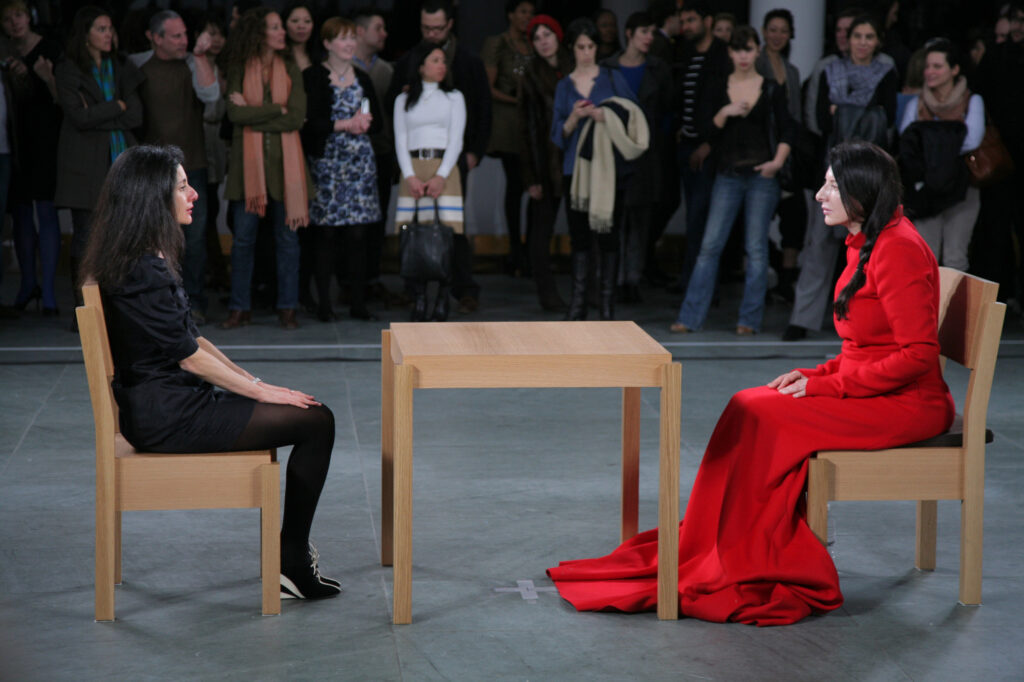
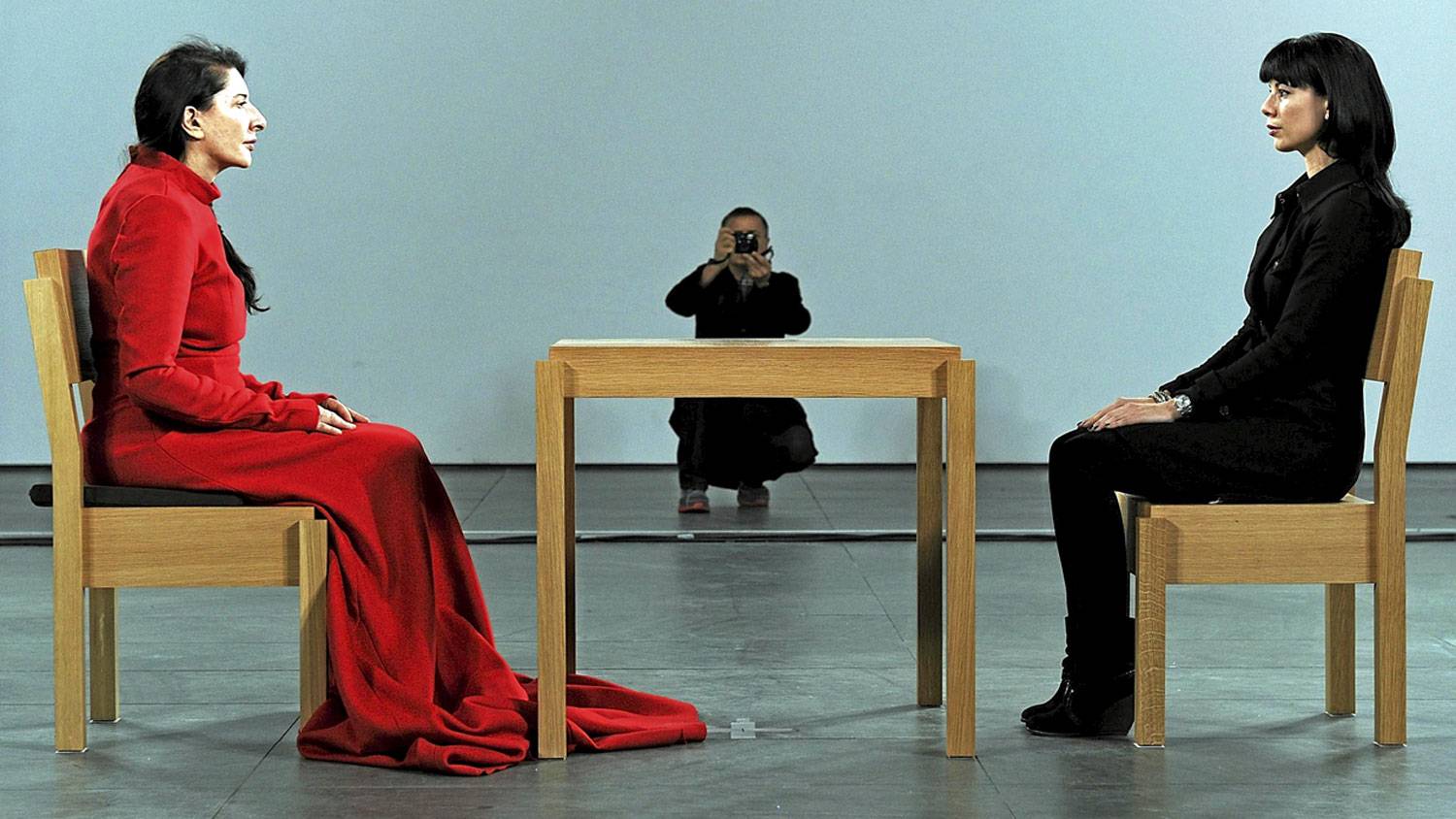
2 . A feature about Marina’s performance art that stood out to me was the intensity of eye contact. I learned that this is a very effective feature, as it sparks discomfort in the viewer, but that discomfort is what really draws people in and evokes a reaction in the viewer, which is typically the goal of performance art. Whether Marina was making eye contact with spectators as a sole method of communication, like she did in “The Artist is Present”, or making eye contact with another actor in her performance work, like she did in “Imponderabilia“, the feature of eye contact was crucial to intensifying the experience for herself, the actors, and most of all the spectators, also creating a sense of intimacy that she successfully incorporated into her works. Her quote “When you perform it is a knife and your blood, when you act it is a fake knife and ketchup.” really allowed me to realize the intentional realness she brings to all her works, and how reality is such a key feature to her works being successful. What I think Marina understood is that when people watch a horror movie, or an uncomfortable scene in a play, this will obviously evoke a discomforting feeling, however spectators can always have a level of reassurance that it is all fake, its just special effects, makeup, fake blood, or a camera working behind actors who will get along as friends after the scene is over. With performance, Marina ensures that people understand she is completely devoted to the experience people receive when watching her, and part of that is knowing that what she is doing is 100% real. They watch her in real time, doing very real things to herself, or with others/ other things. This not only makes it that much more shocking for the viewer to see and understand, but it leaves a deeper impression on the long lasting effects spectators have after seeing the performance.
3. I believe the main way performance art resists many museum and commercial artworld conventions is the idea of the present moment. Performance art erases the concept of “historical pieces”, or “modern pieces”. There is no added value to performance art of how old or new it is, it is always happening in that moment, and cannot be saved in the archives of a museum, waiting to be shown again. A lot of artwork carries meaning based on what was happening during the time it was created this can be a good thing, as we can keep it in the public eye for as long as we feel necessary, or re-introduce pieces that remind us to revert back to certain practices, or remind us not to repeat certain practices. However with performance art, there is no imagining what happened years ago, or thinking about how we should mold our work to be fitting in the future, it is designed to impact the viewers who are present there, in that moment, and all that will stay in the future from it is the impact it had on people. Performance art needs to be so impactful because it is purely memory that carries on its impact. Abramovic interestingly recreated her works, which is how she made a compromise with this idea of reminding viewers of what they have already seen. I believe by creating an entire exhibit solely based on recreating her past works, it did draw more attention to her as an artist and an icon, and I think that throughout this process she became more idealized and famous, which did bring more attention to her impactful artwork, but it also mostly drew attention to her, which isn’t necessarily bad, I just don’t see it as necessary to the impacts she was originally trying to make with her works. I think this may have undermined the ideas at play in her work, as people seemed to end up coming not to be influenced by art, but to come see something famous.
Km assignment!
1 Km of LIFE
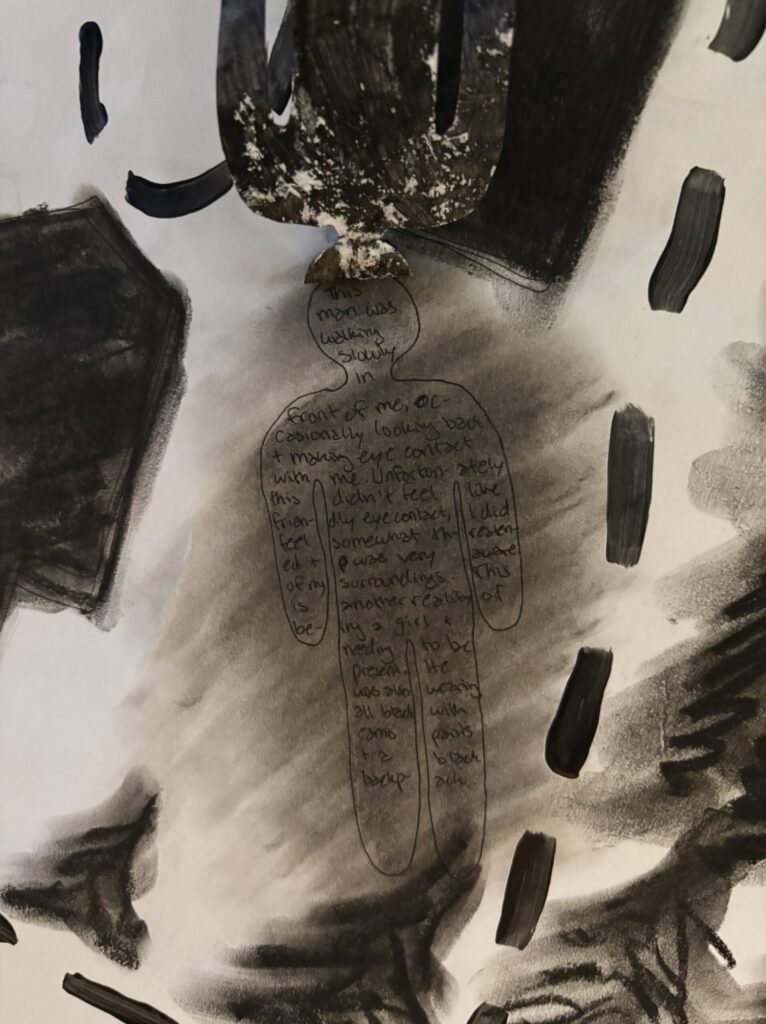
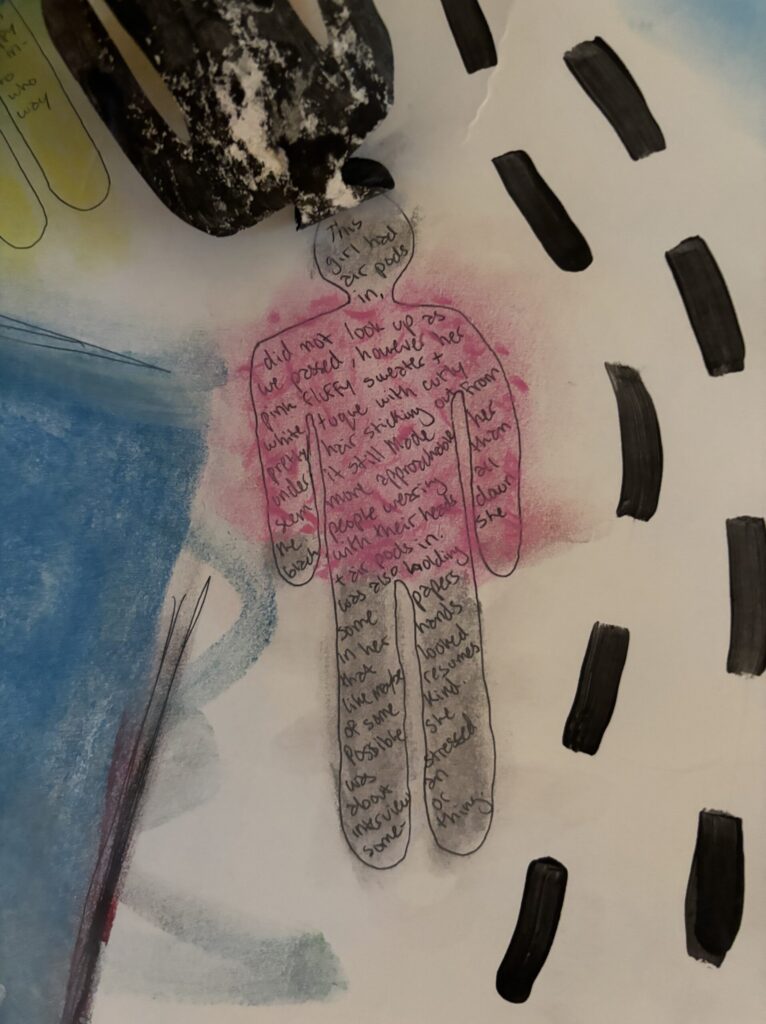
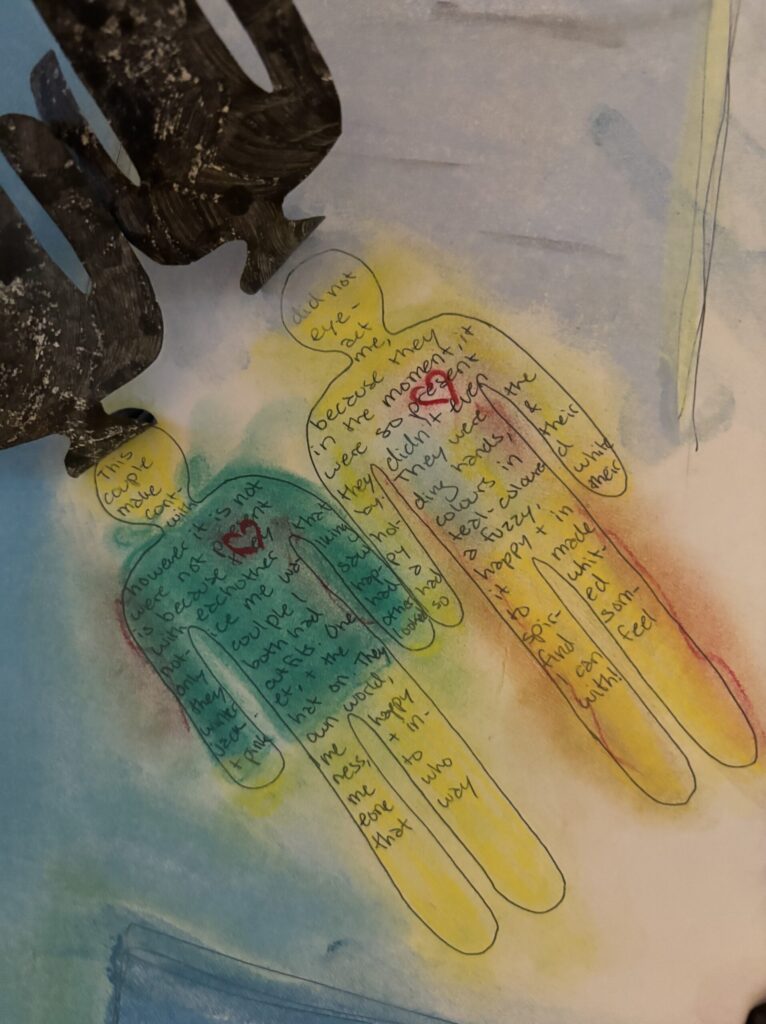
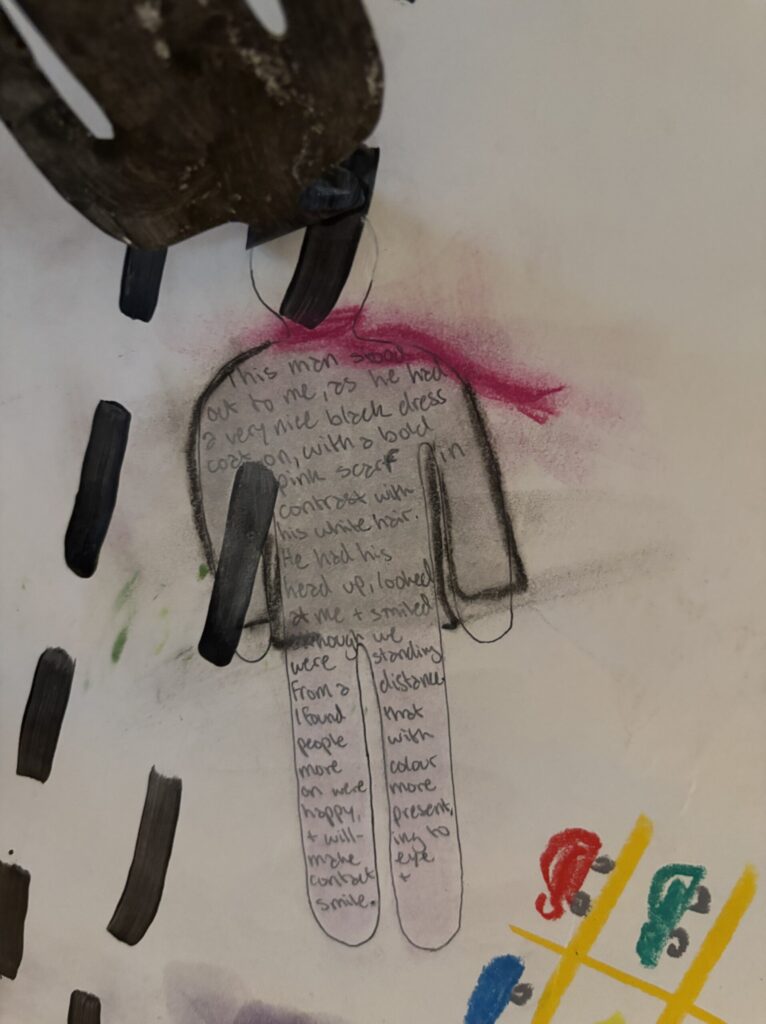
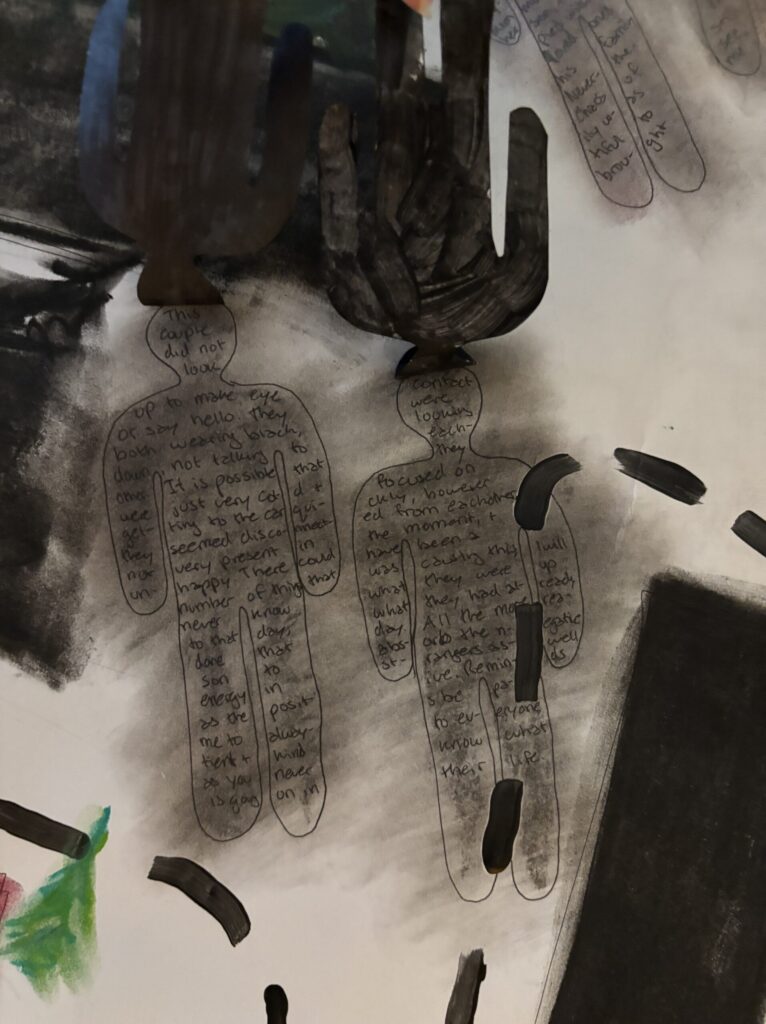
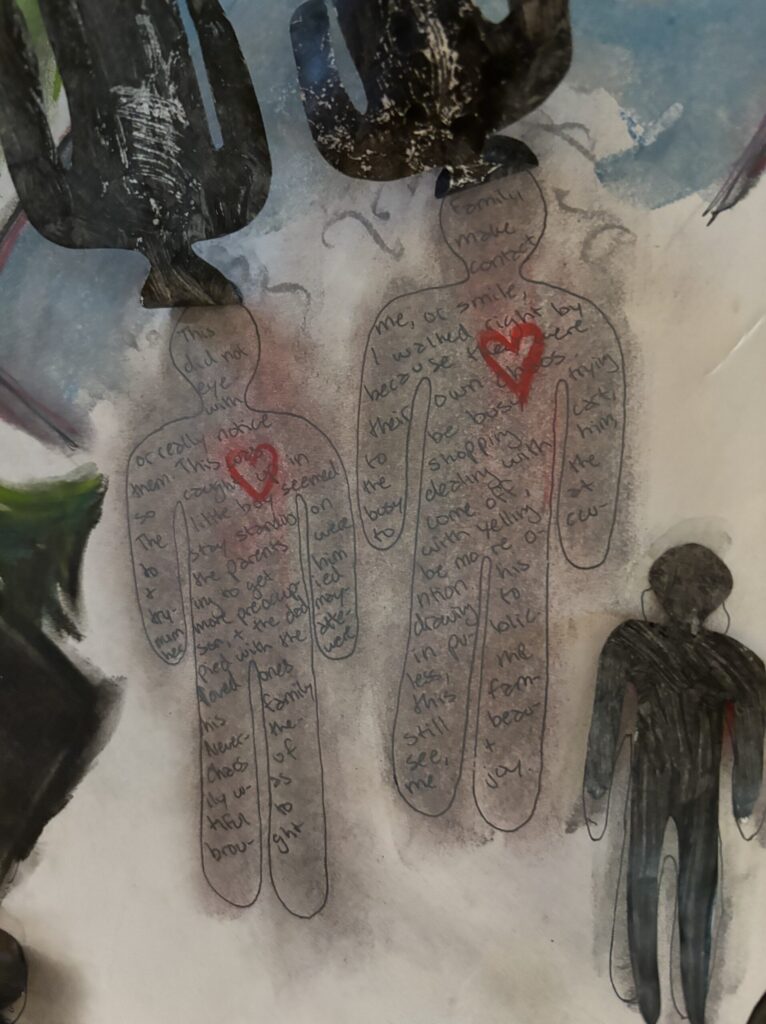
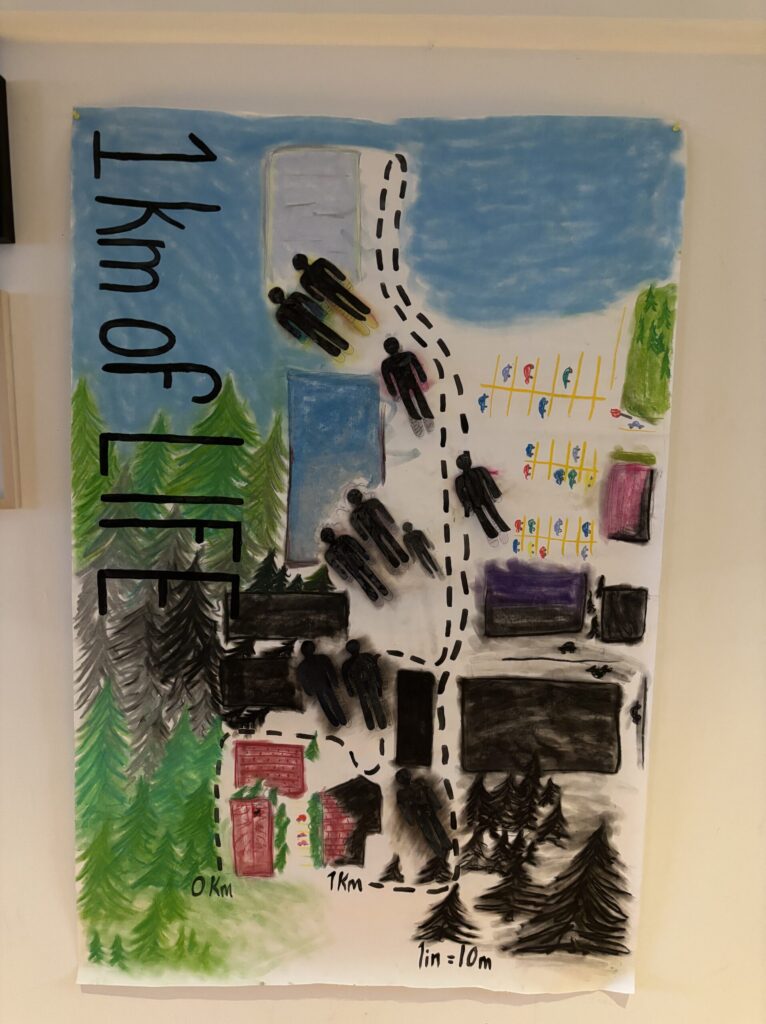
My work 1 km of LIFE has several goals: Firstly to inspire people to be more present in their everyday lives, and to have more of an understanding of the people around us, whether we know them or they are strangers to us. It’s meant to make people think twice before being rude to their waiter, honking at someone necessarily, or loosing their patience on a complete stranger. This work is a way to remind us that everyone has a unique live they’re living, and we have no idea what that includes, unless we know them personally, and even then people hide a lot more than we believe.
I think about this concept every time I am stuck in traffic. It’s beyond the capabilities of my imagination to picture the individual lives that are being lived so close to me, all down the highway, yet I will never know what these people’s stories truly are. I have no way of knowing if the family in the car next to me are anxiously waiting for the traffic to clear because they are heading to Canada’s Wonderland, or a funeral. I try to always treat people with compassion and kindness, because you really never know how your behaviour may impact them, and I think the world needs more of this mentality. With this piece, people will realize just how much goes on around them that they would never consider, in only a km.
The process I went through to complete this work definitely felt experimental, as my original plan was to go on a km walk, interview everyone I ran into, and make a movie about/with my findings. I was completely disregarding a big issue: the winter. Not only did I have to go on several walks before discovering an area that actually had people walking in it, but once I found a good area, people were then bundled up in their winter gear, looking straight down, and walking as fast as they could to get from the grocery store to their warm car. Needless to say, I quickly ruled out the idea of asking people if I could film them answering questions about how they were feeling that day in the freezing cold. I am very glad this didn’t work out however, because I believe my final product was a way more successful way of attaining my goals.
I decided to record voice memos as I walked, sharing my observations of each person who walked by me. I recorded whether they made eye contact with me or not, what colours they were wearing, if they were alone or with other people, did they have air pods in or not, did they seem happy, frustrated, sad, etc. I made a few conclusions with my findings. First of all, people who had colour in their outfits were more likely to make eye contact and smile at me, they also just looked happier in general. The same went with people who were not alone, except for one couple who were barely acknowledging that they were together, let alone noticing that I was there. All of these things of course led me to wonder why they made the choices to wear colour that day, or what was going on in their lives that made them seem happy or sad.
I chose to use chalk pastels for my final work for several reasons. I loved that chalk pastels are supposed to spread, just like they way we appear in public rubs off on other people without us noticing. The flaps I made to show the people I ran into are black silhouettes to represent the fact that without looking up and intentionally noticing, people are nothing but faceless, lifeless, “NPC’s” around us, but with the smeared pastel colours underneath, what was truly underneath them could shine through, and when you lift up the flap you can read the details about what was really going on based on my observations. I used this concept of smudged “energies” in pastels all over the map, where things would be shown in colour or black and white based on how bright or dark their energy seemed to me, affecting the energy of everything around them.
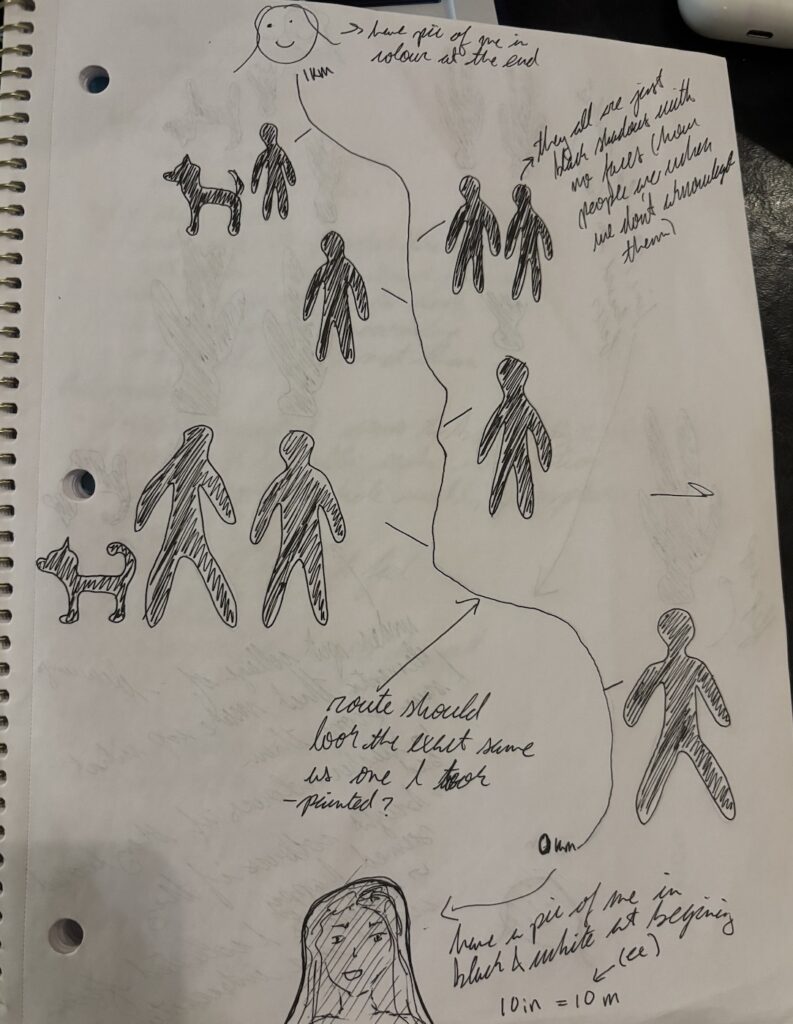
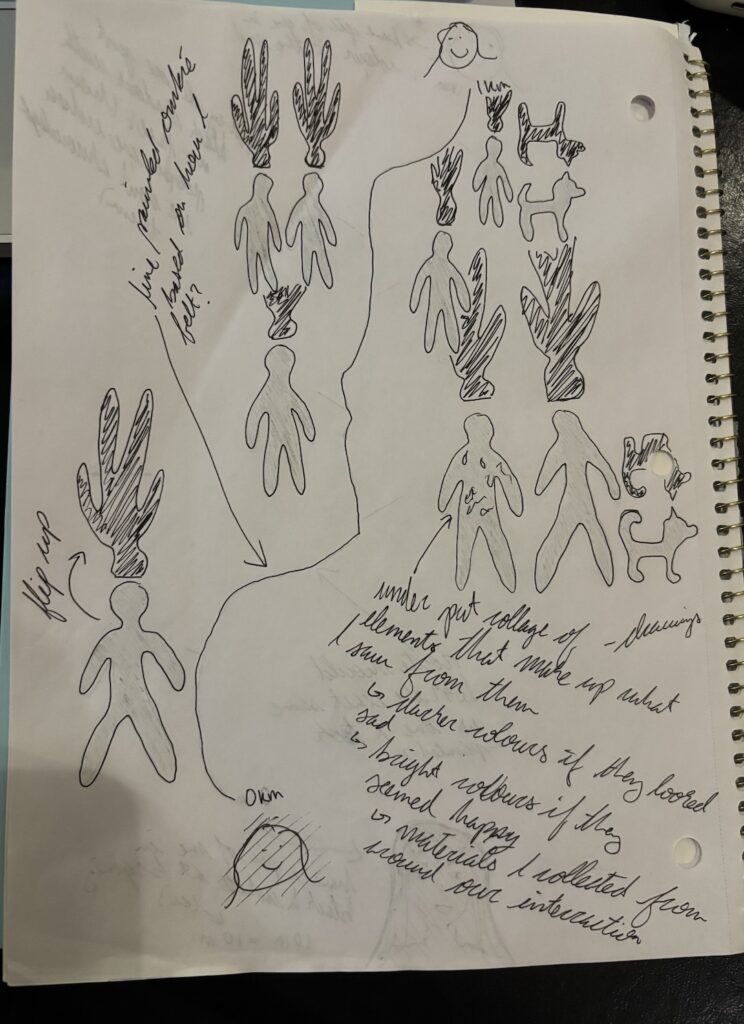
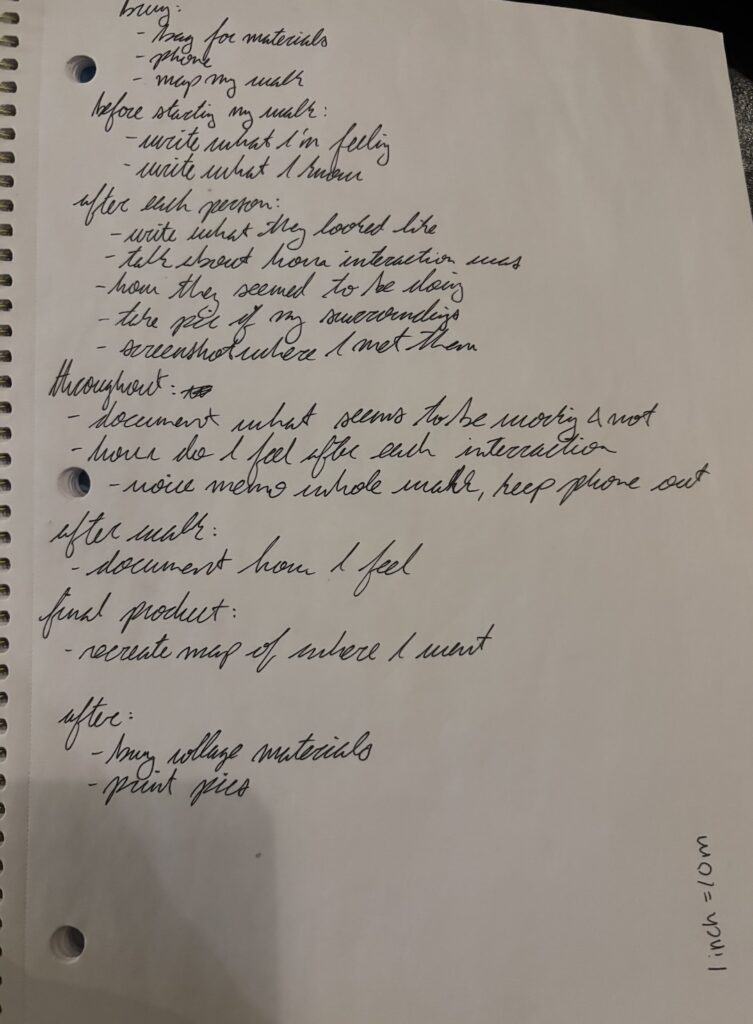
^^My tentative plan after having to rethink my original one
Katja Heitmann article
- Describe the work discussed in the article and the unique challenges – as well as the unique gifts- that come with attempting to archive personal movements?
Something very unique about the works of art that are discussed through this article is it’s reliance on other people’s participation, people who are not the artists/dancers. One challenge mentioned is that the donors started to consciously or subconsciously act differently than usual because they wanted to “do well”. The whole purpose of these studies were to observe the subconscious habits people have without paying attention, so when they are being studied, and aware that they are being studied, it is harder to achieve this goal, keeping everything “natural”. The positive side of working with people for these pieces is that it ends up being so meaningful. This study has such a unique gift of being able to cary on the memory of people who aren’t even here anymore. We may be able to look through old photos or letters or objects that our loved ones left behind, but there is no way to see them live, in action again. This study makes that possible by focusing on movement.
- Discuss one or two examples of movements in the article – what strikes you about them?
One dancer woke up in a specific fetal position one day, which was a gesture she had adopted through an older study of a 40 year old woman. This stood out to me because it proves how embedded these practices and studies are in the dancers. We may be reminded of physical artworks over the course of our lives as they resurface occasionally, however with this movement piece they are written in the dancers physical bodies, which they cary around them forever. If this dancer still was showing old studied habits even when she was asleep, completely unconscious, this shows just how deep these memories resonate.
Another example that really stood out to me was the instagram duck faces. This is a gesture that people picked up on as a trend, however there was no particular reason for it. It is interesting to me because it shows just how quickly we pick up on each other’s gestures, even when its is the facial expressions of complete strangers online.
- Describe the habitual movements/unconscious gestures, tics etc. of 3 people you know well. How do individual body parts move, and how does the whole body interact? What about facial expressions, and emotional valence of the movement? How does body type inform the movement?What do these examples of small movements mean and imply?
My grandmother and her brother both have a habitual gesture of putting their hands clasped together with their pointer fingers sticking up sort of in a gun shape, and tap the tips of their fingers over their mouths while they are concentrated. Their faces sort of look a bit zoned out, as they listen carefully, looking like they are really seriously pondering over the story being told to them, even when it is not that serious. What I find interesting about these movements is that both of them do it, which makes me think that they picked up these gestures from each other, or even maybe my great grandparents. If this is the case, it is really a cool thing for me to experience, because although I have never met my great grandparents, I am witnessing their presence through the gestures of my grandmother and great uncle. It also implies that they must have spent enough time with each other or with their parents to pick up on their habits, which is a really special thing.
My mom always makes this face when she is listening to me tell a story that is at least somewhat alarming and it makes me laugh every time. She doesn’t realize she is doing it, but her mouth makes this huge downwards grin, showing her teeth while her eyebrows go up and her eyes grow big with concern. The best thing is that this face starts to appear even if the story isn’t that bad, you can just tell she always has this concern in her, which definitely speaks to her as a mother and person. Usually I laugh at the fact that she makes this face so often, and then she laughs because she doesn’t even realize she is doing it, then I imitate it which makes her laugh harder, but because I imitate it so often, I have found myself starting to do the same face when I am listening to a concerning story. This further shows how not only do we have our own habits, but we each have the same habit of picking up on each others habits.
My roommate shakes her hands sometimes when she is feeling overwhelmed or anxious. It’s almost as if she is literally shaking off the bad feelings, or trying to reactivate her body and ground herself, because I’m sure that just like everyone, her anxiety has a tendency of having physical effects on her body. Usually she also takes a deep breath in as she does it, opening her eyes up wide. This really does look like a complete reset, that she of course does subconsciously, but it is a way that I can pickup on her feelings, and know she may be anxious. This is interesting because I think the more observant we are, the more empathy we can have, as we pickup on each other’s tells that something is wrong, we can easily then know to ask if things are okay, etc.
Toronto field trip
Onsite Gallery
Memoryforms
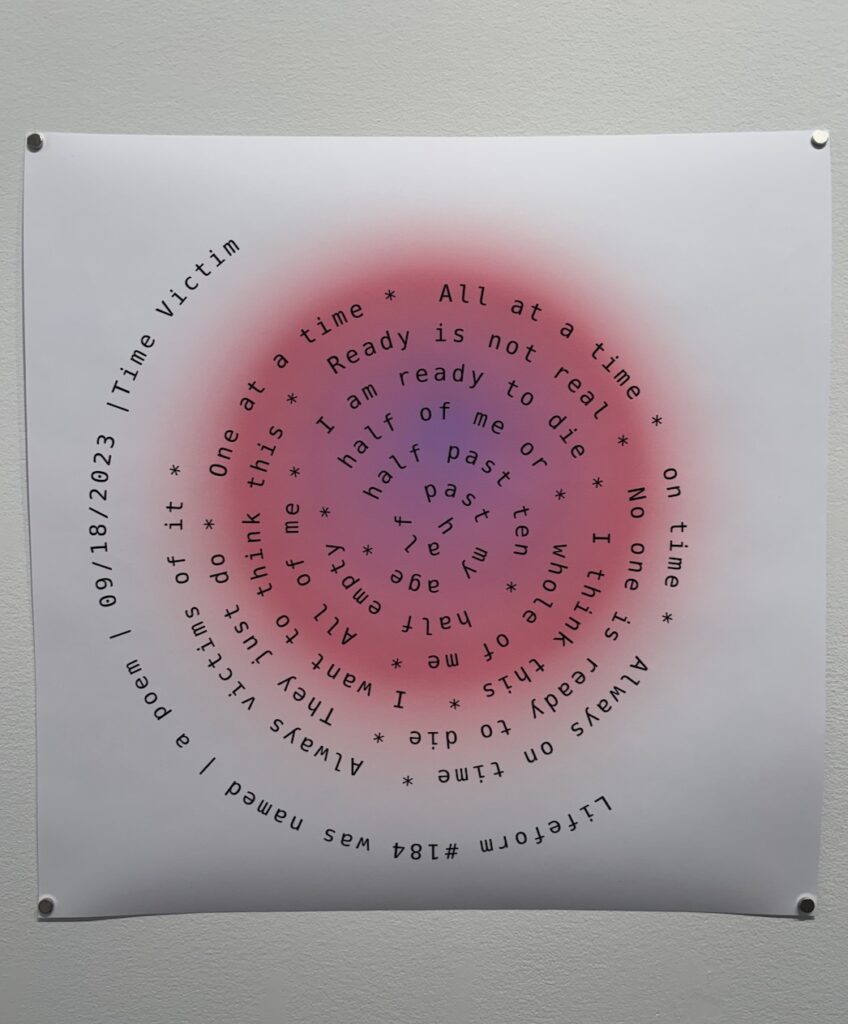
Memoryforms by Sarah Friend is a collection of spiral graphics combining colourful ink and text. Each “memoryform” reflects on a dead NFT-based entity. Some of them would go against the typical very digital, straight to the point, almost scientific language that most of them had. These ones were more emotional, more creative, and seemed more personal, less robotic. I found these very interesting, because they still had the “note taking” quality to them, however it felt more like word vomit of the artist’s thoughts. As someone who journals, I find the meditative act of just writing everything down that comes to mind as it is in the moment a very interesting and captivating practice, and I tend to be drawn to this approach in my art practices as well. In my KM project, I used this strategy to document my thoughts as I walked by strangers to observe them, they displayed these words that came to mind in the silhouettes of people on a visual chalk pastel map. Memoryforms really reminded me of my KM work as the colours behind the texts seem very similar to the idea of the “aura” that shone through the black bodies silhouettes in my KM assignment, and in this case, the black, very digital and emotionless text overtop of it. I think they both speak to the idea of showing the deeper meanings, memories, and associations we have behind very mundane, unfamiliar, and seemingly meaningless subjects.
Fall/Chute
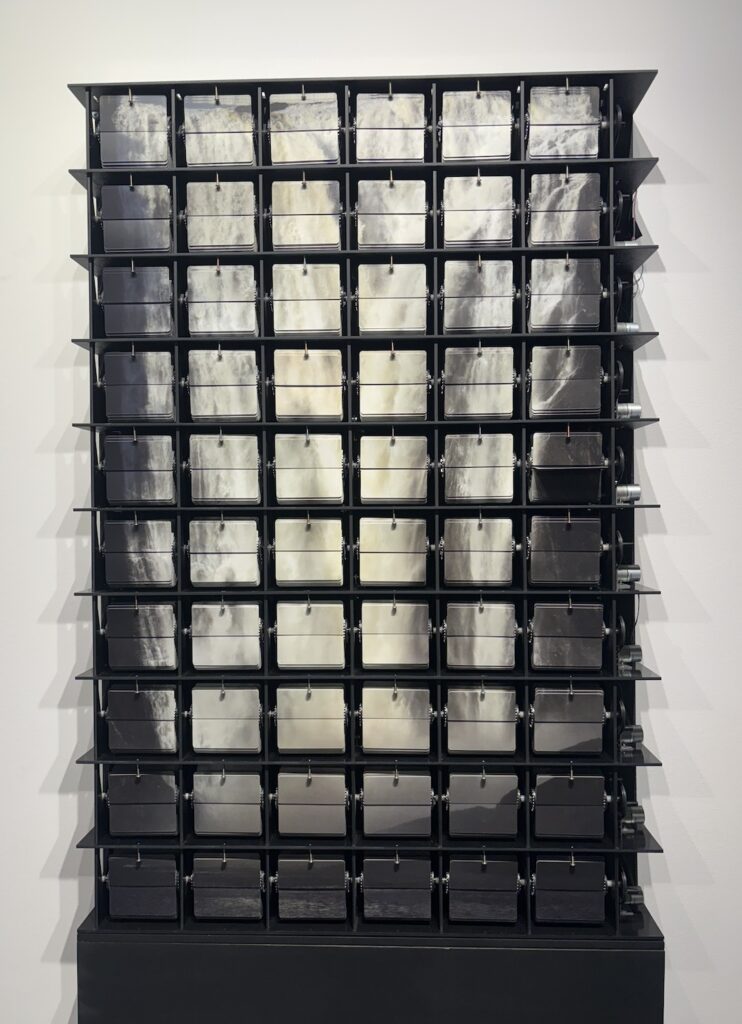
Fall/Chute by Dianna Landry is a mechanical mural that replicates the movement, imagery, and sound of a waterfall in Quebec, using 60 motorized flip books. I was very drawn to this piece for several reasons. The first reason being how interactive and participative it was. The movement of the piece was triggered by the viewer’s presence, which really made the participator (me), feel like I am a part of the piece, I was experiencing something, not just looking at it. It also combines auditory and visual aspects, making this a multidimensional piece. I was inspired by this as I am very drawn to incorporating audio into my artwork. As a video editor, I am very particular in the songs, sound effects, rhythm, I use. I admire how creative Dianna Landry was with her use of audio, as there was no speaker playing recorded sounds, she had to experiment with materials to see what would mimic the sound of the waterfall she was trying to portray, while also making sure the materials made sense in the visual context.
Power Plant Contemporary Art Gallery
Murderers bar
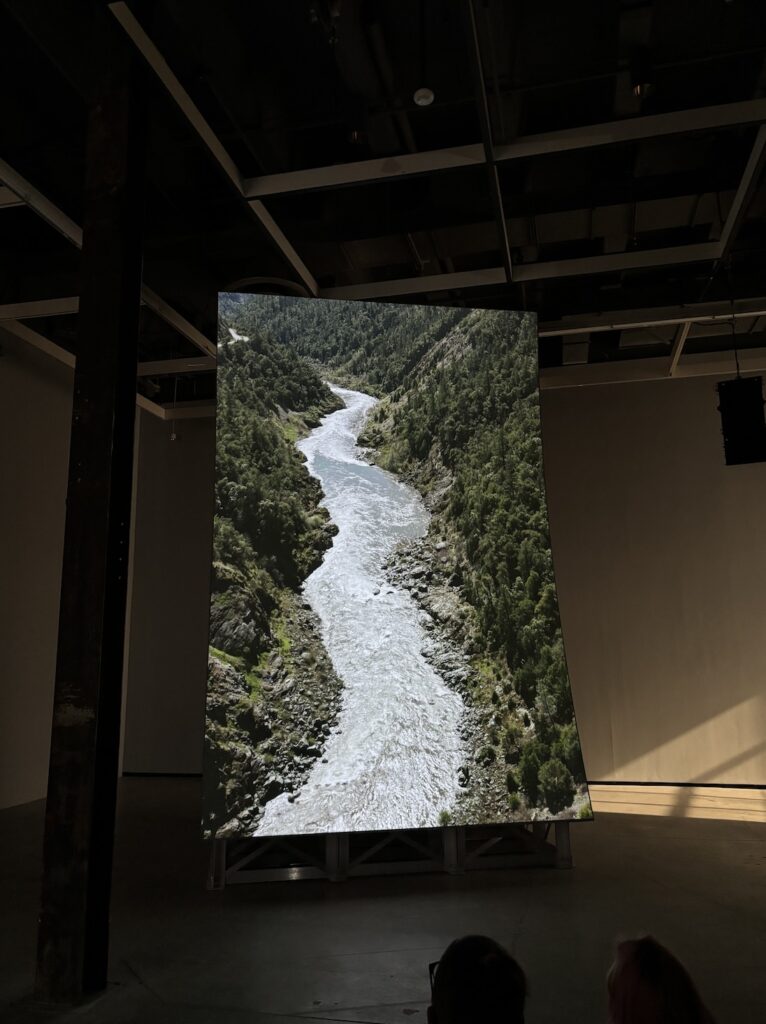
Merderers Bar by Lucy Raven is a video installation of a dam removal shot with drone and underwater perspectives. This piece was my favourite I had seen all day, and it inspired me in so many ways when I thought about my own art practices. First, it taught me about the effectiveness of a soundtrack. I have always valued music and sound effects when it comes to video editing, however the intensity of this video really reinforced that importance for me. Additionally, the grandness of how the video is presented is also something I realized is very important. Showing a video on a small computer screen vs showing it on a giant, vertical, warped, high quality screen makes a large difference. Even the volume of the speakers was critical to the effectiveness of this video. These aspects reminded me to think more about the presentation of my work, and not just the completion of the work itself.
Frei Njootli
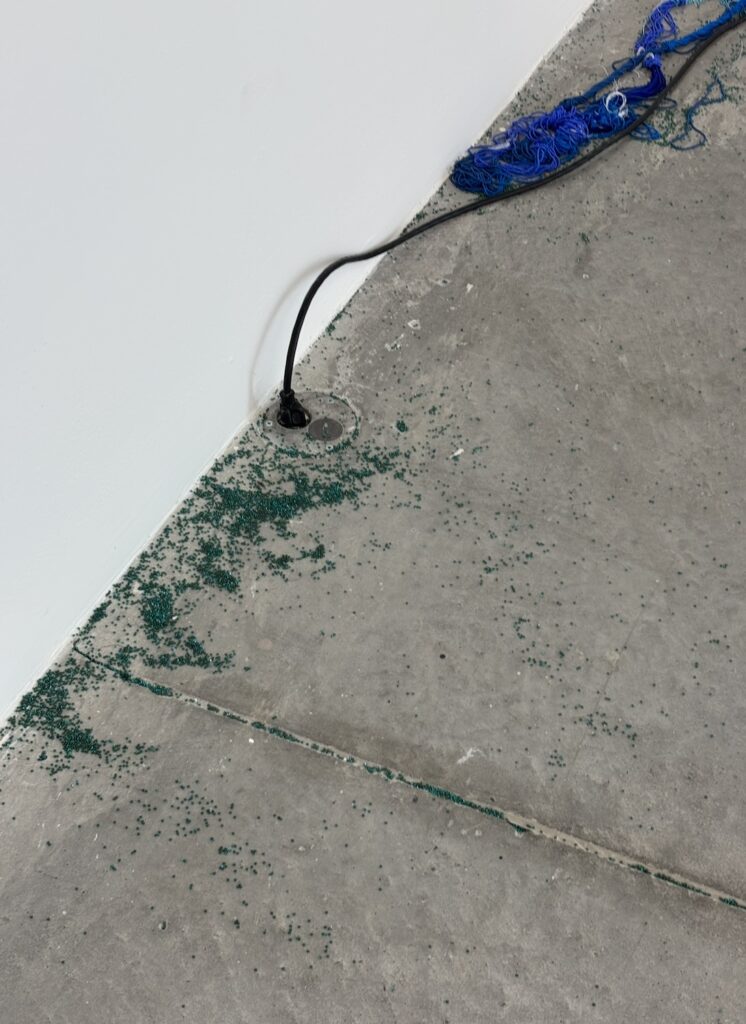
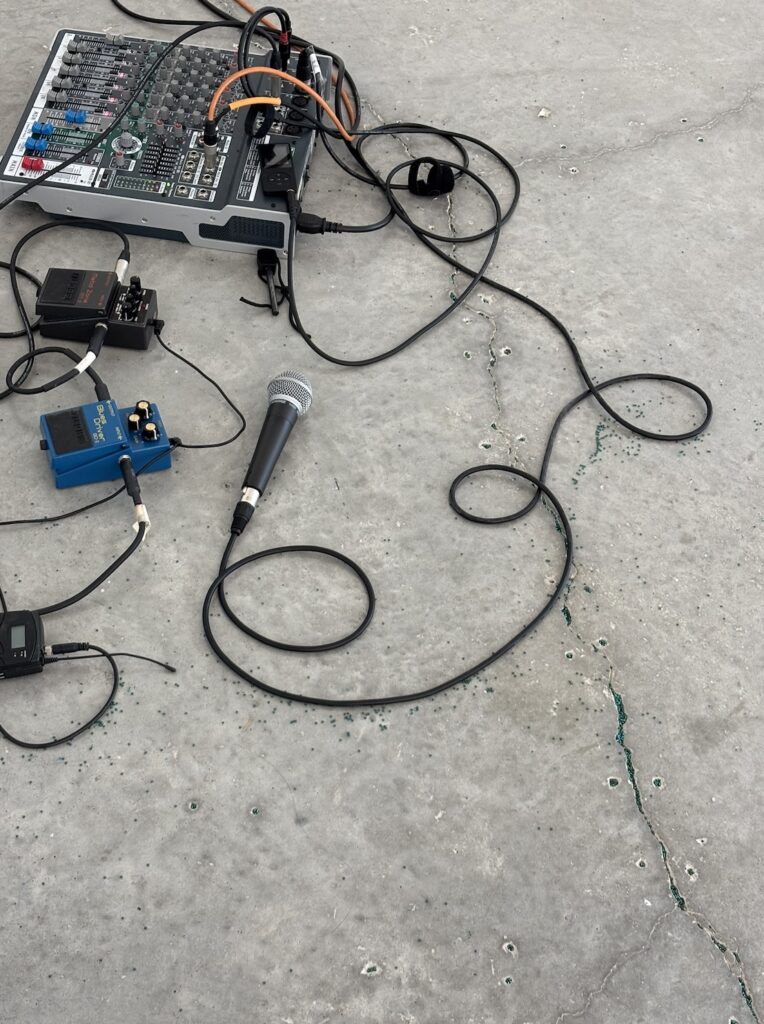
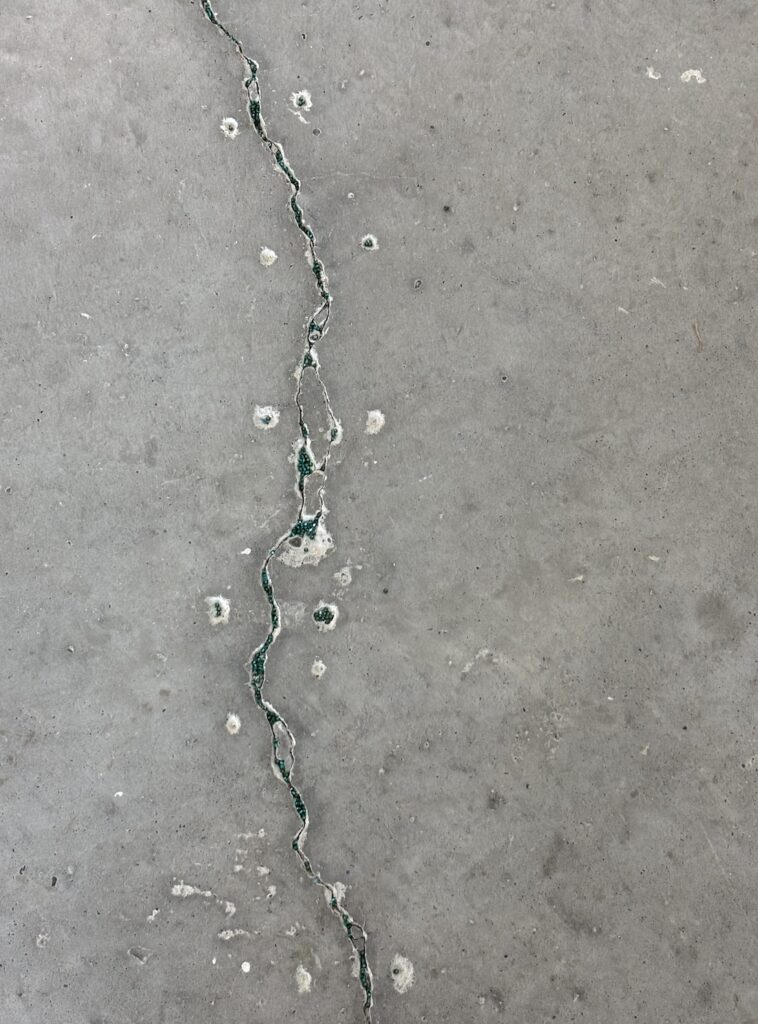
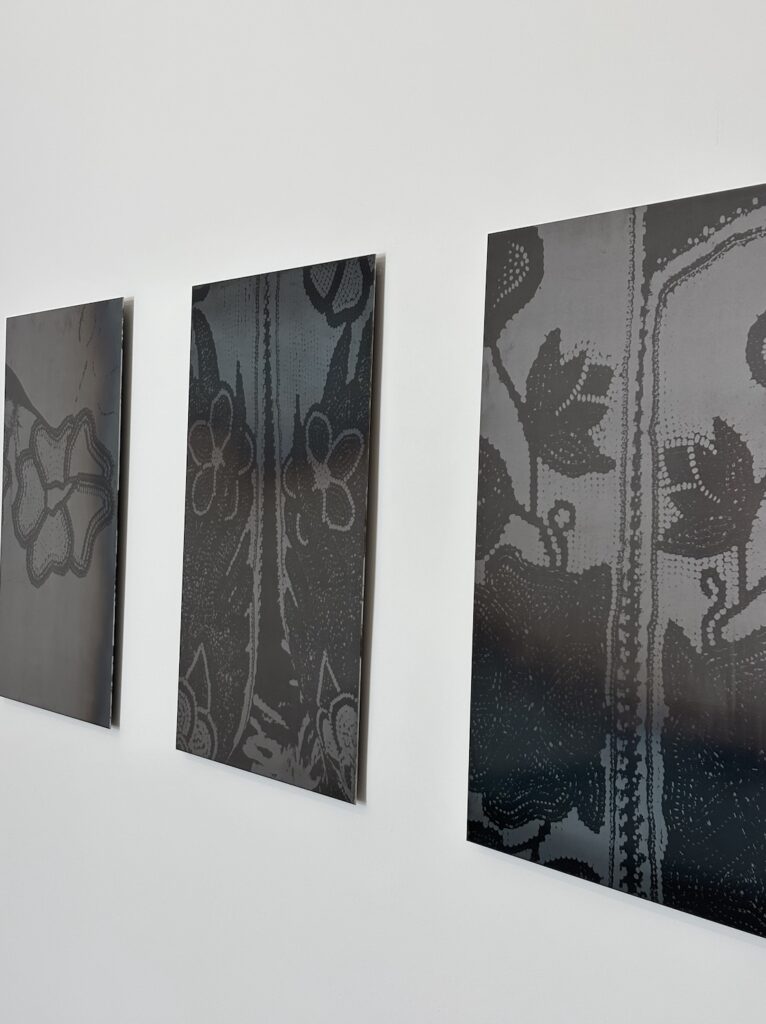
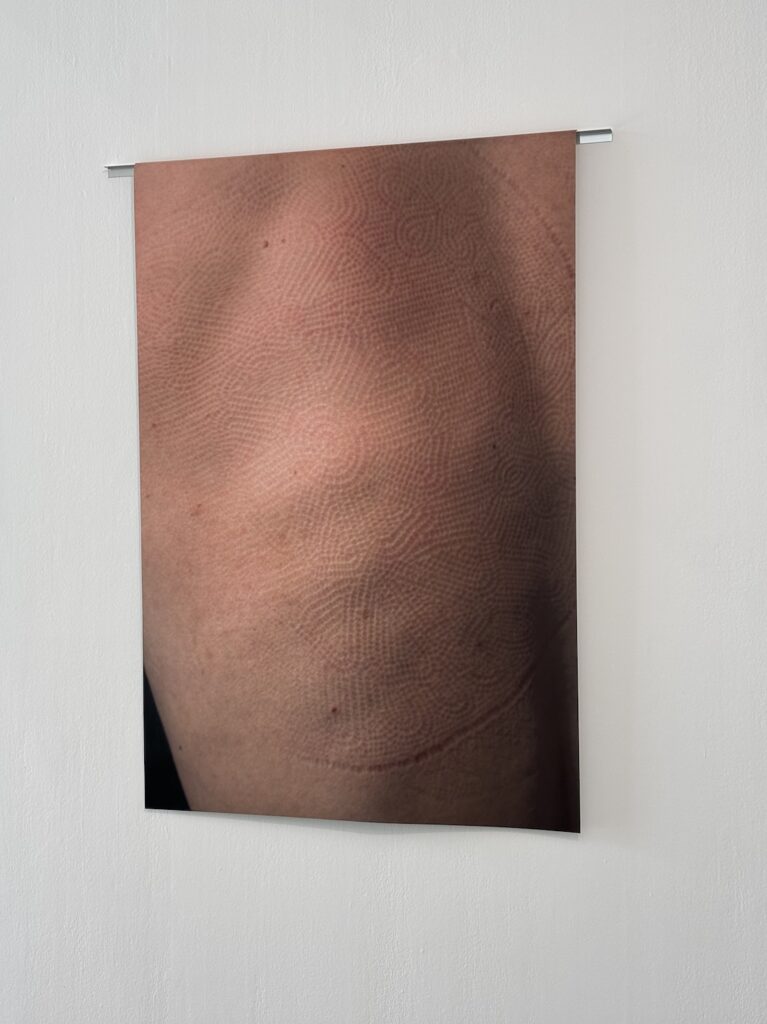
Frei Njootli displayed several pieces in the Power Plant Contemporary Art Gallery that involved the documentation of beadwork. However what I liked about their work is that it was less focused on the visual art the beads came together to make, it was more focused on the metaphorical aspect of labour in cultural belongings. All methods of displaying and capturing the work done using beads were specifically displayed with methods that point to long-lasting effects. For example, the bottom left two images were done on metal plates that deteriorate overtime. This material is strong, long lasting, and resilient, however the artist was not afraid of it showing the fact that parts of it will undergo destructive processes, which is symbolic of the meanings behind the works (cultural belongings). The same goes with the visible mark of the beads on skin, showing the physical effects of the labour in beading. my favourite part was that the artist spread beads throughout the whole exhibition, and they either gathered around their works, or filled in the cracks of the concrete. The millions of these tiny beads will likely take years and years to completely clear out of the exhibition, so even after they take down their installations, people will still be finding the effects of these works in years to come. I love this notion of a long-lasting effect of art and I think it can align with many different meanings. This inspired me to. think beyond the viewers experience of my art in the present moment, how can I ensure that the meanings behind my works remain after the viewing.
One Feat, Three Ways
KEEP UP
Audio Assignment
Seasons
For this assignment, I knew I wanted to demonstrate how my breathing changes based on how I am feeling, what I am thinking about, what I hear, and what is happening in my life. I originally wanted to make an audio piece that rhythmically edited together different clips of my breath, pairing it with the sound of guitar plucking moving at the same pace as my breath. The problem with this was that the sound of quick guitar picking typically makes me calmer and happier, so it would not have heightened the anxiety inducing sound of my quick anxious breath, and the calm of my slow, controlled breath. With this in mind, I remembered that I had hundreds of voice memos on my phone of my happiest memories that I’ve been collecting for years. In these voice memos is a recording of my family friends and I playing Betty by Taylor Swift on the guitar and harmonica which are both very nostalgic sounds for me. I decided to start playing this recording over my breath to trigger the beginning of my calmer breaths. I then went through the rest of my voice memos, saving parts that sounded the happiest and most meaningful to me. Audio editing was certainly a challenge for me, trying to layer the sounds in a way that was not too overwhelming but also in a way that created a great montage that sounds like a memory. As more and more memory sounds are integrated, my breath slows more and more. Each recording were different volumes, so I also struggled with balancing those out. However, I did feel that I successfully accomplished all of my goals: to maintain the intense sound of my breath when needed, and lose the intensity into the mix of joyful sounds, each blending together, offering listeners a sample of how my thoughts might sound while calming my anxiety. During critique it came to be that my piece reminded me of a lot of people about happier times in the summer. I then realized that almost all of my audio clips were from the summertime, which makes sense given I do suffer from winter depression. This whole assignment was inspired by the fact that I have needed to do several breathing exercises throughout this winter to regulate myself, and one thing that never fails to calm me down is watching videos I edit of my summers, or looking through photos of those times, thinking of the people I get to see then.
Pauline Oliveros
I believe that we all have gotten so used to sound and often take it for granted. Most of us have constant music playing in the background while we study, drive, etc., or we have gotten used to the sound of our roommates and family talking in other rooms of the house, the ambiance of the buildings we often go to, or the sound of our loved ones voices while they tell a story. I love the intentionality in Pauline Oliveros’ concept of deep listening, and I very much agree that we should be more intentional in our listening practices. This concept is what motivated me to start taking voice memos of certain moments where the sounds around me felt happy, or had a positive association that I would want to be able to revisit, such as the sound of rain hitting our tin roof at the cottage, or the not so harmonious sounds of my family friends singing at the top of their lungs on new years eve, or my grandparents voices as they tell us their classic jokes and stories that they have told over and over again, but I have to record them because I never want to forget what they sound like. When I am at a concert I like to close my eyes and feel the vibrations of the loud speakers and people jumping up and down to the rhythm of the music, so I can feel the sounds in my body as well as just listening with my ears. Hearing is so much more than one of our 5 senses used to pickup information. When we are intentional with our hearing, it can also produce physical feelings. Approaching sound through research, especially in this assignment made me have an even greater understanding of how sound is more than just a listening experience, it is a catalyst for connection, feeling, and memory making. To me, when we have a conscious awareness of sound in the way Pauline Olivero studied, we notice that hearing is one of the most important sounds, as it can be used to heighten or calm emotions we might be feeling, and also physical symptoms that go along with them. It gives us validation, and a deep sense of appreciation for the presence of the people and environment around us.
Conceptual portrait
Proposal
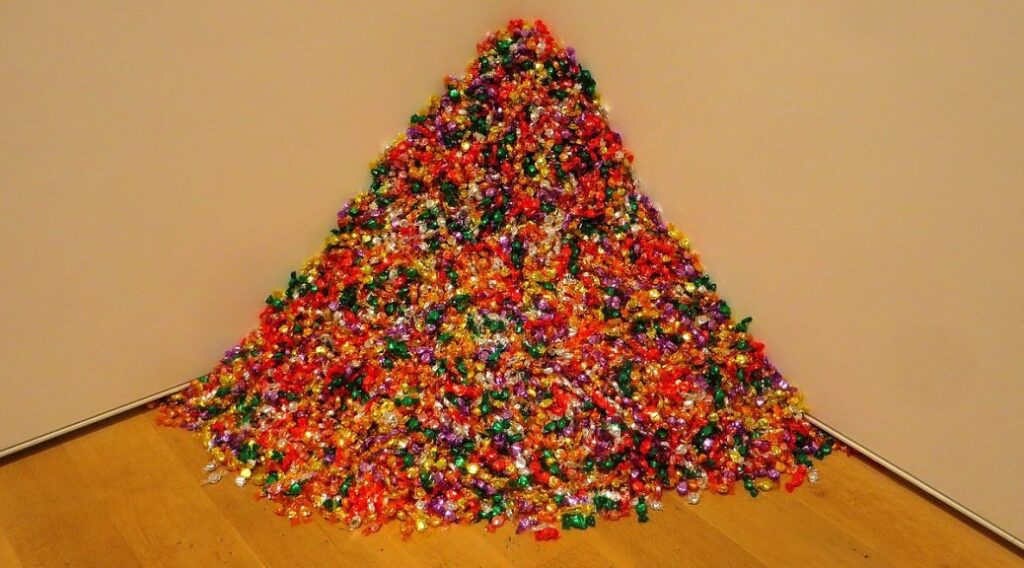
My conceptual portrait will be of my Oma, who has had Alzheimer’s for most of my life. She has been in a home for a long time now, only needing the necessities there, so a few years ago my Opa laid out all of her old clothes and jewelry for her three granddaughters (my two cousins and I) to look through and keep. We each took several items and cherish them very much, her jewelry is especially special to me, even though they aren’t pieces I actually wear. A few years ago I cut one of her bracelets and used the beads to make special charms for my cousins and I. I wore that charm on my everyday necklace for several years, until just a few months ago when it broke, and I have been meaning to remake it with the leftover beads I still have. I love wearing her bead around my neck as a memory of her, which is where I came up with my idea for this assignment. I want to make a stop motion video of another one of her bracelets I have and never wear being cut, and the beads slowly making their way onto one of 13 strings laid out in the shot. Each string will represent one of my 13 family members (not including her) who’s memories of her grow fonder as her memory slips away. As she loses her memory, my family members have become more invested in the tangible things she has left behind, whether that be old photos, sweaters, decorations, clothes, jewelry, nicknacks, etc., holding onto evidence we still have of who she is/was. She will still be represented in the remainder of the bracelet, the few beads left, not added to the other strings symbolic of the little bit we have left of her when we go visit her in her home. I am also considering making this as just a display, instead of a stop motion video, with the necklaces and beads spread out hanging across a stick, with the original bracelet hanging just like the others, although clearly lacking the rest of it’s beads. If I do make a stop motion video, I would like to maybe have an instrumental version of an ABBA song playing in the background, because she has almost no memory left and can’t speak, but when we play her ABBA she will still sometimes be able to sing along to some parts of it.
Artist reference – Félix Gonzalez-Torres
“Untitled” (Portrait of Ross in L.A.)
Leave a Reply
You must be logged in to post a comment.