Lucy Raven’s Murderers Bar
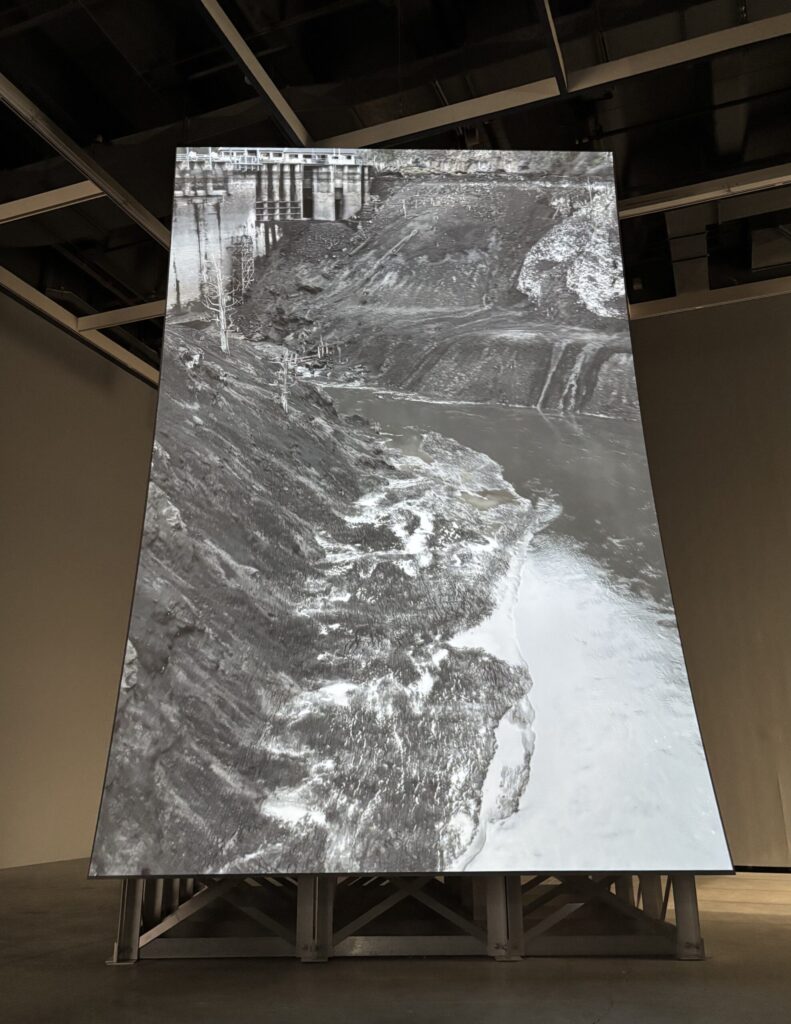
Lucy Raven’s immersive installation Murderers Bar, draws viewers into a multifaceted meditation— giving consideration to landscape and human intervention. Using a combination of film, sculptural seating, and surround sound design, the work creates a physical and sensory environment that encourages mindful viewing.
At its core, Murderers Bar depicts the removal of a hydroelectric dam along the Klamath River, an area that has been shaped by environmental damage and the displacement of Indigenous communities. Lucy Raven’s footage contrasts the mighty, imposing presence of the dam with the slow return of the river’s natural flow.
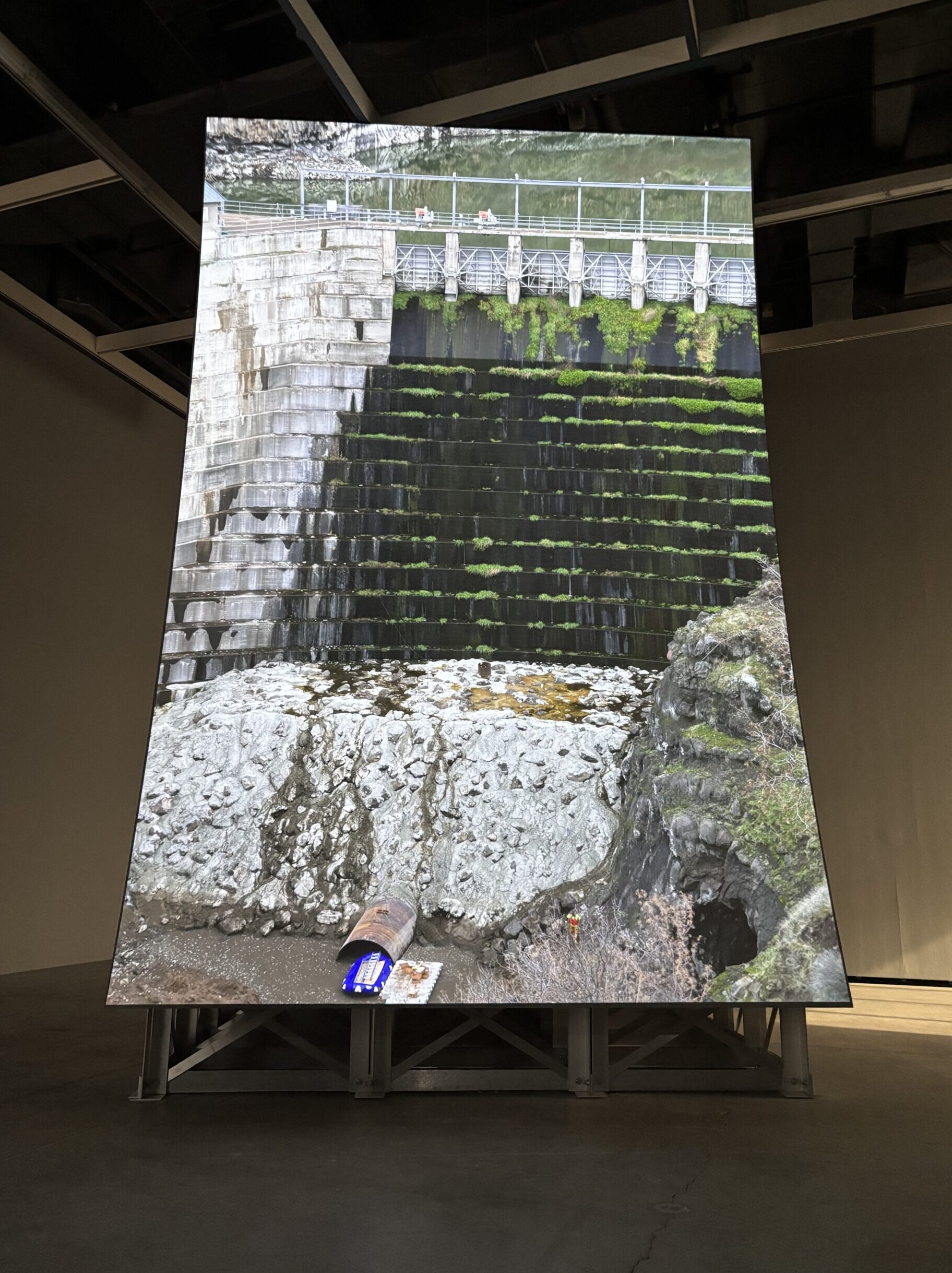
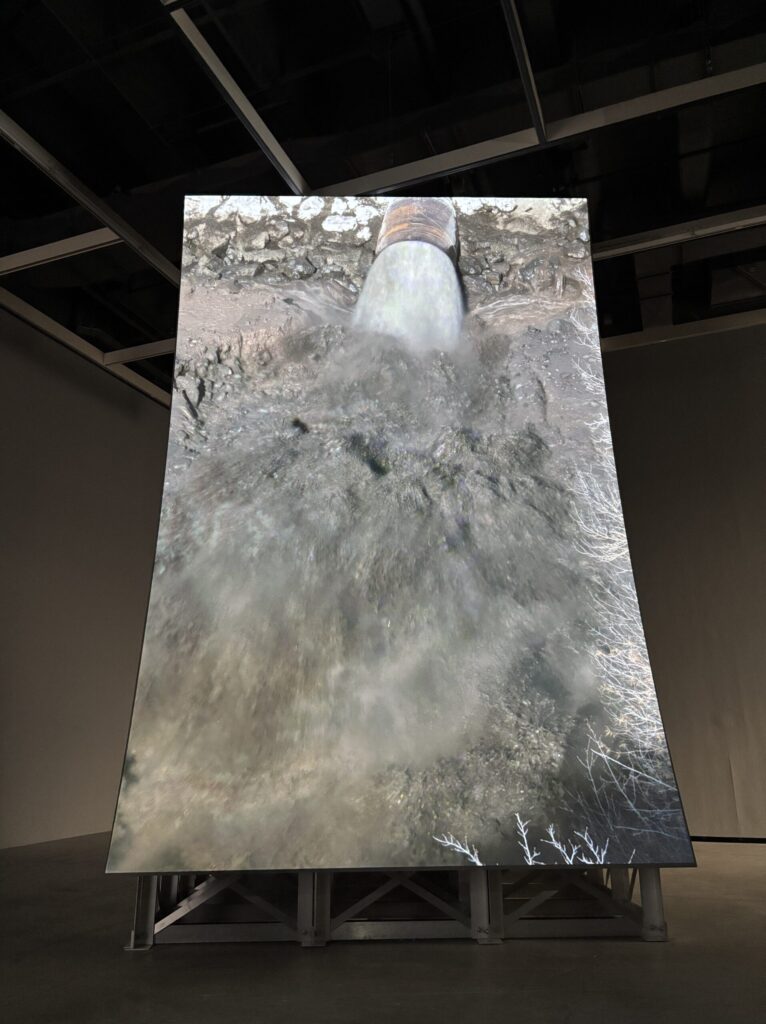
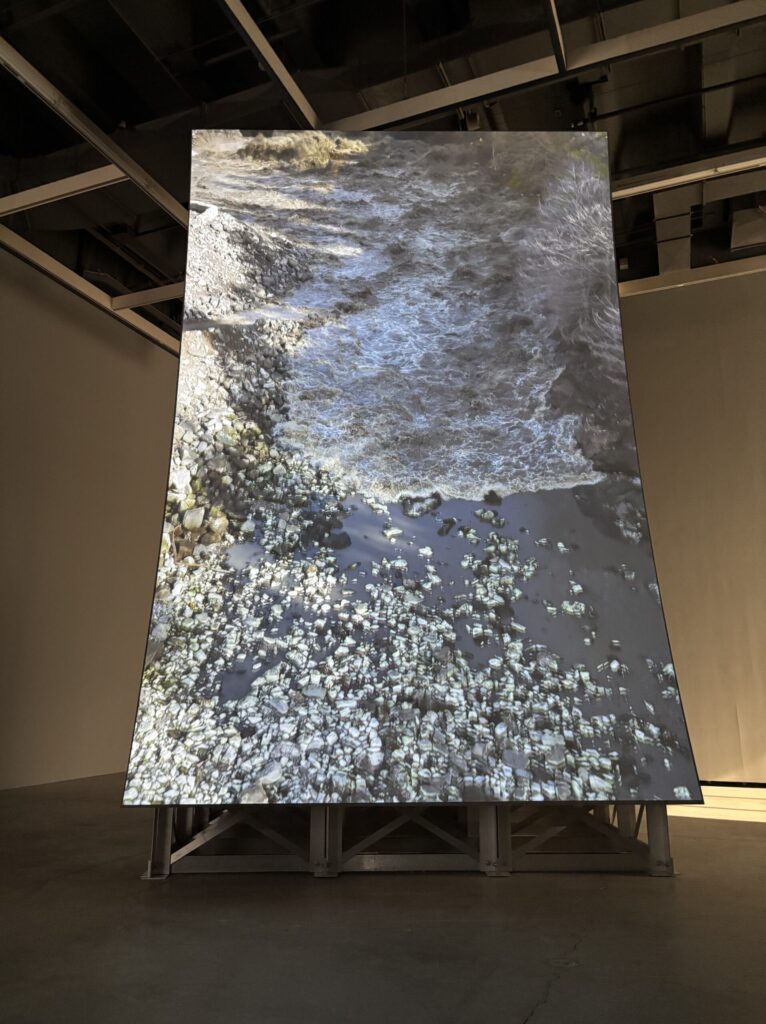
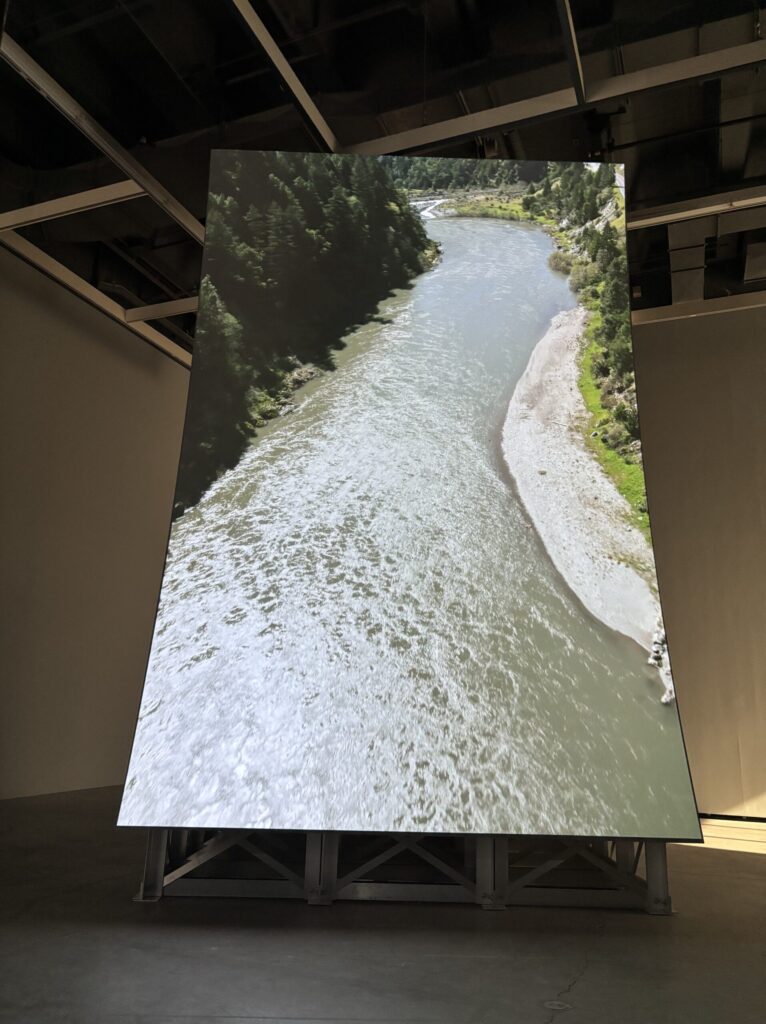
The installation invites audiences to reconsider the relationships between technological progress and ecological restoration. Raven’s work avoids direct messaging, instead offering space for examination and contemplation on how landscapes hold traces of industry, conflict, and renewal simultaneously.
Viewing Murderers Bar by Lucy Raven has shifted the way I think about documentation within my own creative practice. What stands out to me is how the work does not treat documentation as a simple piece of evidence or a fully factual record. Instead, Lucy Raven turns real environmental processes into something immersive and emotionally engaging, allowing viewers to experience documentation as both information and atmosphere.
The poetic reflection within the work encourages me to consider documentation as a form of storytelling. Instead of just preserving moments, I am interested in how documentation can bring out memory, emotion, and change.
Jeneen Frei Njootli’s exhibition opening performance
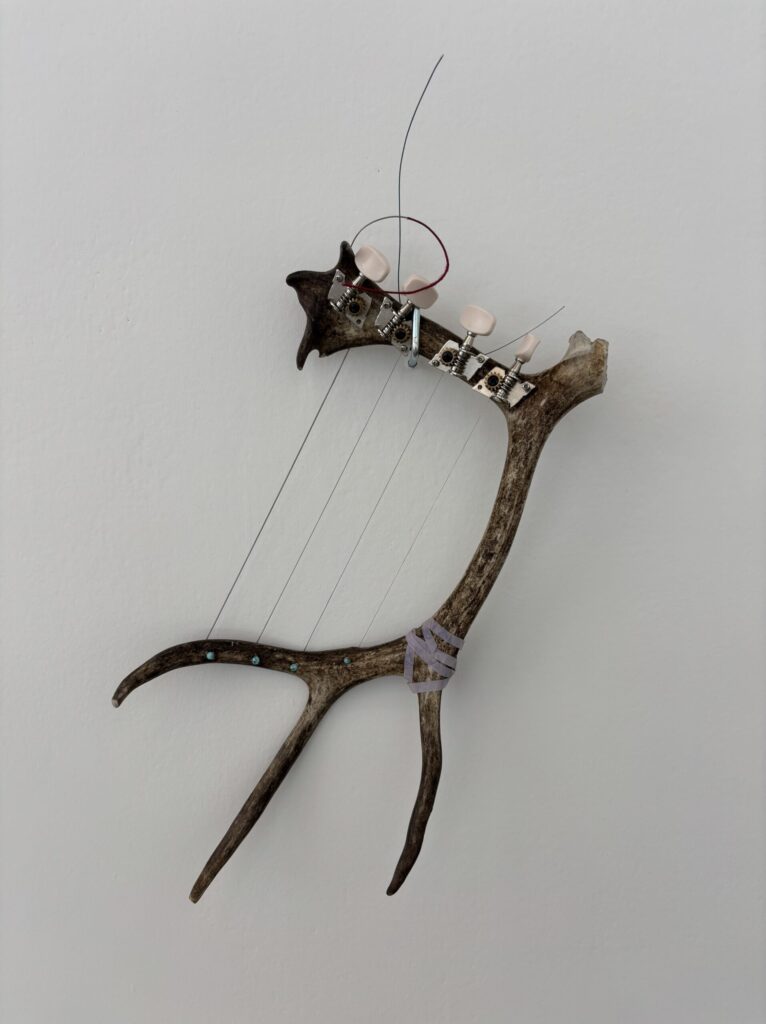
“in a performance during the opening days of the exhibition, Frei Njootli played a violin they made in 2014 from the antler of a female caribou harvested by the artists family”
A sound recording of this action was to fill the space of the gallery.
The violin is now hung from the wall.
”colourful glass beads also remain as a residue of this moment, left behind by the artist and their small son, who scattered beads around the exhibition, filling the cracks and crevices of the gallery floor.”
These leftover materials act like physical memories of what happened — showing that the performance continues through residue rather than traditional documentation like video or photos.
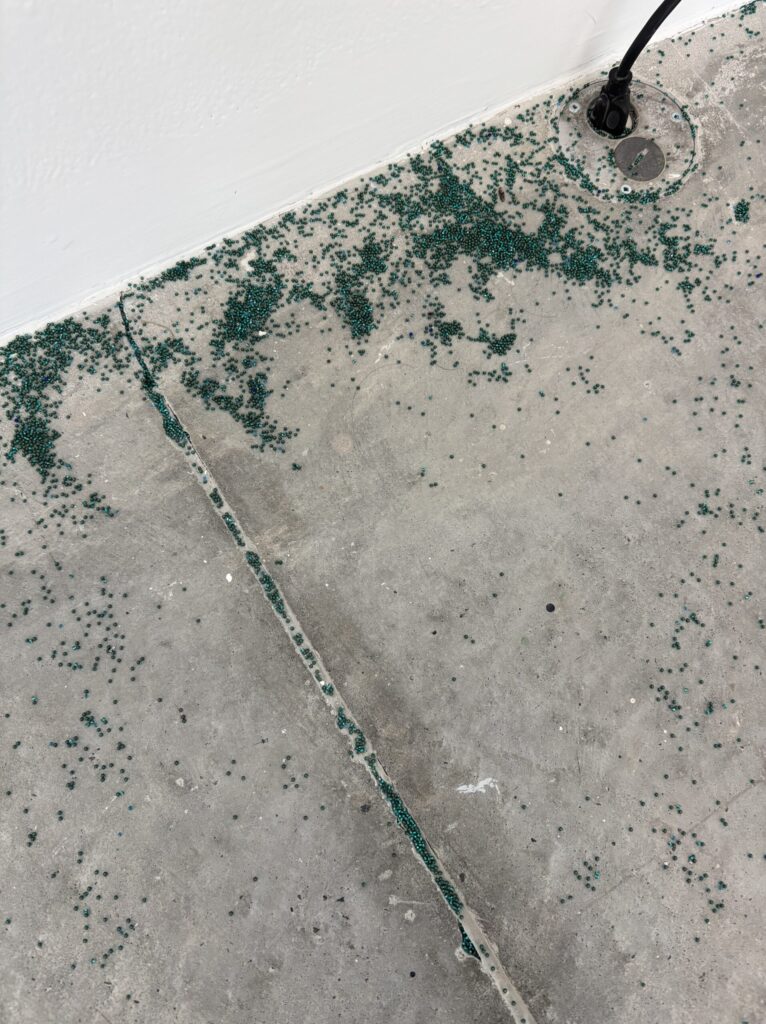
Encountering the performance work of Jeneen Frei Njootli has made me think differently about how materials, memory, and presence can shape creative practice. Rather than relying on traditional documentation like video or photography, her work shows how materials themselves can hold memory and storytelling.
Njootli’s performance demonstrates that art does not always need to exist as a permanent object to carry meaning. The idea that sound, movement, and leftover materials can preserve a moment encourages me to think about how my own work might capture temporary experiences. It reminds me that documentation can be physical, sensory, and emotional rather than strictly visual or written.

Leave a Reply
You must be logged in to post a comment.