
I am a third year student in the arts and science program, with minors in biology and studio art!
I decided to take this program because it allows me to study all my areas of interest. I’m hoping the result of this program is strong interdisciplinary skills and diverse career path options.
Marina Abramovic
The Artist is Present
1. What is your first impression of Marina Abramovic’s performance works?
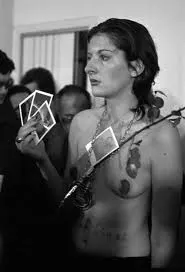
My first impression of Marina’s performance works was shock by how confrontational and extreme they are, with each work testing the limits of both her and the audience. Specifically her work, Rhythm 0, which involves inviting the audience to use various objects on her in whatever way they wish, including knives, scissors, and a gun. From this work, I admire how it reveals the uncomfortable truth of how quickly people will become violent when given permission. However, I think it can be problematic to have this level of danger in a work, and risks aestheticizing this type of violence.
2. What have you learned about features of performance art based on Abramovic’s work?
Abramovic’s work taught me about several key features of performance art, including the use of the artist’s body as a medium in the work. Her quote, “when you perform it is a knife and your blood, when you act it is a fake knife and ketchup,” emphasizes the importance of including real life risk and consequences which cannot be achieved with traditional materials.
Duration is also a key feature, with most of her work lasting for prolonged periods of time, it demonstrates her commitment and endurance. Audience participation is also crucial, as the viewers inevitably become part of the artwork creating art through interaction rather than observation.
3. Discuss the ways performance art resists many museum and commercial artworld conventions. How does Abramovic solve/negotiate these challenges?
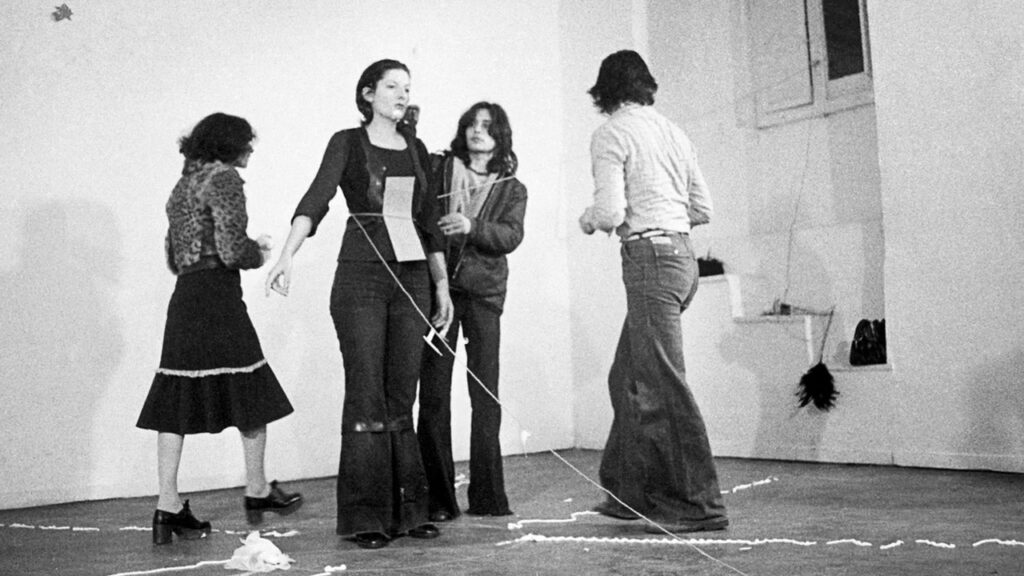
Performance art resists traditional artworld conventions because it is not an object to be sold or collected, it is an ephemeral experience that cannot be permanently displayed in an exhibit. Abramovic negotiates this by documenting/recording her performances to be viewed afterwards and occasionally repeating performances. I think this adds to her work because it broadens the audience as well as further conveying the value she places on endurance. This negotiation involves her work enduring a transfer into a system that is not built to house it, and I find it impressive that the intensity of her work can still be communicated through the documentation of it.
“A kilometre traveled in other realities”
Make a kilometre
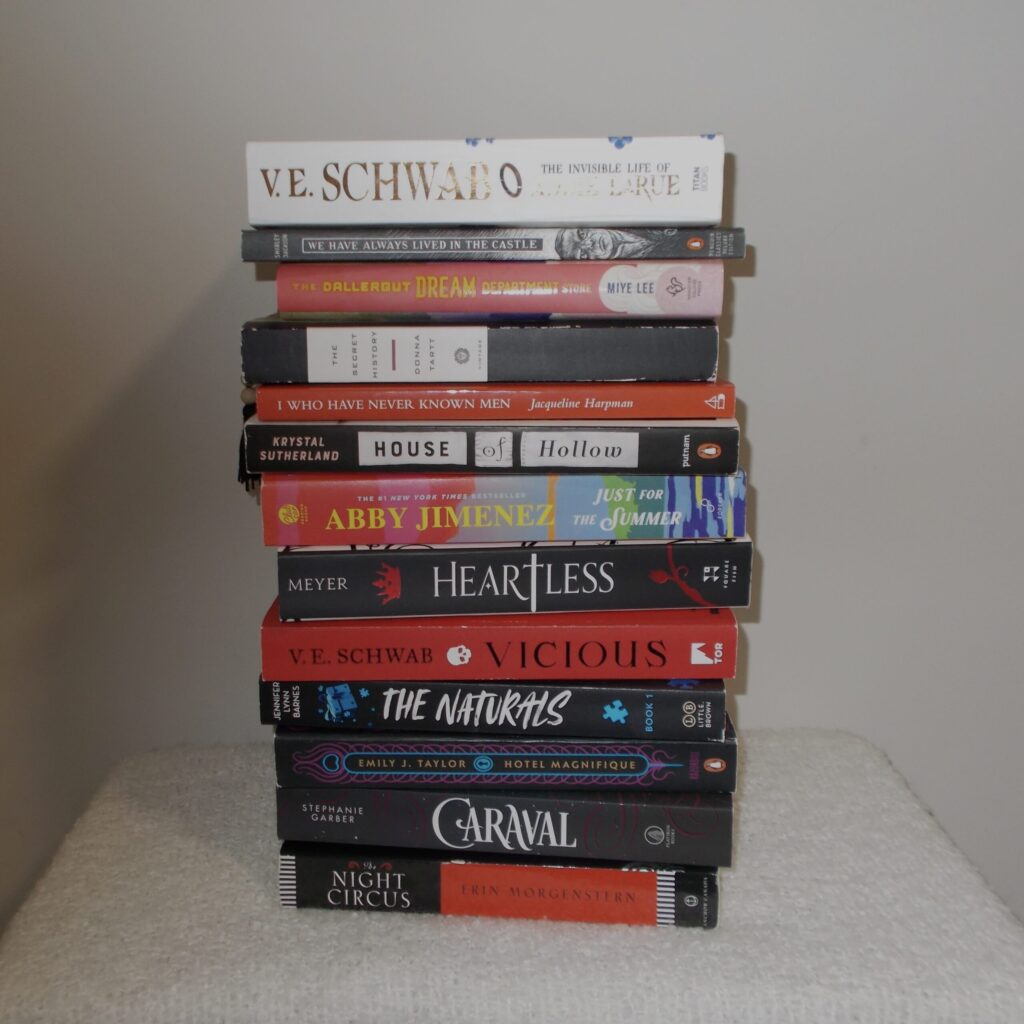
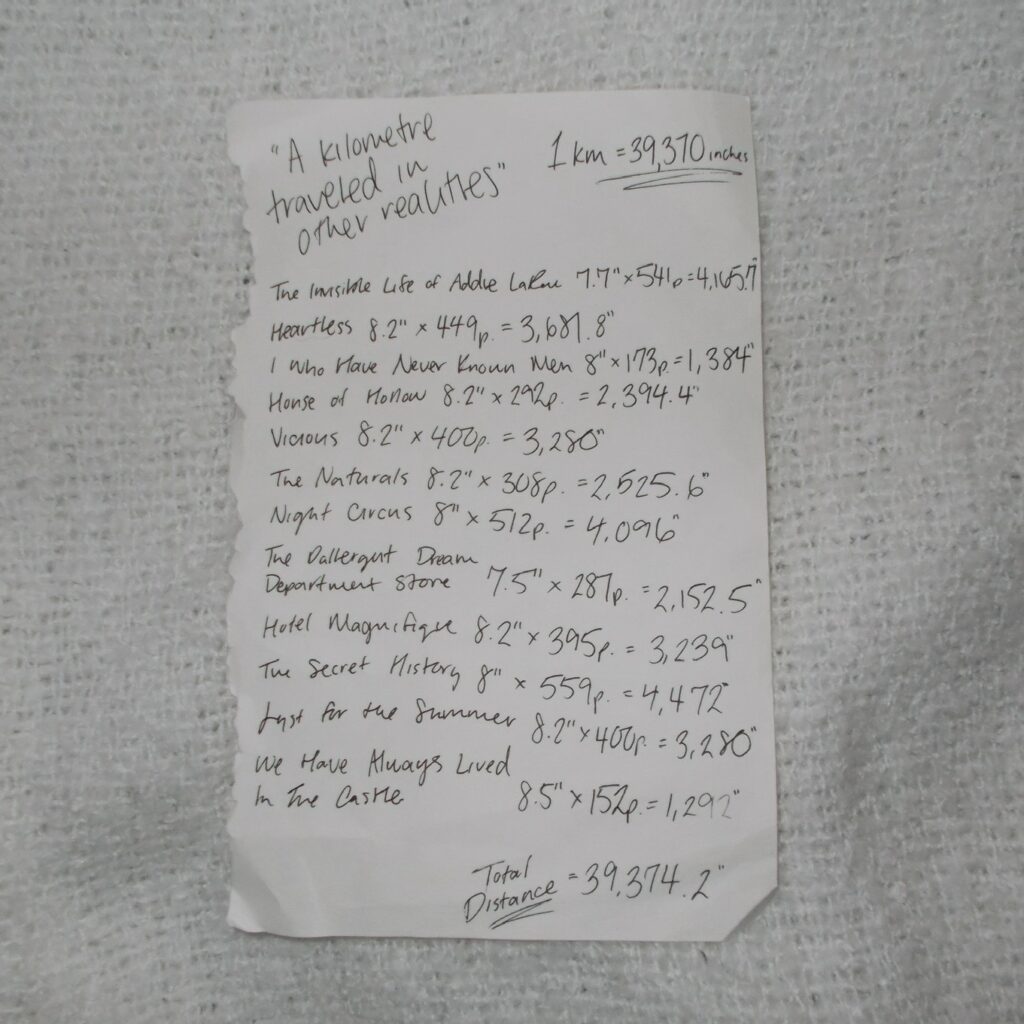

For my “make a kilometre” assignment I didn’t want to treat the distance as something physical to measure, instead, I wanted to represent it as the mental and emotional distance I travel when reading. I chose books as my medium because reading is the way I experience movement without physically going anywhere. There is an aspect of escapism when reading books, specifically fiction, and I wanted to translate that into a kilometre.
To calculate a precise kilometre, I measured the length of each book in inches and multiplied it by the number of pages to determine the overall distance of that book. I continued adding and measuring books until I reached the distance of a kilometre.
This ended up being 13 books, 39,374.2 inches, and 4,732 pages. To others, this may just look like a stack of books, but to me this stack represents the hours of attention I devoted to these books.
The process of completing this project and the discussion during critique made me reflect on how I value the use of my time. As I was choosing which books I wanted to include, I picked ones that were meaningful to me, not realizing that they were all fiction. While reading fiction could be considered less productive than nonfiction, these books have all taught me something and changed me in some way. So I view my time spent reading them as valuable because time spent doing the things I love is not time wasted.
This kilometre was accumulated by pages rather than steps, marking a form of distance that resists visibility. With this kilometre I am highlighting that internal movement should be recognized as real, even if it is more difficult to justify.
Gallery Reflection
Fall Chute, Dianna Landry
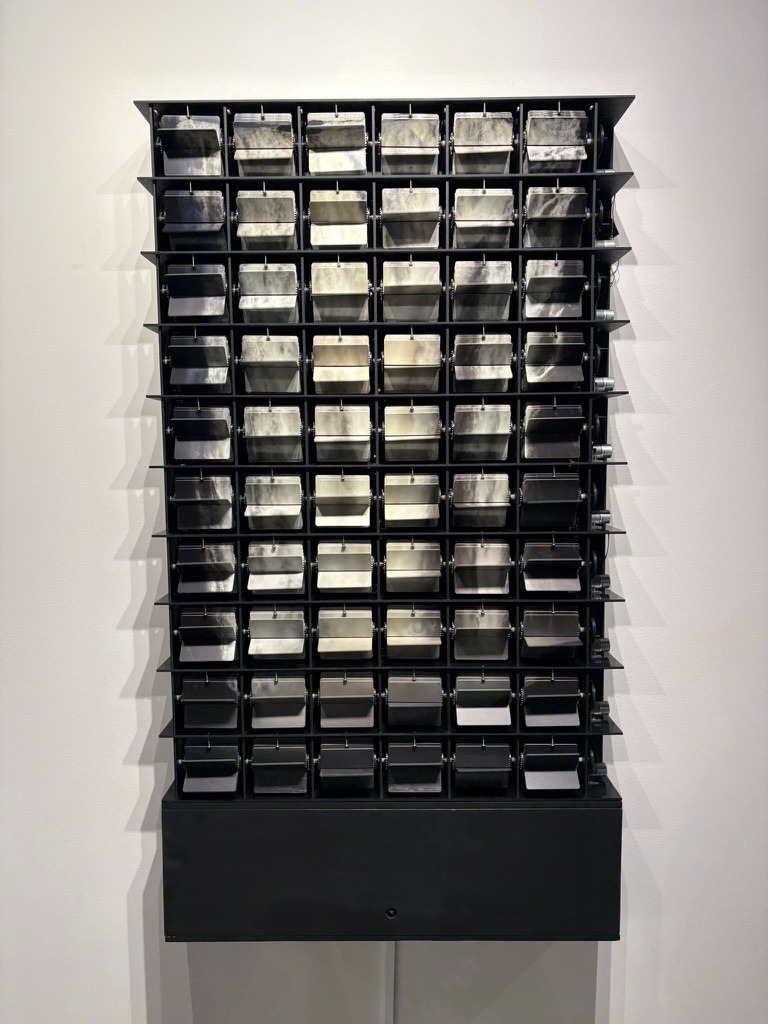
Dianna Landry’s Fall/Chute immediately stood out to me in the gallery. It is a mural of motorized flip books that simulates the movement and sound of a waterfall in Quebec. What I found most appealing about this work was how it was activated by the viewer’s movement in front of a sensor, creating a direct response to the presence of the viewer. This made me very aware of my interaction with the installation, which is something I want to start focusing on in my own art. I’m currently brainstorming concepts for my next sculpture project and this piece has influenced me to incorporate some form of active engagement from viewers.
Greenhouse, Camille Jodoin-Eng
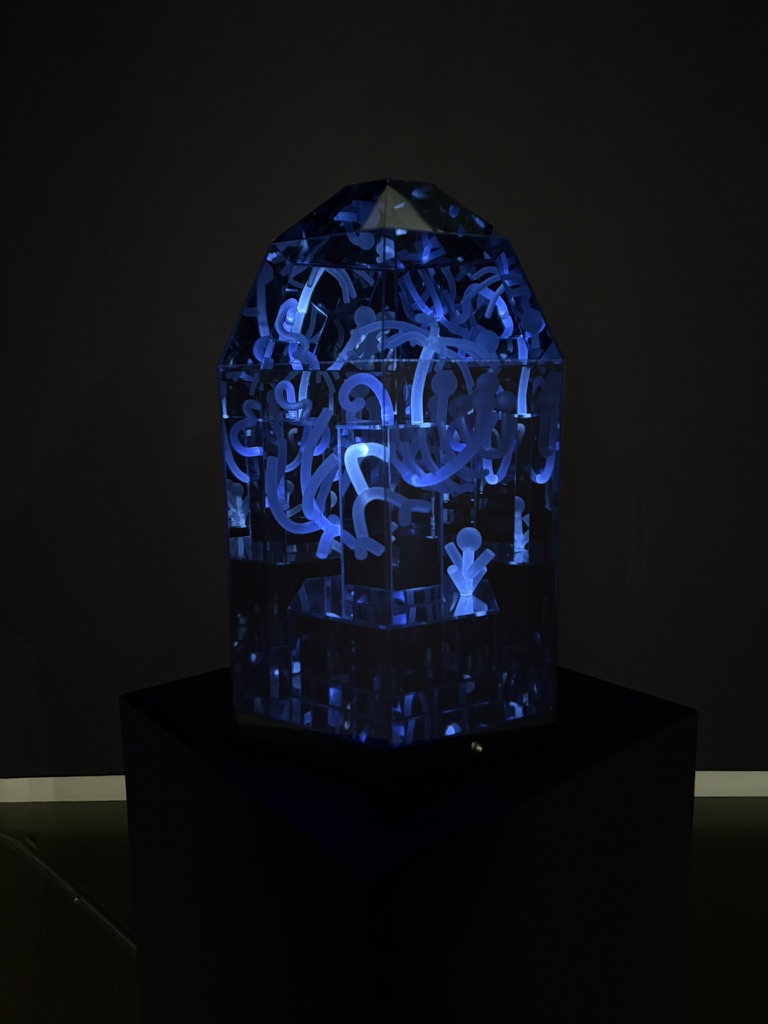
What stood out to me most about Greenhouse, by Camille Jodoin-Eng was the self reflection aspect of it. As I got closer to the piece, my reflection became distorted and fragmented. I enjoyed this type of quiet self awareness, as well as the use of discarded trash alongside the delicate glass which strengthened the shrine-like quality of the piece. Greenhouse made me consider how interaction with works can be psychological and symbolic, responding to the viewer through reflection and light. I left the piece thinking about how my own practice might incorporate this sort of inward reflection, where meaning emerges through the stillness and personal interpretation.
One FEAT Assignment
Amelija Le Moine, Grace Salsman, Nicole Manumbas
“The only failure is not to try.”
One-Shot
Sequence
Animation Loop
Behind the scenes
NYT: Turning the Gestures of Everyday Life Into Art
In the article “Turning the Gestures of Everyday Life Into Art,” choreographer Katja Heitmann describes her project, Motus Mori, meaning “movement that is dying out”. The work involves collecting the unconscious habits and gestures of people and preserving them through live performance.
There are some unique challenges to this piece, such as the ephemerality of having dancers being the living archive of these movements, which risks disappearing when the performance stops. There is also the challenge of authenticity to the original movement, with the dancers having to replicate someone else’s unconscious movements without distorting them. Unique gifts associated with this project include the resistance of the modern impulse to reduce humans down to their data. As well as the emotional response it can raise from grieving families as they see their loved one’s gestures performed, which becomes a way of remembering.
Mahat Arab’s “Anxiety Hands”
Mahat Arab cracks the knuckles of his left hand during anxious moments. What strikes me about this movement is how ordinary the gesture is, but in this context it becomes a signature of himself. When the movement is performed by the dancer, it becomes isolated and prolonged, almost becoming a nervous tic. It shows how a gesture tied to anxiety can become empowering when it is acknowledged rather than being hidden. I think this stuck out to me so much because I’m aware of my own gestures when I get anxious, and it makes me wonder what mine would look like if it were performed in this manner.
Habitual movements of 3 people I know
- When my partner is trying to focus on something, he spins his ring around his finger. The movement is subtle, his thumb and index finger rotating it slowly, sometimes faster if he is deeply concentrated. His eyes narrow slightly and his body becomes very still, isolating the fidget to one small point. He is a very grounded, calm person, and this gesture doesn’t feel anxious it feels centering. The motion seems to anchor his focus, and reflects his controlled, present, and composed personality.
- Every night before bed my seven year old niece goes into every room to hug each person before she goes to sleep. This hug is different from her usual quick hugs during the day, she sinks into it more and holds on longer. Her whole body relaxes and her arms wrap tighter, she always lingers as if she doesn’t want to let go too fast. The gesture feels intentional, suggesting a need she has for closeness and connection before she goes to sleep for the night.
- My best friend and I work together as baristas, and I’ve noticed she always twirls the cup in her hands while she waits for espresso shots to pull, shifting her weight from foot to foot. She holds the cup in her left hand and uses her right hand to spin the bottom of the cup, sometimes pressing in slightly so it dents and springs back. She is an anxious person and very rarely stays still, so the movement feels like a release for her nervous energy. Even in a moment of pausing/waiting, her body still resists stillness, a gesture that suggests restlessness and constant mental motion.
Audio Assignment
“Rupture”
For this project, I wanted to explore sound as a way to express an internal experience rather than a straightforward story. This piece was inspired by a recent period in my life where I was forced to face the consequences of pushing myself too far and ignoring repeated warnings from the people who care about me. Instead of recreating the literal events that took place, I chose to focus on the emotional space of hindsight and what it feels like to sit with the words that I once dismissed.
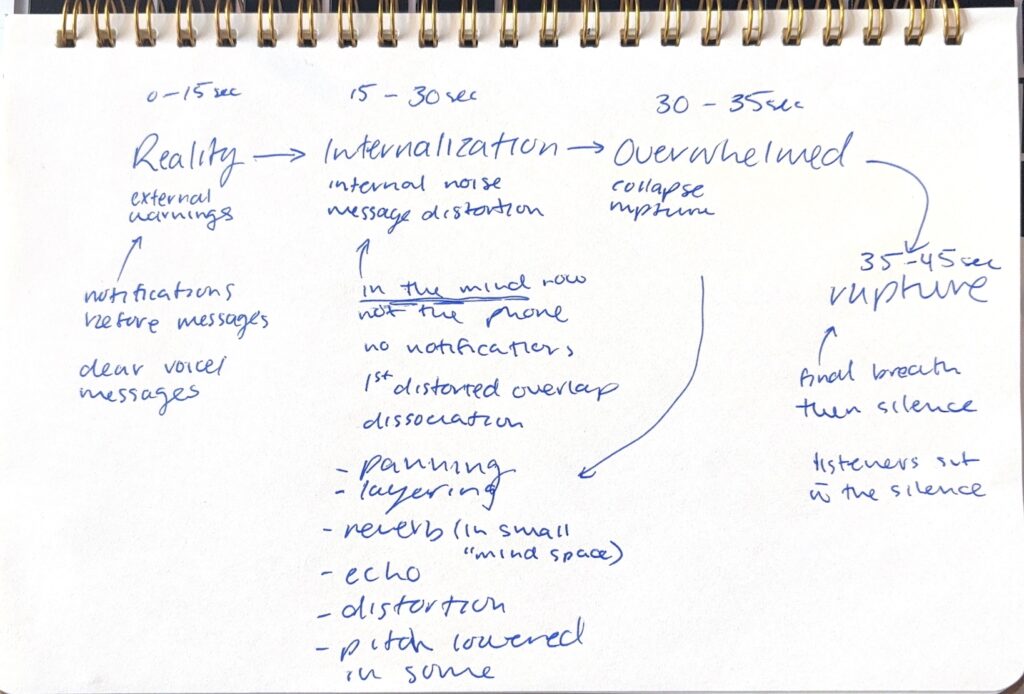
My process involved recording myself reading out text messages I had received, as well as some verbal advice. I structured the audio so it shifts from the clear, external notifications into a layered, overwhelming space that represents a headspace where these warnings were distorted, fragmented, and replayed. The echoing, panning, and reverb was intended to create the sense of entering that internal mental space that experiences a gradual buildup of emotional and mental pressure, eventually reaching a point of rupture.
The very faint clock ticking at the end is meant to reinforce the presence of time, symbolizing the moments I lost due to this experience. For this, I recorded ambient noise in the living room of my house that has a large clock on the wall, which I spent a considerable amount of time listening to as I was recovering after leaving the hospital.
This is not meant to dramatize my experience, but to examine the psychological weight of hindsight and the human tendency to delay care. I chose this subject matter so I could sit with these messages and reflect on my experience so I don’t make the same mistakes again.
Deep Listening
Pauline Oliveros
I spend a lot of time commuting from Guelph to my hometown, and I always play music in the car. After watching the Oliveros video in class I started noticing how the song playing can affect my driving quite a bit. Faster/louder songs make me feel more energized, and sometimes less patient. Whereas calmer songs make me feel more relaxed and focused. This made me realize that listening is not just something happening in the background, it greatly affects my mood and attention.
Pauline Olivero’s idea of deep listening makes me think about how sound influences my body and behaviour. Instead of playing music automatically, paying closer attention to what I’m hearing could change how I experience the drive. If I treat listening as something intentional, it might help me become more aware of how sound shapes my mood and connection to the environment around me.
Conceptual Portrait – Idea draft
“Almost Twins”
My portrait is about my brother. It will be an installation consisting of two plates placed 11 inches apart on a white table cloth. On one plate is a pomegranate my brother peeled for me, and on the other is an orange I peeled for him. With the fruit peels, seeds, and juice remaining as evidence of the act.
Growing up, my brother and I were often treated like twins. We are eleven months apart so we shared birthdays, gifts, friends, classes, etc. When we were children, our Mom used to peel fruit for both of us, and now that we live together for school he peels a pomegranate for me when he meal preps on Sundays. In this portrait, I mirror that gesture by peeling an orange for him.
The system is based on gestures of care that mirror how we were cared for in childhood, evolving into how we care for each other in adulthood.
The two plates are meant to reflect our relationship as “almost twins” as we are similar but not identical.
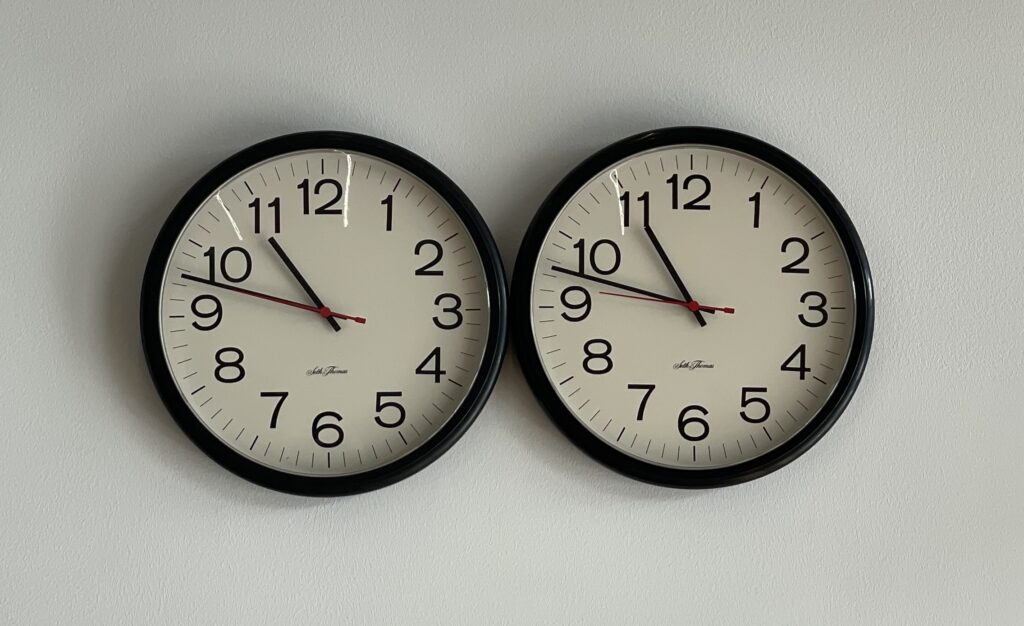
My thinking for this piece was inspired by Untitled (Perfect Lovers) (1987-1990) by Felix Gonzalez-Torres. An artwork that consists of two identical wall clocks set to the same time, that eventually drift apart over time.
This piece inspires me because, like the clocks, my portrait uses paired objects to show similarity and difference in the place of literal portraiture. Both pieces rely on simple paired objects with minimal presentation to communicate ideas of shared time and the subtle difference between two people.
Leave a Reply
You must be logged in to post a comment.