https://www.instagram.com/blossomblizzard

♥ ♥ ♥ ♥ ♥ ♥ ♥ ♥ ♥ ♥ ♥ ♥ ♥ ♥
A third year student enrolled in the Creative Arts, Health, and Wellness program. I transferred from Fanshawe College’s Fine Arts program. My goal is to become an Art Therapist who specializes in trauma and spirituality.
ARTWORK THEMES: living with disabilities, healing, transformation, spirituality
MEDIUMS: digital illustration + animation, gestural abstraction painting, abstract wooden sculpting and musical instrument making (HARPS)–which is an endangered crafting skill!!! https://heritagecrafts.org.uk/categories-of-risk/
INTERESTS: Nature, history, baking, games (Stardew Valley, Baldur’s Gate 3, Mario Kart)
____________________________________________
KILOMETRE ASSIGNMENT
Julie Cracknell, Acid’s Crackle, 2026, digital animation, 1920p x 1080p
YouTube link is below if the embedded media is not working.
Sadly, it’s a lower quality compared to the source material.
ARTS & SCIENCE
My animation conveys 1 kilometre with the combination of the visual of a lightning strike and the delayed audio of the thunder.
SPEED OF SOUND: 343.4 m/s in air at 22°C
TRAVEL TIME: 2.90 seconds
Source: https://sparkcalc.com/sound-travel-time-calculator/
The sound of the thunder plays at 2 seconds and 27 frames after the flash of light on the screen, showing the amount of time it would take for the sound of the thunder to travel one kilometre from its point of origin to the listener.
The reason frames are relevant is because I was using Adobe Premiere Pro to edit, and time code is written in the format of Hours:Minutes:Seconds:Frames; the flash happened at 00:00:02:00 and the sound plays at 00:00:04:27. Since my video is in 30 fps, 27 frames is equal to 0.9 seconds. (30 x 0.9= 27)
IDEA
When brainstorming for ideas I glanced into my closet at wooden harp that I made last year (see below). Then I asked myself, “How fast does sound travel?” After exploring ideas of playing my harp live, I also asked myself; do I preform live or do I film; or do I want to visually show the idea to people in a different way? Then the idea of a lightning animation came to mind.
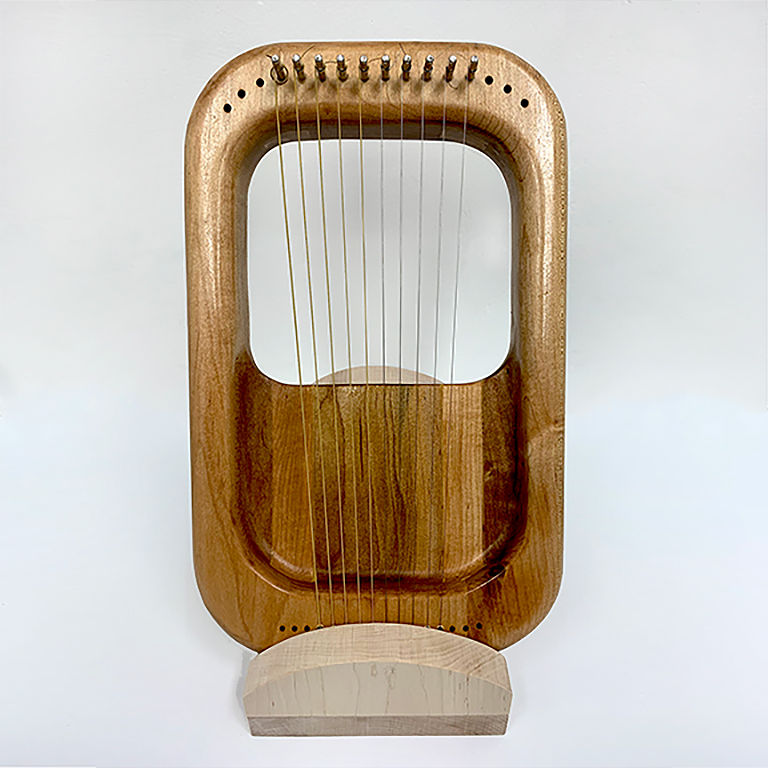
Julie Cracknell, Soothing Sugarwind, 2025, maple wood + metal harp string kit
MEDIA
Being there was no thunderstorms currently in our area to record, I had to come up with an idea of how to convey my concept. Animation felt like the best way to do this with the time and materials I had available.
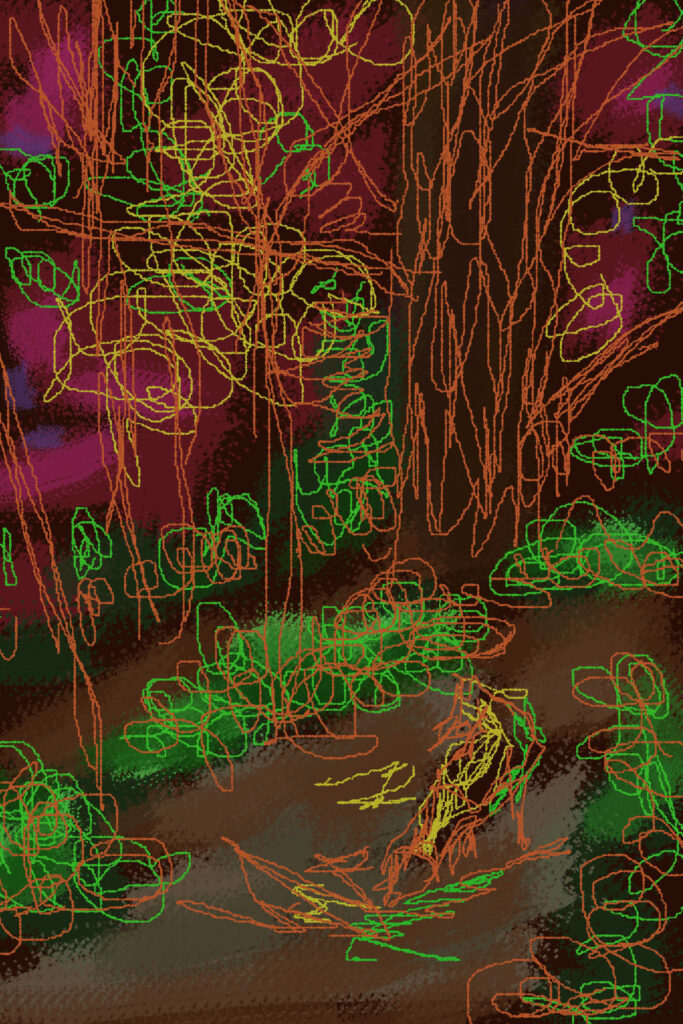
I didn’t want to use a royalty free video of a lightning strike because it lacked my artist fingerprint. There needed to be something visual that said something about me. (I LOVE TREES ♥) So, I created a flat layered image that was inspired by Japanese wood block printing.
References:
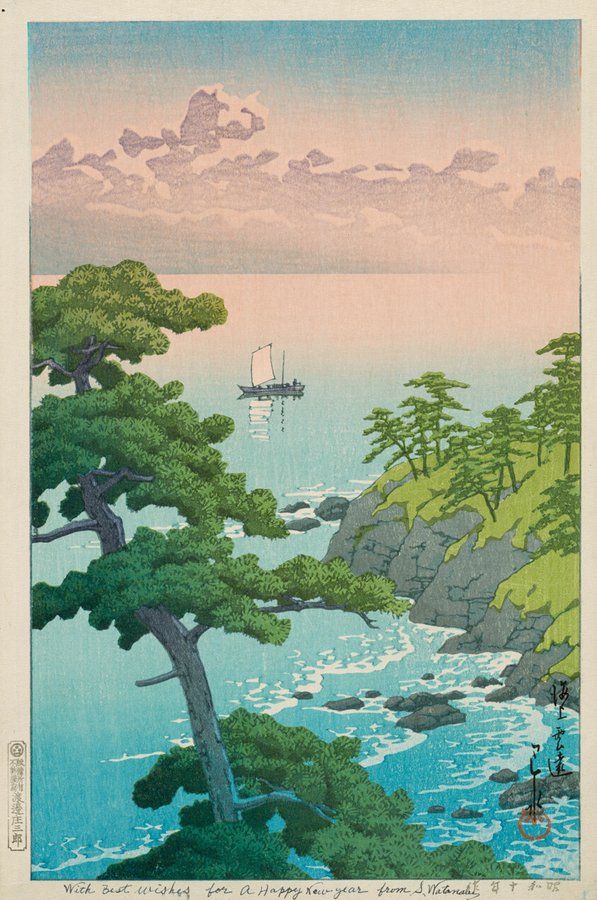
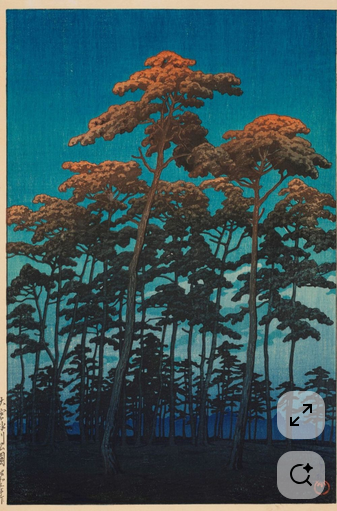
Woodblock prints by Hasui Kawase (1883-1957)
However, I did use royalty free audio for the thunder sound effect via https://pixabay.com/sound-effects/nature-thunder-strike-124463/
TROUBLESHOOTING
It was my intention to create this whole project with the program Clip Studio Paint Pro. It’s similar to Photoshop, but is geared more towards illustration, comic book design, and animation. After I had created the background image, I was ready to animate the lightning strike, or so I thought. The animation timeline was not allowing me to extend the video’s duration. It was stuck on frame 24! If I cannot create more keyframes, I cannot draw animation still images.
After a frustrating amount of time, I finally found the answer online. There are three versions of the program: Debut, Pro, EX. I had Pro. EX was the version that allowed you to animate longer than 24 frames. Which equals to one second if your video settings are 24 frames per second. Not enough time for the lightning animation and sound delay considering the math I did above.
After consulting my wife, she recommended that I use Premier Pro to animate it. I was so disappointed and angry with myself that I could not animate it the way I originally wanted to. My wife reminded me that I had to take it easy on my mind and body this week. Listening to her sage advice I locked in and was successfully able to finish my project!
____________________________________________
Marina Abramović
The Artist is Present
1. What are some of your first impressions of Marina Abramovic’s performance works, based on the documentary? Use an image/example of one or two works to describe aspects you admire, and aspects you might agree are problematic?
When I was first exposed to Marina’s work her performance art didn’t connect with me at all. Like with all art mediums, not everyone is attracted your art style or is able to understand your message. Her performances evoked emotions of unease, sadness, and a little confusion. Generally, that’s not the type of art I enjoy or look for.
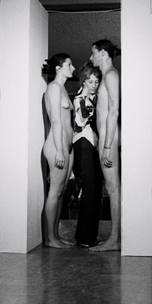
Marina Abramović and Ulay, Imponderabilia, 1977/2010
Yes, I understand that for Imponderabilia that was the point. Allowing people squeeze between Marina and Ulay’s nude bodies puts people in an uncomfortable situation physically, mentally, and emotionally. It was a simple yet powerful performance from both of them. I respected the bravery and appreciated the ingenuity. However, it wasn’t the type of art that resonates with me.
Her past works may seem problematic because often the visuals are so striking that people get caught up in that and are unable to process anything else. The public sees nudity and assumes the artist doesn’t have the same morals or ethics are they do. Thus, their message is not worth listening to. It’s a little sad, because there is a lot you can discuss about her work. Such as her choice of medium (herself), the setting, intended message versus received, and the objectification of the female body.
After watching The Artist is Present a few times, I asked myself, “How would I feel if my past partner did that during my performance?” My emotional reaction was similar to Marina’s—well I assume a little—looking at her subtle facial expressions. The surprise, joy, grief, gratitude, and pain. All the memories flooding back at once would be overwhelming.
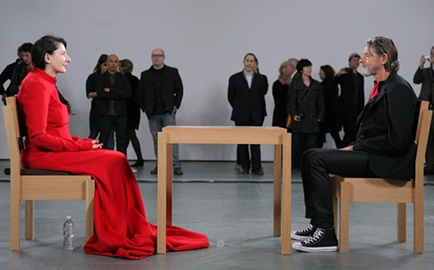
Marina Abramović, The Artist is Present, 2009 Marina Abramović, red dress, two chairs and table
(Ulay sitting on the right)
2. Discuss the ways performance art resists many museum and commercial artworld conventions. How does Abramovic solve/negotiate some of these challenges, and do you find these compromises add to, or undermine the ideas at play in her work?
Marina’s is able to resist traditional museum and commercial artworld conventions because her work does not have a lasting physical presence. Her performance with her body is the work in the moment it is presented. It cannot be easily bought, auctioned, or revisited like a collectable on display at a museum.
She negotiates these challenges by having herself be filmed, photographed, and documented. Thus, allowing her performance to have a longer stage presence. This gives her work an opportunity to be viewed by a larger audience. Plans like these help document the spontaneity of the moment that would otherwise have no evidence of existing.
I think there is a little play with her work with how its main attraction is to be seen in person for a limited time, while also being documented. Her art seems to resist control by the very institutions she often performs in. It causes the viewer to stop, think, and question trained thought patterns, and I enjoy that.
____________________________________________
Assignment 2: One Feat, Three Ways Video Project
Video 1: The One-Shot
Video 2: The Sequence
Video 3: Rotoscope Animation Loop
Assignment Overview
The objective of this project was to create three videos exploring a movement-based feat: one long shot, two sequences, and three rotoscope loops. The assignment required me to experiment with filming, composition, lighting, video editing, and animation while working within the limitations of my available equipment, space, and resources.
As a mature art student with the long-term goal of becoming an art therapist, I approached this assignment as an opportunity to explore movement as a form of visual expression. However, the process proved more challenging than I anticipated. Although I encountered several technical and practical obstacles, I gained experience in problem-solving, adapting my original concept, and exploring different approaches to digital animation.
Media and Equipment
Technical equipment:
- Canon SLR camera
- Tripod and microSD card
- Portable lighting kit and natural sunlight
- iPad
- Windows PC and monitor
- Adobe Premiere Pro
Props and materials:
- Table
- Mason jar and lid
- Tap water and ice
- President’s Choice instant espresso coffee
Performer: Scarlet Flowers
Location: My living room – filming space.
Filming Process & Development
The project involved three filming sessions. My initial concept explored repetitive rocking as a form of self-soothing. I wanted to capture a movement that could communicate discomfort and the instinct to seek comfort through physical repetition. Unfortunately, the resulting footage did not convey the idea as good as I had hoped.
We attempted the concept again during a second filming session, but the results remained the same: lacking. I questioned whether the difficulty came from my direction, the performer’s unfamiliarity with the movement, or the concept itself. As the deadline approached, the repeated attempts became increasingly stressful, and I realized that I needed to reconsider my idea.
During the third session, I collaborated with Scarlet to develop an alternative concept. My initial idea was to film her whisking heavy cream into whipped cream. Having previously worked as a professional baker and cake decorator, I was drawn to the repetitive physical movement and the visual transformation of the ingredients. However, we recognized that our limited supply of cream would restrict the number of takes we could afford to make.
Scarlet then suggested filming the way she makes instant coffee at home by shaking the ingredients in a Mason jar. Since we had sufficient instant coffee to accommodate multiple takes, we agreed to this alternative and began filming. I appreciated her contribution, as it allowed us to move forward with a practical solution that suited our limited resources.
The coffee-making process provided several distinct movements and materials to explore, including the addition of water, ice, and coffee powder, followed by shaking the jar. These actions offered opportunities to capture movement through live-action footage and animation.
Editing, Sequencing, and Animation
During post-production, I explored different ways of combining footage and animation to create visual interest. For the second video, I incorporated stop-motion animation using coffee grounds alongside shots taken from my long-shot video. My intention was to combine the recorded movement with a more tactile, experimental element created from the coffee grounds.
However, I was uncertain whether I had structured this second video correctly according to the assignment requirements. I understood that I needed to create sequences, but I was unsure whether combining stop-motion animation with footage from the long shot was the intended approach. Although I made a creative effort to integrate the different elements, I cannot say with complete confidence that the final sequence met the assignment’s expectations.
The rotoscope loop component was the most enjoyable part of the project. I found digital animation on the iPad considerably faster than working on paper, and I enjoyed experimenting with the process. I also added sound effects to imitate the ice, water, and coffee powder moving inside the jar. These sounds helped emphasize the physical qualities of the movement and added another sensory dimension to the animation.
Technical Challenges and Troubleshooting
Space and composition: My living room was small, which restricted my ability to position the camera and frame the performer as effectively as I would have liked. Because Scarlet is tall and the ceiling has a bulkhead beneath an air vent, I could not tilt the camera down very far without including too much of the floor. Also, I had limited control over the negative space above her head. With more room, I would have preferred a composition with greater breathing room and a more balanced frame.
Lighting and colour correction: The portable lighting kit contained only two lights, making it difficult to achieve even illumination across the background. The left side appeared cooler in colour temperature than the right side. I used the available lighting and natural sunlight as best I could, but the uneven illumination remained visible in the footage.
During post-production, I tried to correct the colour temperature and shadows in Adobe Premiere Pro. However, I was met by difficulties masking specific areas of the background independently. When I tried to create additional masks, the adjustments affected the settings of existing masks. I was also unable to isolate the shadow of a kitchen cupboard visible on the right side of the background as well as I had intended. I chose to focus on balancing the overall colour temperature on the left side of the frame rather than continuing to try corrections that I couldn’t correctly fix.
File transfer and software limitations: Transferring footage between my Windows PC and the iPad was another unexpected challenge. I initially tried downloading applications that would allow me to transfer files between the two devices, but these attempts were unfruitful. Eventually, I uploaded the MP4 video to Dropbox and downloaded it through a browser on the iPad. Although this solution worked, the process was less straightforward than I had had in mind.
Costuming and continuity: An unexpected incident occurred during an early practice take when Scarlet accidentally spilled water from the Mason jar onto her shirt. Because this was a practice run, the instant coffee had not yet been added, so the footage could not be used. Although her expression during the incident was amusing, the water stains remained visible on her shirt during the subsequent filming.
____________________________________________
Blog Post 2
Zoey Poll, “Turning the Gestures of Everyday Life Into Art,” The New York Times, November 21, 2022.
Questions
1. Describe the work discussed in the article and the unique challenges – as well as the unique gifts- that come with attempting to archive personal movements?
2.Discuss one or two examples of movements in the article – what strikes you about them?
3. Describe the habitual movements/unconscious gestures, tics etc. of 3 people you know well. How do individual body parts move, and how does the whole body interact? What about facial expressions, and emotional valence of the movement? How does body type inform the
movement? What do these examples of small movements mean and imply?
Answers
1. Katja Heitmann’s Motus Mori, meaning movement that is dying out, is an ongoing dance project that collects and preserves the small, often overlooked movements that make everyone special. It could be habits such as cracking knuckles, raising those bushy eyebrows, fidgeting, walking, sleeping, and changing the bodies stance. Since 2019, Heitmann has collected the movements of more than one thousand people!
One challenges in this work is change. People may self-correct their behaviour when they know they are being observed, presenting a socially accepted and idealised version of themselves instead of just being themselves. The dancers must build trust with people to learn their genuine movements. The most beautiful part of this project is that it treats ordinary movements as meaningful expressions of individuality. A minor habit can reveal someone’s personality, insecurities, emotions, and experiences in life.
I find the idea of a living archive very sweet and moving because it preserves something that written records cannot fully capture: the physical presence of a person. A person’s gestures may seem unimportant while they are alive, but after they are gone, these small details can become precious reminders of their individuality. The project also makes me question how much of our identity is expressed through our bodies without our conscious awareness—especially for people with disabilities.
2. Example 1: Mahat Arab cracks the knuckles of his left hand when he feels anxious, while driving or talking on the phone. This repetitive movement is an example of how emotions can become physical habits. I too fidget while stressed and driving. A lot of people fidget/repeat various movements when they feel nervous, and often others and themselves don’t even notice it. It also reminds me of stimming for people who are overstimulated and need comfort. Yet, for Arab, his habit is distinctive enough to become part of his identity.
The project also changes how he understands his own body. Seeing his movement reproduced by a dancer gives him a new understanding and ownership of it. Rather than viewing his knuckle cracking as a nervous habit, he recognises it as something unique to himself. I find this interesting because it shows how our unconscious gestures can reveal emotional states that we might not outwardly express. The movement becomes a record of anxiety, but it is also a characteristic that could be accepted rather than hidden and shamed.
Example 2: Ranti Tjan discovered that he tended to shift his body to occupy less space. One detail that surprised him was his habit of hiding his thumbs by flattening them against his palms.
Tjan was unaware of a movement that reflected a broader pattern in how he presented himself physically. His posture spoke to a tendency to make himself less noticeable, even though he held a respectable position. Tjan’s movements suggest that the body can communicate aspects of self-confidence and social behaviour that we may not consciously recognise. A small movement of the hands can be part of a much larger pattern of how someone occupies space and presents.
3. I tend to pick up on subtle behaviours more so than the average person. I consider it an evolved survival trait from my childhood, due to not being a consistent safe and secure environment. However, it has transformed since then to also assist me with my endeavors of becoming an art therapist. It may assist me to gain a better understanding a person from their physicality, rather than from their words alone.
Example 1: Scarlet, my wife, tends to have a droopy energy to her sometimes. It can be seen in her eyes, upper torso, and how she completes her work. When she’s having life challenges it becomes much more noticeable, with how lethargic her body language becomes. It’s as if her vitality has left her. On the plus side, when that happens, I’m always there to step in and support her when I notice it.
Example 2: Pia, my friend, has a unique energy that makes me consider them an Earthbender with the way their body’s stance holds firm, how they carry themselves in an anxious conversation: it’s as if they are a tiny solid rock. Round, strong, unmoving, grounded to the Earth. For the untrained eye, there is a fire there as well that drives this spirit forward. Example, they enjoy dancing.
Example 3: Myself. I too have a grounded energy to my presence. Not solely based on my weight, but my body language as well: slow, intentional, strong, and stable. When it comes to the mind though, it translates in other types of subtle and not so subtle movements. I bite my nails when I feel anxious or bored, I touch my face to sooth and brace myself, and if I smell any strong perfume/cologne that I am sensitive to you’ll immediately see my facial muscles tense up.
____________________________________________
FIELD TRIP
Create a FIELD TRIP blog post illustrating, describing and responding to two art works. How are these works relevant to your own research interests and practice?
What did you notice, learn, or take away from the experience of the works in the gallery?
Location: Woodstock Art Gallery, Woodstock, Ontario
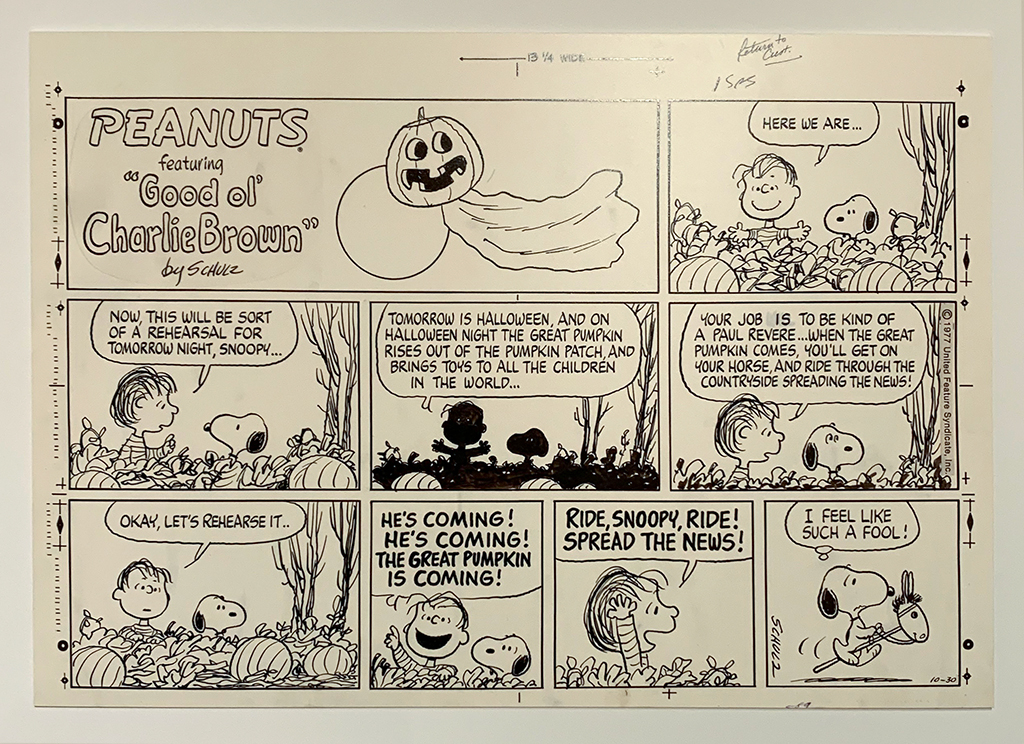
Artwork 1: Peanuts featuring “Good ol’ Charlie Brown”
Artist: Charles M. Schulz
Date: n.d.
Seeing the original Peanuts comic layouts upstairs was exciting! Being someone who has drawn comics in the past and has always been a fan of the series it was a fun surprise to see. One of the first things I noticed was how much larger the original page layouts were compared to the comics we see in books.
The white-out corrections and editors’ notes about spelling and grammar was fun to see. It was nice that even a famous comic artist went through revisions before publication. Art doesn’t have to be perfect from the beginning. There is a process behind the final product.
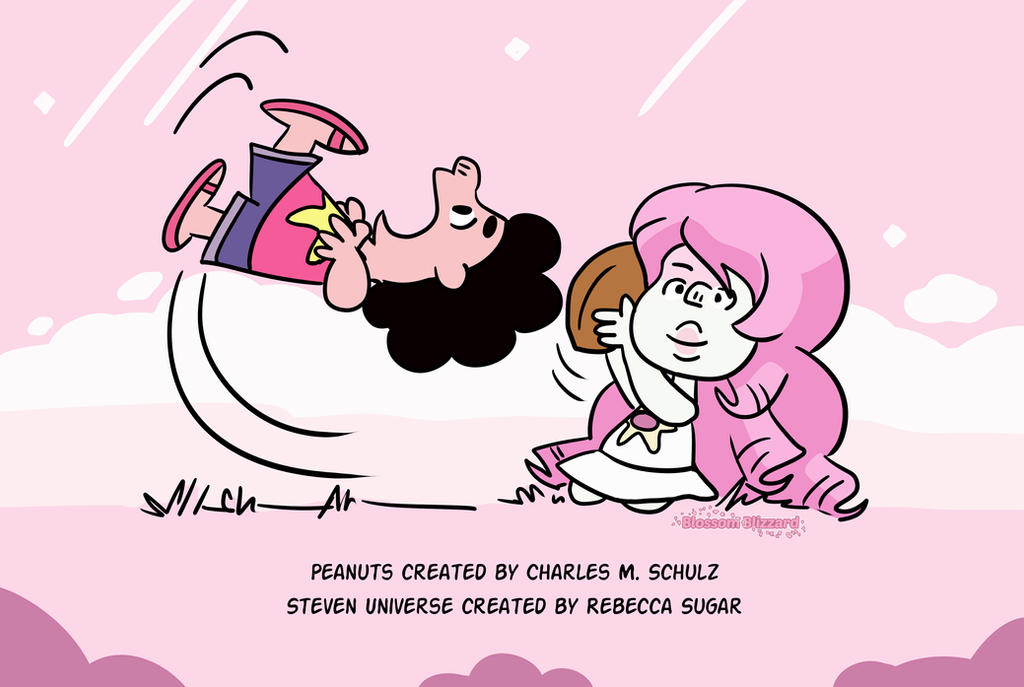
This reminded me of my own experience drawing comics. In 2017 I was inspired by Peanuts and Steven Universe and drew the image below. Seeing Schulz’s original work made me want to draw comics again. I also enjoyed seeing how his drawing style evolved from the 1950s into the 1960s while maintaining its recognizable look.
The gallery’s interactive art stations, where visitors could trace Peanuts characters using light tables, were another highlight. Overall, this experience reminded me to embrace experimentation and revision in my own practice and inspired me to enjoy comics again.
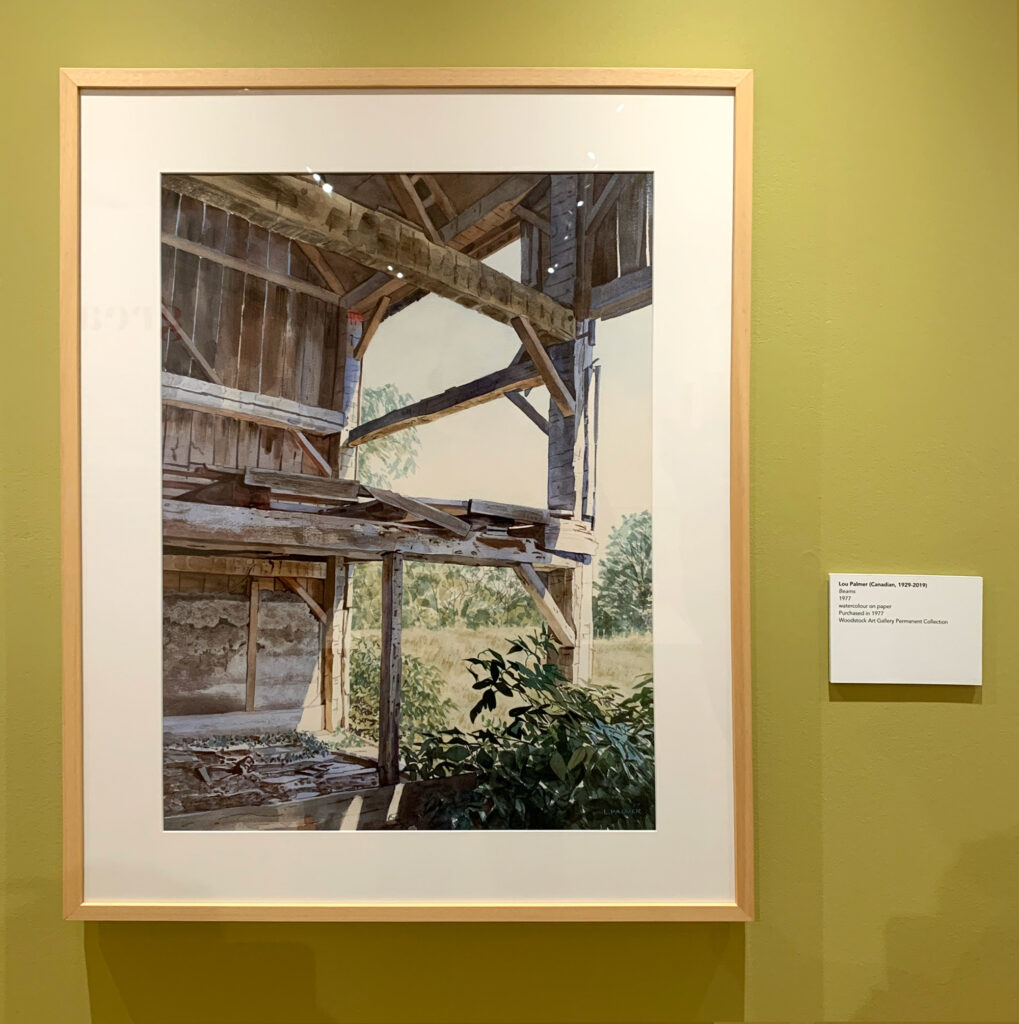
Artwork 2: Beams
Artist: Lou Palmer (Canadian, 1929–2019)
Date: 1977
Medium: Watercolour on paper
Downstairs, in the permanent collection, Lou Palmer’s Beams immediately caught my attention. I am always drawn to landscape paintings, particularly those featuring nature, plants, and foliage. Palmer’s mastery of watercolour amazed me. The precise perspective, balance of warm and cool tones, and photorealistic details were amazing.
As someone who enjoys working with wood in my sculptural practice, I was drawn to the old wooden timbers. They made me wonder about the building’s history. Was it a barn, a mill, or an old factory? The painting captures a moment in time that makes you think about the past, present, and future all at once.
Seeing this work reinforced my appreciation for watercolour and its ability to capture the fine details of architecture and nature. From an artist’s perspective, it was clear that Palmer was a master of his craft. The painting also reminded me to consider the textures, histories, and stories that materials can communicate in my own work.
Summary
Both artworks offered different perspectives on my artistic practice. The Peanuts collection reminded me of the importance of process, experimentation, and developing a personal style. While Palmer’s Beams highlighted the beauty of craftsmanship, material, and careful observation.
This visit inspired me to maybe get back into comic-making and reconnecting with natural materials. Also, it reminded me that inspiration can come from the smallest details, whether it is an editor’s note on an original comic or the weathered texture of an old timber.
____________________________________________
Leave a Reply
You must be logged in to post a comment.