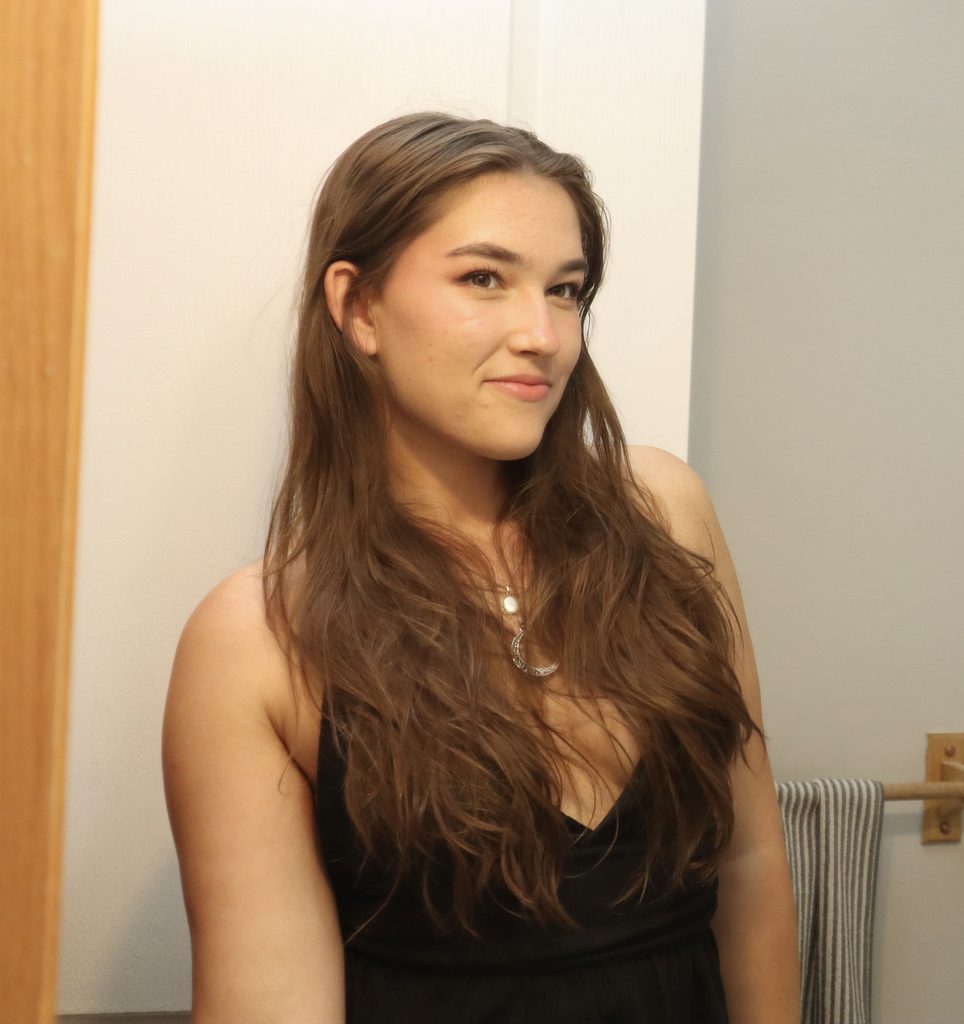
Hi! I’m Leah and I am a second year student in Creative Arts, Health and Wellness. After school I would like to be an art therapist either in the cancer wing of a hospital or in hospice. I’m taking this course in hopes to challenge my creativity and to become more confident in thinking outside of the box, not only in art but also in my practices.
Marina Abramović: The Artist is Present
Question 1.
My first impression of Marina’s performance works was that this art is raw and vulnerable, and I wondered what inspired her art. The courage it takes to be so incredibly vulnerable to the public is truly admirable. Additionally, I admire how simple yet powerful some of her pieces are. For example, The Artist is Present where she sits in a chair in the middle of the room for 8-10 hours, allowing participators to sit with her in silence. It was so moving and fascinating to watch as something so simple could bring out such complex emotions as she said, “there was so much pain and loneliness – so many incredible things”. Leaving space for viewers to interpret art is an effortless way to give life to it because I think the mind fills in the gaps with what is familiar and by doing so creates a connection between the viewer and the piece.
Question 3.
The traditional art world assumes that an artwork is an object; something physical that you can buy, own, and display indefinitely. Performance art resists these conventions, because, though it involves something physical to look at, it is not purchasable or infinite; once the performance is over, that is it. Additionally, the artist(s) themselves are not the art, but the movement or actions in their performance and the emotions it evokes are art. Marina solves these problems by becoming the “object” herself. By sitting in silence for the duration of the show, she turns her presence into something viewers can observe, similar to how they would a sculpture. I think this compromise adds to the idea, because people are given the option to observe the performance like they would any other painting or sculpture, or they can view it from up close and by doing so they become a part of the performance and make it come alive.
Assignment 1 – A KM
An Endless Stroll – Leah Nelsons
The artwork consists of a sporadic montage of social media reel clips layered overtop of a video of a girl walking while looking at her phone in the background. There is not a definite start or end to the video as it plays in a loop; a reminder of the endless tangent we often get trapped in when scrolling on our phones.
The purpose of this artwork is to capture the numbness and dream-like state that many of us experience when we get sucked into our phones; losing our sense of time and space.
The Beginning Idea
During the brainstorming period, the first idea was to have a map of where I walked the kilometre next to a grid of screenshots that I took from all the reels I watched on my walk. Later, I thought the addition of a video of me walking while on my phone would look cool placed in the center of the two images (as shown to the right). However, as we were watching the documentary on Marina Abramović, I decided that the whole thing was far too complicated and didn’t leave enough room for interpretation.

Rough Draft - Brainstorm
By leaving it simple, my hope is if this were to be displayed in a gallery or simply outside of the classroom, viewers could have the freedom to interpret the artwork themselves rather than me spelling it out for them.
Creating the Art
As I walked the kilometre through Preservation Park, I made myself watch Instagram reels and track how long I was walking, by screen recording my phone for the duration of the walk. I did my best to keep track of how far I was walking by using my Apple Watch; in the end, I walked 1.17 km while watching 15.07 minutes worth of instagram reels (15mins 4secs).When I got back from my walk I used CapCut to trim, speed-up, and layer all of the videos.
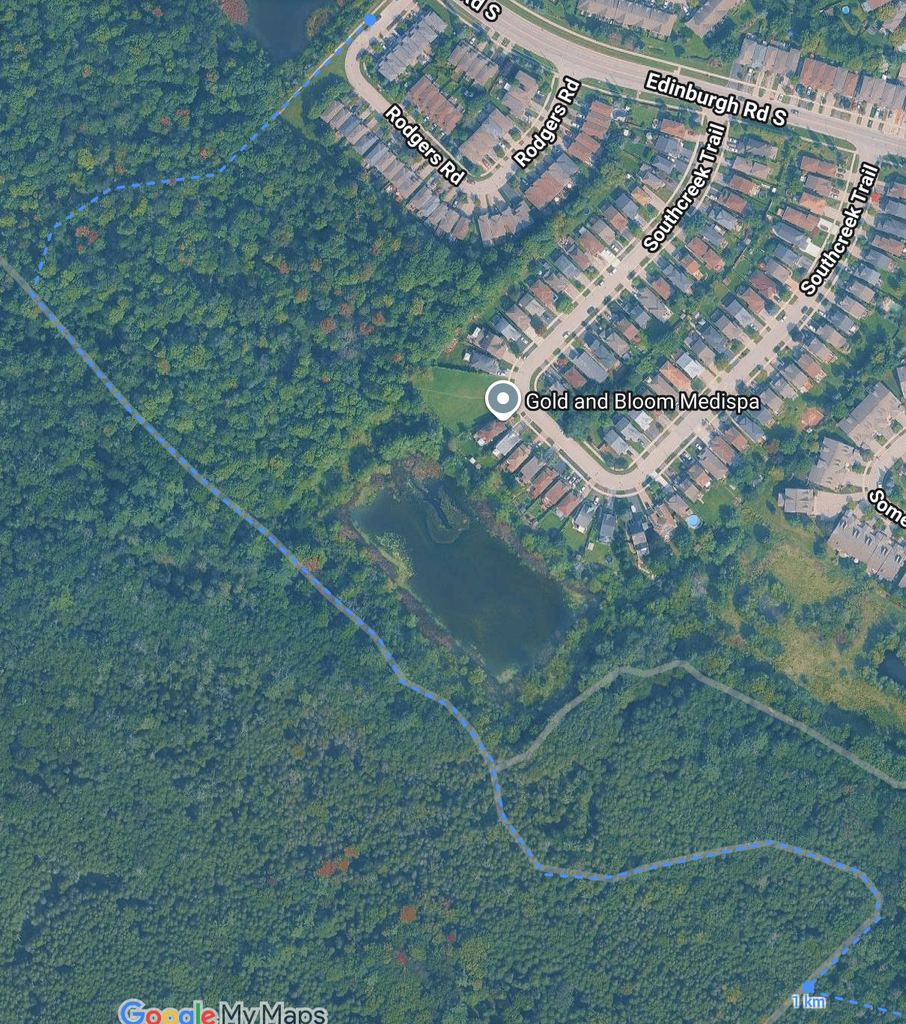
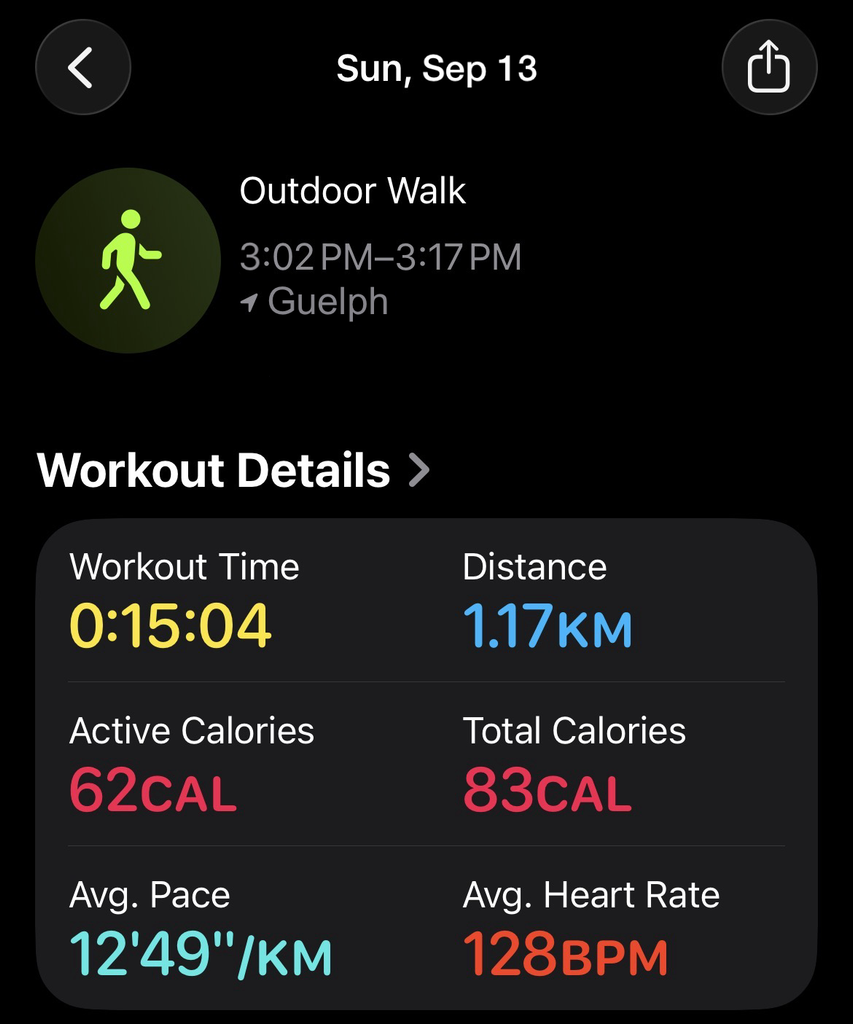
The 1 KM Walk
As I walked through the forest, I could feel my attention getting sucked more and more into my phone and some point my mind reached a point of numbness. I took the same path back as I did on the way there, but put away my phone this time. On the walk back, I could feel my mind becoming clearer as I took in my surroundings and I realized just how much beauty and life I had missed because I was on my phone.
Walking a km was a metaphor for doomscrolling because a walk is something that can go on forever or be a short stroll. Doomscrolling is the act of scrolling social media platforms endlessly, watching mind-consuming media to the point of numbness. We need to apply the same concept to doomscrolling, in that, with enough effort we can control how long we scroll for.
Assignment 2: One Feat, Three Ways
Part 1: The One Shot
Part 2: The Sequence
Part 3: The Loop – Rotoscope Animation
Video #3 – The Loop (Rotoscope Animation) The third idea revolves around the visualization of the phrase ‘I love you.’ It is drawn differently. The heavier the emotions, the more bold and vivid the letters and colouring. The softer the phrase, the lighter and smaller the words. We focus on how the words are delivered, and how different tone can change the meaning of a sentence.
Turning the Gestures of Everyday Life Into Art – Questions
Question 1.
type
Question 2.
One example that stuck out to me was Tjan’s habit of hiding his thumbs by flattening them into his palms. Pointing out this habit made Tjan realize that he often positions himself in a way that takes up less space. I like that Tjan reflected after this project and was able to acknowledge that he does in fact tend to arrange his body so that it takes up less space. It’s refreshing that he went out of his way and bought a bright yellow jacket for himself saying, “…you can’t miss me now”. I love that he decided to change this habit and not ‘apologizing’ for taking up space anymore. It’s interesting to think just how many this work probably helped so many like Tjan to become aware of their movements and change their habits for the better.
Question 3.
One of my roommate always walks with near perfect posture and a small bounce in every step, and it intensifies depending on her mood and environment. I’ve seen her walking around campus alone before, and she just looks straight ahead focused on her destination, the small hop of her walk is smaller and portrays the image of confidence. On contrast, when she sees someone she loves (especially if it’s unexpected) she smiles brightly and the hops become more dramatic and sometimes even turning into skips. She is a warm, bubbly person, and I love how that part of her true personality still peaks through her cool, neutral mask when she walks amongst strangers.
MOCA Field Trip Assignment
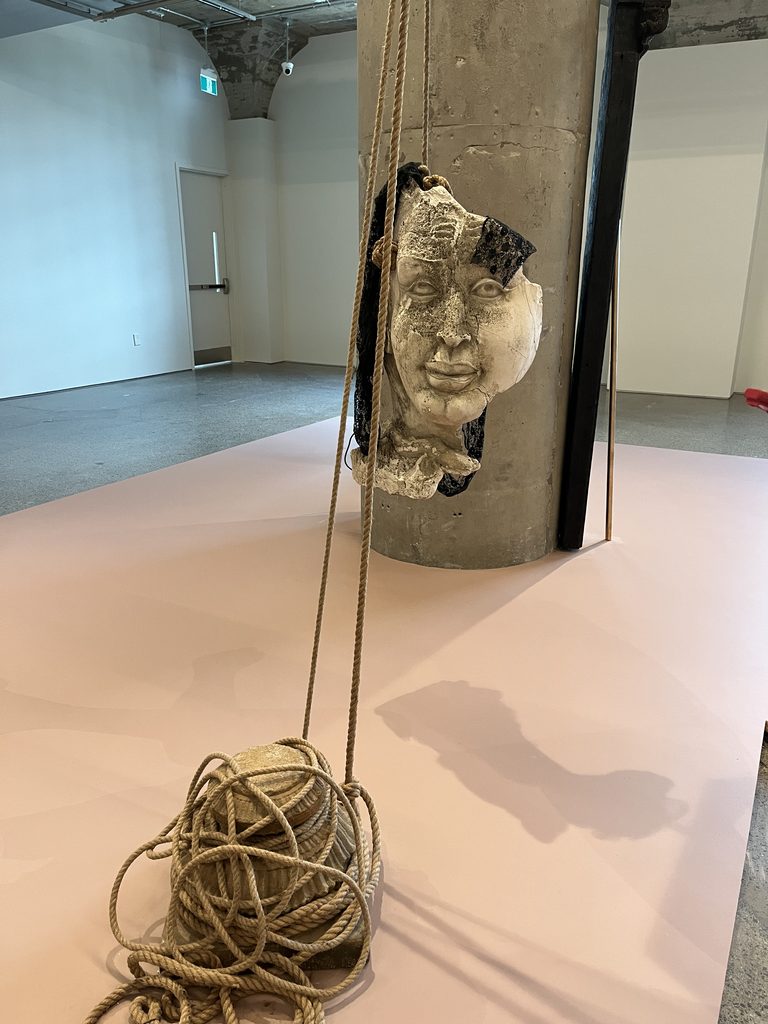
The third floor of the gallery was my favourite by far. The artist’s name is Bharti Kher and what captured my attention the most was the variety of materials and sculptures she created. Every sculpture on display was different and unique in their own way but all together there is a balance between them. Immediately when I got to the floor, I was overwhelmed by the smell of Play Dough, which through discussion with my peers, we realized was resin we were smelling not Play Dough. Bharti used resin to freeze fabric in space to create movement; those sculptures were the ones I liked the most(sculptures a. + b.).
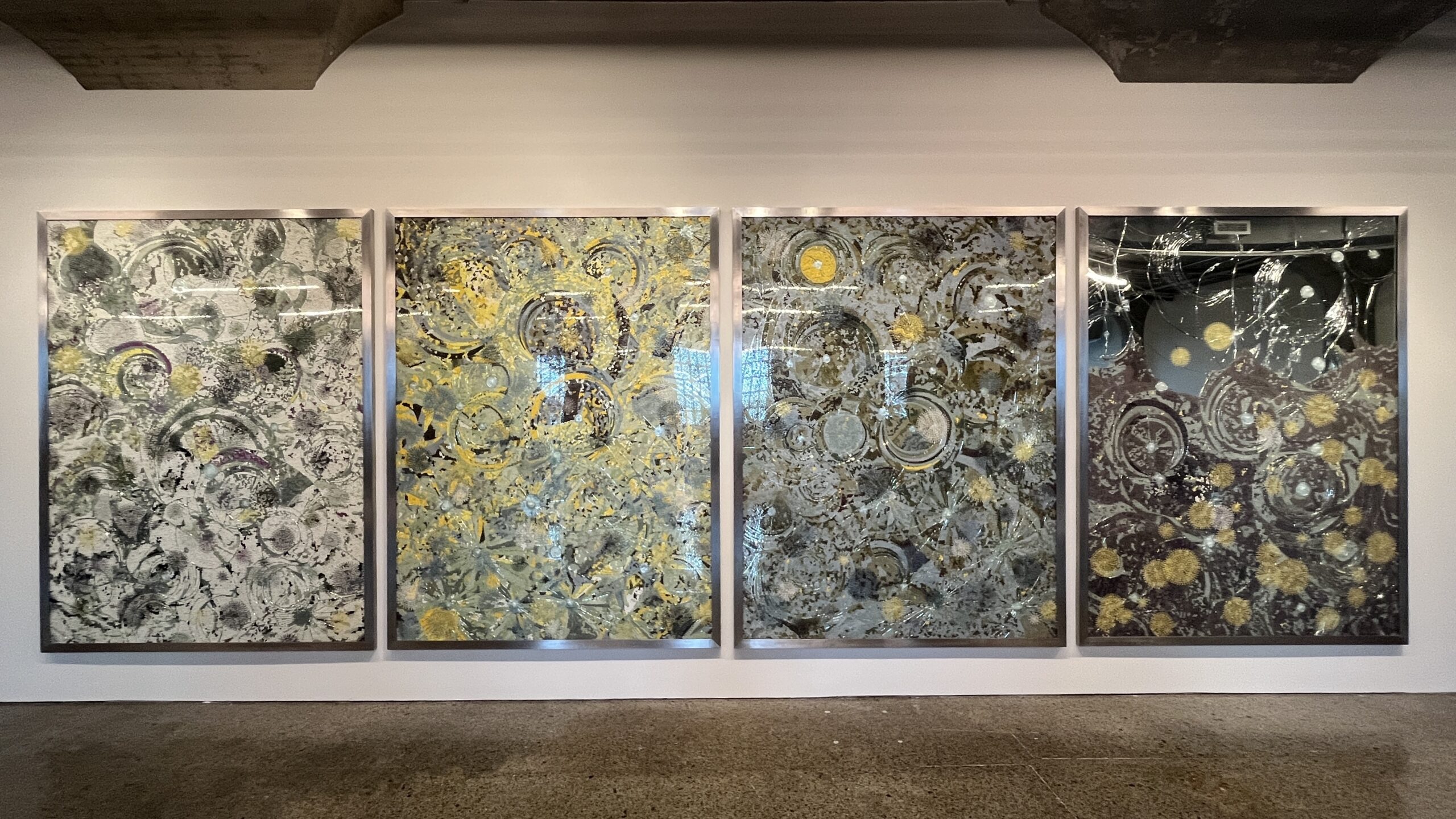
a. Everything about this sculpture was intriguing to me. The way the human figure is suspended in air with use of the chains is beautiful. With the addition with the wooden frame and chandelier hanging underneath the figure and the chain piled on the ground; I can’t put my finger on it but something about it is so beautiful and breathtaking. I would love to know what the story is (if there is one).
b. I had very similar feelings about this sculpture as I did for sculpture a. I love the placement of the scarves over the figure. the droplets of resin dripping from the cloths was mesmerizing. I’m having a hard time putting my feelings about these sculptures into words without sounding repetitive; the best words I can find are awestruck, mesmerized, and admiration.
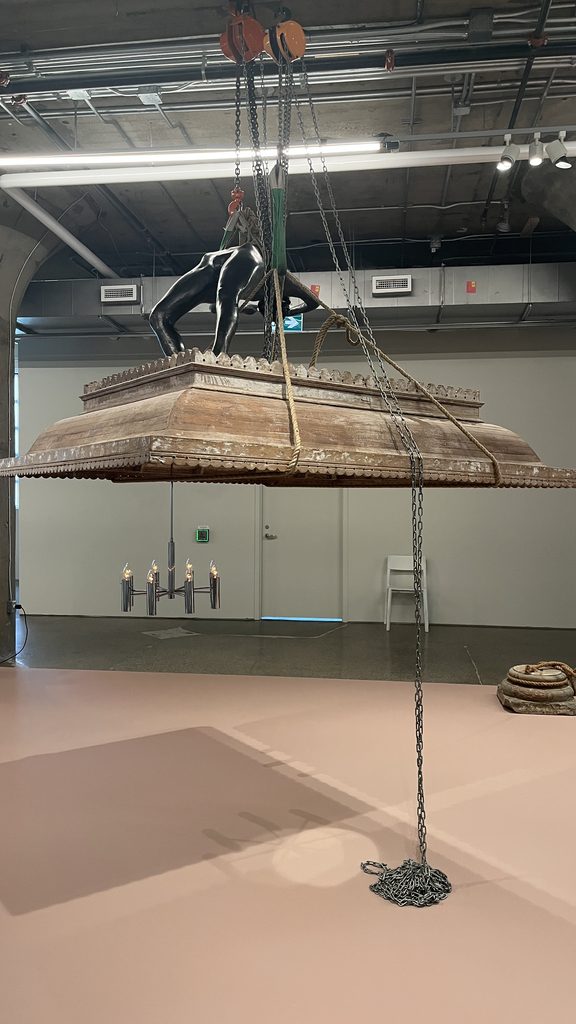
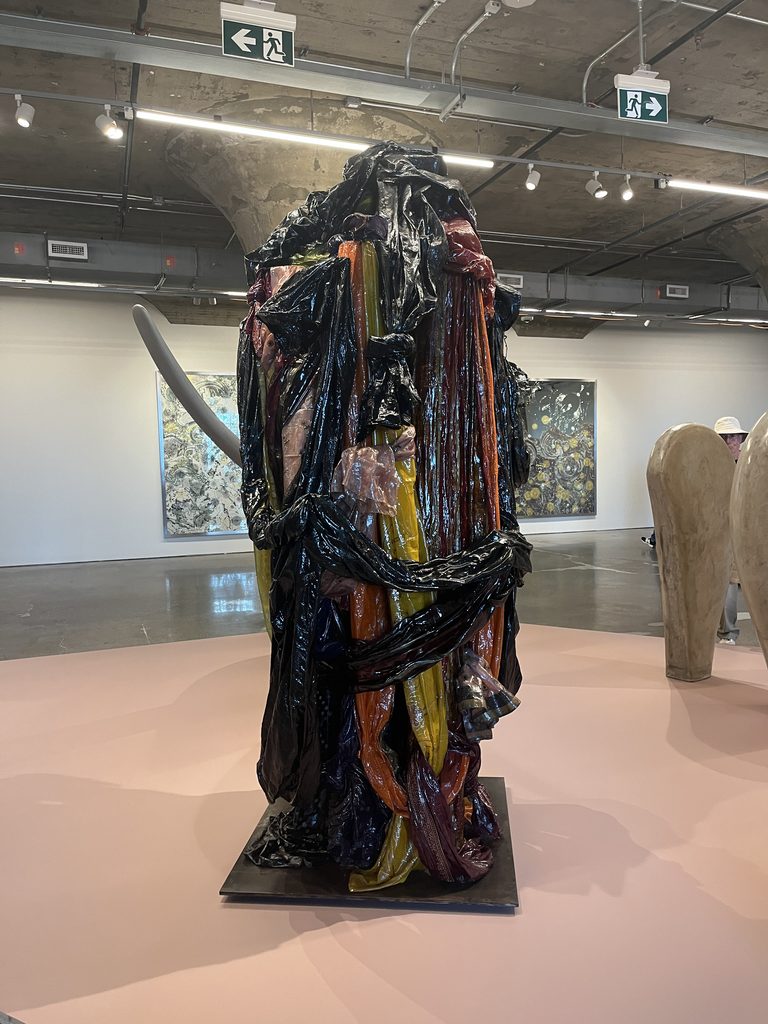
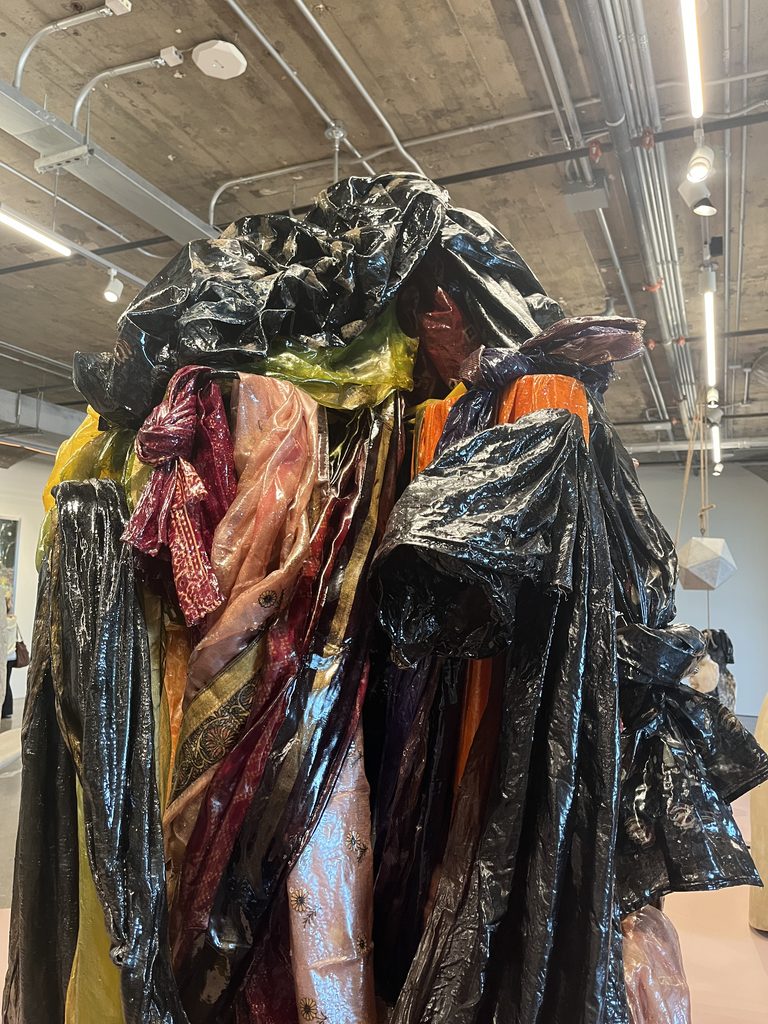
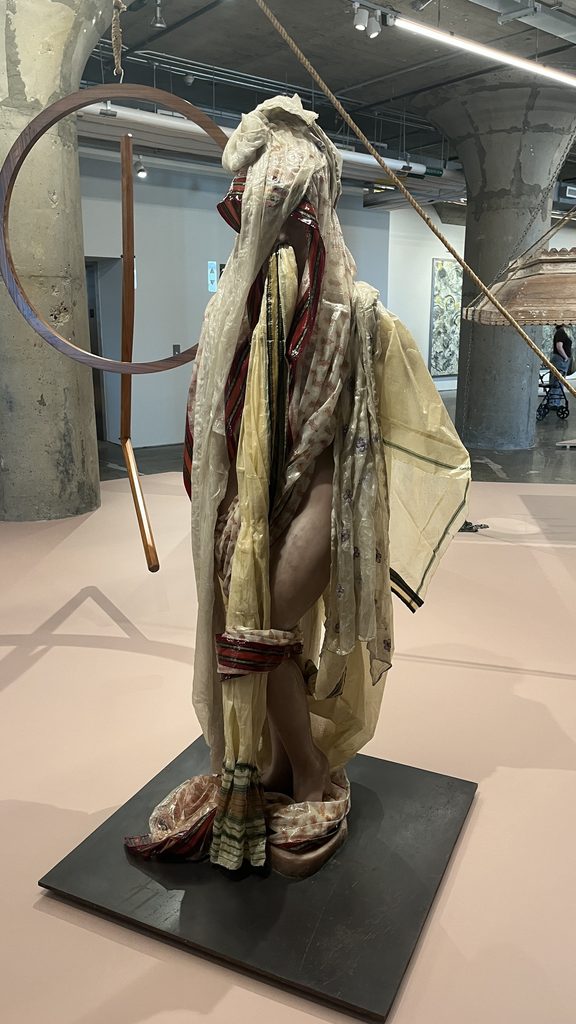
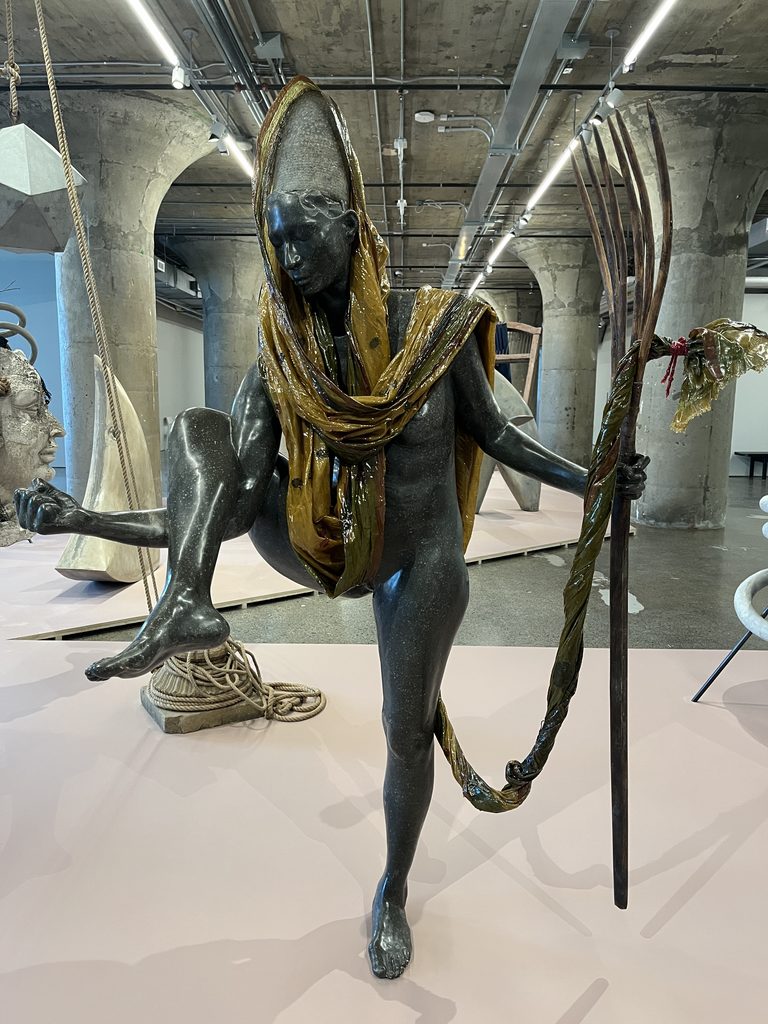
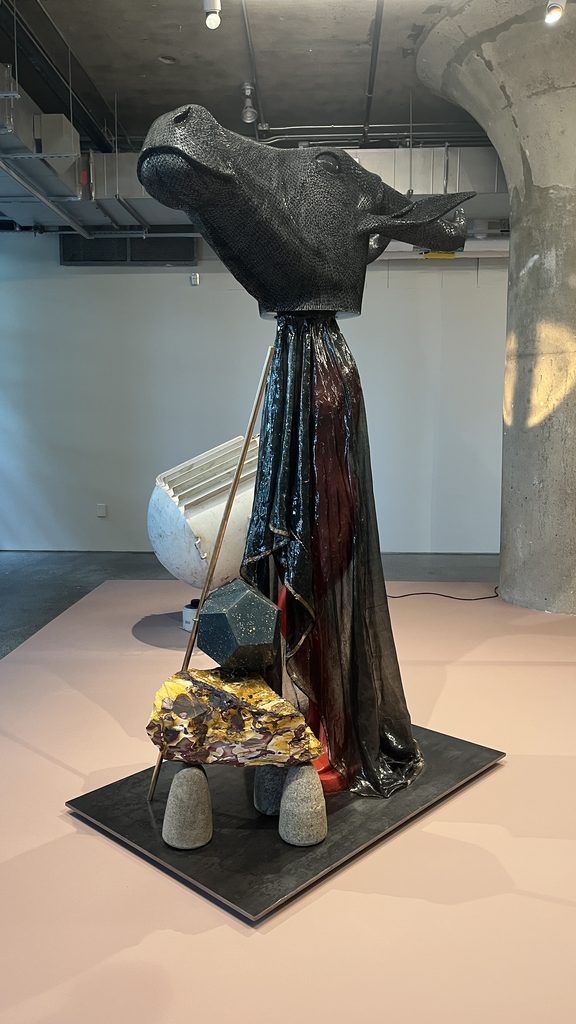
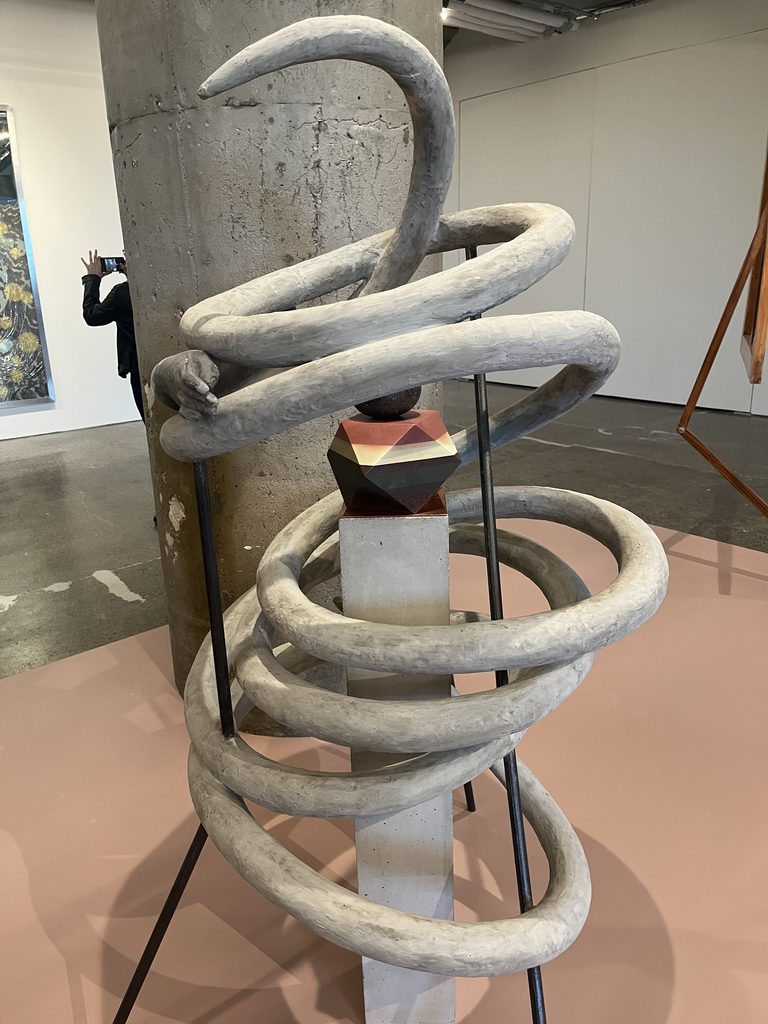
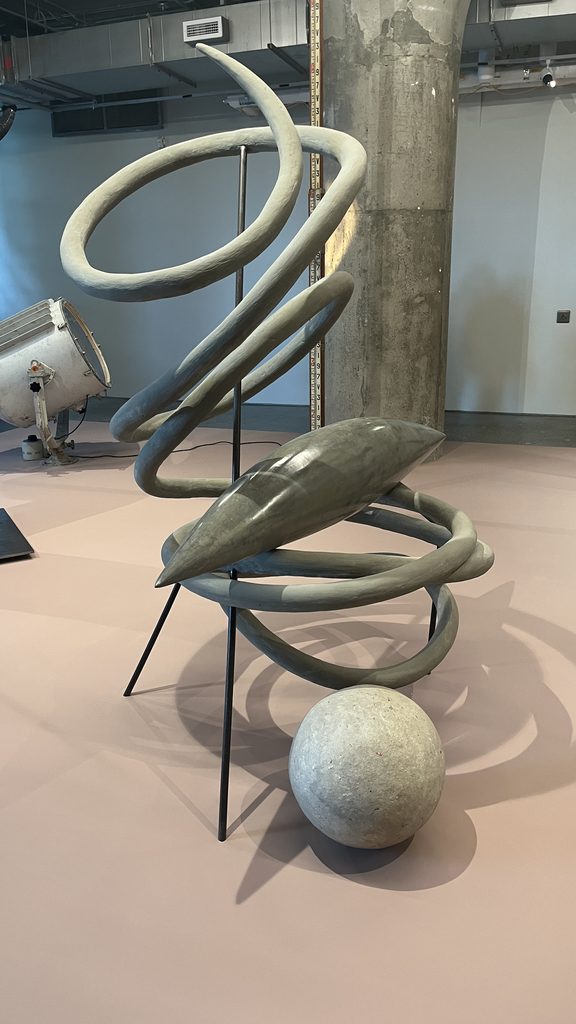
I admire how she used pieces of torn-down religious buildings, like temples, and gives them a new life in her gallery. She transforms discarded rubble into pieces of art, and I think that’s a concept I might like to explore and apply to my own practice in the future.
Leave a Reply
You must be logged in to post a comment.