NYT Gestures of Everyday Life
September 29th 2025
1.
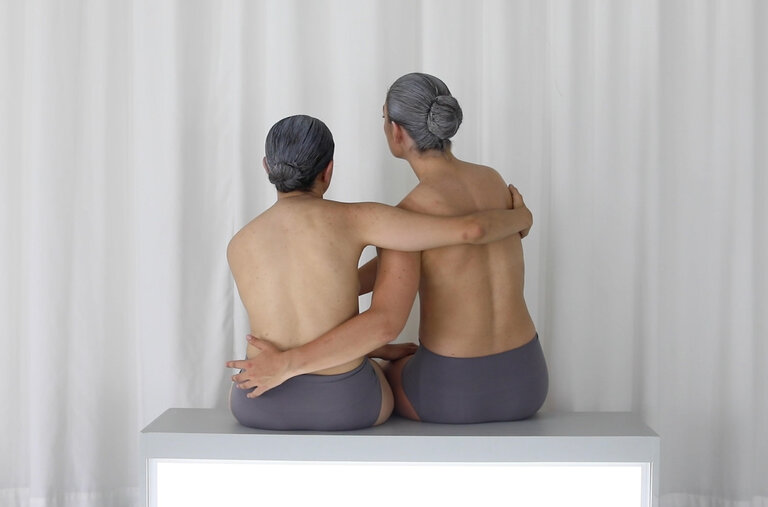
Motus Mori is a living archive created by Katja Heitmann, where dancers preserve the everyday gestures of volunteers in their own bodies, rather than through digital means. Unlike written or filmed archives, this project depends on muscle memory as the storage medium. As the article explains :
The challenges are clear: if a dancer forgets a movement or leaves this project, part of the archive disappears. The fragility is heightened by the fact that “you’re body needs to stay in training. If you stop, your artwork is gone.” Yet this challenge is also a gift. Instead of treating gestures as data, the project treats them as lived experience, reminding us of the intimacy and humanity movement.
2.
One striking example comes from Ranti Tjan, a museum director who learned something surprising about himself. The dancer discovered that “I hide my thumbs,” a habit Tjan had never noticed. This unconscious gesture revealed his tendency to minimize his presence, and it ultimately inspired him to adopt more expressive choices, like wearing a bold yellow jacket. What strikes me here is how a seemingly tiny physical detail can mirror deeper patterns of self-presentation and even shape how a person chooses to move forward in life.
3.
(Person 1)– My anxious friend Abbie tends to bounce her knee frequently when seated, and they tugs at their sleeve as if trying to self-soothe. She curls her shoulders inwards, paired with tight smiles and darting eyes. Much like the article describes, participants who reveal “insecurities and trauma” through small movements, my friend’s gestures communicate unease and vulnerability, even words don’t.
(Person 2)– My mother, Rachelle, tends to walk with a grounded, open posture and keeps her hands loosely behind her back. Her facial expressions are always measured, with a slight end tilt to show alertness. The broadness of her shoulders makes the stance appear both calm and confident. Her movements imply steadiness and authority, echoing how Motus Mori emphasizes that there is no “good’ or “bad” movement, only authenticity.
(Person 3) – My Little brother Stephen uses wide sweeping gestures and exaggerated facial expressions when talking. His eyebrows raise and fall dramatically, and his whole body leans into storytelling. Like the donor in the article who realized that ” his movements looked less elegant than he imagined,” my siblings’ gestures show how expressiveness can be both enduring and revealing. His body type, medium and agile, allows for this fluidity, implying charisma and eagerness to engage with others.
Leave a Reply
You must be logged in to post a comment.