Make a Kilometer
Assignment One: September 20th 2025
Uneasy Words of The Wise
Planning Work
Instead of trying to measure a Kilometre with metres, I measured through language fragments. I pulled 100 random texts from my personal device. Each word is explicitly personal and involved in a piece of conversation I’ve had. Being isolated, becoming free-floating without any context, the words lose their original meaning and transform into something strange, vulnerable, and abstract.


By assigning unique colours to segments of texts, I added the most basic outline of context without needing to describe or show the public anything. The piece is no longer just about distance, but rather how fragments of everyday communication can stretch out into something vast, absurd, and emotional, like wearing a kilometre through thought.
But Why is this a Kilometer ?
- I started by sifting through my messages and finding the most absurd, uncomfortable, and personal texts. Every text is from a separate and different conversation.
- I then measured 100 words into a mathematical calculator to determine how long a kilometre would be..?
- 1000 100 = 10, therefore each word is worth 10 metres. Each word expands ➗
into 10 metres, together forming a kilometre of fragmented language and colour - I then chose the different colours with intent and got to writing
What Inspired Me?
“Pushes the boundary between audience and artist in pursuit of highlighted consciousness and personal change”
The intent and inspiration I had was through Marina Abramovic, and her production of art firmly believed that art should make the viewer uncomfortable, and through watching her performances, I truly was startled. When keeping her in mind while shifting through texts, I chose the most offensive, uncomfortable, personal, and weary texts. Some things I said “without context,” most would censor or wonder why on earth this would be in a conversation…? But through my realization, context is a very important thing, and without it, the mind wanders in endless loops trying to figure out why. This kilometre of distance between the individual reader and the context hidden is what fascinates me. Getting to the nitty-gritty, I entirely made a Kilometre through intimacy and disconnection, possibly giving room for the viewer to be yet concerned or startled, and relatable.
Final Work
I was inspired by Marina Abramovic and her belief that art should unsettle. While sifting through my messages, I chose the most absurd, uncomfortable, and personal phrases that, without context, might startle or confuse. Viewers are left in a gap between what is known and what is withheld, their minds circling possible meanings. This kilometre is built on intimacy and disconnection. The fragments are deeply personal, pushing my boundaries on comfort. In presenting these words, I invite the viewer to sit in discomfort, to wander in uncertainty, and to recognize how much of the meaning depends on what is left unsaid. A kilometre measured through language becomes not only absurd but deeply human.

In this work, I reimagined the Kilometre as a measure of not metres, but of language. I pulled 1000 words from random conversations on my personal device, isolating them from their original context. Each word is assigned the value of ten metres, so that together the 100 words form a kilometre. Through this process, distance becomes intimate, uncomfortable, and abstract. By stripping words from their conversation, they lose meaning and become strangely vulnerable fragments. To give the faintest trace of tone, I assigned each segment a unique colour. This suggests an emotional backdrop without revealing what was truly said. The result is a kilometre that cannot be walked physically, but can be experienced through thought, perception, and time.
More Images


Citations
One Feat, Three Ways Video Project
Assignment Two: October 20th
When Fragility Meets Destruction
Planning Work
During the preperation stage, our group explored a range of creative ideas – from lighting somthing on fire againt a black background, to eating an apple in a grotesque way, and more. We discussed these concepts in debth while preparing our work and consulting with the professor.
Filming in the studio was unexpectedly fun. There was a looseness to experimenting with different camera angles and lighting setups – the kind of creative play that turns uncertainty into discovery. My Lab partners and I received more than helpful feedback on using DaVinci Resolve to help with footage contrast and balance.
Below are some of the original frames and frames drawn over that I’ve used for this project. Also, including some rough drafts before I had decided to crop all images to get a better, clearer animation.


Here is our very first take on our walking skit, the focal point is absurdly hard to find with the distorted background. This take was to help us idealize where we want to position the shots and how close/far away we may want to take.
Rough Drafts
Video One
The concept began with something deceptively simple — the act of plucking petals from a flower. It’s a gesture that’s been repeated endlessly in movies and fairytales: a woman whispering, “He loves me, he loves me not.” We wanted to take that soft, romantic image and turn it inside out. What happens when a moment of tenderness becomes one of destruction?
Our first video captured that question in its most literal form. I sat under calm lighting, slowly removing petals one by one. The motion felt meditative — each pluck leaving a little more emptiness behind. The pink flower we chose carried every stereotype of femininity: delicate, beautiful, composed. Yet even within that stillness, the image began to feel unsettling, like something too perfect about to unravel.
Video Two
In the Second video, I stepped back to observe the change from calm to chaos through the lens. The camera became my way of tracing the breakdown – every motion sharper, heavier, more unpredictable. As the person in front of the camera no longer plucked petals, they contorted in every way, eventually tearing the bouquet apart. Through my viewfinder, the contrast between stillness and violence became striking – as an unspoken dialogue between fragility and force. The final shot, where I followed Kate walking away from the scattered petals, felt like witnessing the moment their beauty surrendered to defiance.
Sound became it’s own texture throughout the process. The rip of petals, the thud of stems hitting the ground – each added a rawness that shaped the rythem more than msuic ever could. We repeated certian clips to build tension, turning noise into pattern and pattern into somthing that almost resembled a heartbeat.
Animation
When it came to the animation, I found the process both challenging and exciting. Working in the Procreate Dream’s app proved more difficult than expected – moving between frames and adjusting the timing often made the motion feel choppier than I had hoped. Still, the experience of experimenting with animation for the first time was genuinely rewarding. Even though the final result wasn’t as polished as I had envisioned, I really enjoyed exploring the new medium and learning how movement and rhythm could bring the imaginary to life in a completely different way.
Citations
– Group Members: Kate Giffen, Grace Major, Althea McGinn
Audio Art
Assignment Three: November 5th
Cockpit Chronicles
Rough Planning
When I first started rough planning, some of my ideas included recording the sounds of animals outdoors or recreating natural, everyday noises. As I developed the concept further, I wanted to make it feel more personal-something that reflected my own interests and style. Since my favourite formats are podcasts and documentaries, I wanted my first piece of audio art to feel familiar and meaningful to me. I really connected with the idea behind creating it, especially incorporating powerful, loud sounds like planes.
Raw Audio Files
The Interveiw – audio turned out to be the strongest part of my project. I really enjoyed interviewing my sister-it felt natural and genuine. The raw, unedited recording captured an amazing take, and I actually loved how the background airplane noises added an unexpected but authentic touch to the peice.
The Hydraulic Pump – audio take was my second favourite recording, mainly because of the experience it gave me. Getting the change to sit up front and see what they do in the actual job because it was so intense and physically demanding, which made me appreciate their work even more.
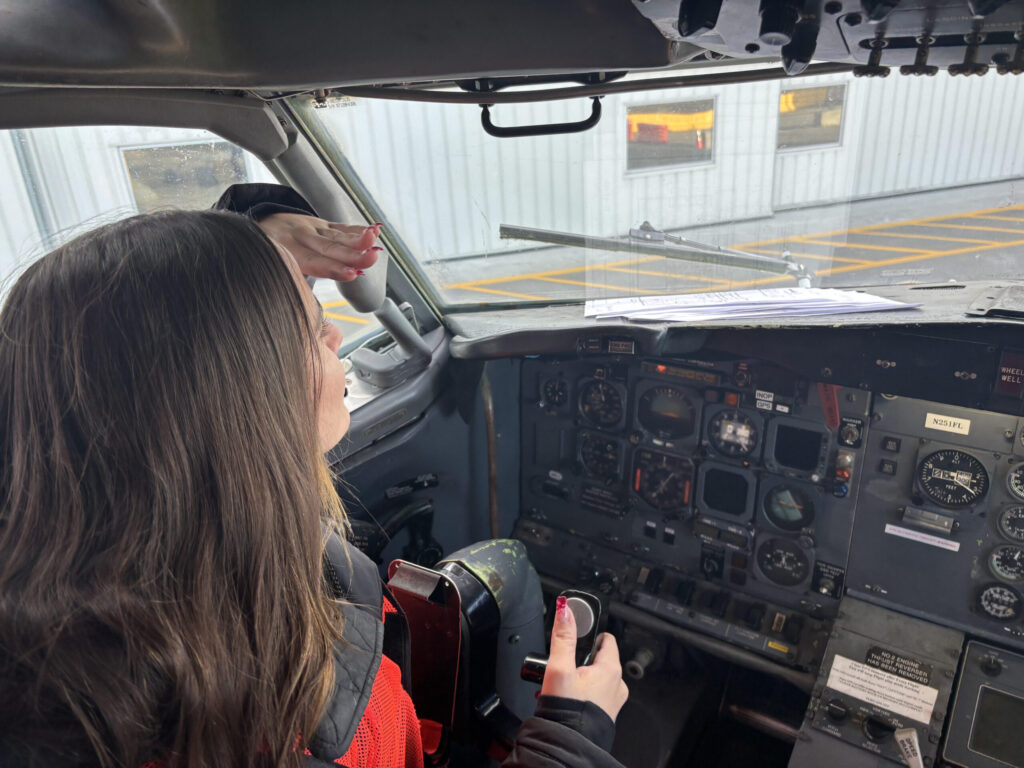
The Professors Lesson – Getting the opportunity to join another class in a completely different subject was an incredible experience. Being able to sit firsthand in the drivers area “cockpit” of the plane and watch the mechanics at work was absolutely brilliant.
Field Trip “Photos”

Watching the dashboard where the hydraulic pump was operating as they added more components to the plane was absolutely fascinating. The lights lit up like a Christmas tree, and the sounds – though a bit terrifying- made the whole experience even more thrilling.
Having the opportunity to sit in the cockpit alongside my sister and take control of the plane, even briefly, was an incredible and memorable moment.


The hangar full if planes was an incredible sight to experience. Since we live fairly close to the airport, it almost felt like I was seeing something right out of my own backyard. I have to admit, seeing drakes plane parked there was very cool.
Seeing where all the mechanics worked and getting to look inside their classroom was one of the most memorable parts of the experience. The engines on display-and even the helicopters parked outside made it all the more fascinating.

Audio File
CockPit Chronicles
Description:
Cockpit Chronicles: is an immersive audio experience that captures the sights and sounds of an airplane hanger and cockpit. Blending real-world recordings of mechanics and artists, working with hydraulic pumps, airplane engines, and personal interviews, the project creates a cinematic, documentary-like journey that transports the listener into the heart of aviation.
Inspiration
Janet Cardiff
Janet Cardiff’s audio walks and sound installations are inspirational to my project because, like her work, I aimed to create an immersive experience that blends real-world sounds with narrative elements. Her ability to guide the listener through a space and make them feel as if they are part of the environment misers my goal of capturing the atmosphere of the mechanics workspace.

“Sound feels more directly tied ti memory, and to dreams…” – Janet Cardiff
By combining recorded sounds, interviews, and environmental audio, Cardiff creates a documentary-like experience that tells a story and evokes a sense of place-something I also strive for in my audio art. Her work demonstrates how sound alone can transport a listener and covey both information and emotion, which directly influenced the cinematic and immersive approach I took in my project.

Janet Cardiff’s The Missing Voice (Case Study B) directly inspired me for my audio are because, like her work, it created this immersive experience by blending real world sounds with narrative elements. In her sound walk, listeners navigate the streets of London while hearing layered environmental sounds guided by storytelling, producing a documentary like space.
Naomi Usher

Who is This Girl? –
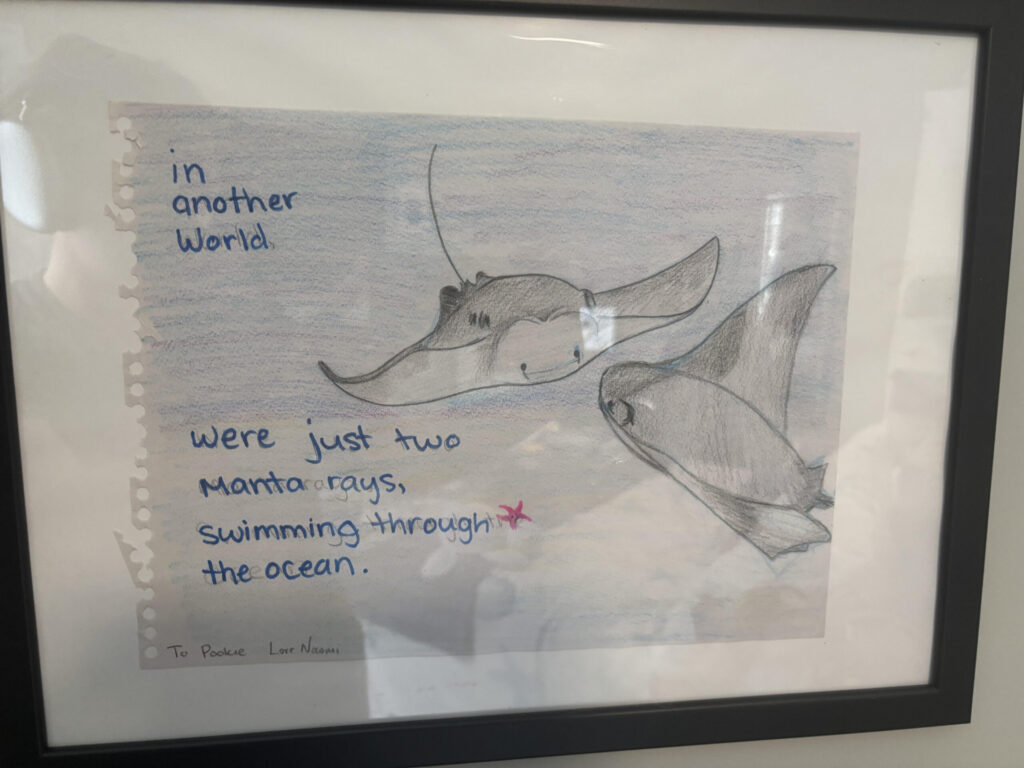
Who I like yo call my adopted best friend, in the most literal case. We first became friends around grade 7 in elementary school and stayed close as we moved into high school. Eventually, she started coming over so often that it felt like she was part of the family =. By grade 10, she officially was- Naomi was legally adopted by my family.
Naomi started out academically weak and didn’t have much interest in School at first. However, once high school came around, she discovered a genuine passion for the trades. Her dedication and hard work paid off- she quickly rose to the top of her class and even graduated early.


I think the most surprising part of this project is realizing that the person that I’ve always thought of as the silliest, clumsiest, and sometimes downright “dumb” around me is now a mechanic working on planes at a major airport. Seeing friends, family members, and acquaintances go on to do important and impressive jobs is a realization that really hits-you suddenly see the full scope of what people you know are capable of.
References
U.S. Bureau of Labour Statistics. (2025). Aircraft and avionics equipment mechanics and technicians. Occupational Outlook Handbook. https://www.bls.gov/ooh/installation-maintenence-and-repair/aircraft-and-avionics-equipment-mechanics-and-technicians.htm.
Cardiff, J. (1999). The Missing Voice (Case Study B) [Sound Walk]. Whitechapel Gallery. https://www.whitechapelgallery.org/about/blog/janet-cardiff-the-missing-voice/
Conceptual Portrait
Assignment Four: November 19th

My Life Through Another
Rough Planning

For my rough planning, I began by identifying key moments from Naomi’s life that shaped who she is now – both positive and traumatic. Instead of representing her directly, I chose a system where each canvas focuses on one symbolic object connected to a specific memory.
This allowed me to build a portrait through moments rather than likeness. I started by listing events and matching each one with an object that could visually communicate its emotional weight. From there, I sketched out small compositions, keeping them minimal and non-literal so the system, not decoration, drives the work.
The goal of this planning stage was to create a structured framework: one object per memory, all painted in a consistent style, forming a series that slowly reveals Naomi through the accumulation of her experiences.

Conceptual Idea
The core concept is that a person can be understood not only by their appearance, but also through the accumulation of what they’ve endured and enjoyed. Using a non-literal, minimalist approach removes decoration and narrative, allowing the objects to act as evidence of her history. The “portrait” emerges indirectly, through the systems of memories translated into forms. This method shifts the idea of identity from appearance to experience – showing that who we are is built from the things that have imprinted themselves on us over time.
“Objects carry the imprint of the lived life; they become the reservoirs of memory” – Walter Benjamin
How Audio Ties In
The audio ties into the project by acting as another layer of “evidence” within the portrait system. Just like eacj painted object represents a memory or event from Naomi’s life, the audio captures the emotional atmosphere behind those moments. Instead of literally, telling her story, the sound functions as an abstract emotional trace – tones, voices, or enviormental sounds that echo the feelings attached to the objects.
This creates a multisensory system: the paintings show the physical symbols of her memories, while the audio reveals an emotional residue. Togther, they build a fuller, non-literal portrait of Naomi, allowing veiwers to feel the weight and texture of her experiences rather than simply see rthem.
Conceptual Portrait
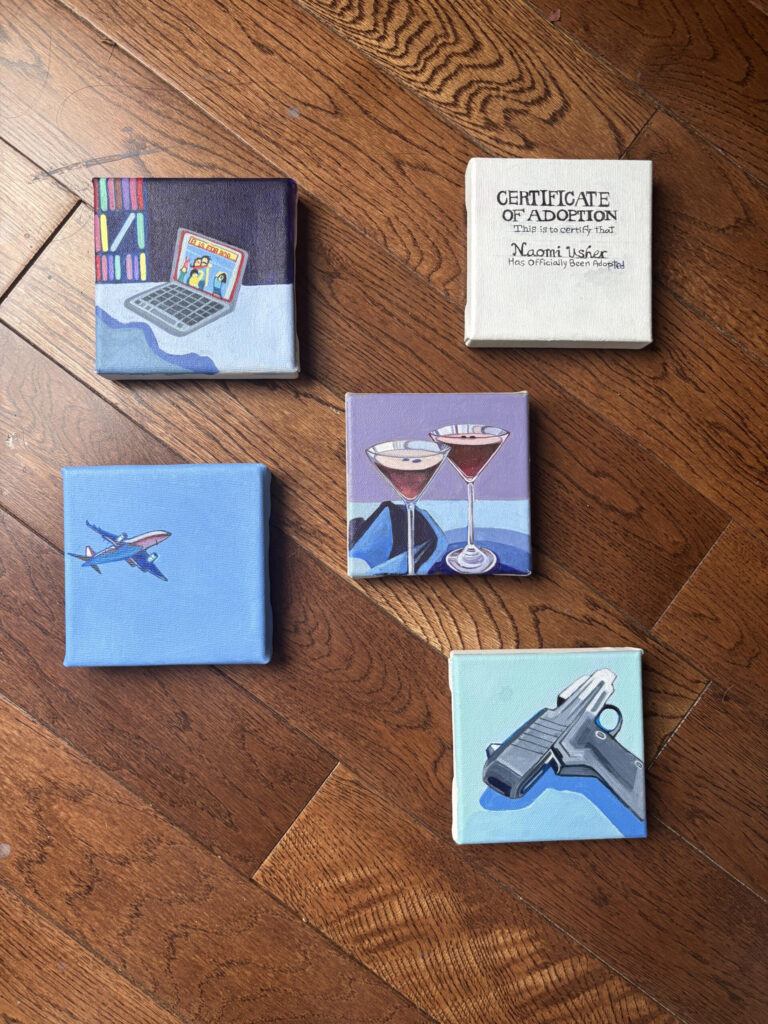

This portrait shows her goals and what she strives to achieve every day. Also represents movement within her life.
This portrait resembles where her life on a legal and official note changed forever.


This painting represents her personal comfort show, Bob’s Burgers, in bed. Representing personal peace and a way of relaxation.
This piece shows representation in socializing, making friends, meeting new people, and being able to interact with her world.


This portrait of an object represents her traumatic memories through what a pivotal point in her life measures.
Inspiration
Sophie Calle
Sophie Calle is one of the strongest influences as she makes conceptual portraits built through objects, memories, and indirect storytelling.
She builds portraits of people by showing what they leave behind, not theur appearence – exactly like how I represent Naomi through symbolic objects such as my martini glass, the gun, the plane and more.
Her work often deals with trauma, intimacy, absence, and memory. She avoids literal representation and instead lets evidence tell the story.

“The objects we leave behind are the traces of our stories. They speak for us when we cannot” – Sophie Calle
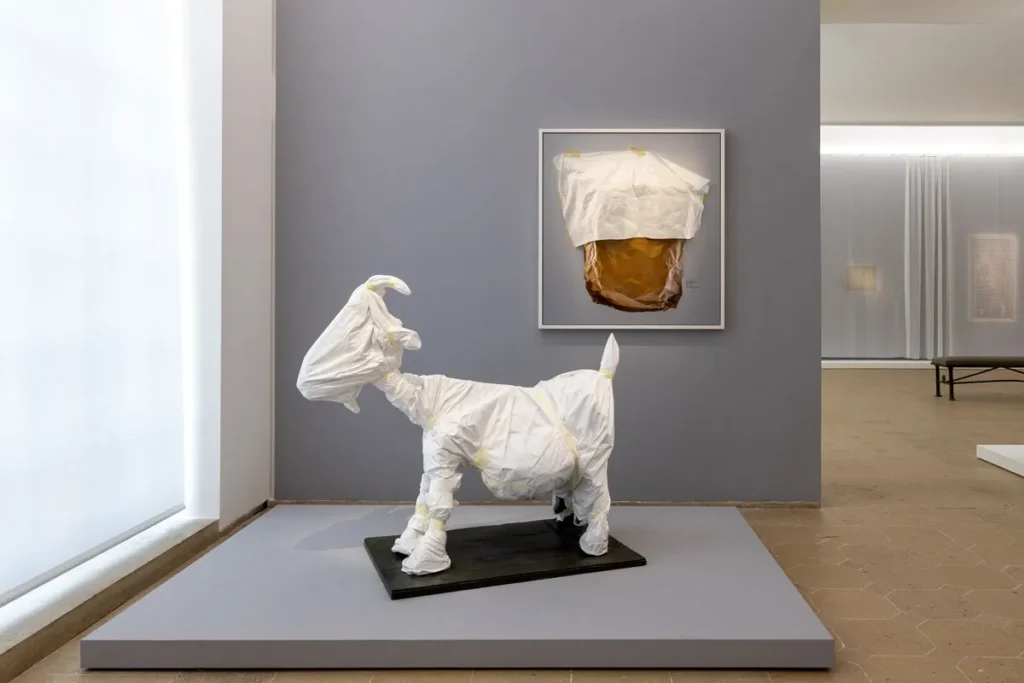
Calle shows turning memory into material, showing her identity through evidence instead of portraiture. Letting a system of the work, creating a portrait built from absence, narrative gaps, and symbolic fragments.
References
Calle, S. (n.d.). Artist statement and interviews. Various publications.
Benjamin, W. (1968). Illuminations (H. Arendt, Ed.). Schocken Books.
Barthes, R. (1977). Image, music, text (S. Heath, Trans.). Hill and Wang.
Counter Archive Zine
Assignment Five: November 28th

STING RAY Adventures
Rough draft
My Room

The biginning of this project started with the fact that I wanted to capture a rather funny aspect of an archive. I knew that most projects of mine inquired about serious topics and loved the idea of a play by play aspect of my niche.
From an archival perspective, my family has non-traditional tendencies, or you could suggest that stereotypical norms don’t apply. We love to express ourselves freely, keeping things open and being who we truly are. For a long time, it was just my mother and me, and her rules towards me were that you can swear as much or at anything, but telling someone directly to “Fuck off” is rude and unnecessary.
My thoughts then wandered about “telling a family story” within the criteria, but also somehow including aspects of me, aspects of my memories, and enjoyments.
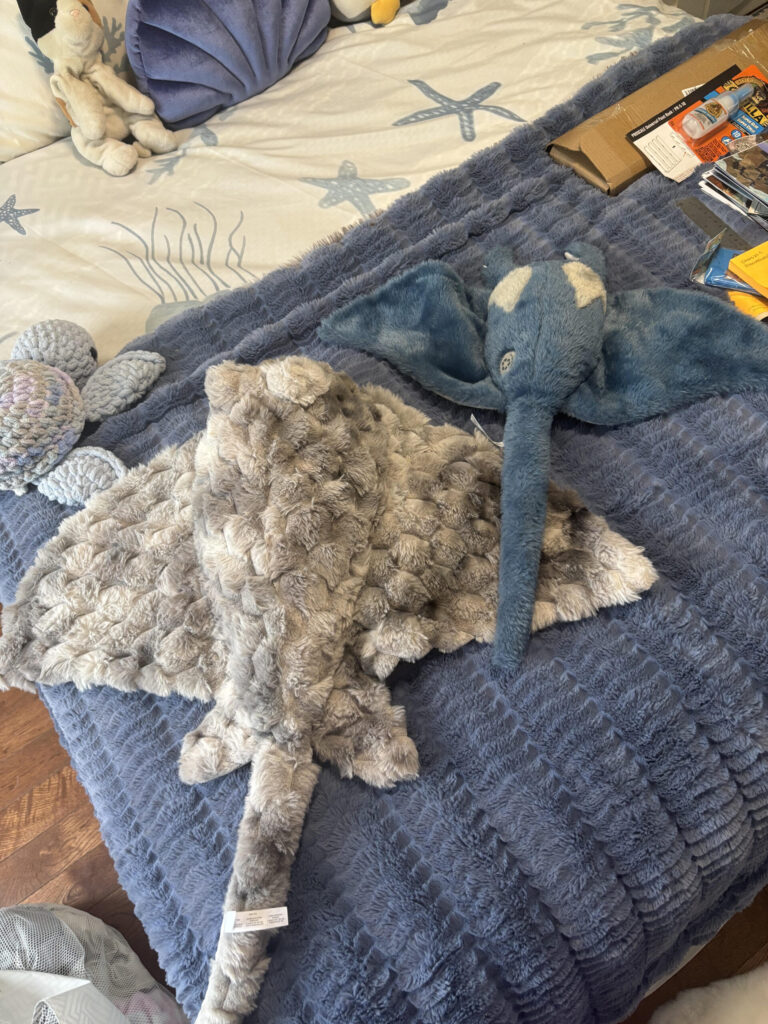

So starting this project really meant being able to counter archive myself and really reach out to people who don’t know who I am or aspects of me, or my principles.
It also shows how other people have loved me through the things I enjoy the most, through gems, stuffies, art, hand made gifts and more.
Process
Digital Process

I feel digitally, this process was rather lengthy because of a couple of aspects. Let’s start with the fact that I am useless when it comes to computers. It tends to take me twice as long to not only remember each aspect of a new program, but I just don’t work with Apple either….
I think part of what made this process more successful, look-wise wise was the fact that when learning about Affinity 2, I received a ton of help from Nathan and Doctor Wilson; they really took the time through each step I took to help, look over, and give proper feedback.
When creating the look “templates” of the zine, working from scratch was rather difficult and more time-consuming, but very rewarding in the end. I really had a full range to be as cinematically inclined as possible. I loved the way I staggered things to make the zine look very proper, documentary-like but when reading, being totally off guard to intake the silliness of it all.

Printing Process

When finally being ready to print off my zines and get prepared for the final look, I believe things went as smoothly as they could with consideration of 22 students all in a single day. It was rather hectic and fun all at the same time because our classroom felt like a working NASCAR team to change tires and get our zines on the road.
When printing off the first copies, it took me, Nathan, and a couple of attempts when using a specific format for good quality on my zines. The printer did roll ink on a few of the zines, but overall, the process, while stapling and cutting with Doctor Wilson, was extremely fun.


I feel as if the cutting process was VERY satisfying and enjoyable for me regarding putting the zines together. I did have to rearrange the pages on a few attempts to get the full capacity of my zine template.
Concept
When creating the concept and templates for the zine, you get a complete walkthrough of my mental capacity and pure enjoyment of stingrays. The wording on each page is specific to the events happening within the images. The idea is to highlight how far some people take their niches, hobbies, and loved topics and items.
The most ridiculous aspect is the fact that I talk about my niche as if it’s a problem, but in reality, it’s not hurting anyone but my wallet. When going through some topics, you get a cinematic experience of my hot spot, Ripley’s Aquarium, and pure, unfilterd Althea.
The Zine


Inspiration
Meichi Ng (Barely Functional Adult)
Meichi Ng’s wirj ub Barley Functional Adult blends dark humor, emotional honesty and chaotic self-awareness into simple, iconic illustrations that hit harder then their minimalist style. Their comics often revolve around the awkward, spiralling, yet strangly relatable experiences of adulthood – overthinking, impulsive decisions, mild existential crises, and the search for meaning in everday chaos. NG takes feelings most people hide and turns them into bold, comedic narritaves, using a simple blob-like character to express complicated inner states.

Although this inspiration isn’t a Zine directly, I find it to be the most relatable to my approach and topics, with what I try to capture. Within this book, it relates to depictions of this little character simply trying its best and giving in to reality and pleasures most NEW adults tend to do.
I find the idea is the fact the artist gets to completely let loose and say things that aren’t normative.
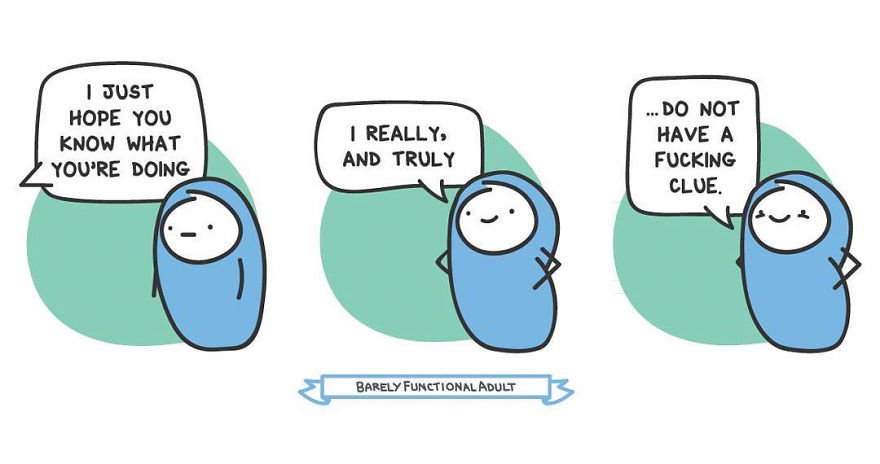
In the end, this book really ties around to the original concept of being who you truly are without being rude. It really stands on my values in life because this is simply reality. Honestly, I feel as if maybe in my generation, people shine this “healthy light” through social media, and put on this mask of being more than okay within all areas of life. When coming back to reality, the concepts talked about in Ng’s book and my zine are universal experiences, whether it’s different topics or memories, or something you simply WILL experience.
References
National Oceanic and Atmospheric Administration. (2019). Southern Stingray glinding over seagrass [Photograph]. NOAA Fisheries. https://www.fisheries.noaa.gov/
Monterey Bay Aquarium. (2022). Anatomy of a stingray [Diagram]. Monterey Bay Aquarium Research Institute. https://www.montereybayaquarium.org/
Stingray anatomy labeled diagram. (n.d). [Diagram]. Biology Online. https://www.biologyonline.com/

I just want to leave a special thank you to Nathan and Dr. Wilson. I feel I simply could not have gotten through such a chaotic and life-changing semester without the help you’ve provided grateously for me so graciously. As a student, I feel there’s not enough credit that goes around to the professors/directors who really put in the work, take time to teach one-on-one, and listen to students’ struggles. Throughout my little university experience, this class has really been an eye-opener to try new things and explore as an artist to strive and experiment.
I hope although I did switch my degree, I do get the opportunity to work with you again and keep striving to experiment.
Thank you,
Leave a Reply
You must be logged in to post a comment.