Conceptual Portrait- Did You Know…
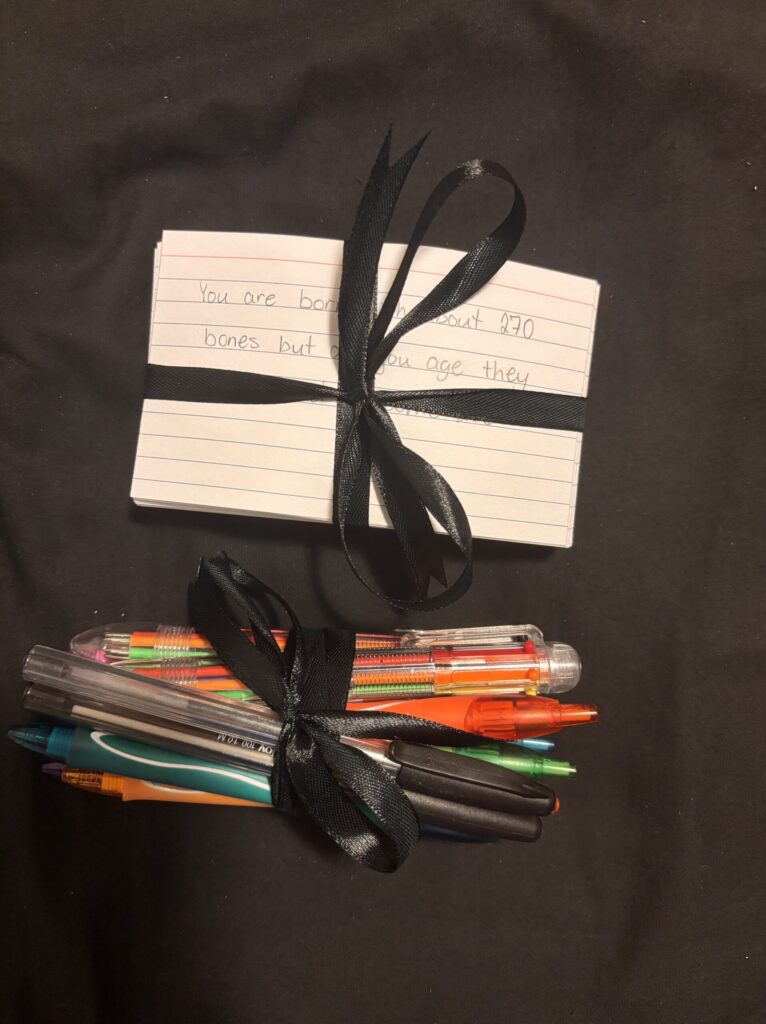
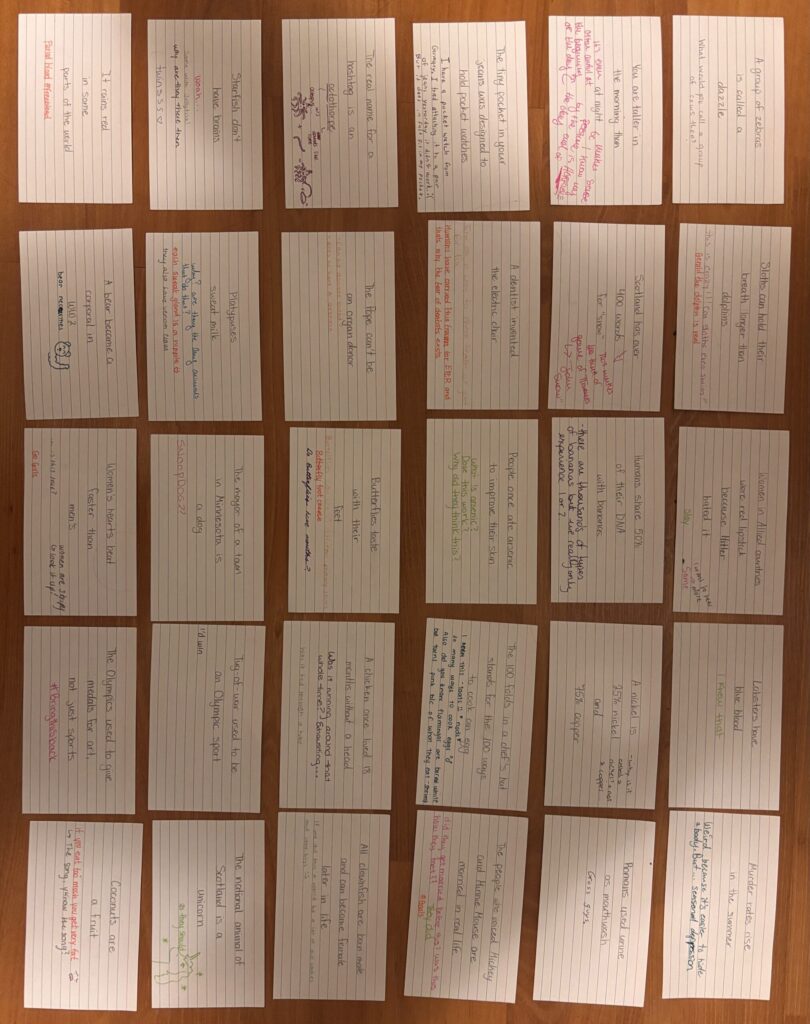
For this project, I chose to represent my dad, who often sends me random fun facts. This shared interest in trivia is a characteristic we both possess and something I strongly associate with him, as he didn’t finish high school but loves learning. I recorded and kept track of the facts he sent me, creating note cards with each fact and personalized stickers.
I was inspired by Adrian Piper’s piece, My Calling (Card). I found it fascinating how she uses calling cards to initiate difficult conversations and share information. I connected with this because my dad does something similar with facts. I thought that using a similar card format could effectively showcase the exchange of knowledge and serve as a conversation starter.
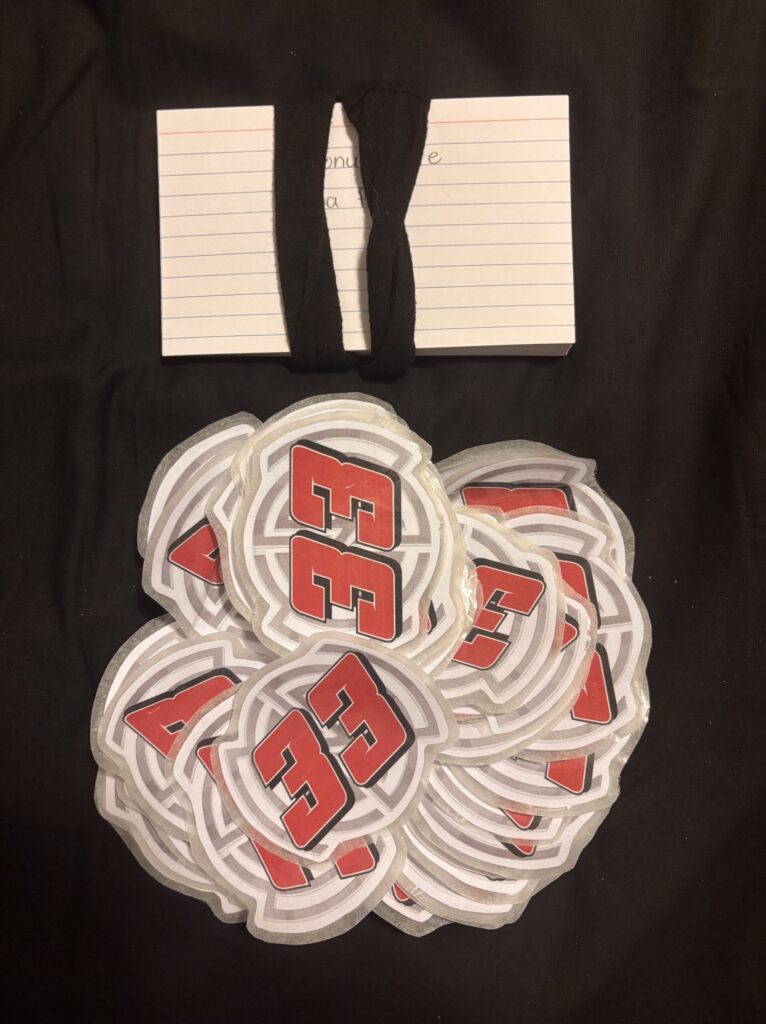
I began by listing each of the facts my dad shared with me. Then I transcribed each fact onto its own cue card, resulting in a total of 50 cards. I sourced an image of my dad’s old racing number and removed the background. Afterward, I took the letters of my dad’s first name and combined them into a logo shaped like his race car’s steering wheel. I merged the logo with the racing number image and refined the design until I was satisfied. I printed 50 copies of the final image and cut them out. To create stickers, I adhered a layer of tape to parchment paper, laid down all the images, placed another layer of tape on top, and cut them out. I then peeled off the backs and affixed the stickers to the center of the backs of the cue cards.
The final aspect of the piece was completed during the critique, where I invited everyone to share their thoughts, questions, or their own facts on the cards they received. This interaction was essential because the cards themselves weren’t the primary focus of the project; rather, it was the conversation that unfolded after reading the cards.
For a gallery exhibition, I would present the project differently from in class. Visitors would still write on the cards, but I would encourage them to stick their cards on a gallery wall. This way, other visitors could see what others wrote and add their own thoughts or grab a new card.
This idea was inspired by Yayoi Kusama’s Obliteration Room, which began as a completely white domestic space that was gradually “obliterated” by thousands of brightly colored polka-dot stickers placed by visitors.
Leave a Reply
You must be logged in to post a comment.