Marina Abramovic- “The Artist is Present”
1. What are some of your first impressions of Marina Abramovic’s performance works, based on the documentary? Use an image/example of one or two works to describe aspects you admire, and aspects you might agree are problematic?
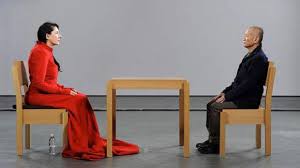
My first impression of Marina Abramovic’s performance art from the documentary is that she shows a strong sense of endurance, vulnerability, and the bond between the artist and the audience. A good example of this is her piece “The Artist is Present,” where she sits silently across from visitors at MoMA. I admire how she creates this intimate space for wordless dialogue, opening up a powerful emotional exchange. That said, I sometimes think the emotional intensity needed from both her and the audience can be too much. This makes you wonder about the mental and emotional impact on everyone involved, especially during those long interactions.
2 . What have you learned about features of performance art based on Abramovic’s work? Name a few key features according to her examples. Include an image to illustrate. Consider her quote, “When you perform, it is a knife and your blood, when you act, it is a fake knife and ketchup.”
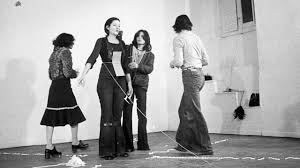
Abramovic’s work has shown me that performance art centers on the body and real-time connections with the audience. A key feature in her art is her physical endurance, like in “Rhythm 0,” where she put herself at the mercy of the audience with various objects, showcasing her vulnerability and trust. Another important aspect is the focus on the experience happening in the moment. I love her quote, “When you perform, it is a knife and your blood; when you act, it is a fake knife and ketchup,” which highlights the raw authenticity of performance art versus traditional acting. This difference emphasizes the intense immersion and risk that come with performance art compared to more conventional forms.
3. Discuss the ways performance art resists many museum and commercial artworld conventions. How does Abramovic solve/negotiate some of these challenges, and do you find these compromises add to, or undermine the ideas at play in her work?
Performance art, especially when it comes to Abramovic’s style, pushes back against the usual museum and commercial art setups by prioritizing experience over commodification. Unlike traditional artworks that can easily be bought or sold, performance art demands active participation from both the artist and the audience. Abramovic tackles these challenges by making herself the experience of the art; her physical presence becomes the artwork, blurring the lines between the artist and the audience. Sometimes, she makes compromises, like shortening her performances or tweaking them for larger crowds, that can either make her art more accessible or risk losing what makes it special. In the end, while these adjustments can help people relate to her work, they need to be handled carefully to preserve the essence of the experience.
Leave a Reply
You must be logged in to post a comment.