Category: StudentW26

  • Amelija

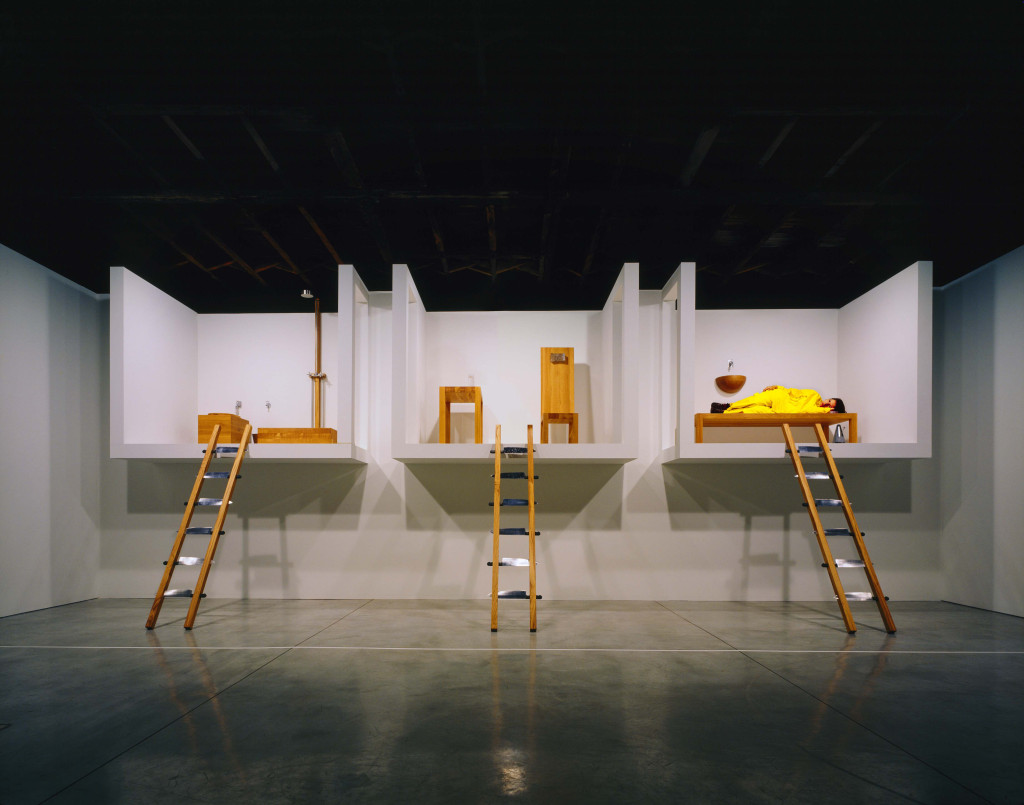
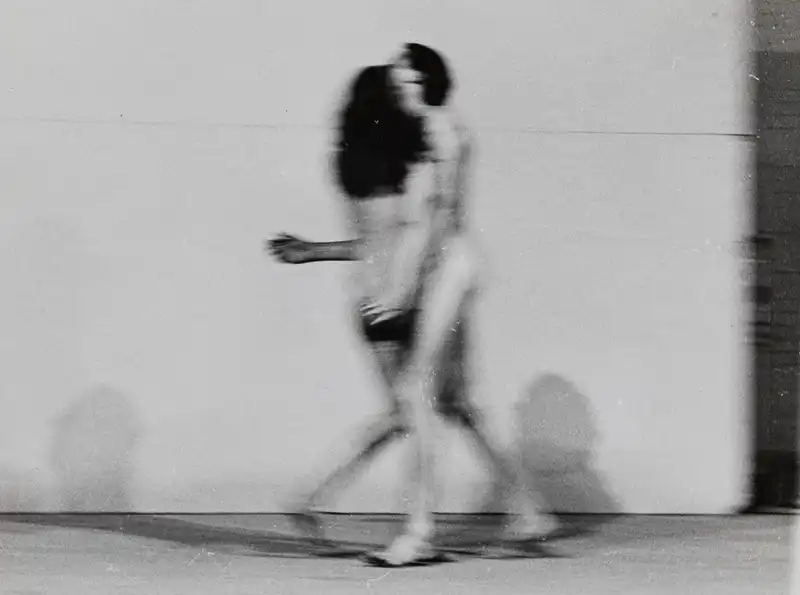
    1. My first impression of Marina Abramovic’s works was how shocking it was, the level of commitment she had to her work. When she was preparing the actors and herself to be performing 6 days a week, 8 hours a day, for 3 months, I couldn’t believe it was physically possible to accomplish the specifically demanding tasks their bodies had to endure for that long. Especially with Marina’s main sitting performance work, what seems so simple is what I thought would maybe be the most challenging for me. As we were watching the documentary I started getting uncomfortable and had to keep switching my positions on my reasonably cushioned office chair, all because I had been sitting for an hour and a half maximum. I couldn’t imagine the level of commitment it took her to sit with that level of stillness, for that long, constantly. The commitment she had to her work drew me to her as an artist, as I admired that she fully dedicated herself physically, mentally, and emotionally to her works, to the maximum degree anyone could possibly imagine dedicating themselves to something, which is something almost no one can do. However this also simultaneously set off some red flags in my head, as she ended up having an immense audience, people who idolized her and even started copying what she did. There were parts of the documentary where spectators were shown staring at each other, as if to recreate her work on the sidelines, which is a really beautiful and interesting thing to happen with engagement, however I do worry that people may copy the not-so safe portions of her work as well. I find that demonstrating triggering topics need to be done so carefully and sensitively, especially with art, as it is one of the most inspiring things in the world, but it can inspire/influence people positively just as easily as it can inspire/influence people negatively. The idea of fasting and self-harming that is involved with many of her works did make me question if it was something to advertise, and if she approached that properly.
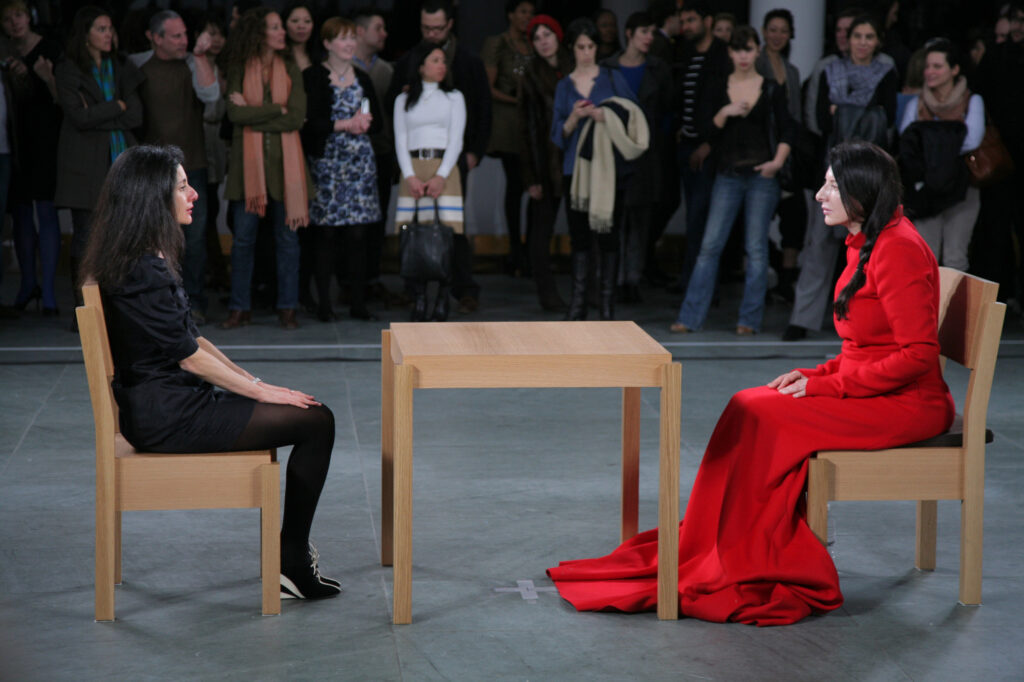
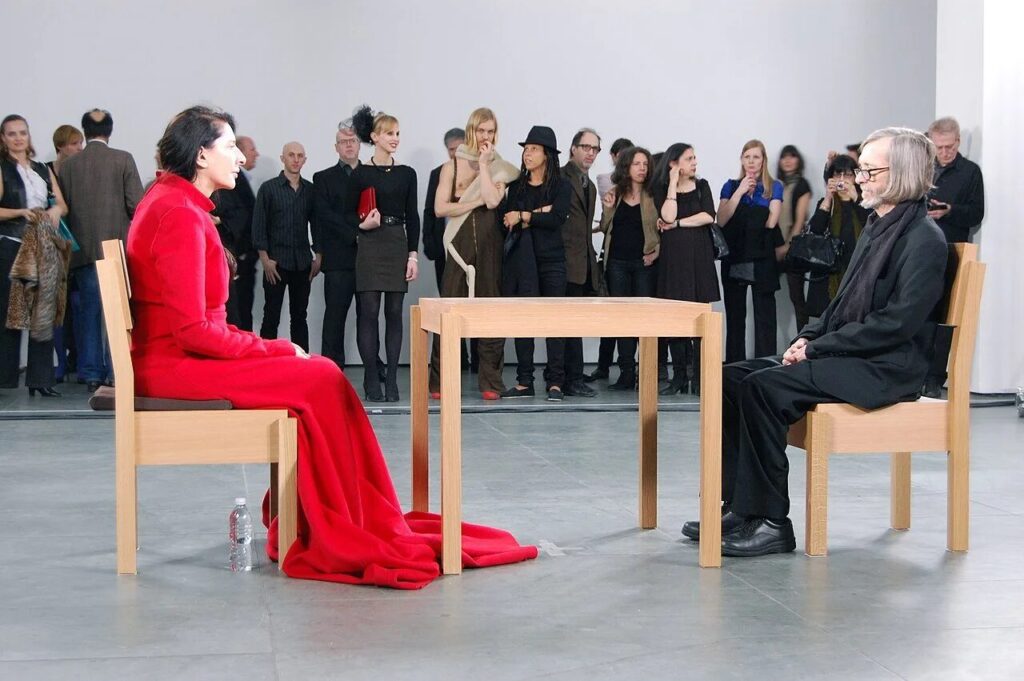
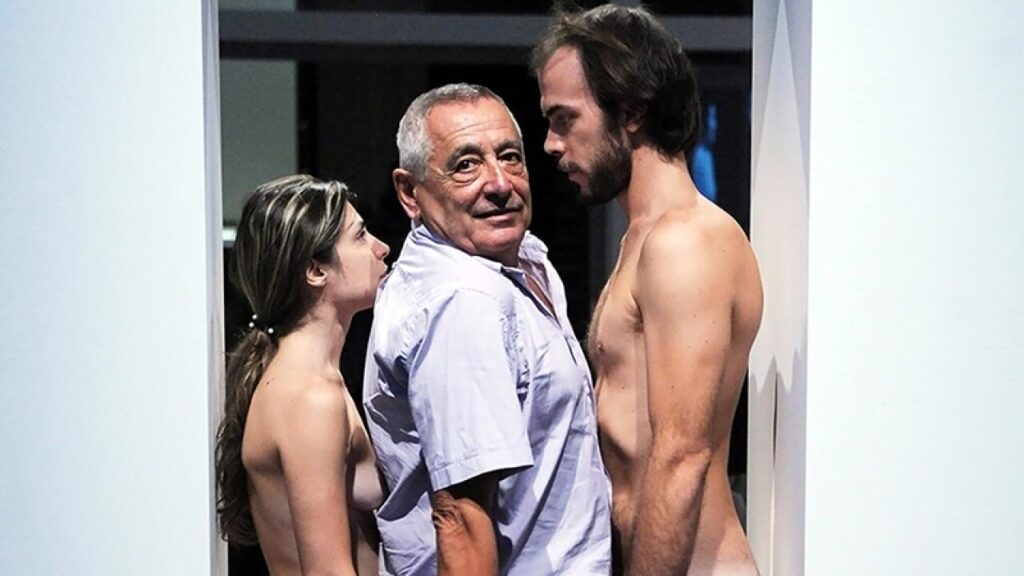
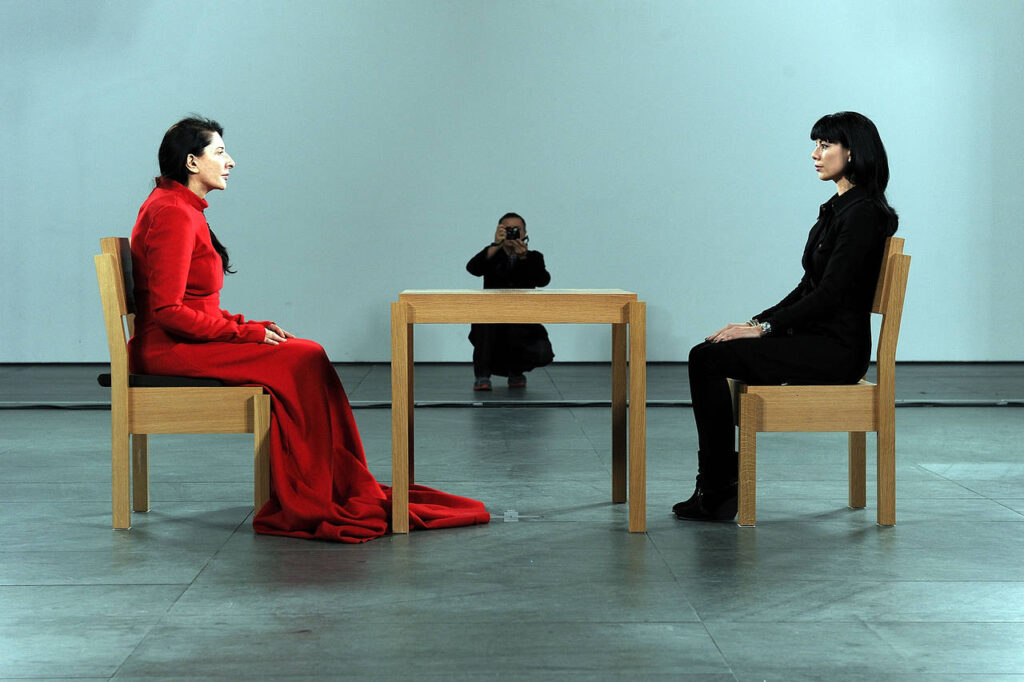
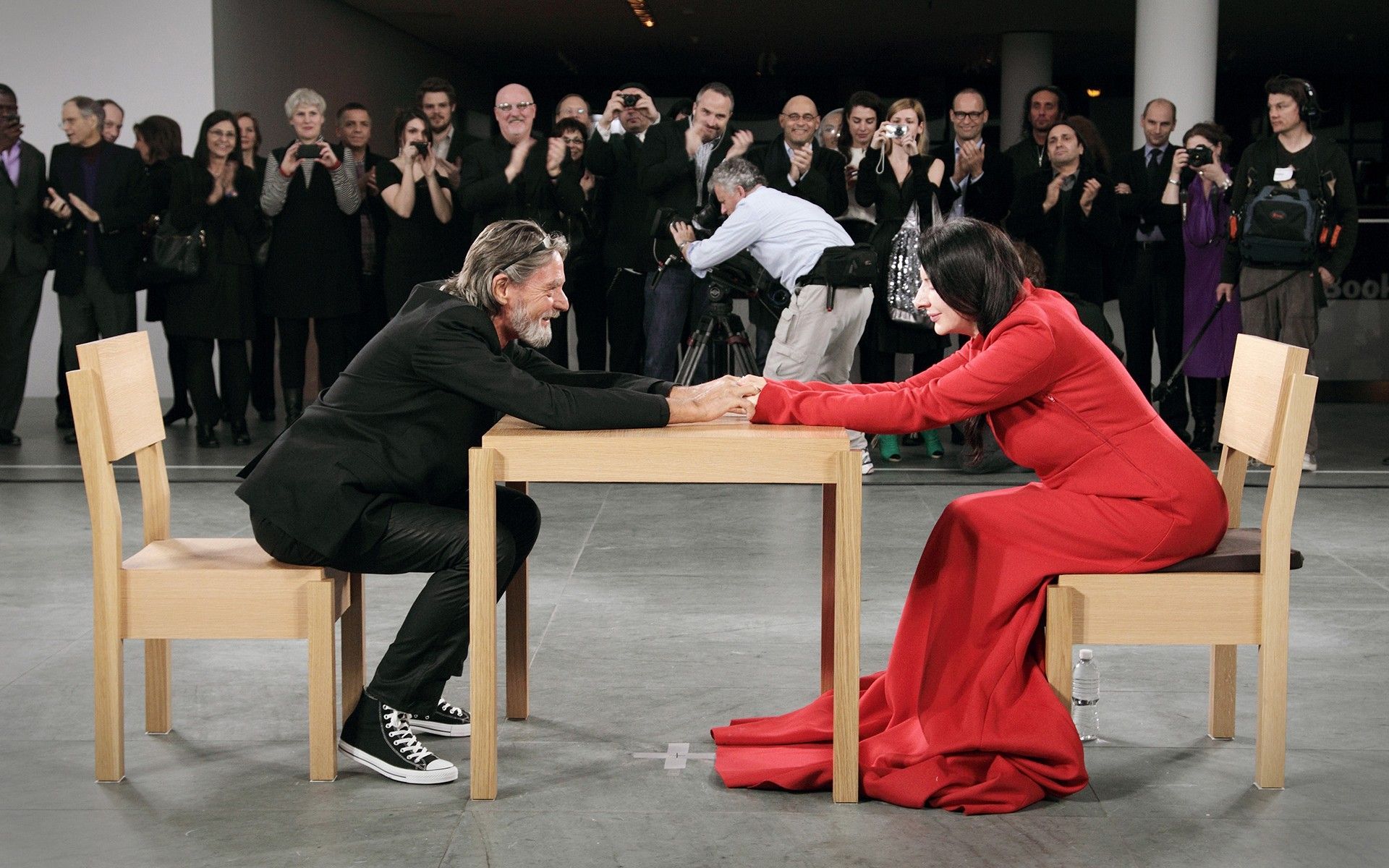
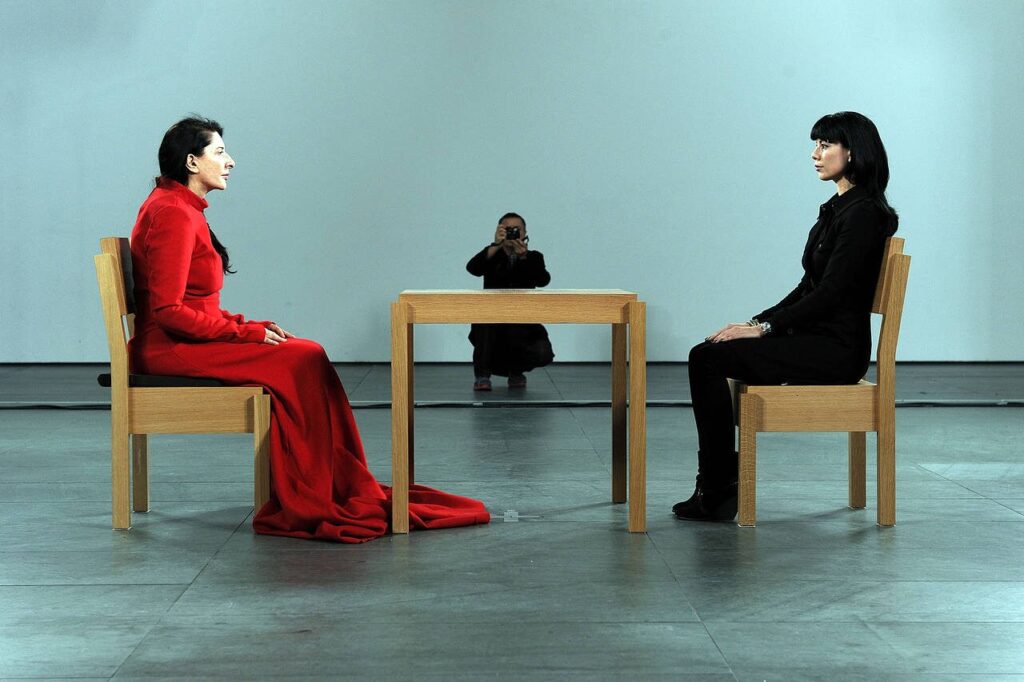
    2 . A feature about Marina’s performance art that stood out to me was the intensity of eye contact. I learned that this is a very effective feature, as it sparks discomfort in the viewer, but that discomfort is what really draws people in and evokes a reaction in the viewer, which is typically the goal of performance art. Whether Marina was making eye contact with spectators as a sole method of communication, like she did in “The Artist is Present”, or making eye contact with another actor in her performance work, like she did in “Imponderabilia“, the feature of eye contact was crucial to intensifying the experience for herself, the actors, and most of all the spectators, also creating a sense of intimacy that she successfully incorporated into her works. Her quote “When you perform it is a knife and your blood, when you act it is a fake knife and ketchup.” really allowed me to realize the intentional realness she brings to all her works, and how reality is such a key feature to her works being successful. What I think Marina understood is that when people watch a horror movie, or an uncomfortable scene in a play, this will obviously evoke a discomforting feeling, however spectators can always have a level of reassurance that it is all fake, its just special effects, makeup, fake blood, or a camera working behind actors who will get along as friends after the scene is over. With performance, Marina ensures that people understand she is completely devoted to the experience people receive when watching her, and part of that is knowing that what she is doing is 100% real. They watch her in real time, doing very real things to herself, or with others/ other things. This not only makes it that much more shocking for the viewer to see and understand, but it leaves a deeper impression on the long lasting effects spectators have after seeing the performance.
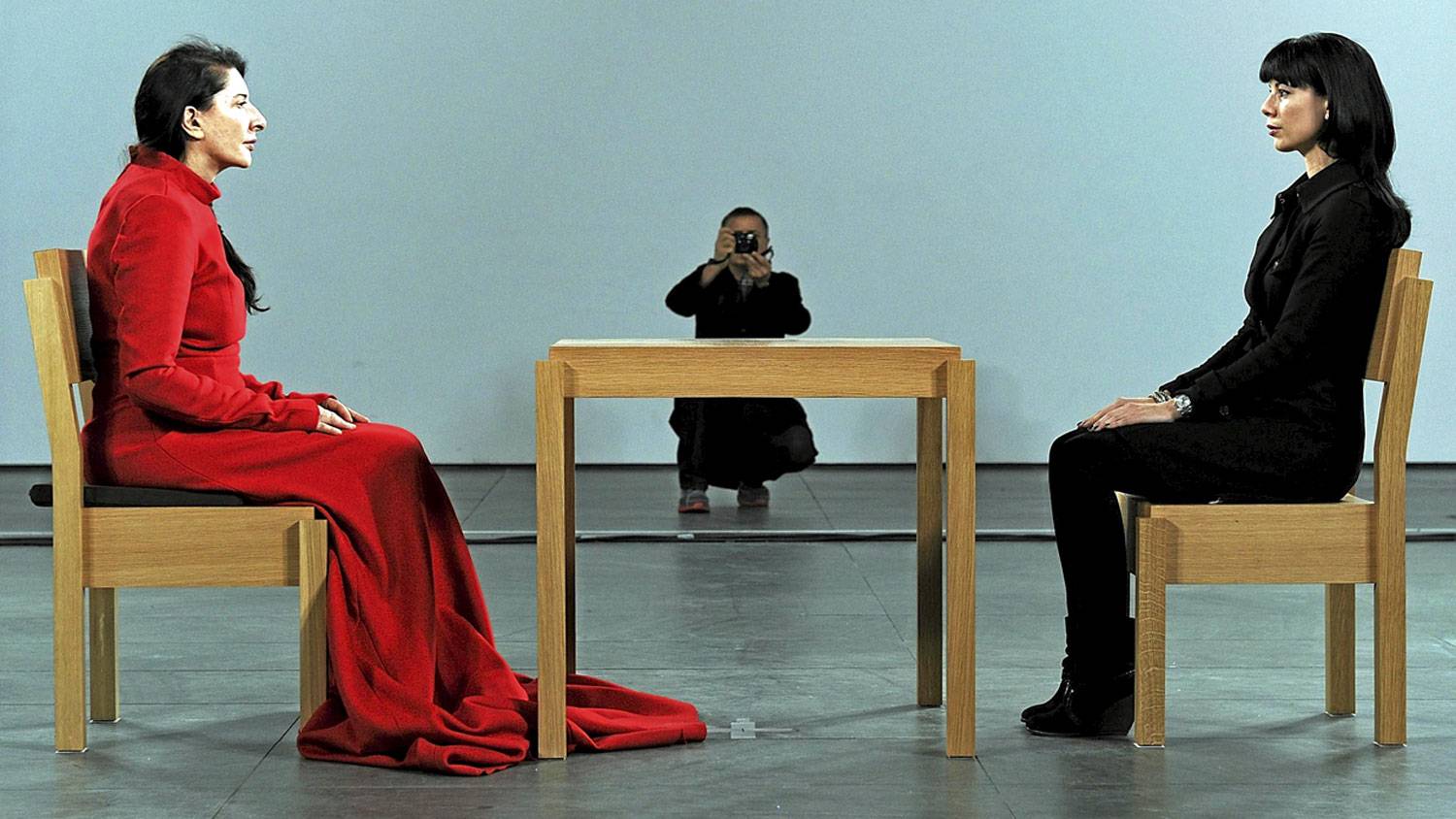
    3. I believe the main way performance art resists many museum and commercial artworld conventions is the idea of the present moment. Performance art erases the concept of “historical pieces”, or “modern pieces”. There is no added value to performance art of how old or new it is, it is always happening in that moment, and cannot be saved in the archives of a museum, waiting to be shown again. A lot of artwork carries meaning based on what was happening during the time it was created this can be a good thing, as we can keep it in the public eye for as long as we feel necessary, or re-introduce pieces that remind us to revert back to certain practices, or remind us not to repeat certain practices. However with performance art, there is no imagining what happened years ago, or thinking about how we should mold our work to be fitting in the future, it is designed to impact the viewers who are present there, in that moment, and all that will stay in the future from it is the impact it had on people. Performance art needs to be so impactful because it is purely memory that carries on its impact. Abramovic interestingly recreated her works, which is how she made a compromise with this idea of reminding viewers of what they have already seen. I believe by creating an entire exhibit solely based on recreating her past works, it did draw more attention to her as an artist and an icon, and I think that throughout this process she became more idealized and famous, which did bring more attention to her impactful artwork, but it also mostly drew attention to her, which isn’t necessarily bad, I just don’t see it as necessary to the impacts she was originally trying to make with her works. I think this may have undermined the ideas at play in her work, as people seemed to end up coming not to be influenced by art, but to come see something famous.

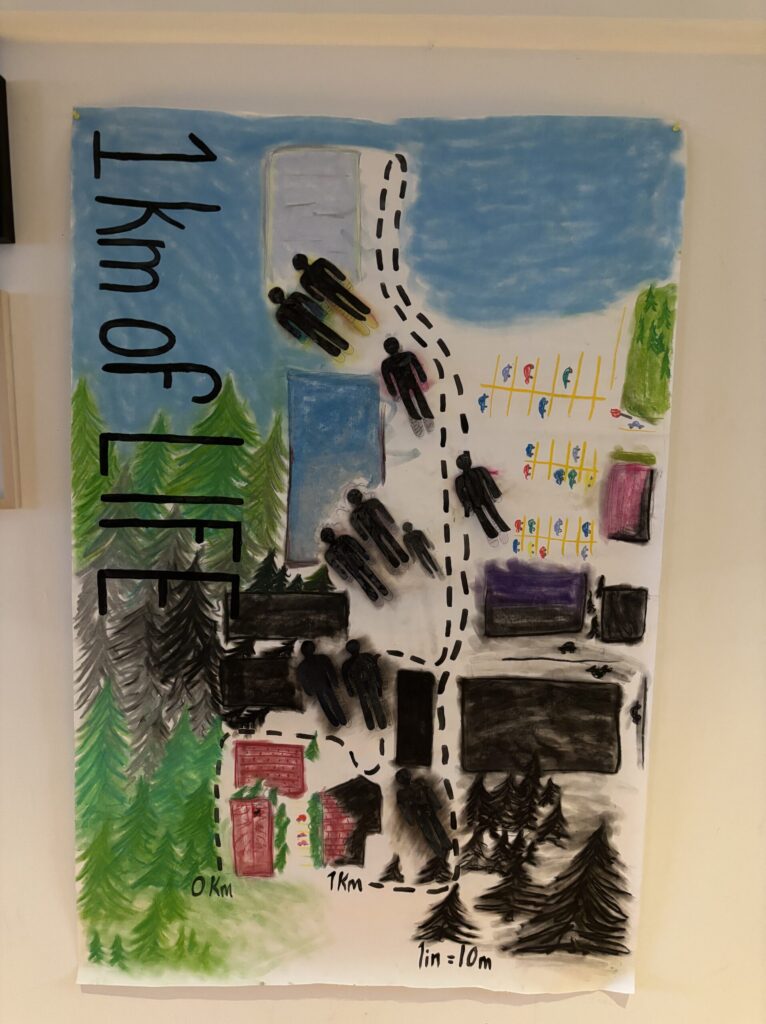
    1 Km of LIFE

    My work 1 km of LIFE has several goals: Firstly to inspire people to be more present in their everyday lives, and to have more of an understanding of the people around us, whether we know them or they are strangers to us. It’s meant to make people think twice before being rude to their waiter, honking at someone necessarily, or loosing their patience on a complete stranger. This work is a way to remind us that everyone has a unique live they’re living, and we have no idea what that includes, unless we know them personally, and even then people hide a lot more than we believe.

    I think about this concept every time I am stuck in traffic. It’s beyond the capabilities of my imagination to picture the individual lives that are being lived so close to me, all down the highway, yet I will never know what these people’s stories truly are. I have no way of knowing if the family in the car next to me are anxiously waiting for the traffic to clear because they are heading to Canada’s Wonderland, or a funeral. I try to always treat people with compassion and kindness, because you really never know how your behaviour may impact them, and I think the world needs more of this mentality. With this piece, people will realize just how much goes on around them that they would never consider, in only a km.

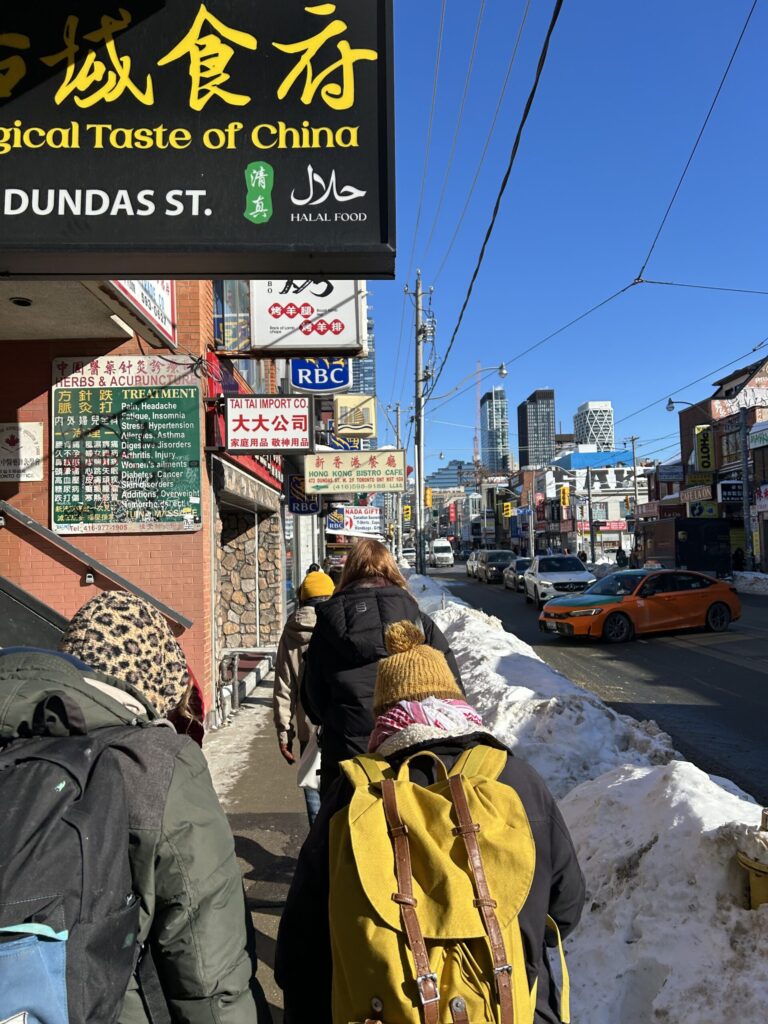
    The process I went through to complete this work definitely felt experimental, as my original plan was to go on a km walk, interview everyone I ran into, and make a movie about/with my findings. I was completely disregarding a big issue: the winter. Not only did I have to go on several walks before discovering an area that actually had people walking in it, but once I found a good area, people were then bundled up in their winter gear, looking straight down, and walking as fast as they could to get from the grocery store to their warm car. Needless to say, I quickly ruled out the idea of asking people if I could film them answering questions about how they were feeling that day in the freezing cold. I am very glad this didn’t work out however, because I believe my final product was a way more successful way of attaining my goals.

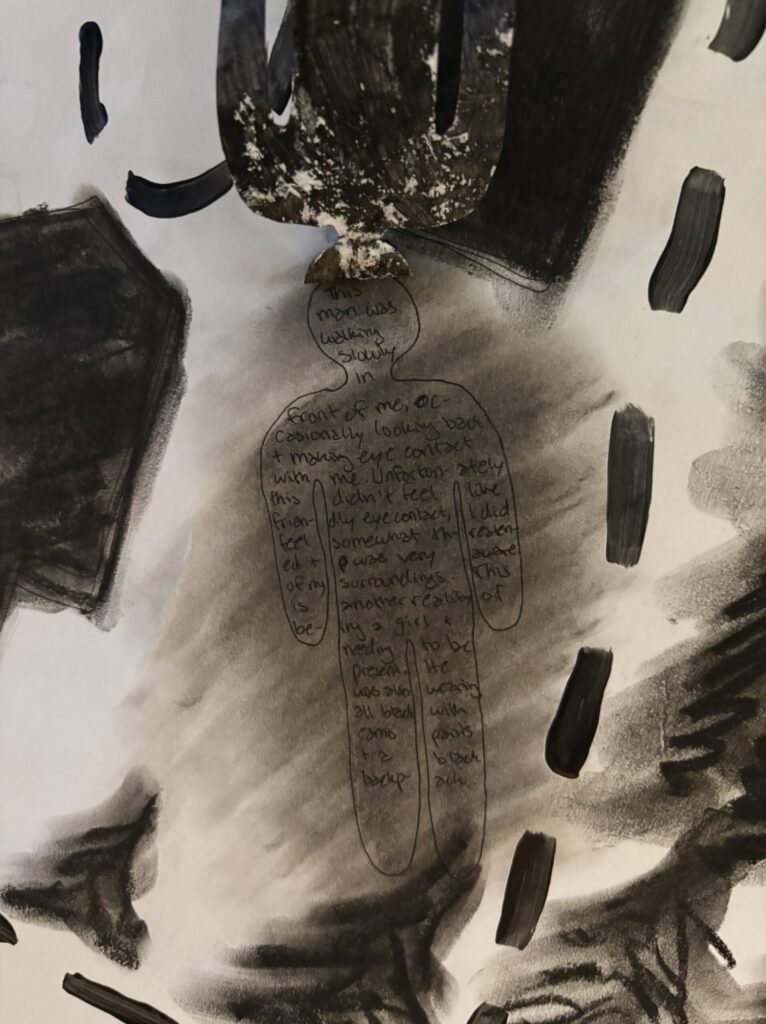
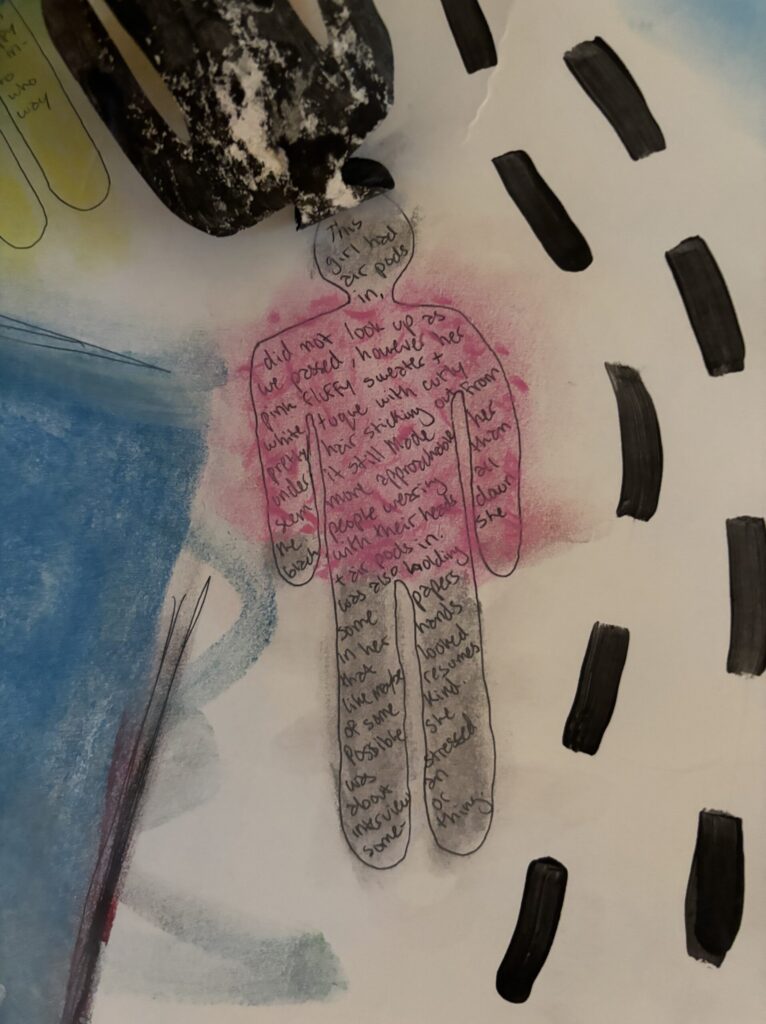
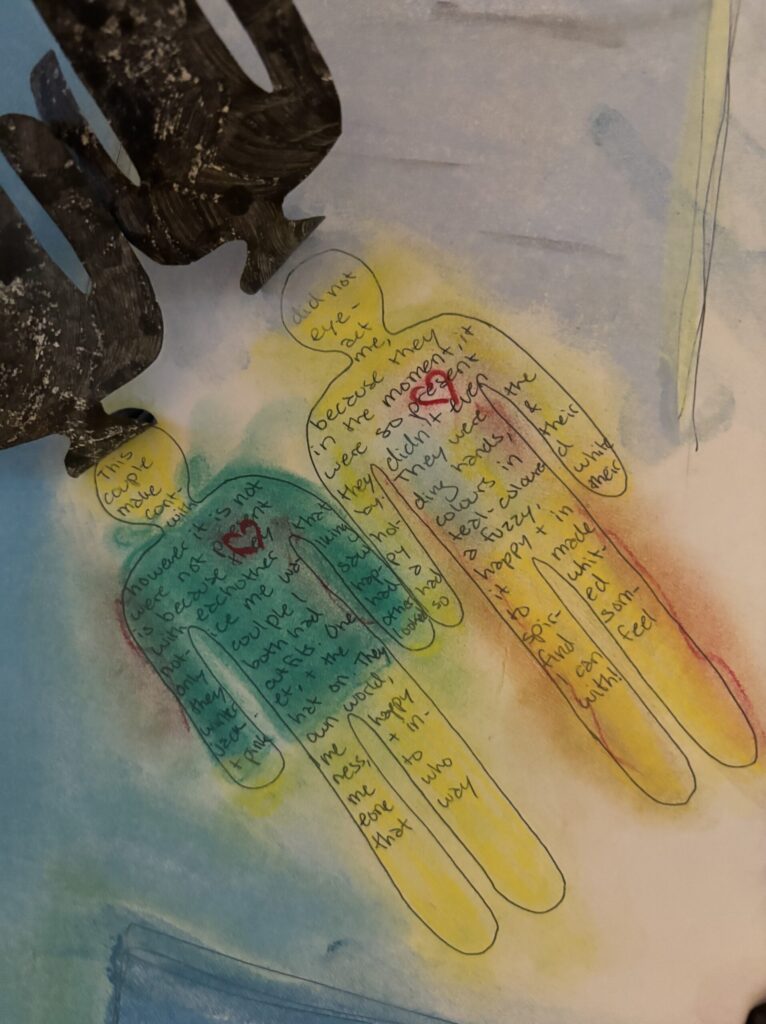
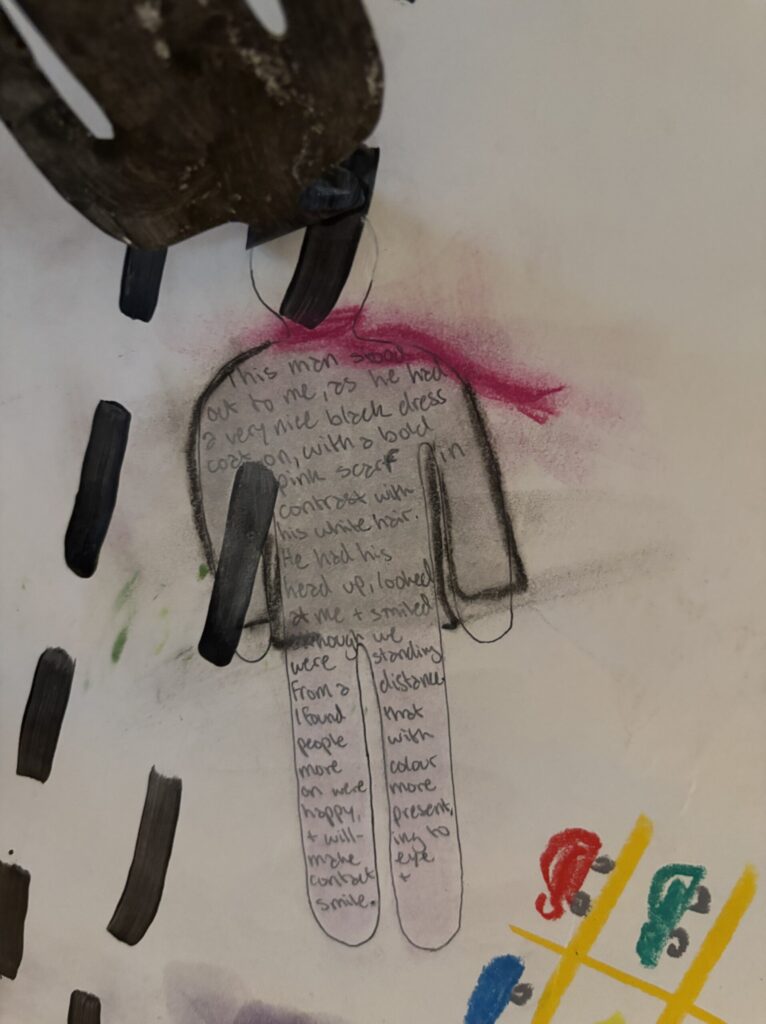
    I decided to record voice memos as I walked, sharing my observations of each person who walked by me. I recorded whether they made eye contact with me or not, what colours they were wearing, if they were alone or with other people, did they have air pods in or not, did they seem happy, frustrated, sad, etc. I made a few conclusions with my findings. First of all, people who had colour in their outfits were more likely to make eye contact and smile at me, they also just looked happier in general. The same went with people who were not alone, except for one couple who were barely acknowledging that they were together, let alone noticing that I was there. All of these things of course led me to wonder why they made the choices to wear colour that day, or what was going on in their lives that made them seem happy or sad.

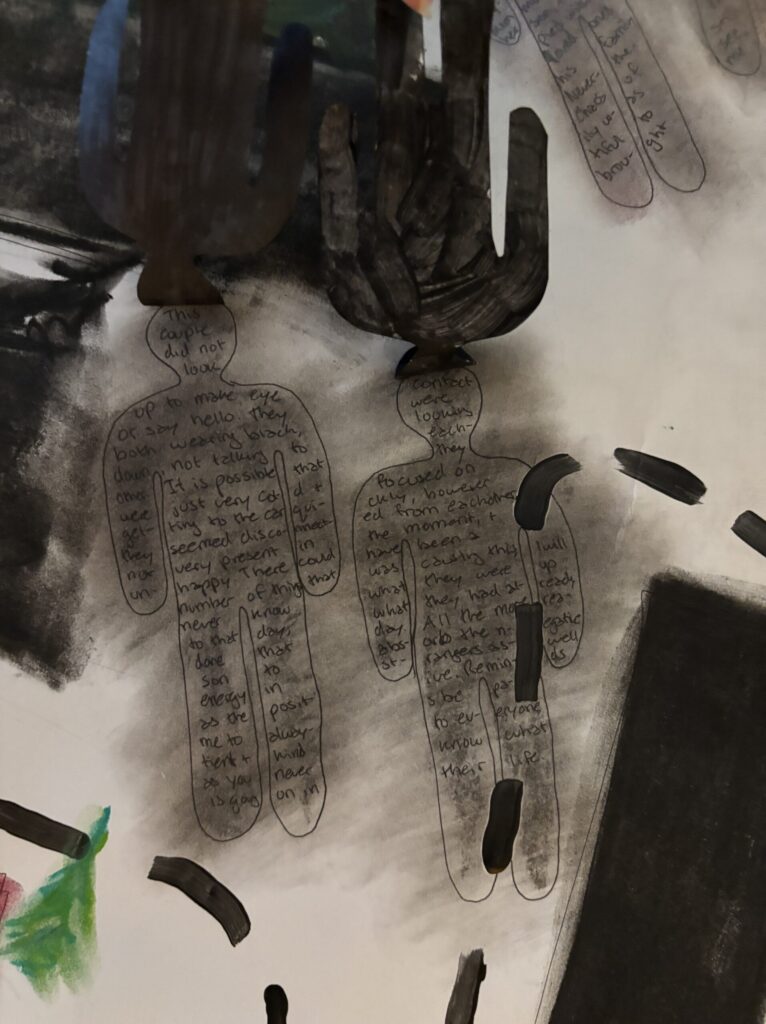
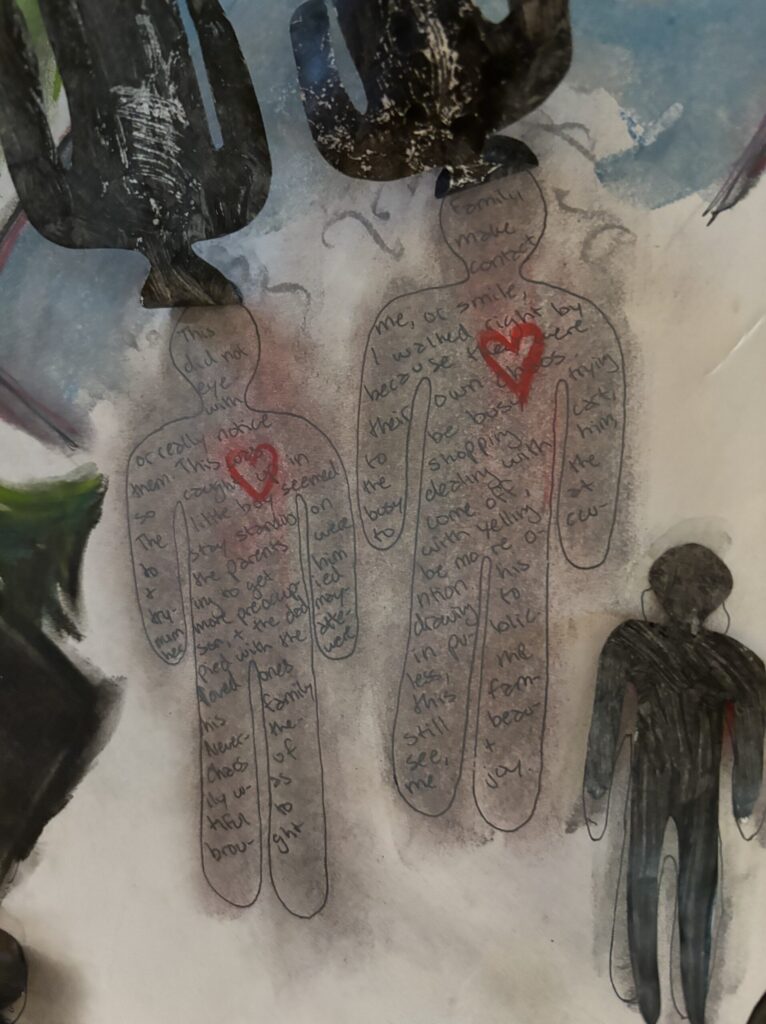
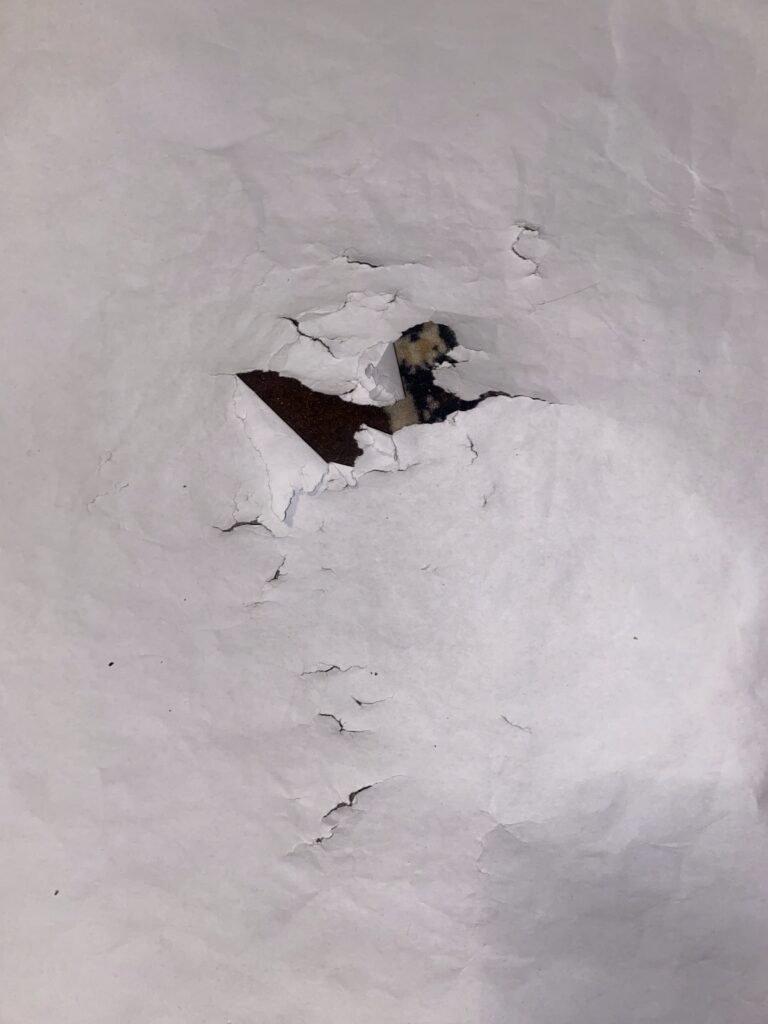
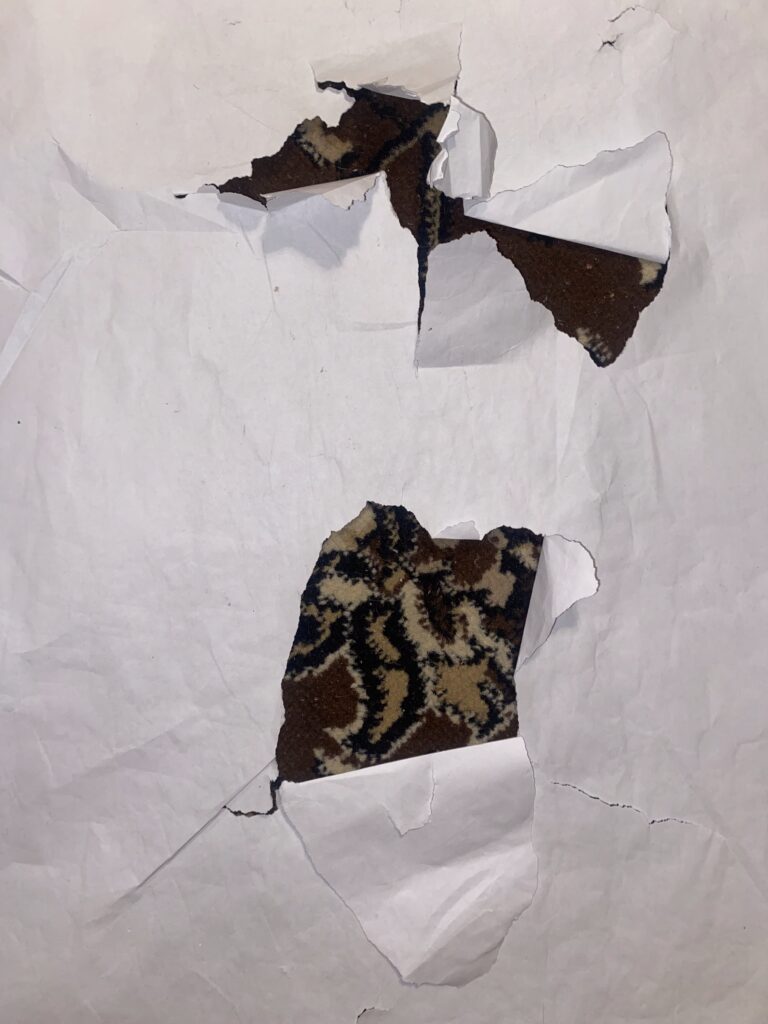
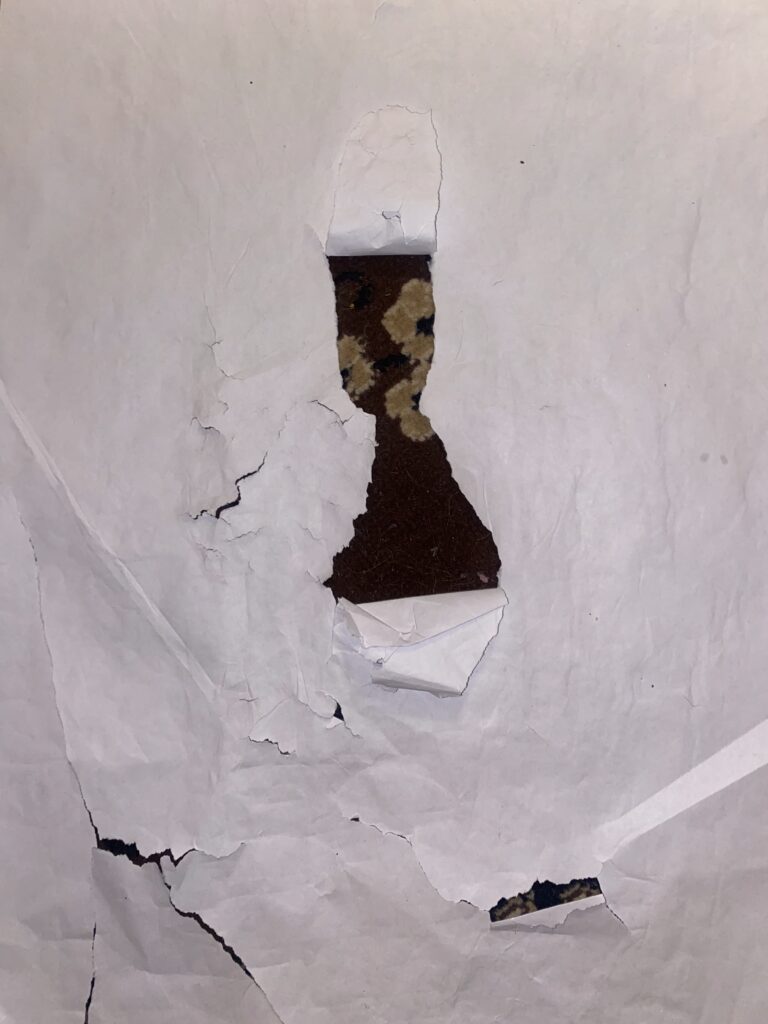
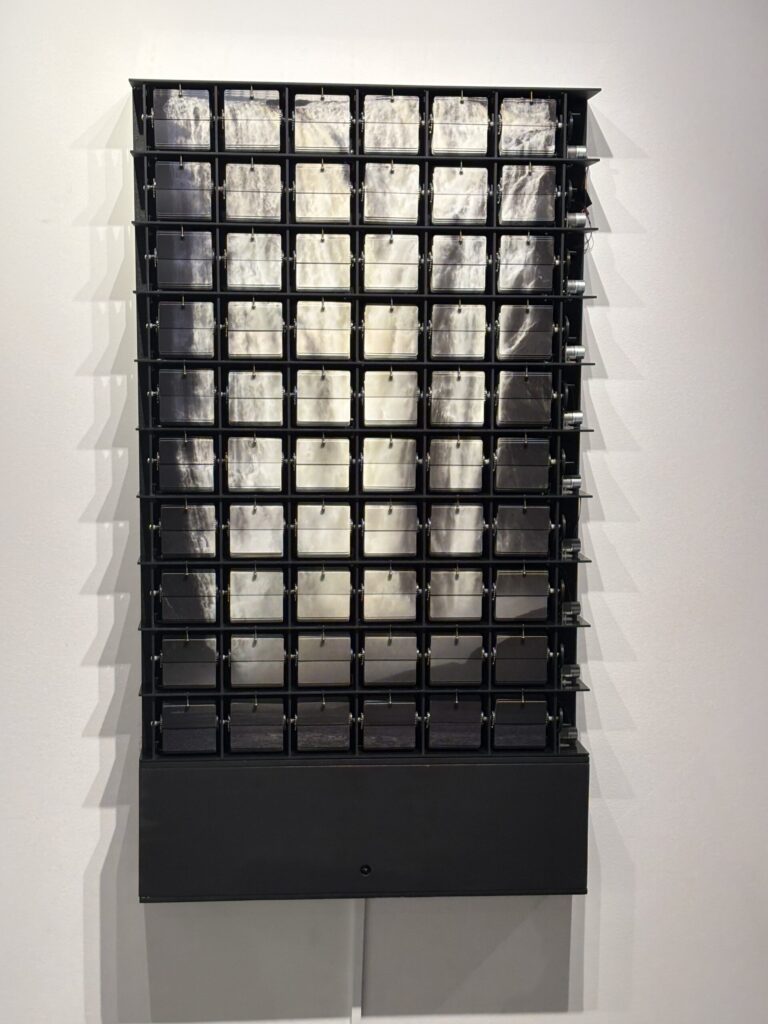
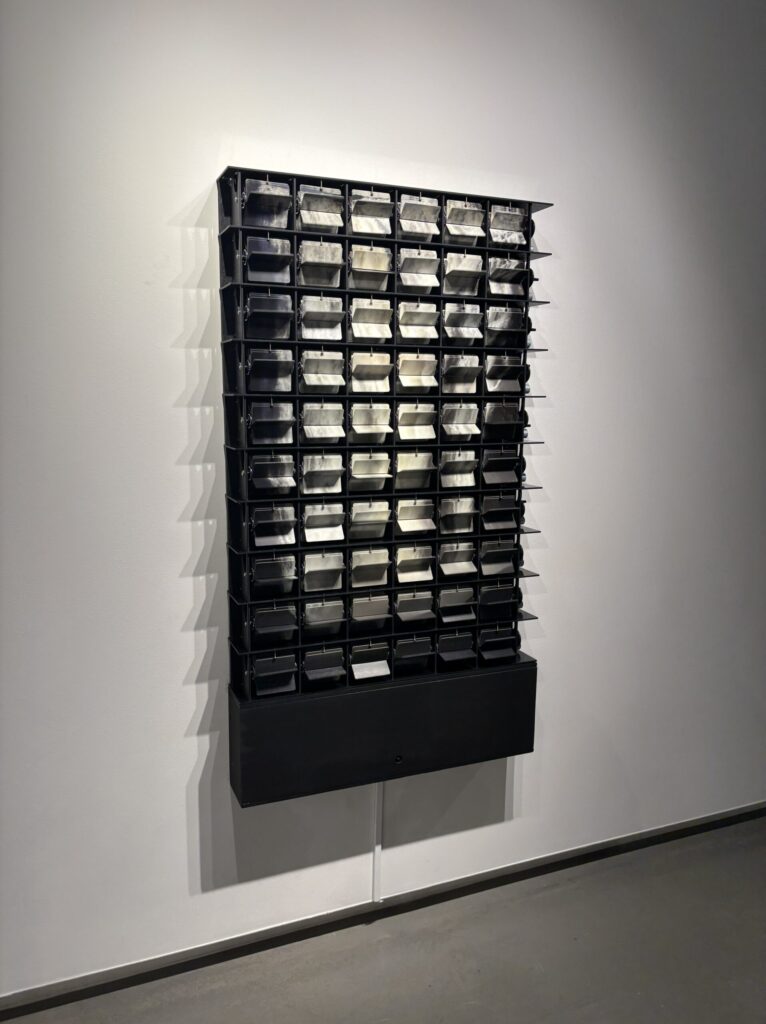
    I chose to use chalk pastels for my final work for several reasons. I loved that chalk pastels are supposed to spread, just like they way we appear in public rubs off on other people without us noticing. The flaps I made to show the people I ran into are black silhouettes to represent the fact that without looking up and intentionally noticing, people are nothing but faceless, lifeless, “NPC’s” around us, but with the smeared pastel colours underneath, what was truly underneath them could shine through, and when you lift up the flap you can read the details about what was really going on based on my observations. I used this concept of smudged “energies” in pastels all over the map, where things would be shown in colour or black and white based on how bright or dark their energy seemed to me, affecting the energy of everything around them.
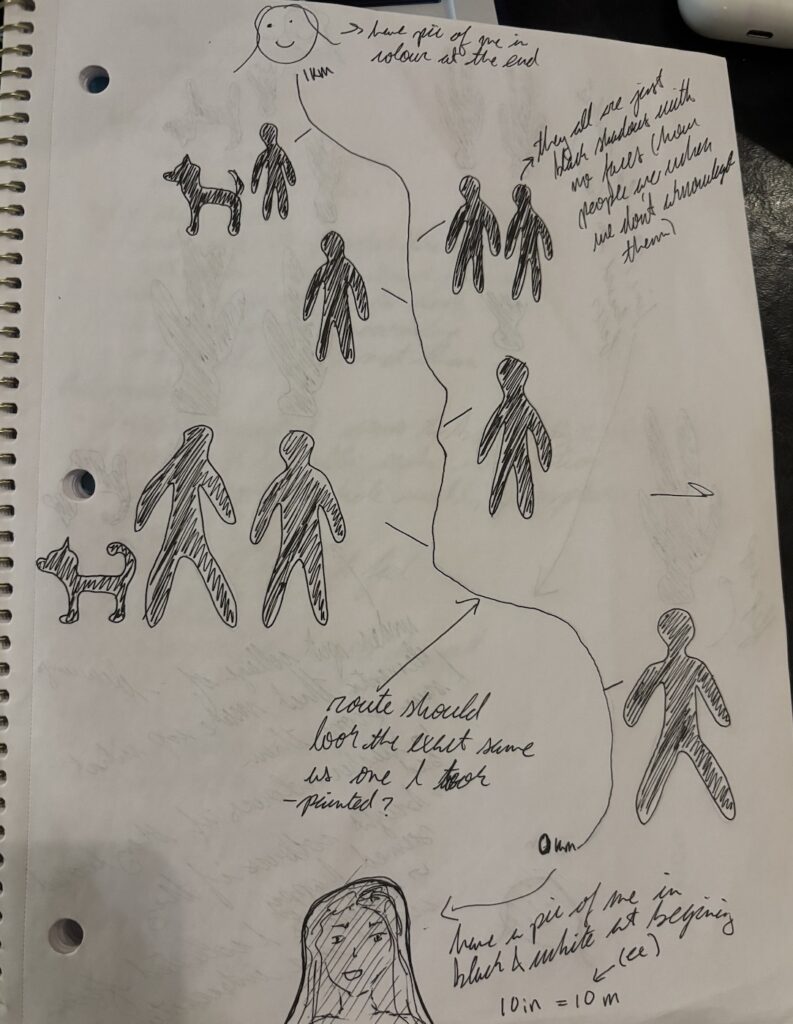
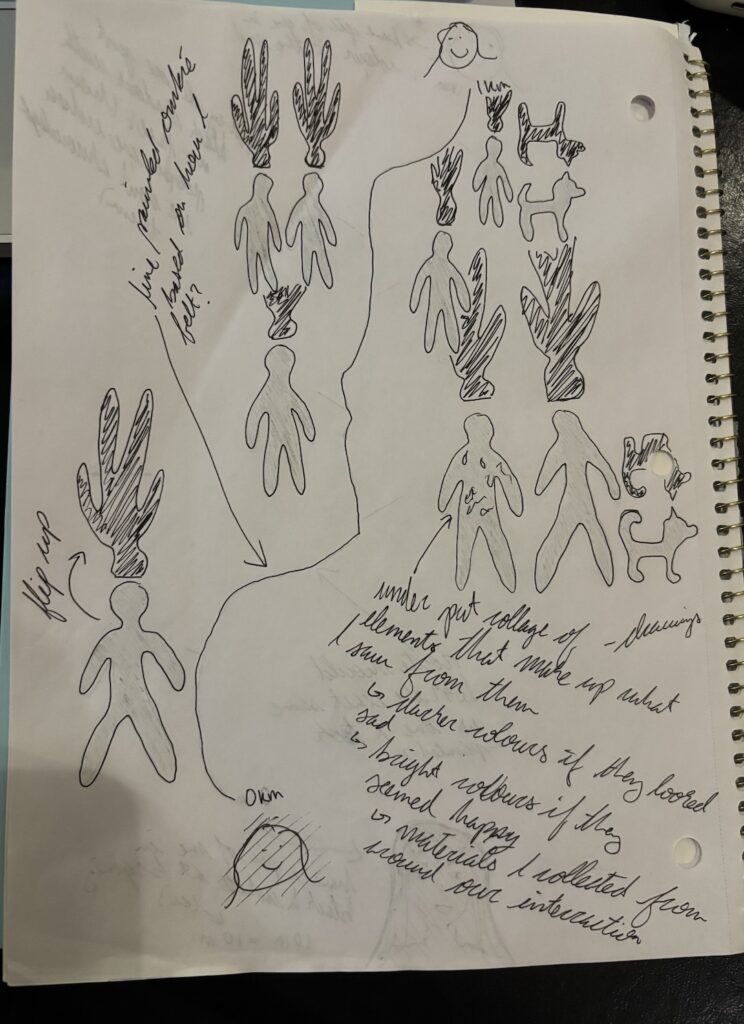
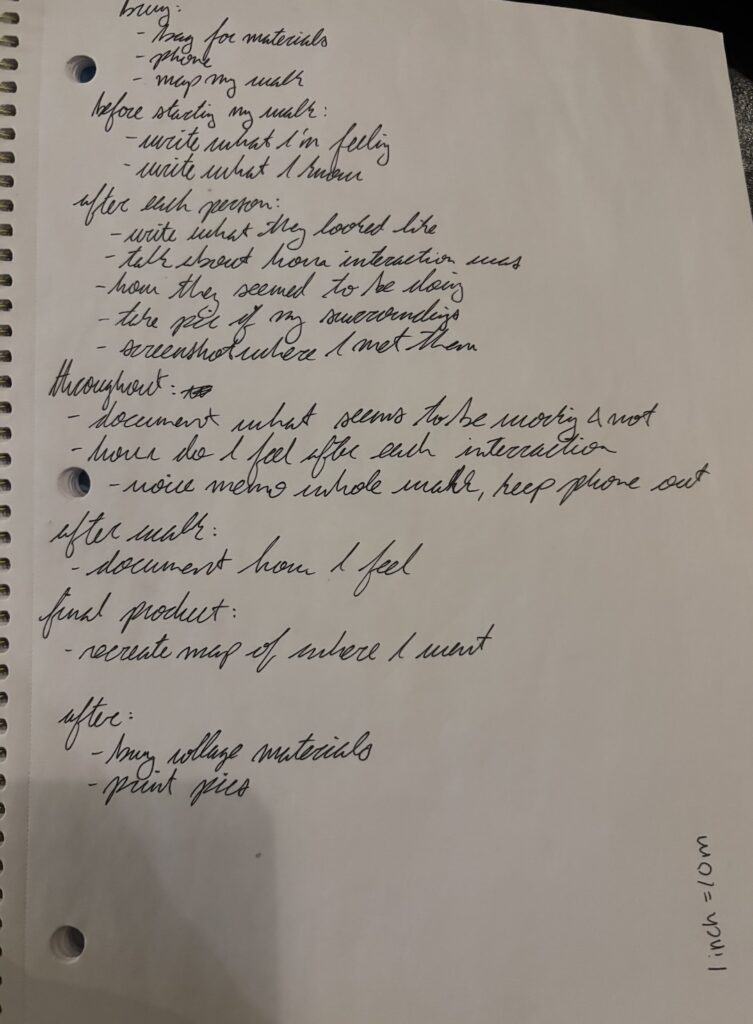
    ^^My tentative plan after having to rethink my original one

  • Becca


    meowmeowmeowmeow


    Hello loves, my name is Becca Venter!

    I am a second year studio art student. I chose this program because I would like to be a high school art teacher.

    I attended southwood secondary school in Cambridge — the smallest school in the WRDSB — and my art teacher changed my life. I hope to do the same for students in the future.

    Pages: 1 2

  • Claire

    KM Assignment – Rotating While We Rotate

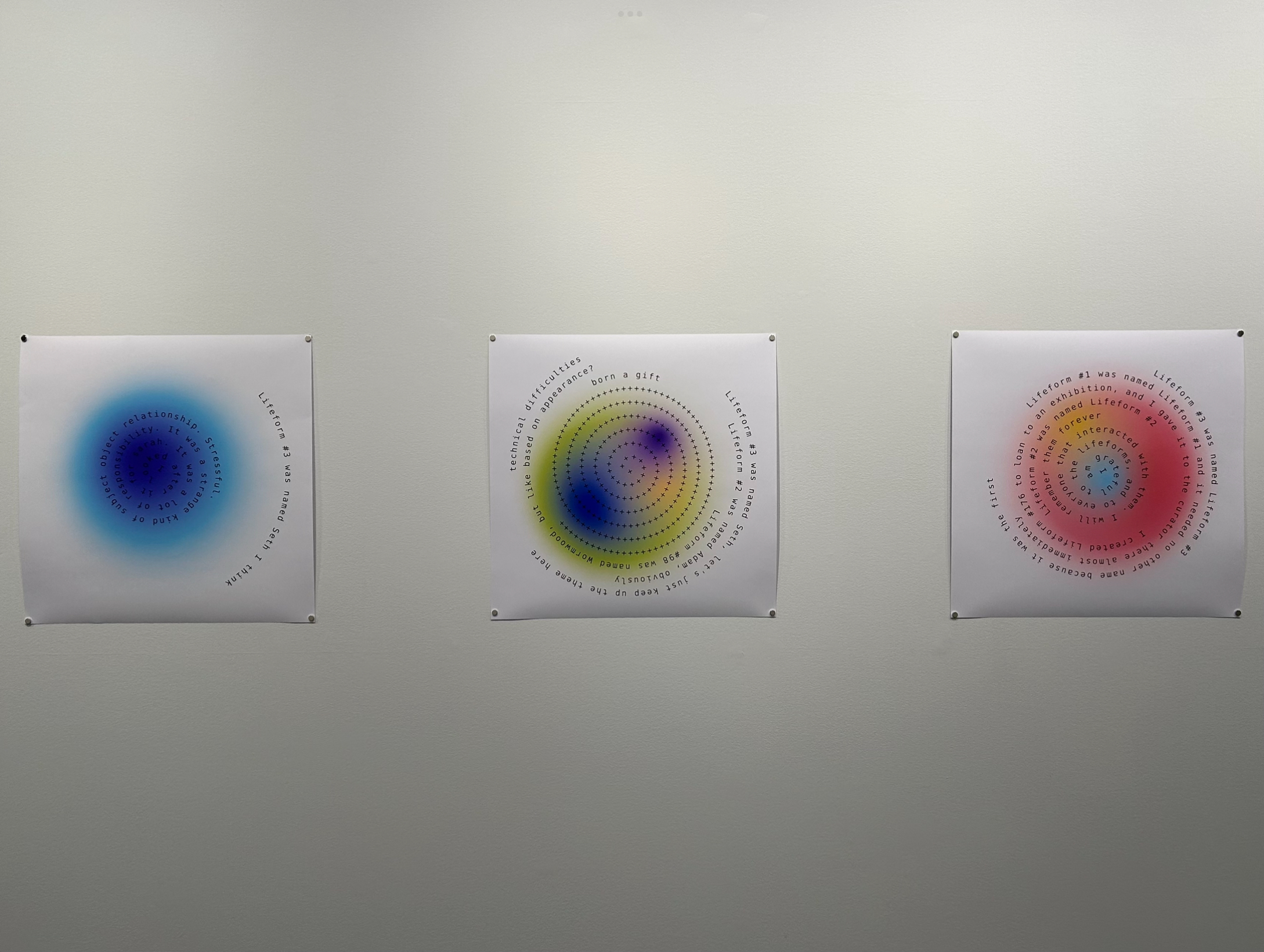
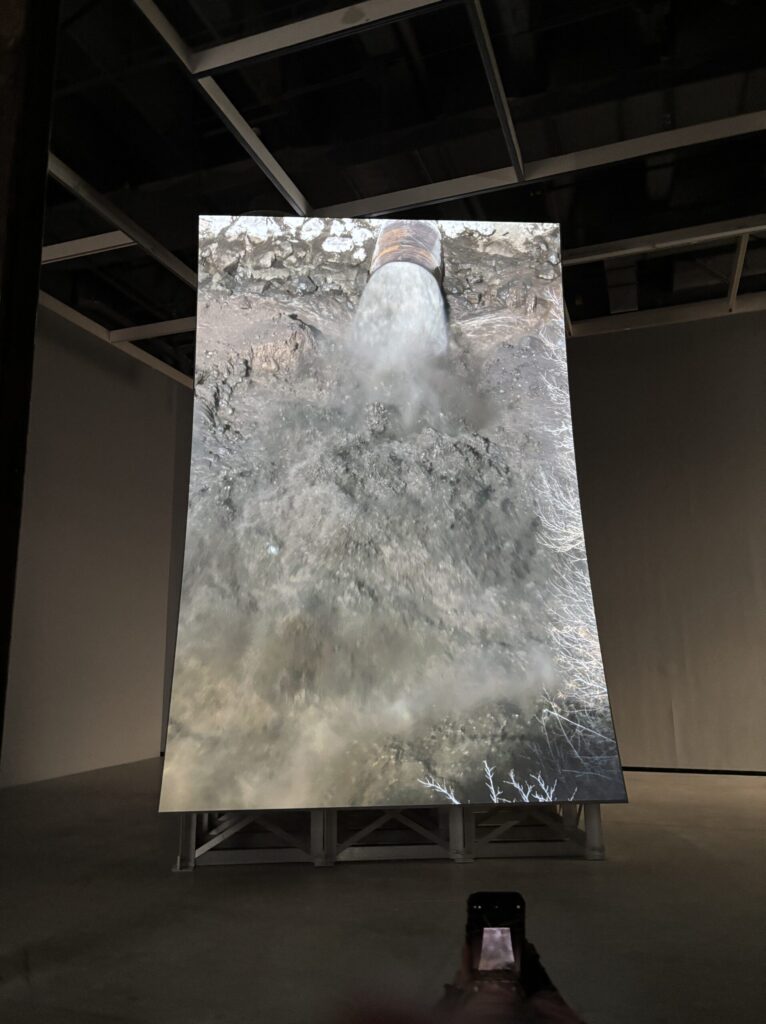
    “Rotating While We Rotate” is a video of me somersaulting that loops 365 (rounded up from 364.5) times. Each summersault is nine feet, meaning the total distance rolled is one kilometer. My vision for this project was for viewers to watch a sped up version of me summersaulting back and fourth from one end of the screen to the other. I intend for it to look silly and bring smiles to people. Initially, this was the whole premise for the project, however, after doing the math and coincidentally needing 365 summersaults I decided to expand on this. Earth rotates around it’s axis once a day and rotates around the sun once every 365 days. Each somersault represents a day in a year. My hopes are that this video reminds viewers that no matter what we’re doing (whether it’s productive or not) we are always moving.

    Marina Abramovic

    1. What are some of your first impressions of Marina Abramovic’s performance works, based on the documentary? Use an image/example of one or two works to describe aspects you admire, and aspects you might agree are problematic?

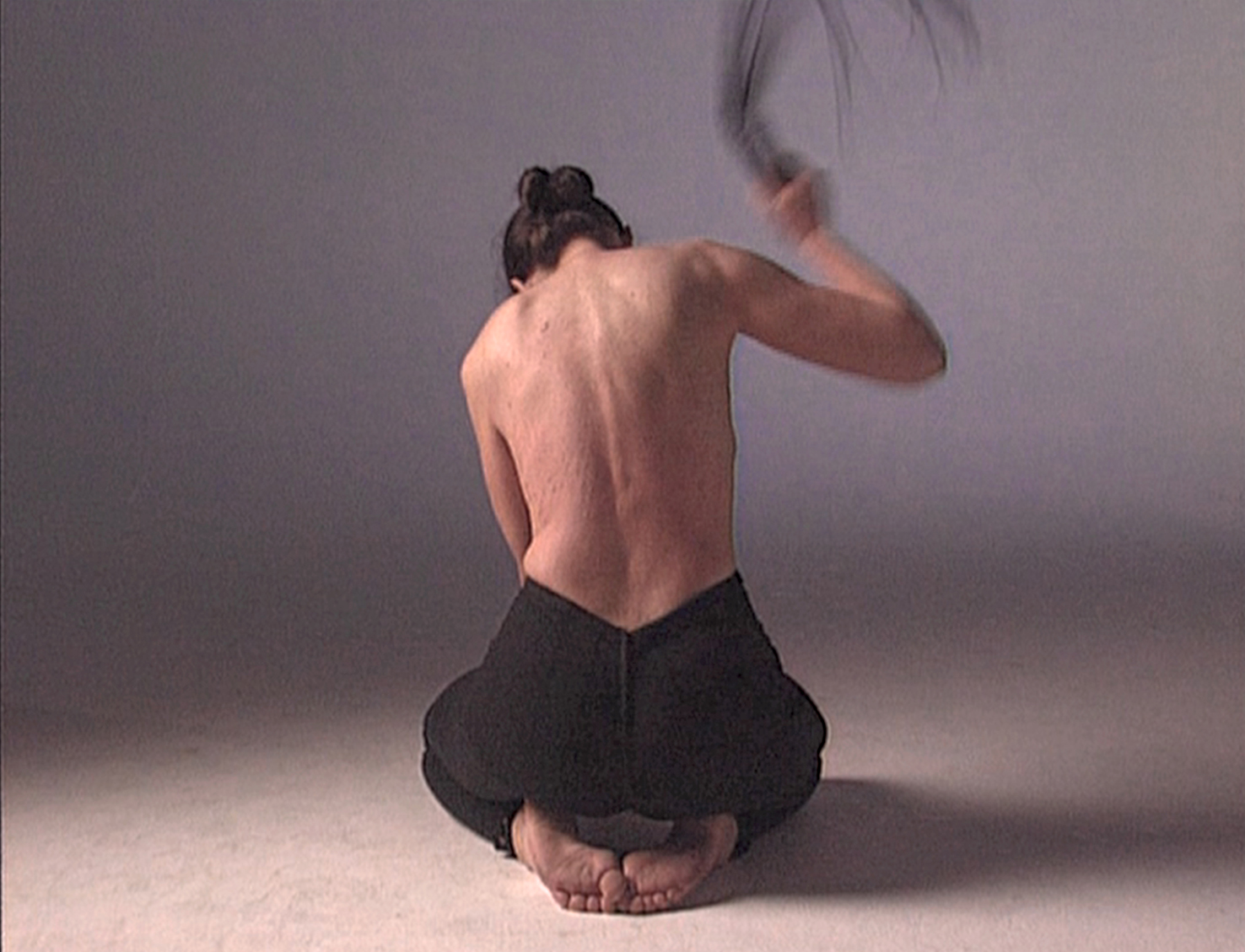
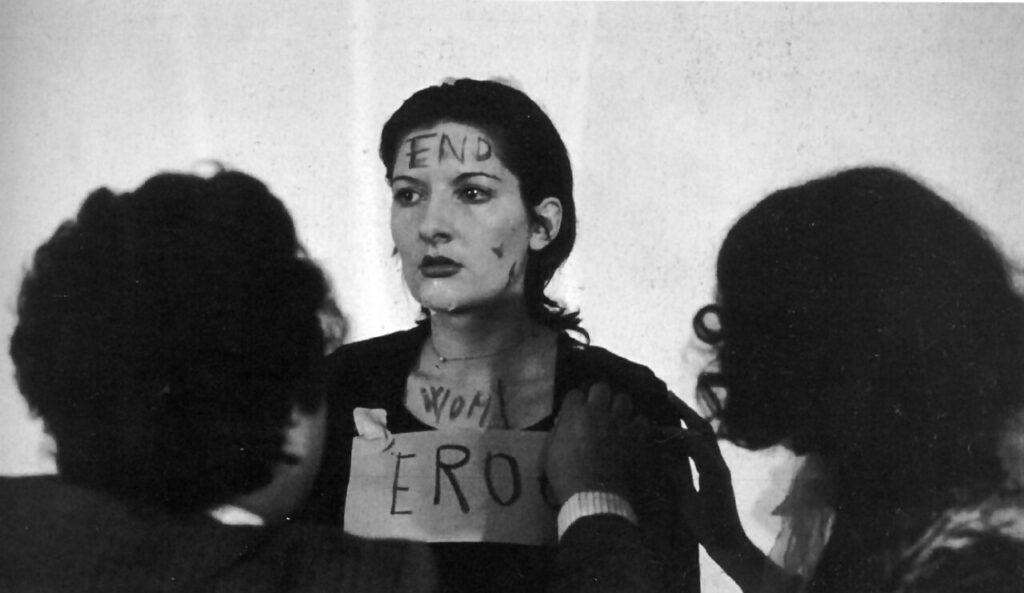
    My first impression of Abramovic is that she’s very bold and likes to push viewers comfort zones. I admire her ability to connect and expel so much emotion out of her audience just by sitting still in “The Artist is Present” and how she was able to continuing month after month giving every volunteer the same amount of attention. I admire her stubbornness to continue even though it was taking a tole on her mental and physical well being, not once considering quitting as an option. I also admire her dedication in “The lovers” walking for three months straight on the Great Wall of China. However, I do see some problematic aspects to Abramovic’s performances, particularly in her Rhythm 0 (1974) series where she repeatedly whips herself and in another performance cuts herself. I think these performances could easily be misinterpreted as glorifying/glamorizing self harm.

    2 . What have you learned about features of performance art based on Abramovic’s work? Name a few key features according to her examples. Include an image to illustrate. Consider her quote, “When you perform it is a knife and your blood, when you act it is a fake knife and ketchup.”

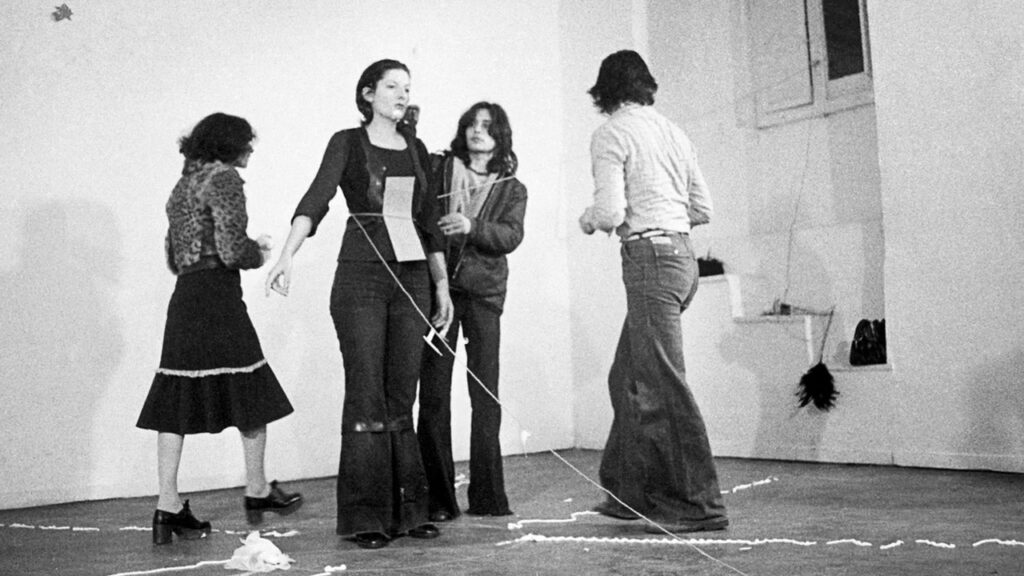
    Abramovic’s performances have taught me that the key to performance art is keeping it raw and authentic. During the documentary it was mentioned how David Blaine, a famous magician at the time, was interested in performing with Abramovic. Ultimately they decided against it because Blaine was an illusionist and Abramovic’s persona was being raw and genuine. Lots of her performances also contain aspects of making people feel uneasy. She achieves this by making many of her performances interactive. Whether its by making the audience walk within close proximity of naked models, by maintaining one on one eye contact or inviting them to touch her with various objects.

    3. Discuss the ways performance art resists many museum and commercial artworld conventions. How does Abramovic solve/negotiate some of these challenges, and do you find these compromises add to, or undermine the ideas at play in her work?

    Typically museums and the commercial artworld holds a preference for physical and/or digital pieces of artwork, for example a painting or film. Something that can be easily accessed anytime from almost anywhere. Performance art resists this by being more of a one time experience, being limited in the number of times an artist is able to perform it both physically and financially. This makes performance art more exclusive. Abramovic solved this in “The Artist is Present” by performing all day, everyday for three month straight, this made her performance much more accessible. For example, the documentary featured a man who was waiting in line to experience Abramovic’s performance for the sixth time as well as a woman who had travelled from across the world to see her.

  • Dani

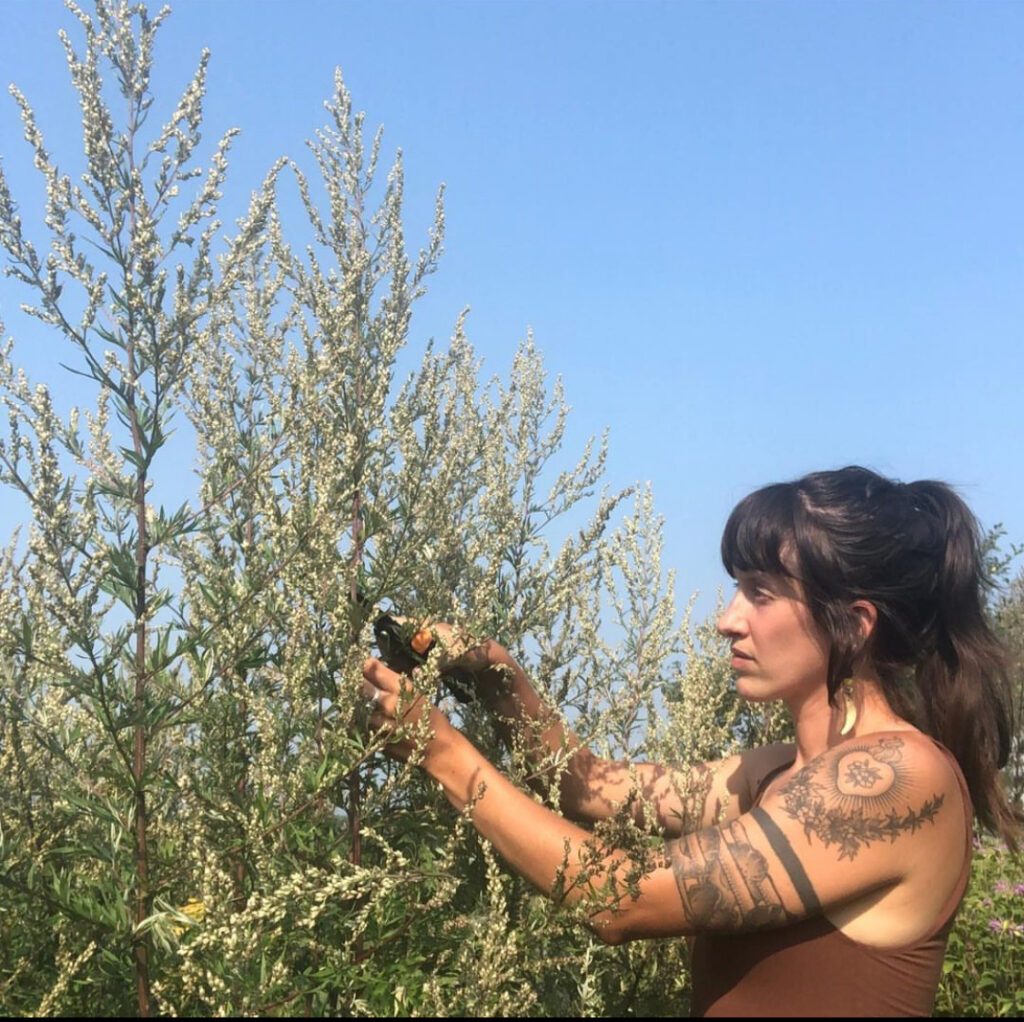
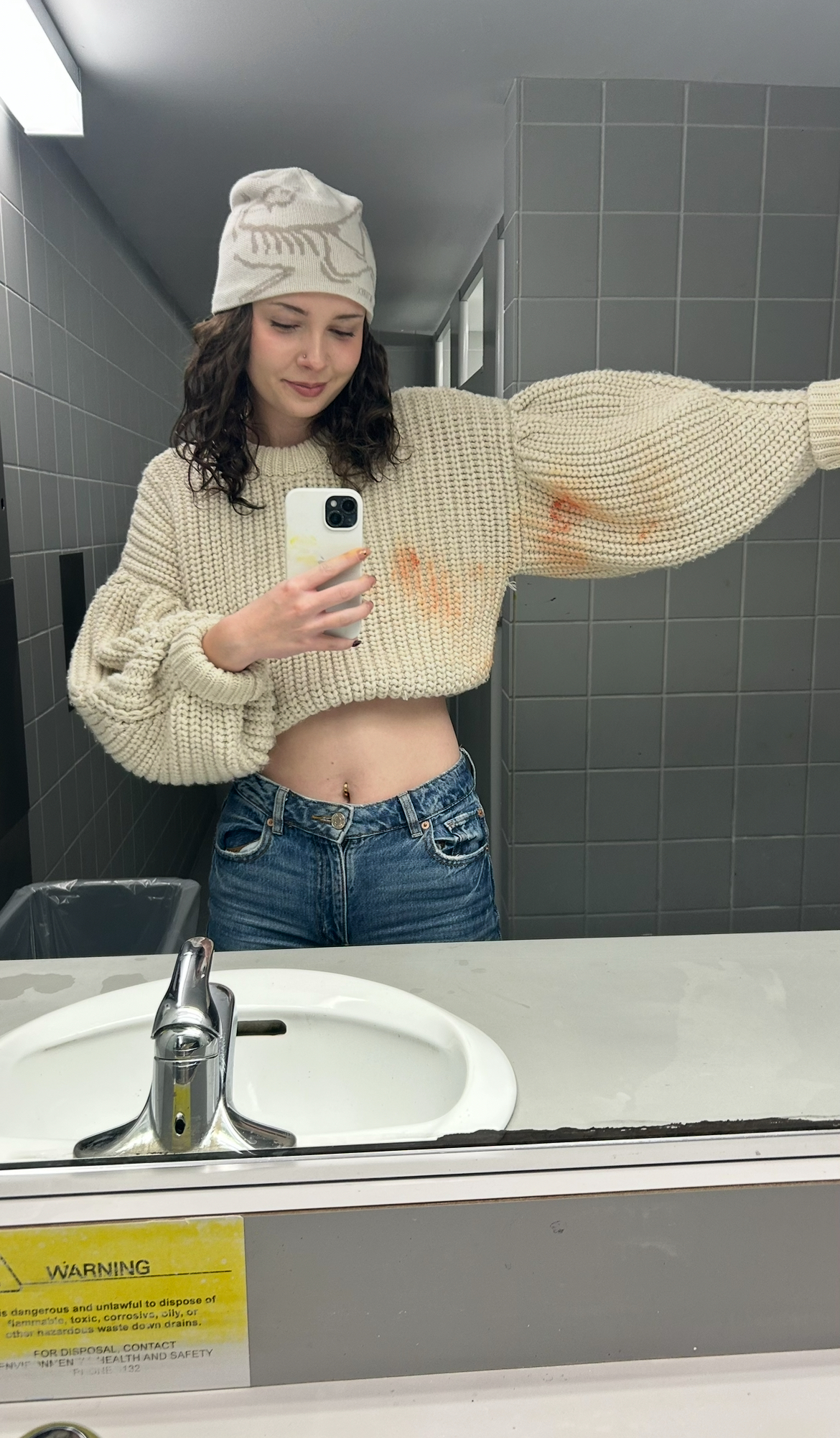
    Hi, I’m Dani. I’m excited to be back in school to write, research and make art at the intersection of land, liberation, queerness, and craft. Outside of school, I study and teach about plant medicine, ecology, and land-based art. Here’s me with one of my fave plants, mugwort =]

    Make a Kilometre

    For this project, I conducted a plant species index of every plant I could discern in one kilometre of urban green space.

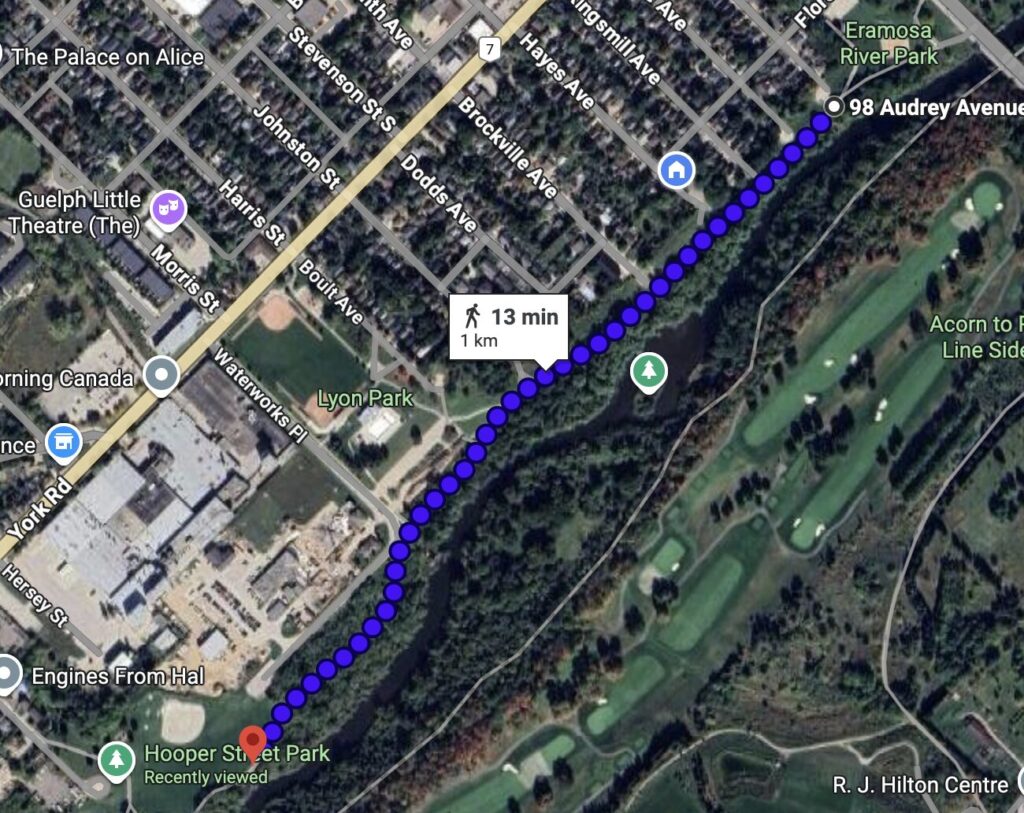
    I live near the Eramosa River Trail, a foot/bike path that runs along the Eramosa River between Victoria Road Park and the Gosling Bridge. I used Google Maps to map out exactly a kilometre of the trail from the end of my street to a nearby park.

    I walked this kilometre in each direction on Sunday, January 11th from 3-4:30 pm, taking notes on the notes app on my phone. It was interesting to rely exclusively on stems, bark, seedpods and dried leaves as ID features instead of foliage and flowers.


    Species list, heading west:

    Highbush cranberry
    Crack willow
    Manitoba maple
    Vitis spp. (wild grape)
    Canada goldenrod
    Cup plant
    Bittersweet nightshade
    Red oak
    Burdock
    Pagoda dogwood
    Rosa multiflora.
    Eastern white cedar
    Tamarack
    Mystery maple
    Motherwort <3
    Red maple
    White spruce
    Black cherry
    White pine
    Clematis
    Buttercup
    Zigzag goldenrod
    Mystery grass 1
    Mullein
    Bull thistle
    Mystery viburnum
    Rumex spp. (dock)
    Black raspberry
    American basswood
    Ninebark
    Japanese barberry
    Plantain
    Mystery grass 2
    Wild currant
    Wild cucumber
    Buckthorn
    Aster

    Heading east:

    Red cedar
    Staghorn sumac
    Chicory
    Queen Anne’s lace
    Catnip
    Red osier dogwood
    Canada yew
    White ash
    Teasel
    Mystery spiky tree
    Black walnut

    Total: 48


  • Protected: Cyrus

    This content is password-protected. To view it, please enter the password below.

  • Rylee

    Hi my name is Rylee! I am a student in the batcher of arts health and wellness program at guelph university!

    The Artist Is Present – Movie Questions

    Questions for discussion:

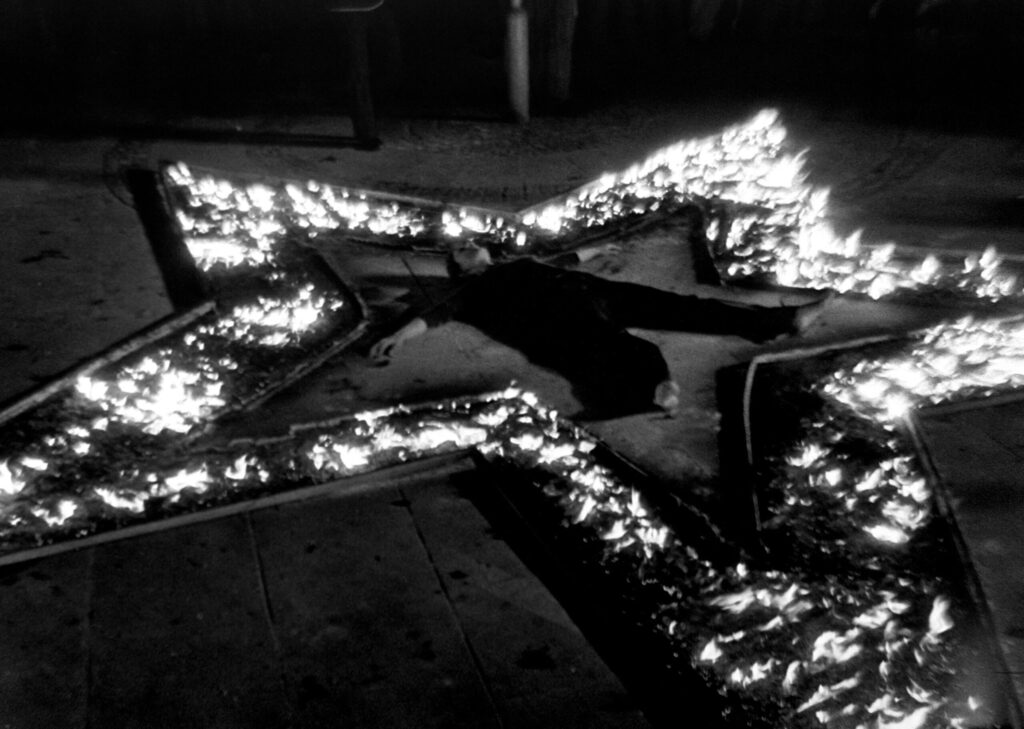
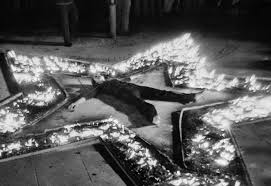
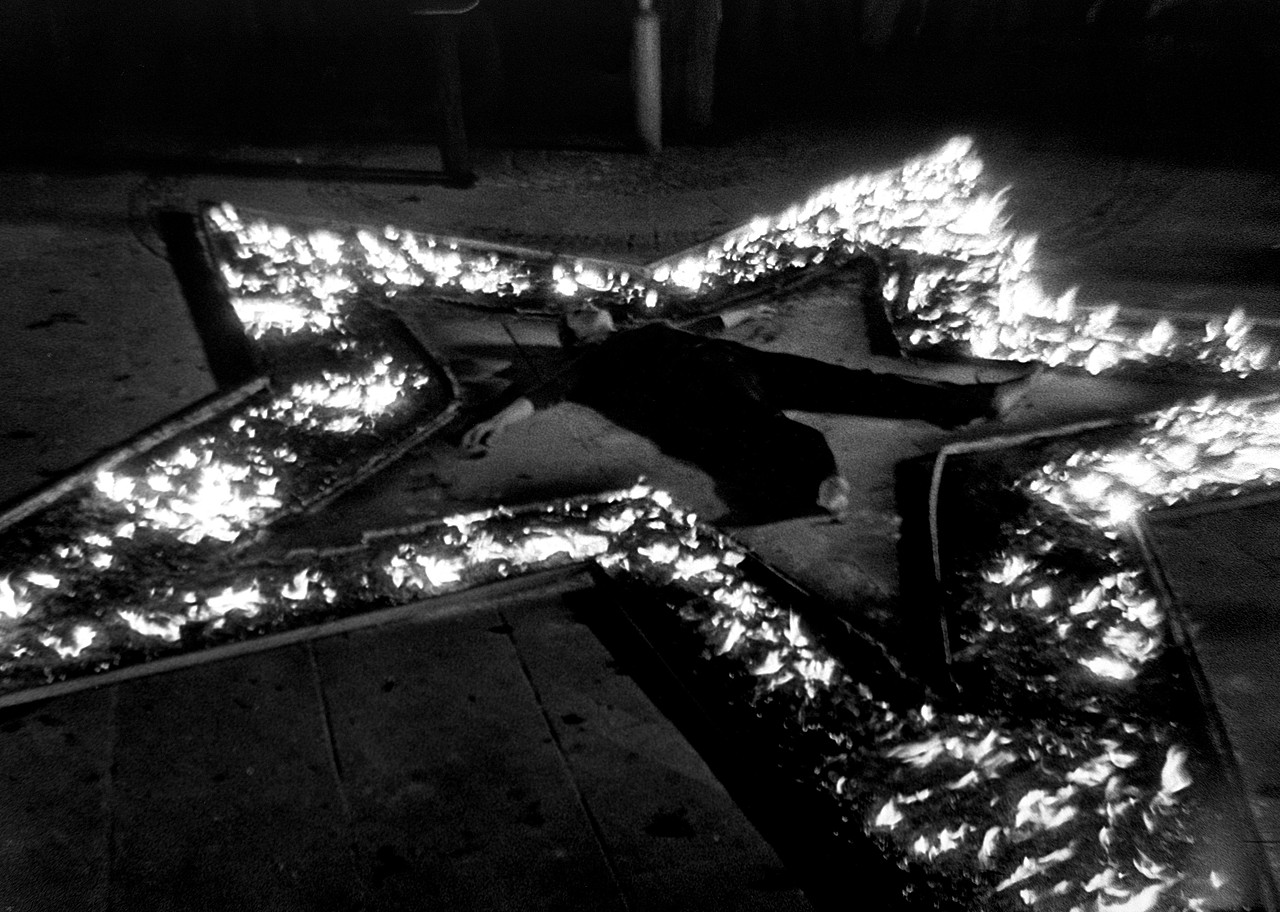
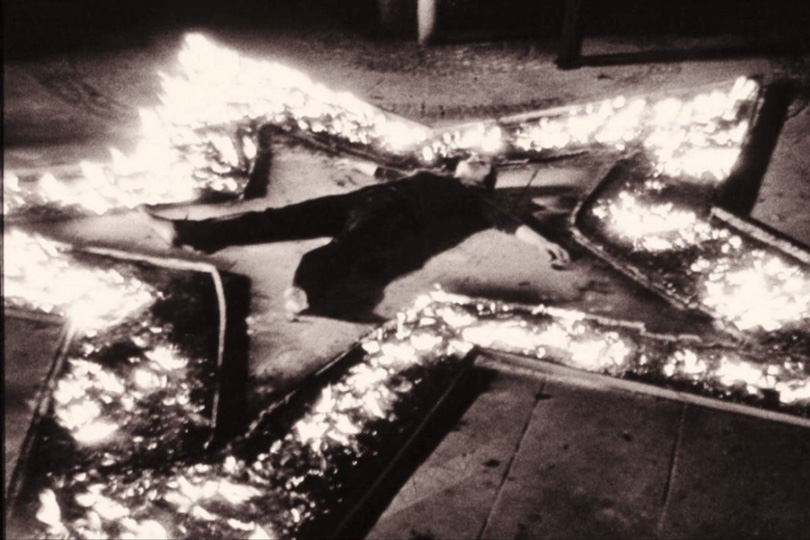
    1. What are some of your first impressions of Marina Abramovic’s performance works, based on the documentary? Use an image/example of one or two works to describe aspects you admire, and aspects you might agree are problematic? One aspect I admire is her fearlessness, particularly in Rhythm 5, where she lies inside a burning five-pointed star. The act is visually very powerful. At the same time, some of her work feels deeply problematic, especially performances involving cutting and self-inflicted harm, such as Rhythm 0. While the intent is to expose audience psychology, power, and violence, the escalation into physical injury raises ethical concerns. The line between artistic exploration and self-harm becomes blurred. I believe self harm shouldn’t be normalized as an art form because it’s using the act itself as an art form when realistically it’s a world problem that needs helping. You don’t have to do the act and abuse yourself publicly for it to be moving. That just seems emotionally harming to the artist and audience experiencing somebody go through this real pain. Rather than inviting reflection alone, these moments can risk normalizing or sensationalizing harm in the name of art.
    2. What have you learned about features of performance art based on Abramovic’s work? Name a few key features according to her examples. Include an image to illustrate. Consider her quote “When you perform it is a knife and your blood, when you act it is a fake. knife and ketchup.” In my opinion this quote clearly shows that a performance uses real materials, real pain, and real consequences. Nothing is staged or pretend. Performance art breaks through the barrier of art not being a reality and only an act or simulation representing something, it is not an act you are in it and feeling the presence of the message being voiced through this art. Performance art involves genuine risk. The outcome is not fully controlled, which creates tension and makes the audience aware that what they are witnessing could go wrong. Viewers are not just observers. Abramović often invites or allows the audience to participate, making them partly responsible for what happens during the performance. so whats going on itsint all planned because nobody can predict what the observers will do. Performance art, as shown through Abramović’s work, collapses the distance between art and life. It demands presence, confronts discomfort, and forces viewers to recognize that what they are seeing is not representation. Its a reality happening in front of them.
    3. Discuss the ways performance art resists many museum and commercial artworld conventions. How does Abramovic solve/negotiate some of these challenges, and do you find. Do these compromises add to, or undermine the ideas at play in her work? Performance art resists museum and commercial artworld conventions because it is temporary, embodied, and experiential, rather than object-based. It cannot easily be owned, sold, or permanently displayed, and it often involves real risk, unpredictability, and direct audience engagement, which conflicts with the controlled environment of museums. To me, it almost feels like a social experiment, testing both the artist and the audience. Giving people the choice to participate or respond in real time pushes the boundaries of what we usually think art is. In Abramović’s case, she works around these challenges through documentation, re-performance, and working with institutions so the work can continue to exist after the live moment. Even though this reduces some of the raw danger of her earlier performances, I think it adds to the work by making it accessible to more people and by highlighting the tension between lived experience and institutional control.

    Make a Kilometer

  • Paige


    My Concept:

    My concept for representing a kilometer (km) is through the use of Minecraft. My idea was to calculate how many blocks it would take for me to travel a kilometer and then have my avatar run that distance, allowing a comparison of time and potential factors that could slow me down. At first, I assumed I would be within the average time frame to complete a kilometer, but when it actually came time to run it, I found that, much like in the real world, a lot of outside factors can affect your timing.

    On a deeper level, I wanted to represent what a kilometer means—how much effort it takes, how much preparation is involved, and what a kilometer represents in terms of the passage of time. In the video, I begin at my house and then venture out, only starting the timer when I begin the sprint. Along the way, I encounter a lake, mountainous terrain, and the need to eat, not unlike if I had actually done the run myself. All of these factors slowed me down, along with the fact that I had never played in third-person mode before, which I found made it very difficult to break blocks and make jumps.

    Near the end of the sprint, I slowly climb a mountain, carving out a path to make my way to the top. Once at the summit, I admire the view and then jump off the mountain, losing all my items and resetting back to where I started, only to begin the same journey again. I framed the ending this way to put into perspective how much effort and struggle can go into achieving something as simple as a kilometer. Once you die in the game, you have to start again, building up your materials to get back to where you were in order to complete another kilometer.

    I think this shows growth and the idea that progress is not linear. It is really about what the kilometer means to you or what it represents in your journey. Did I just waste 43 minutes running through Minecraft just to die at the end? Was it pointless, or does it represent growth?

    Precision of Measurement:

    In Minecraft, the idea of a kilometer averages at 1,000 blocks. Instead of something like 500 steps, this form of representation brings attention to the idea of a digital kilometer and what it means to travel a distance while not really moving at all. Through research, I found that one Minecraft block equals one meter; therefore, a kilometer in Minecraft is represented by 1,000 blocks.

    Originally, I wanted to build a tower upward amassing 1,000 blocks, but upon further research, I learned this was impossible, as it exceeds the world’s maximum build height. This is where the idea for the sprint came from. To walk a kilometer would take around 8–10 minutes, but by enabling the sprint feature, the average sprint speed makes it take around 2.5–3.5 minutes. When sprinting, you move at about 5.6 meters (blocks) per second, meaning the quickest a kilometer can be completed is around 2.5 minutes.

    However, during my sprint, I encountered water, used a boat, and faced the challenge of climbing a mountain, which significantly slowed my speed. In addition, I encountered biome difficulties, which made my kilometer take approximately 40–42 minutes. This presents an imaginative and original way of thinking about or experiencing a kilometer.

    Creativity & Idea:

    The idea of Minecraft came from my recent found love of building, especially in teams/groups. In class, I expressed my ideas as physical movement, but upon further reflection, I thought it would be cool to discover a more imaginative way of travel. I really wanted to reflect the idea of travelling distances without really moving at all. In Minecraft, you get to explore new planes of land and experience different biomes. It can be played solo or in groups, and can really be about whatever you want. I think video games are an amazing immersive way to explore, so although I might not physically be exploring a mile, I can travel hundreds of km in a shorter and creative format

    Media & Materials:

    My media itself is very simple, as Minecraft can be explored almost anywhere. I chose Minecraft over other games because I believe Minecraft allows you to connect and explore unlike any other game. When we talk about different ways to represent a kilometer, we cannot rule out the idea of digital connection, especially when so much of our lives are online.


    1. During the beginning of the documentary, my thoughts about Marina Abramovic’s work were very much centered around confusion and trying to understand what kind of deeper meaning there could possibly be, as we were just seeing the flashes of her work. As the video continued on I gained respect for her and a great understanding of her work/ messages. I think the way they set up the documentary was very much telling of her life story, there was something one of the interviewers said about how you’re looking at many different Mariana’s and how she is a product of both of her parents. I think that line is very impactful as it gives us a deep insight into the history of her and how her mind wraps around the deep ideals of her artwork. Understanding the juxtaposition between her parents and her grandma and how she felt a sense of safety or love from this spiritual figure instead of her own parents, who were the opposite of comforting, really sets the tone of the documentary from early on. I admire her dedication and willingness to be so open to us as the viewers and as she talks about this idea that art should be a shared experience of the artist and their performance, kinda reinforces how personal and vulnerabile you have to be to interpret her works and truly work towards understanding the bigger picture. I would definitely agree that some of her pieces are pretty problematic, I find the ones where she is in a constant state of harm to herself, harder to watch as she is putting herself in these situations but it’s scary to see it repeated over and over with almost no emotion put into them. 
    2. I learned how personal performance work can become, I mean this in the sense that when you give your soul to your performance work it shows. When she sat in the museum, not saying anything but just staring, I could only imagine what it would be like to be in the other chair. Something about the way she gave every person almost a part of her soul was so heartbreaking and the way she almost turned into a reflection for people’s inner self was so breathtaking to watch. Even though I wasn’t in the chair, I could feel her emotion through the documentary and it’s almost like you have an inner dialogue with her in the chair which almost creates questions that only you yourself can answer. Her quote inspires the idea that you have to give everything your all, putting your heart and soul into something will translate through if you let it. 
    3. For as long as art spans, there has always been an idea of perfectionism and that to create art is to create almost divine pieces that reflect perfection. I think performance art especially really speaks through this idea and a few people always come through when I’m learning about past artists, people like Mariana and Yoko Ono, who create this incomparable work meant to set itself apart in a field of perfectionism. She talks about questioning the idea that “Art must be beautiful” (11:07) and that artists have to be beautiful and I think this isn’t true at all. Art is meant to be raw and true
  • Nicole

    Pages: 1 2 3

  • Leah

    Meet The Artist:

    Hi, I’m Leah and I’m in my second year of Studio Art. I enrolled in this program, for I always knew I wanted to pursue art as a career, and I was particularly fond of the size of this program and the tight knit and supportive community it offered. I love exploring mediums and creating pieces inspired my conceptual ideas. I have recently been trying to allow myself to create work based on the process and not the outcome, aiming to further develop my practice and how I am connected to it. Sketches and smaller pieces have been a big part of this experience, but I am excited to apply these goals to bigger pieces throughout this course!

    Existing Work:

    The Artist is present, Marina Abramovic:

    My initial impression of the works by Abramovic tends to fall towards the prevalence of nudity throughout her pieces, which generates a shock factor, especially for people who are not artists. As artists there is a sense of comfortability for the majority with nudity and the human body, but for many people this unavoidable acknowledgement must be given towards the presence of nudity and this often generates a feeling of discomfort, which seems to be a prominent theme of her work.

    One of the main factors of her performance that remains the most prevalent to me is the discipline, which functions as the foundation for her pieces. Her pieces are often very demanding both physically and mentally, and that tends to be a very important aspect of her work, for the required discipline allows viewers to be both shocked and uncomfortable. Her discipline allows her to perform through reality, for she forces herself to be physically uncomfortable, which really allows the audience to feel the sacrifice she is making, generating a strong viewer impact.

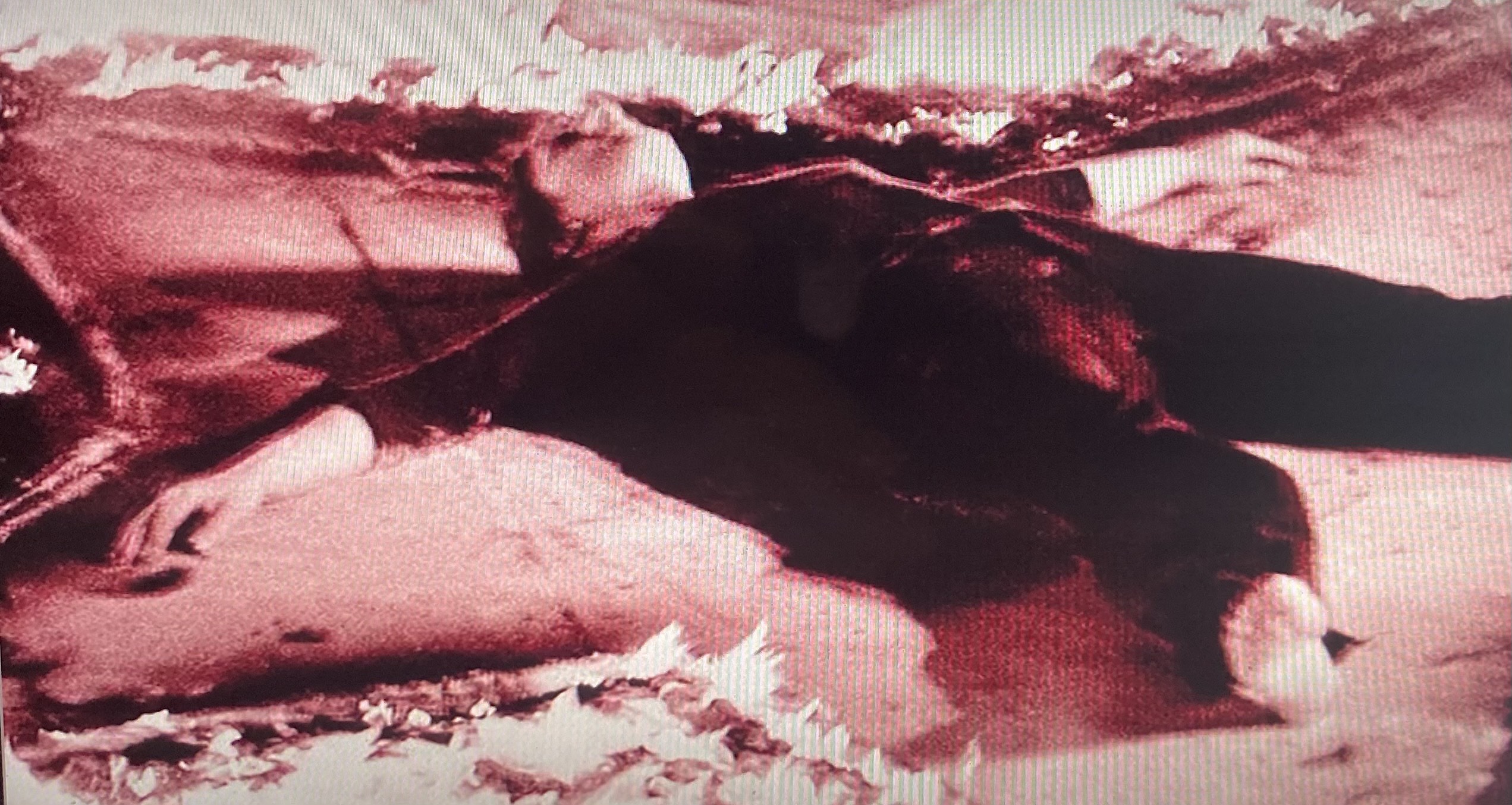
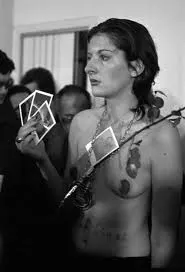
    Rhythm 5, Marina Abramovic, 1974

    Abramovic challenges museum conventions through the confrontation she pushes upon audiences, for often it is expected that a person would simply wander around a gallery or museum space casually viewing paintings or sculptures, yet Marina works directly against that. She forces the viewer to acknowledge her work directly through the physical presence, creating uncomfortability, for this is not the norm, especially in reference to traditional artwork. Performance art and the body as a medium is very confrontational and forces the audience to directly interact with the piece, yet Abramovic works to create even more uncomfortability within the nudity and jarring discipline in her work, which is what make her pieces so memorable.


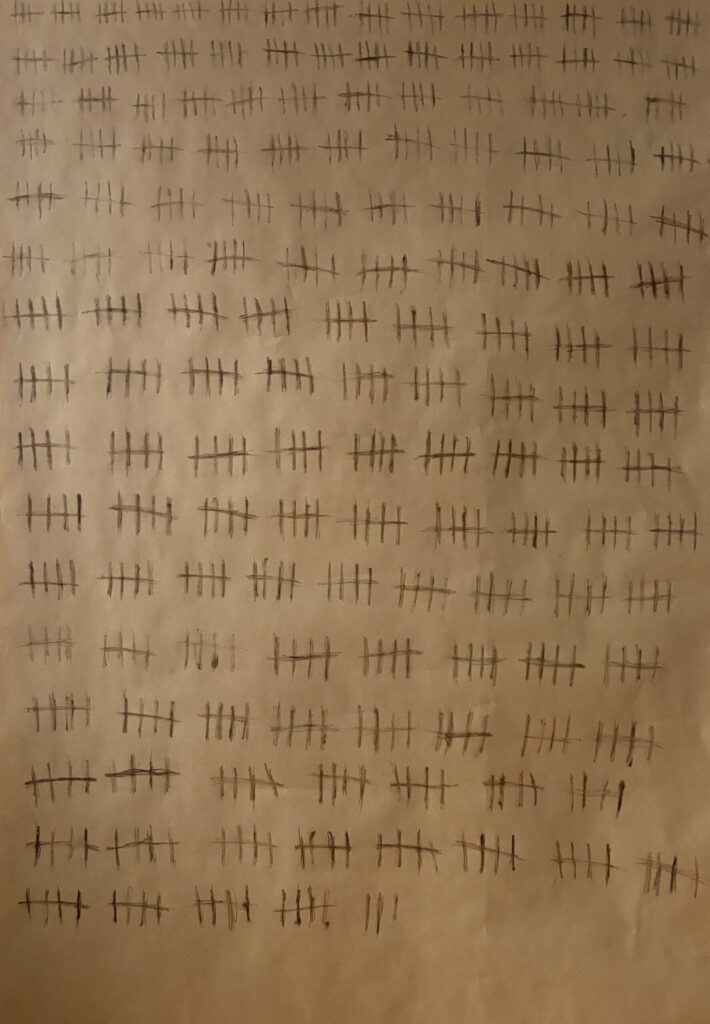
    762.5 Breaths: One Kilometer

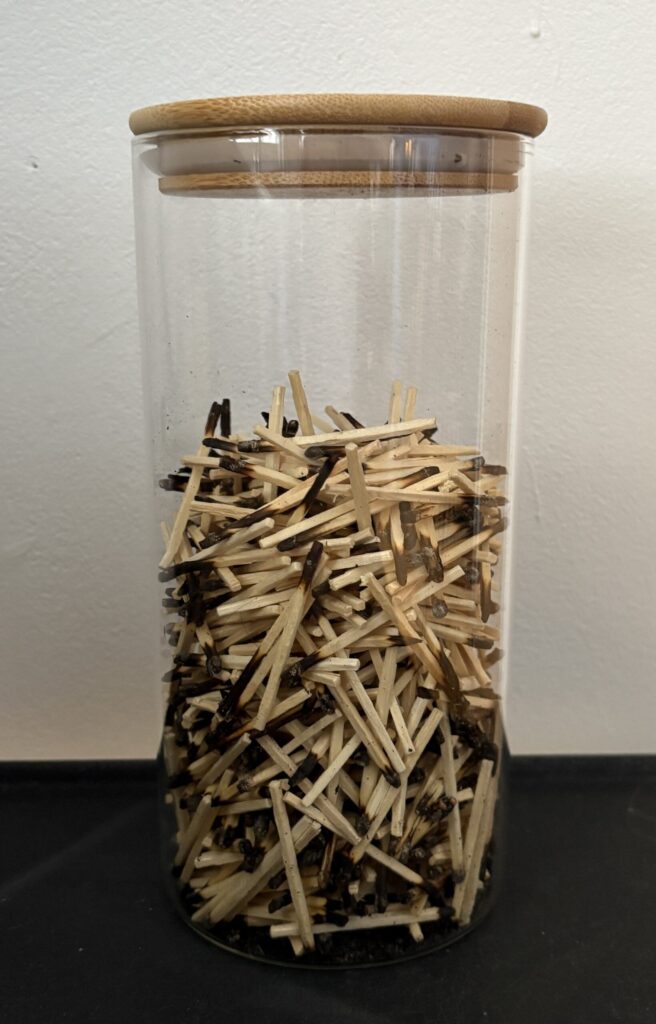
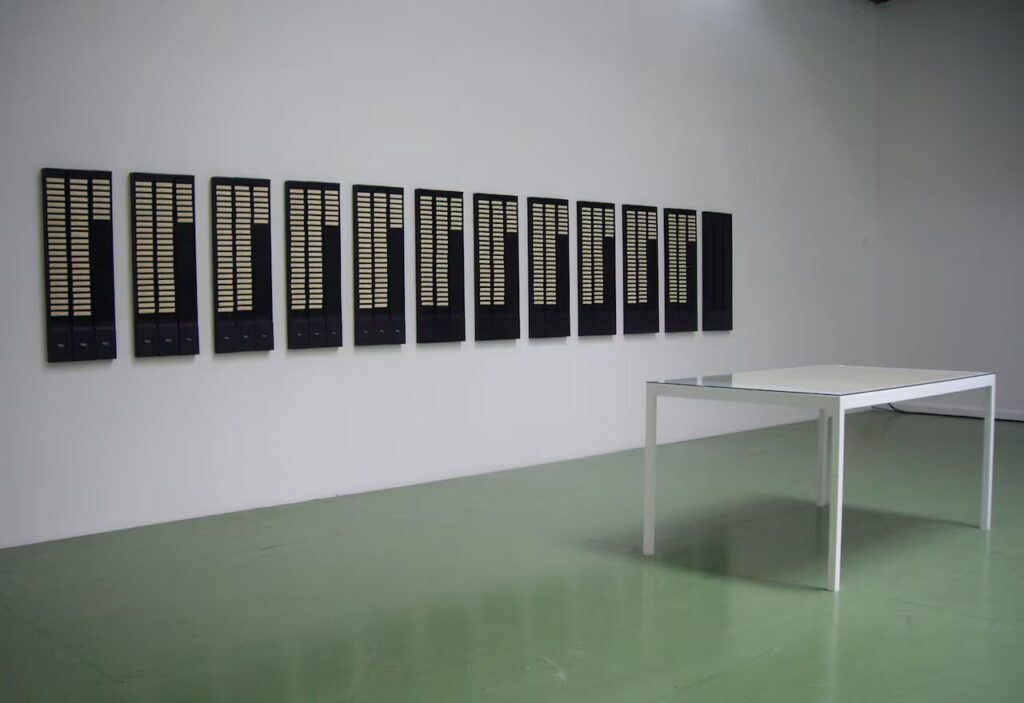
    762.5 Breaths: One Kilometer, Leah Tipping, 2026 (paper, matches, jar)

    For this piece I decided to measure a kilometer of breath. In order to measure this I had my roommate hold a match and see the furthest distance in which I could blow the match out from, this ended up being 1.3 meters. I then did the math to determine how many times 1.3M goes into 1 kilometer, giving me my final number of 762.5 breaths. 

    To create this piece I lit and blew out a match to represent each individual breath, and then used the previous lit end of the match to create a tick on my large piece of paper. This allowed me to create a large tally chart, which is equal to 762.5, following me drawing with the match I dropped the burnt match into a glass jar, which I also presented. 

    My motivation for this piece was my current journey quitting smoking, and how my personal lung health generates a unique amount of breaths for myself and my health. This number is also reflective for me, allowing myself to consider how I am preventing this number of breaths from continuing to grow by quitting. I chose to create a tally chart in addition to just presenting the matches, for the tallys remind me of an incarcerated person counting the amount of days they have been in jail; representative of the inescapable hold smoking has had on me and my life. 

    I aimed to encourage myself to allow the materials of my piece to more deeply connect with my work for this piece; instead of just picking a medium that I think would be the most appealing visually. I believe that using the matches as my main material has been very productive to my work, and has created depth in my work. Furthermore, this material choice has also further connected my creative process to peace and the motivations behind it. The act of actually sitting down and blowing as hard as I could 762.5 times was powerful, allowing myself to actually physically blow one kilometer. This repetitive motion almost felt like an inverse of smoking, reminiscent of my previous habit of repetitive inhaling, now juxtaposed by this repetitive practice of exhales.

    Something I wish I was able to encorperate into the process of this piece is actually blowing the matches out from a consistent distance of 1.3 meters. I think that if I had more time I could have organized having another person assist me with the entirety of this project, having them hold the match at a distance for me to blow, yet th turn around time was unfortunately too short to accomodate this. I considered trying to create a setup that would be able to hold the lit match at the proper distance for me, yet I could not come up with a way to achieve this utilizing the resources accesible to me without creating a fire hazard. Since this was something I could not do, I resorted to blowing as hard as I could in order to still allow my breath to travel the 1.3 meters even if the match was not able to be at that distance.

    Portion of process, timelapse

  • Laila

    Hi! I am in my second year, majoring in Studio Art, along with minoring in Creative Writing. I am someone who has always loved art from a very young age, consistently getting into some sort of supplies and going wild. Not only do I get to write about the creative flares that come to my head, but I also get to visualize and create them via drawing as well! Originally during my 12th year of high school I was going to go into the animation field, however, with the rise of AI I was concerned about the future of animation. This of course made me worry…for months, but after some time I thought ‘what is something that I can do for work that can still be art focused’ and the grand idea of teaching popped into my head. Which is why I am here now! This campus not only stood out to me from its looks, but also because my visual arts teacher from high school (who I deeply look up to) learned here as well. I want to be the type of teacher who is able to branch out into a array of mediums in my classes, which is where Guelph’s differing artistic options help to aid in my future endeavors. (I ALSO LOVE MY CATS!)


    1. My first impressions of Marina Abramovic’s performance work is that she loves to create a sense of discomfort in the viewer. Her work has a sense of unconformity with ideas never before seen in the artist world. Many of her performances show her harming herself or placing her body / mind in danger. For example, her flaming star performance, or her use of razor blades on her own flesh. While I can admire her intense dedication for her craft, I can’t help but seeing some of her aspects of self harm being problematic. Her work can be extremely applaudable and strong, especially in some of her later pieces but her ease in harming herself is worrisome.

    2. Abramovic’s work is very person oriented, with seemly all of her installations including people, and herself. She has been said to ‘challenge’ her audience, seeing what makes them squirm and all for the name of art. Many of her performances include the nude, see how far people will go, and whether they will back out or accept it and continue forwards. Performance art requires training in a sense, readying the body and mind to become ready for the piece rather than just simply creating it without thought. With her quote she elaborates that performance art is putting yourself out there fully, no curtains, no masks, simply who you are, when in comparison when you pretend you are someone else.

    3. Performance art resists many elements of certain conventions in the artworld. For example the use of live nude models, along with Abramovic herself in many of her performances (even though it could be quite dangerous with growing popularity) is breaking the mold that the world is comfortable with. The idea of a nude body to the regular non artsy person can be a touchy subject, as the idea of being nude is something quite personal. However, with performance art, there is a breaking of this mold, as Abramovic makes it almost impossible to ignore her exhibits of live actors. Not only that, but the idea of being a constant hour(s) long exhibit is something that many would flat out refuse to do, simply for the exhaustive labor of it all, however, Abramovic took it face on 7 days a week as an installation.


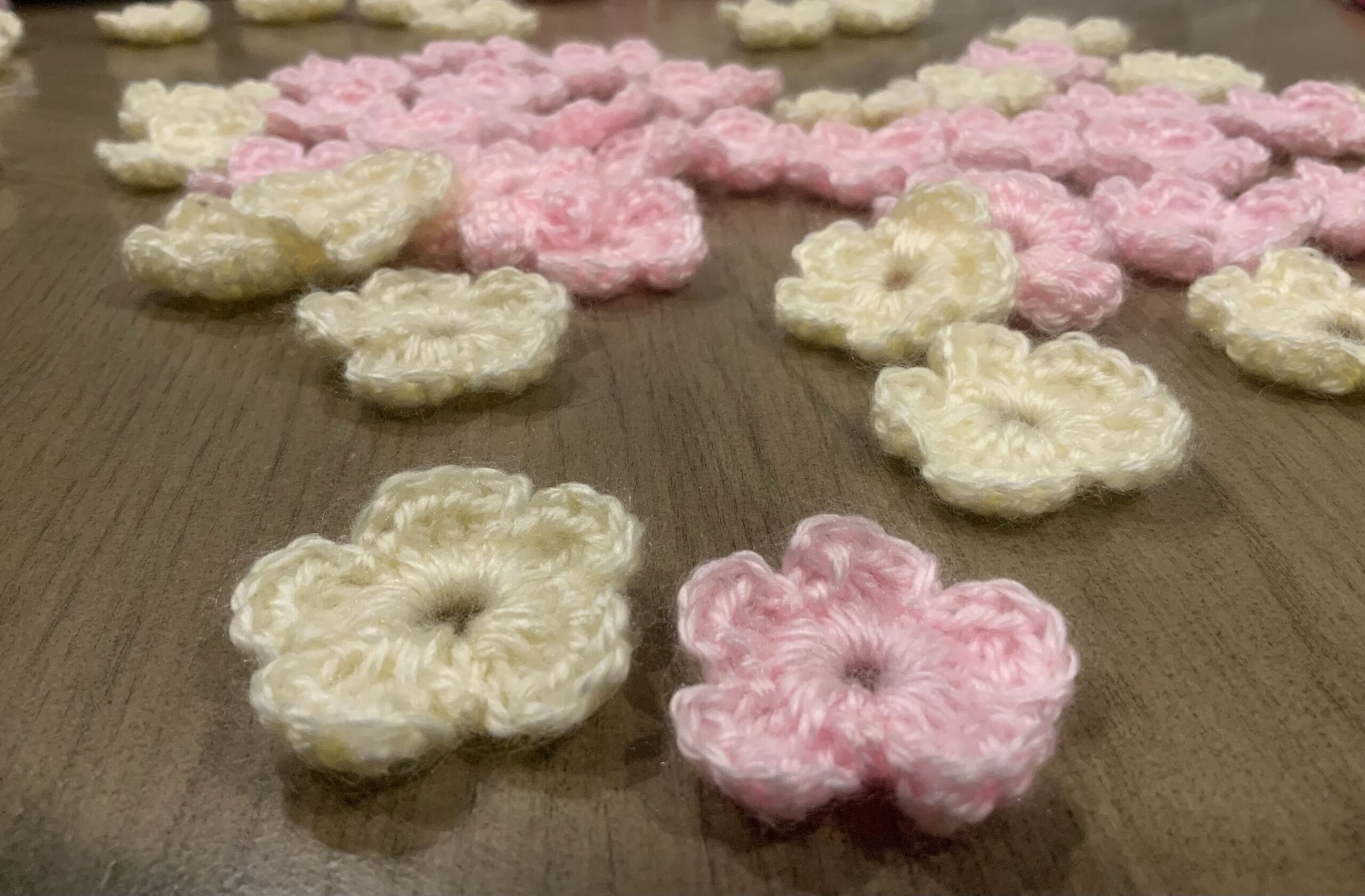
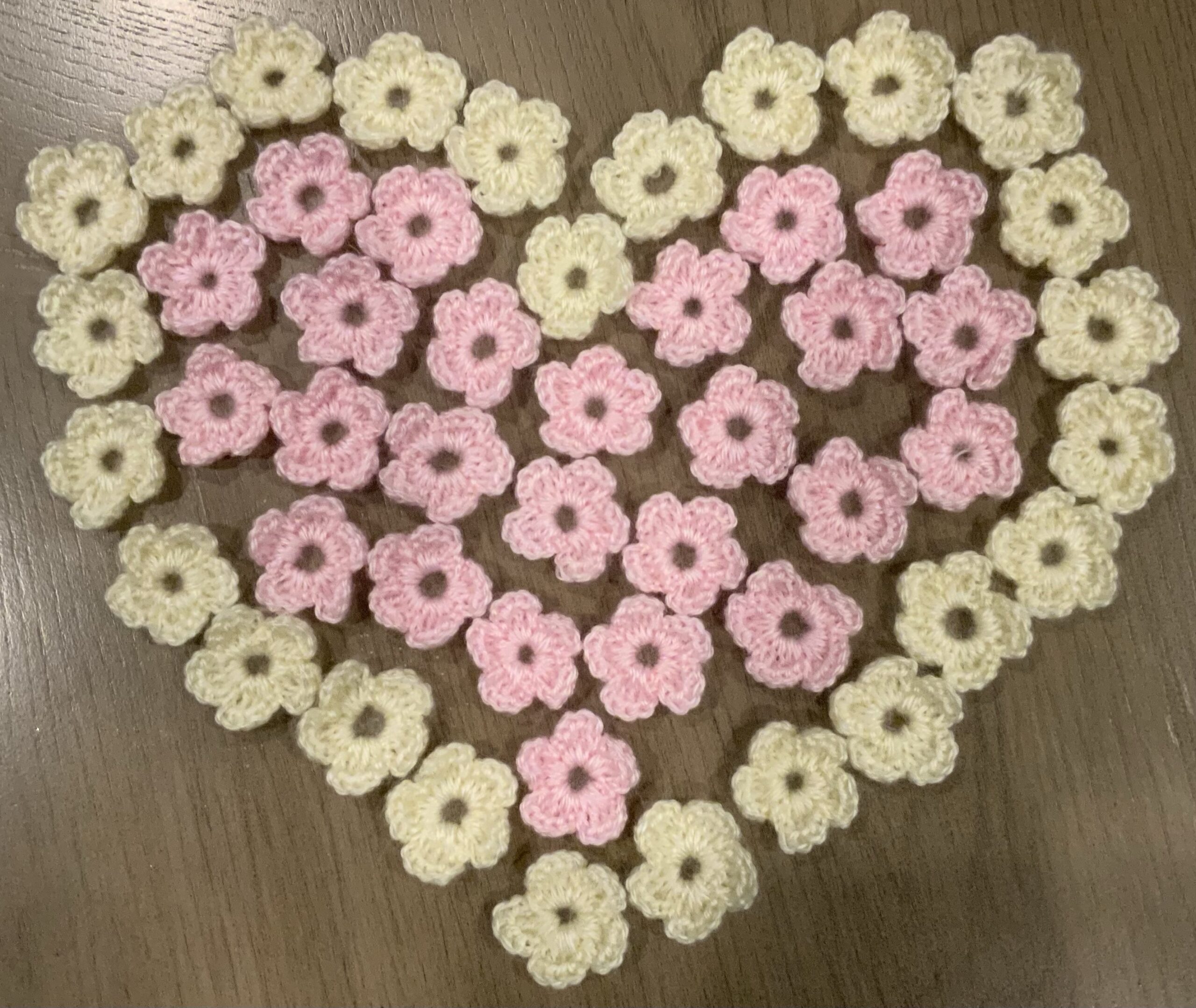
    The concept that I chose to focus on for representing a kilometer was through the process of crocheted flowers. During a trip to Florida I went on recently there was an abundance of flowers that Canada was deeply lacking due to the cold weather. The sheer amount had caught my attention greatly, resulting in myself being inspired for this project. As someone who loves flowers in their many varieties I thought that this project would be a perfect outlet to not only show my interest flowers, but also start a passion project of faux crocheted flower garlands to decorate my room.

    The use of measurement was relatively easy to figure out considering my idea. I chose to divide 1000 by 20, 1000 being the total amount of meters in a kilometer, and 20 meters being the ‘length’ of each individual flower. The result of 1000 divided by 20 equals to 50, which is the total amount of flowers withing my project. Originally, the first idea that came to my mind was crocheting 1000 flowers! However, given that each flower takes roughly 3 – 4 minutes to complete, that wouldn’t be entirely feasible given our timeframe.

    The media I chose was something that I enjoy doing in my spare free time, the media itself being crochet (as stated in the paragraphs above) . I had alternated between baby pink and baby yellow yearn, not only for its pretty colours, but also because of how soft it is. The colours themselves are also most commonly associated with spring and flowers, enhancing the project itself and it’s aesthetic.

  • Keira

    This is me :]

    Marina Abramovic: Discussion Questions

    Make a Kilometer

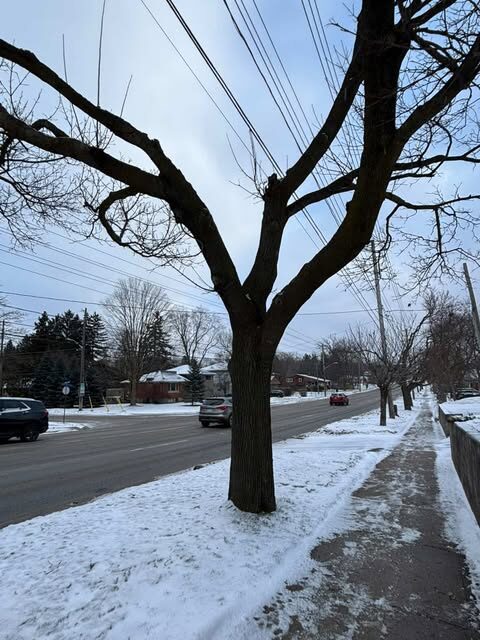
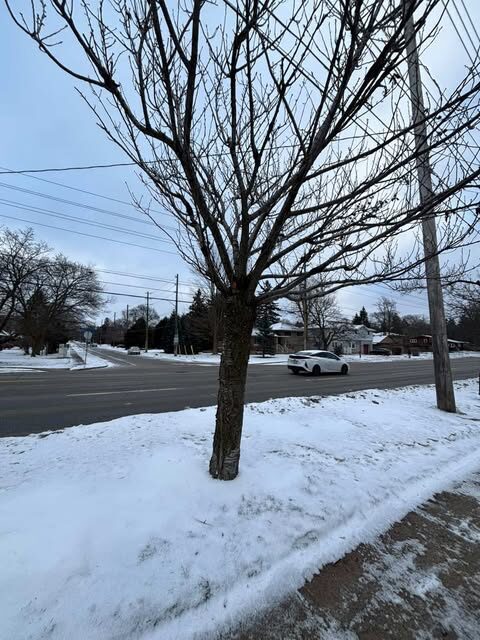
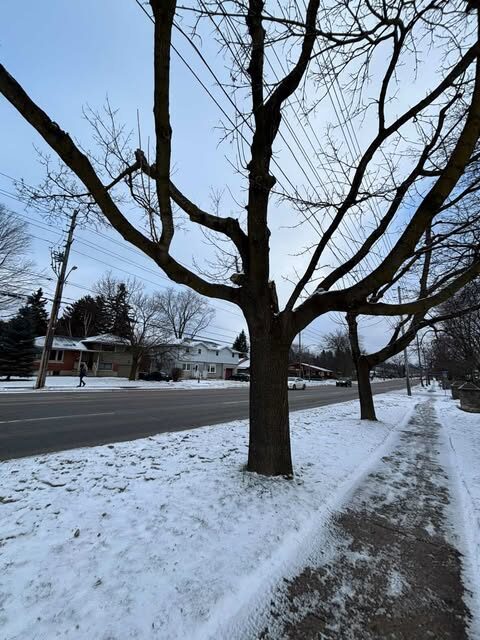
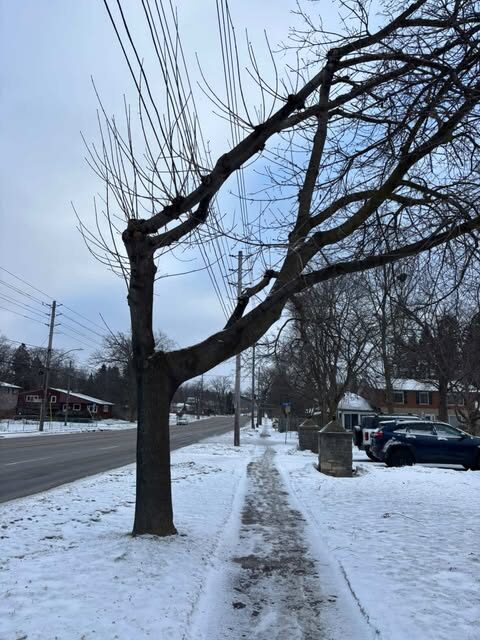
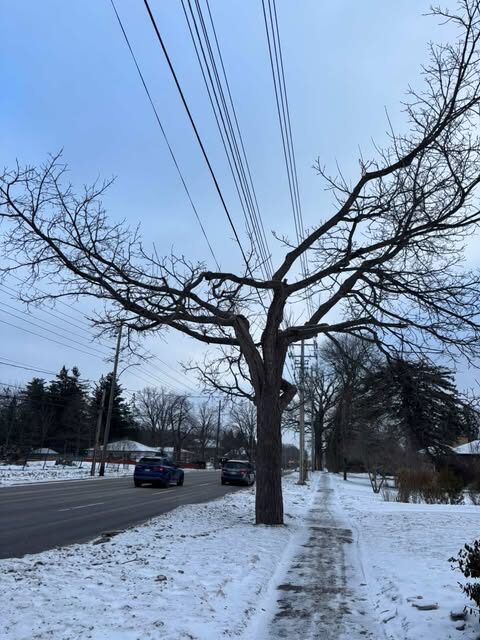
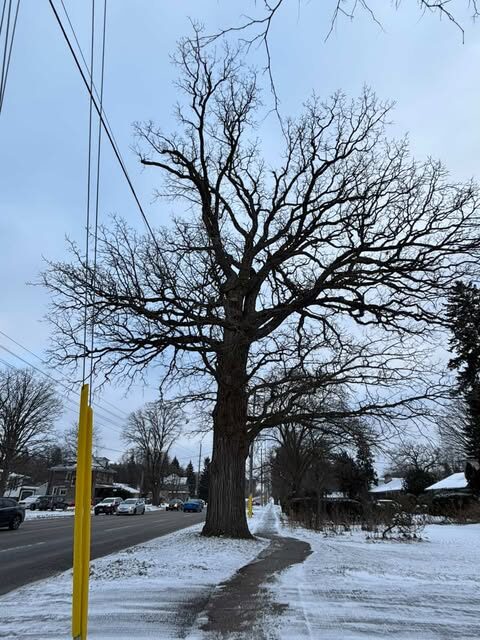
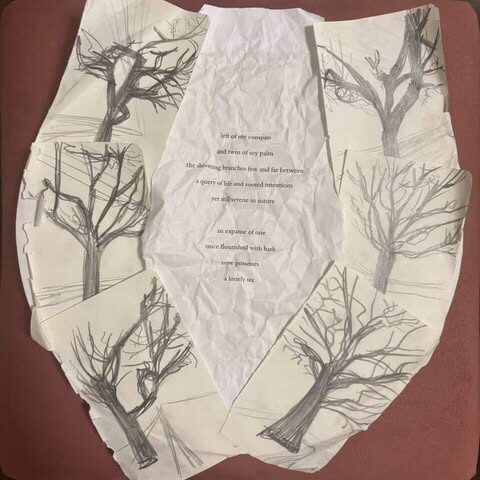
    For this project, I took a 1km walk and took a picture of every tree I saw on my left. I was expecting quite a lot of trees, yet there were only 6 trees for the entire 1km stretch. This made me reflect on how many trees may have filled that 1km stretch 50, 100, or even 1000 years ago.

    I wanted my documentation of 1km to be something aesthetically pleasing because I relate nature walks to calmness, simplicity, and refreshment. I wanted to evoke that feeling through my display. my only materials were paper, a canvas, and my pencils. I wanted to use only paper to keep it very closely related to the trees.

    Tree Pics + Proof of kilometer

  • Julia

    Hi, my name is Julia! I’m a second-year studio art major with a minor in English. I started in the Bachelor of Arts general program last year and decided to declare my major in studio art after falling in love with the program. However, by the end of high school, I was pretty certain that I wanted to do something with studio art, but it wasn’t until a few months in that I realized that this was what I wanted to do. My goal from this is to become a high school teacher and be able to express my love of art to other people ( and hopefully inspire them as well).

    Documentary – “The Artist is Present” By Marina Abramovic

    Questions:

    1. What are some of your first impressions of Marina Abramovic’s performance works, based on the documentary? Use an image/example of one or two works to describe aspects you admire, and aspects you might agree are problematic.

    My first impression of her work was that it was very intense. As much as I love art, I cannot even think about sacrificing my entire life for it. For that, I admire her strength, perseverance, patience, and confidence that she brings to all her work. However, I do agree that various aspects of her work are controversial. For example, both images ( and most of her pieces) in a way risk her health, and there comes a point where you wonder if it is worth it to risk your life for the sake of performance, potentially. Along with everyone who is included in her performances as well.

    1. What have you learned about the features of performance art based on Abramovic’s work? Name a few key features according to her examples. Include an image to illustrate. Consider her quote, “When you perform, it is like a knife and your blood, when you act, it is like a fake knife and ketchup.”

    I learned how interactive and personal performance art is based on watching the documentary. For example, the importance of actions in relation to presence and time. I feel like that quote represents how she is performing reality, opposed to illusion, which is then part of the way she uses art to convey emotion, I think. Having the realistic element to it makes people think more about it and feel more.

    1. Discuss the ways performance art resists many museum and commercial art world conventions. How does Abramovic solve/negotiate some of these challenges, and do you find these compromises add to, or undermine the ideas at play in her work?

    Performance art resists many typical art world conventions in multiple ways. I feel like one of the main aspects of performance art that challenges this is the fact that performance is not a physical object; without video, there’s no record of it. Performance art becomes a moment, not a piece. Abramovic negotiates these challenges by performing in a way that creates an impact/ reaction, maybe? Her interactions with her audience, for example, create an impact both on the audience and whoever participates, making it memorable. Which, in this case, can become more of an artwork, or just as much as a typical, conventional artwork found in museums.

    Km Assignment – Mind Exercise

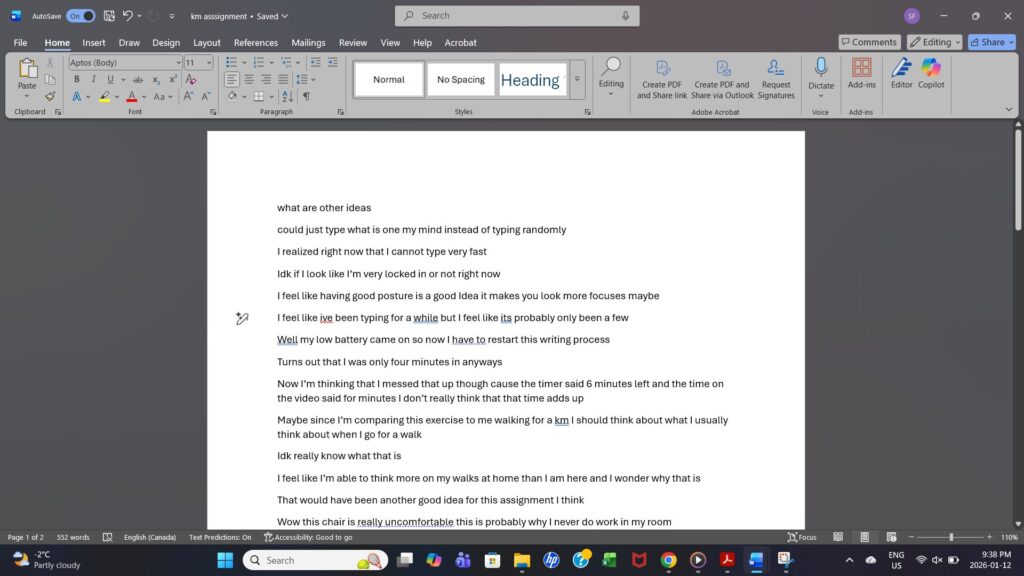
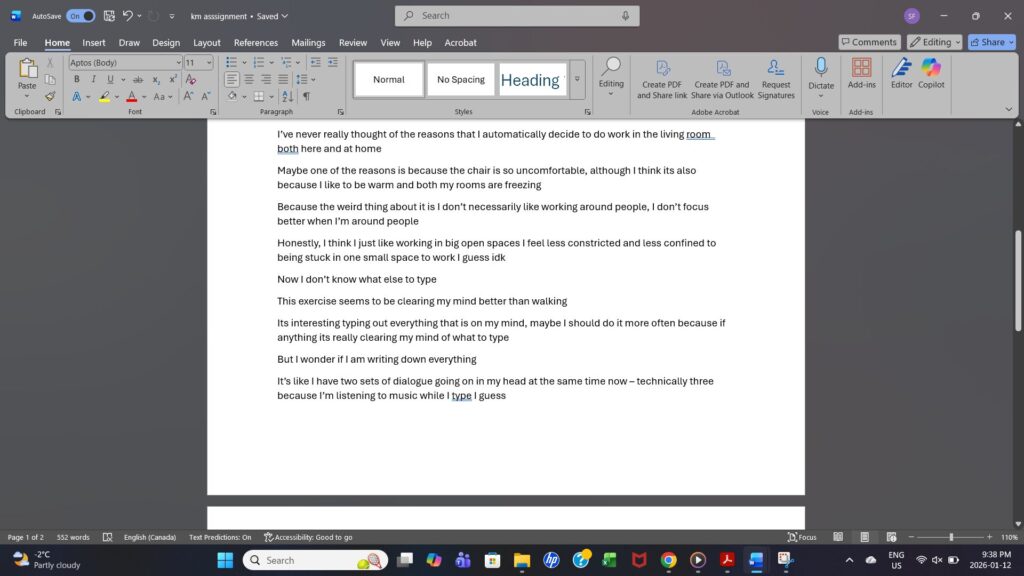
    For this project, I wanted to compare walking to typing to emphasize the automatic process that both hold and how they are a part of our daily lives.

    To do this, I walked a Km, which ended up taking me 10:50 minutes, and I then typed for the same amount of time.

    I find that when I write, I often reach a state of mind where I can type without thinking about it (when I have a good idea, when I have to do a repetitive task, etc.), and I reach a point where I can just keep typing. Another example could be typing out notes in class, I find that often I’m typing but not really retaining anything I’m writing down.

    Which could be seen as just as much an exercise as walking in a way (and could often be just as productive, just mentally, instead of physically).

    During this time, to emphasize my point about being able to reach this robot-like state of typing, I decided to write my stream of consciousness:

  • Grace S

    I am a third year student in the arts and science program, with minors in biology and studio art!

    I decided to take this program because it allows me to study all my areas of interest. I’m hoping the result of this program is strong interdisciplinary skills and diverse career path options.


    Marina Abramovic

    The Artist is Present

    1. What is your first impression of Marina Abramovic’s performance works?

    My first impression of Marina’s performance works was shock by how confrontational and extreme they are, with each work testing the limits of both her and the audience. Specifically her work, Rhythm 0, which involves inviting the audience to use various objects on her in whatever way they wish, including knives, scissors, and a gun. From this work, I admire how it reveals the uncomfortable truth of how quickly people will become violent when given permission. However, I think it can be problematic to have this level of danger in a work, and risks aestheticizing this type of violence.

    2. What have you learned about features of performance art based on Abramovic’s work?

    Abramovic’s work taught me about several key features of performance art, including the use of the artist’s body as a medium in the work. Her quote, “when you perform it is a knife and your blood, when you act it is a fake knife and ketchup,” emphasizes the importance of including real life risk and consequences which cannot be achieved with traditional materials.

    Duration is also a key feature, with most of her work lasting for prolonged periods of time, it demonstrates her commitment and endurance. Audience participation is also crucial, as the viewers inevitably become part of the artwork creating art through interaction rather than observation.

    3. Discuss the ways performance art resists many museum and commercial artworld conventions. How does Abramovic solve/negotiate these challenges?

    Performance art resists traditional artworld conventions because it is not an object to be sold or collected, it is an ephemeral experience that cannot be permanently displayed in an exhibit. Abramovic negotiates this by documenting/recording her performances to be viewed afterwards and occasionally repeating performances. I think this adds to her work because it broadens the audience as well as further conveying the value she places on endurance. This negotiation involves her work enduring a transfer into a system that is not built to house it, and I find it impressive that the intensity of her work can still be communicated through the documentation of it.


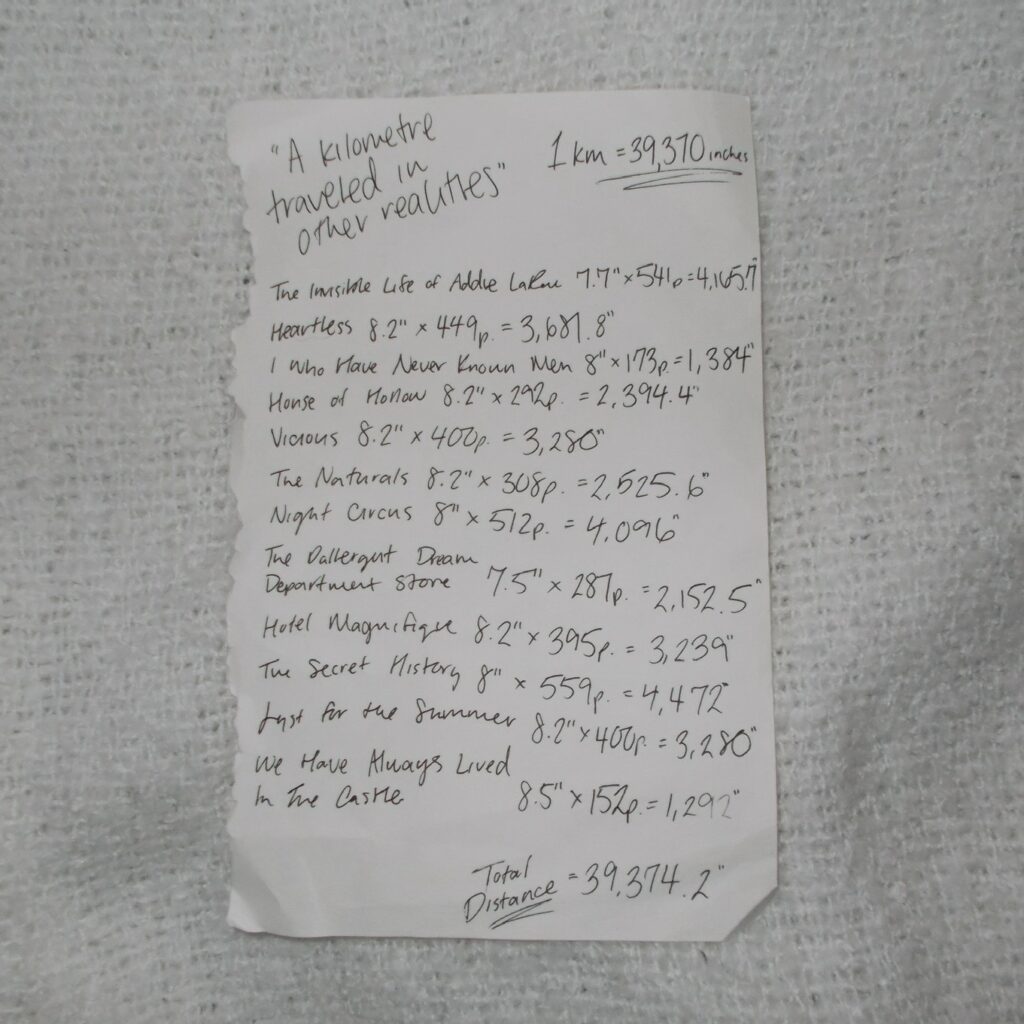
    “A kilometre traveled in other realities”

    Make a kilometre

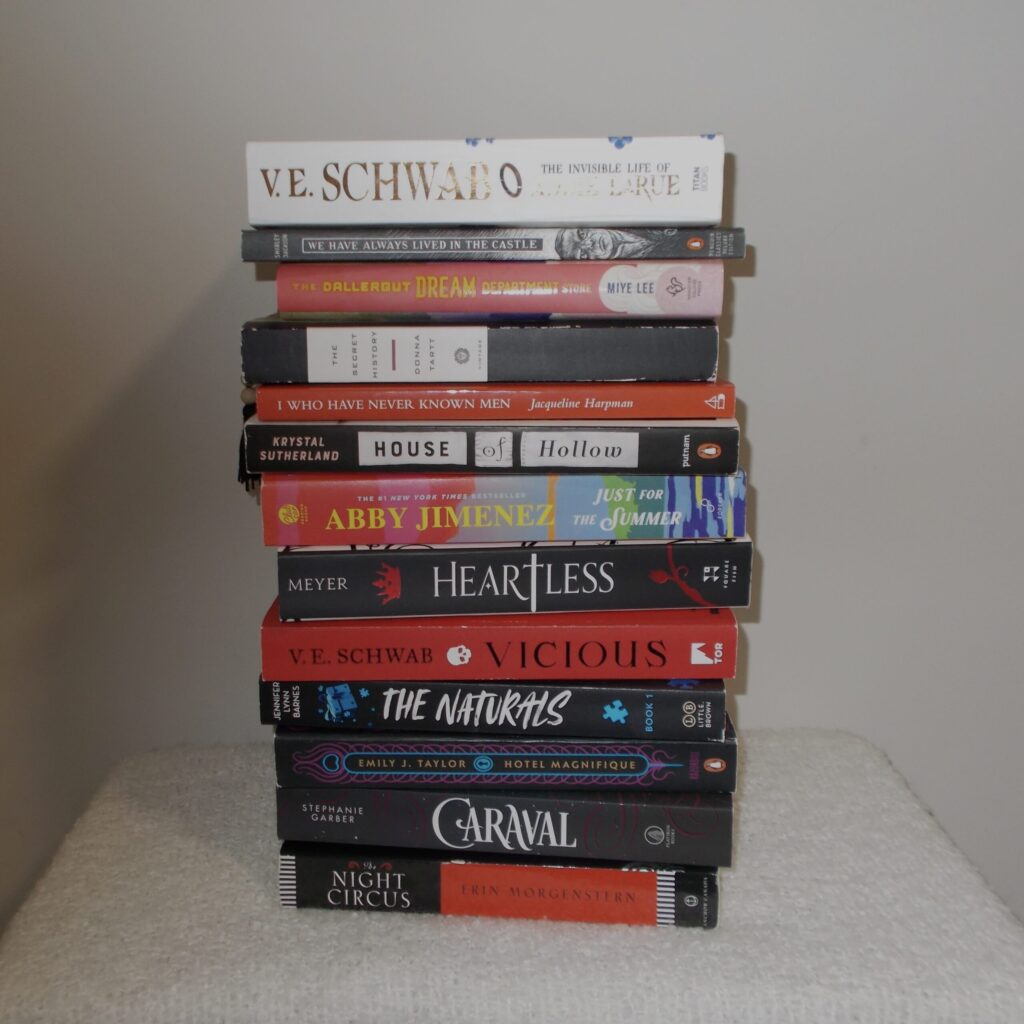
    For my “make a kilometre” assignment I didn’t want to treat the distance as something physical to measure, instead, I wanted to represent it as the mental and emotional distance I travel when reading. I chose books as my medium because reading is the way I experience movement without physically going anywhere. There is an aspect of escapism when reading books, specifically fiction, and I wanted to translate that into a kilometre.

    To calculate a precise kilometre, I measured the length of each book in inches and multiplied it by the number of pages to determine the overall distance of that book. I continued adding and measuring books until I reached the distance of a kilometre.

    This ended up being 13 books, 39,374.2 inches, and 4,732 pages. To others, this may just look like a stack of books, but to me this stack represents the hours of attention I devoted to these books.

    The process of completing this project and the discussion during critique made me reflect on how I value the use of my time. As I was choosing which books I wanted to include, I picked ones that were meaningful to me, not realizing that they were all fiction. While reading fiction could be considered less productive than nonfiction, these books have all taught me something and changed me in some way. So I view my time spent reading them as valuable because time spent doing the things I love is not time wasted.

    This kilometre was accumulated by pages rather than steps, marking a form of distance that resists visibility. With this kilometre I am highlighting that internal movement should be recognized as real, even if it is more difficult to justify.


  • Grace K

    I am a second-year studio art major with a minor in media and cinema studies. I have always been interested in the nuances underlying art and the reaction a work can provoke so I planned on attending a University in the arts field but wasn’t sure where.
    Guelph’s campus and community is what convinced me to enrol in its studio art program. I want to continue expanding my knowledge of art mediums, especially in the digital landscape, which is what made me take experimental studio.
    What are some of your first impressions of Marina Abramovic’s performance works, based on the documentary?

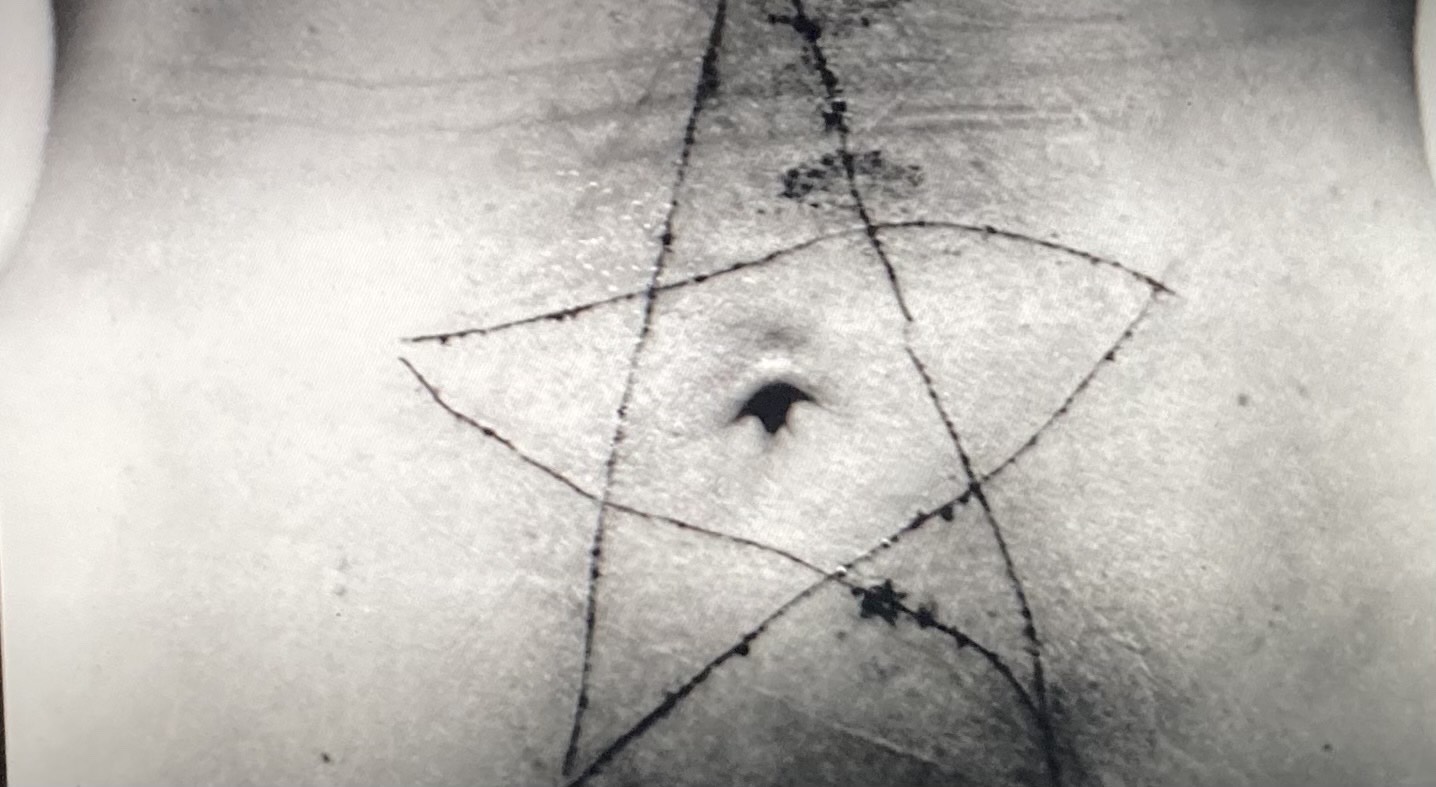
    I had seen Abramovic’s performances of The Artist is Present and Rhythm 0 on social media years before watching this documentary, specifically her performances of endurance: sitting in silence with strangers and, in Rhythm 0, allowing them to do whatever they wish to her. They always stayed with me because of their unique and revealing nature of humanity. The documentary allowed me to discover her oeuvre, and despite its violence, I found myself admiring her dedication to her art. Her work walks the line between art and shock value, sometimes stepping to one side or the other. For example, in her work Rhythm 5, she carves a pentagram into herself, a rather grotesque and uncomfortable sight, which I do not believe was a necessity to convey the meaning of the work. Nevertheless, Rhythm 0 was a novel work that showcased people’s capabilities and destructive tendencies, despite likely causing Abramovic more pain than Rhythm 5. I can understand why people would see it as unethical and problematic; however, her work has pioneered performance art, and when presented in the proper context, it can be incredibly moving, inspiring, and almost unbelievable.

    What have you learned about features of performance art based on Abramovic’s work? Consider her quote, “When you perform it is a knife and your blood, when you act it is a fake knife and ketchup.”

    Performance art requires as much physical exertion as mental effort; it takes immense confidence, strength, courage, and determination to build a career in performance. Viewing Abramovic’s works changed my perspective on what performance art is and can be. For example, her work with Ulay Relation in Space felt pointless and harmful when I first saw it. However, as I kept watching and learning about the medium and her works, I realized it captures life in a way no painting could. The art is as alive as the audience; everything that occurs may be more real than life itself. The audience and their provoked emotions become a component of the art. It transforms the viewer through a unique experience, exemplified by some of the people who sat across from Abramovic in The Artist is Present. When interviewed afterwards, many told the documentary that it altered their lives, showing that it is distinctly different from conventional art media.

    Discuss the ways performance art resists many museum and commercial artworld conventions. How does Abramovic solve/negotiate some of these challenges, and do you find these compromises add to, or undermine the ideas at play in her work?

    Public art is generally expected to remain in a single spot, be available for most of the day, and be static, allowing museums to display a variety of work consistently and efficiently. Performance art disobeys all previous conventions of art; it has no monetary value, is limited, requires performers, requires more space, and can be unpredictable. Having an exhibition as a performer would not be possible, since each work requires the performer at all times. To address this, Abramovic’s exhibition at the MOMA included earlier performances of hers that used other performers to execute the works. Seeing the same performance with different performers separates the artist from the art, making the meanings feel more communal but also less of an experience. What is unique about performance art is that an audience is together viewing and thinking about the same work, and being in a gallery setting makes them assume a gallery mindset. The viewer does not put as much thought or attention into works that would otherwise have the whole room’s eyes.

    assignment #1

    Make a Kilometre

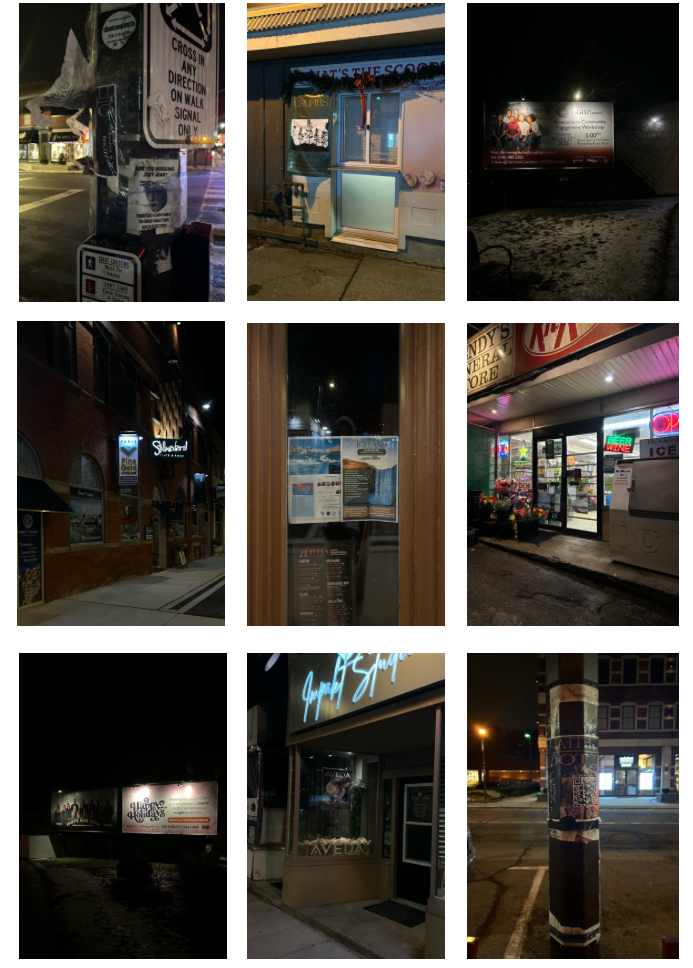
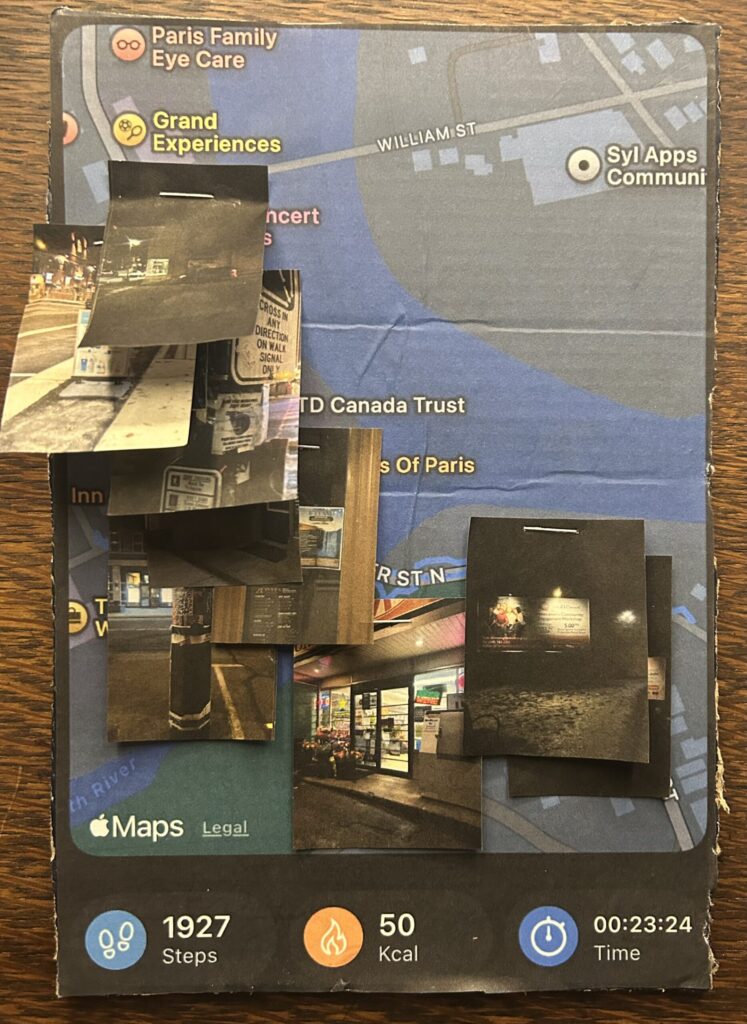
    To represent a kilometre, I decided to go on a kilometre walk and document every advertisement that I came across. My original idea was to collect receipts and sew them together to measure out to a kilometre, however, time and material become major restraints.

    Consumerism has been a growing interest of mine, certainly due to the landfills most trending items find themselves in. So, building off my previous idea I decided to explore the role and impact of advertising on over consumption within real life. When I think of advertisements my mind immediately resorts to digital marketing (commercials, pop-up ads, sponsorships, etc.) since ads predominate the digital realm. I wanted to challenge myself and see how many I can find in a mere kilometre.
    Process/Measuring

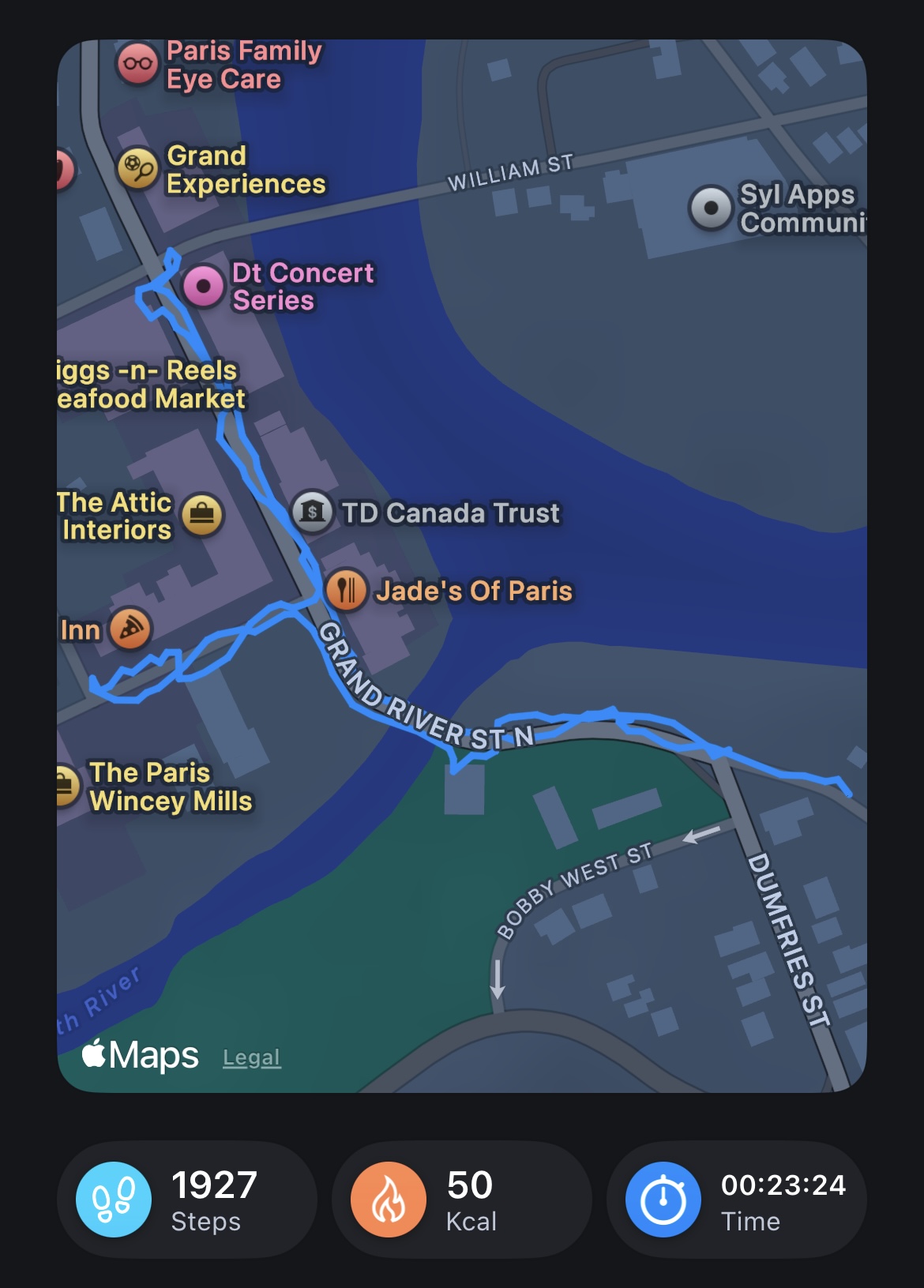
    I used a pedometer app to measure the precise kilometre I walked and displayed the advertisements posted alongside. I decided to walk through the town I grew up in, it yielded a lot more results than a section of Cambridge & Hamilton I did because more stores were condensed in a smaller area.

    Materials & Presentation

    I digitally recorded my findings but decided to physically create a document of the walk to give the piece both a digital and physical essence. I used my phone camera, paper, cardboard, glue, and staples to make the work presented on the left. By presenting the physical advertisements, physically despite capturing it all digitally I wanted to juxtapose my predisposed ideas of ads, which are digitally crafted and presented yet seek to sell physical commodities. By doing this I hope to promote discourse regarding the influence, and influx of advertisements, as well as, it’s harmful role in consumerism.

    Results/Thoughts

    I had a great time documenting and creating this work, I believe the display encapsulates my ideas most accurately and clearly. Nevertheless, if I were to do it again, I would make the presentation look cleaner and test out a variety of areas/walks to compare and contrast the density of advertisements in different areas.

  • Donika

    1. My first impression of Marina is how incredibly strong and brave she is. She creates art that she knows will bother people. She knows many won’t understand her. She knows it takes a specific headspace to feel what she is portraying, but she continues to create. I think that this speaks to her passion to create for herself, and for a specific audience, rather than to “succeed” or receive recognition. Her undeniable endurance is incredible. Rhythm 5 (1975) was briefly mentioned in the documentary. This piece began with a large wooden pentagram being lit on fire and Marina tossing pieces of herself (hair, nails, etc..) into it, she then threw herself into the flames. This performance was incredibly dangerous, and Marina lost consciousness during it, but she continued to perform despite harming herself and receiving backlash. Despite controversies, she is a very admirable woman and artist. The pure emotion people feel simply by sitting across from her speaks to the impact she has.A quote that stuck out to me was “with Marina, she is never not performing”, I feel this is displayed fantastically with her endurance piece The Lovers (1988), where she and Ulay walked from opposite ends of the Great Wall of China, for 90 days, to symbolize the end of their relationship.
    2. When discussing preformance art, state of mind was mentioned multiple times within the documentary.

    “it doesn’t matter what kind of work you’re doing as an artist, the most important is from what state of mind. preformance is all state of mind.”

    How an artist can take an audience, of any demographic, and move them to feel things, and enter a similar state of mind to which the artist is in is a beautiful and important ability.

    “you have to create your own charismatic space” “for most pieces, people stop and look for 30 seconds. People stay here all day”.

    Preformance art considers so much more than just how ‘cool’ something will look. It is about changing a space, and untimatly changing people. Creating something that doesn’t just change a headspace for a moment, but becomes something that people look back on and reflect on those feelings many times.

    3. Preformance art is constantly resisting what is commercially considered art, even as art styles change. When preformance is how the art is being communicated, the medium is the body, this is directly challenging the viewer. The art we see most frequently is created to appease an audience, it’s familiar and safe, the mane goal is to look pleasent. With preformance, if you are not willing to feel the emotion, you won’t understand the art. That is incredibly challenging to market to an audience, as many people simply do not understand, or wont LET themselves understand. Just based off of what I saw in the documentary, I didn’t particularly notice Marina compromising to fit in to these social ideals, although I could be wrong, if I am not I consider that incredibly admirable.

    1 Kilometer ; The Cost of Going Nowhere

    A trend in my art style is creating based on what I’m currently passionate about.

    To me, a kilometre has so many meanings, but in my current headspace, I knew I wanted to make this about travel by car. As a commuter student in a long-distance relationship, and someone whose car is my most prized possession, there were a lot of different ideas flooding through my brain. I reflected on what an overarching theme in all of these concepts was: I pollute our planet, A LOT! 

    To briefly summarize my ‘performance’, driving one kilometre is such a minuscule act in our minds; it’s a couple of seconds in the car. We all know cars are not good for our planet, but do we really know just how bad they are? Do we really recognize the magnitude of one kilometre?

    Most of us are ‘environmentally conscious’, we don’t use plastic utensils, cups, straws, or bags. 

    My “muse” for the math in this project is my dad’s Dodge Ram.

    This truck burns 0.2L (200mL) of gas per kilometre. If I gave you a jar with 200mL of water in it, that would not make an impact.
    Burning 200mL of gas produces roughly 500g of CO2. 

    Producing 1kg of plastic emits roughly 2-6kg of CO2.

    That means the emissions of 200mL of gas is equivalent to 0.5kg of plastic. 

    300 plastic straws

    30 plastic lids

    18 plastic forks 

    15 grocery bags

    9 plastic cups

    Using this amount of plastic would eat up our conscience; many of us would never use these things, it is incredibly immoral.

    The production of each of these emits the same amount of CO2 as driving just one kilometre. Driving across campus is a task we view as insignificant, but that is equivalent to using nearly 100 plastic forks. Why are we so woke when it comes to using a straw but not driving down the street? 

    I wanted to make everyone as angry as I was. I want us all to reflect on whether driving one kilometre is worth avoiding that 15 minutes of exercise. If you wouldn’t use 300 plastic straws in one day, why will you drive that one kilometre?

  • Ahana

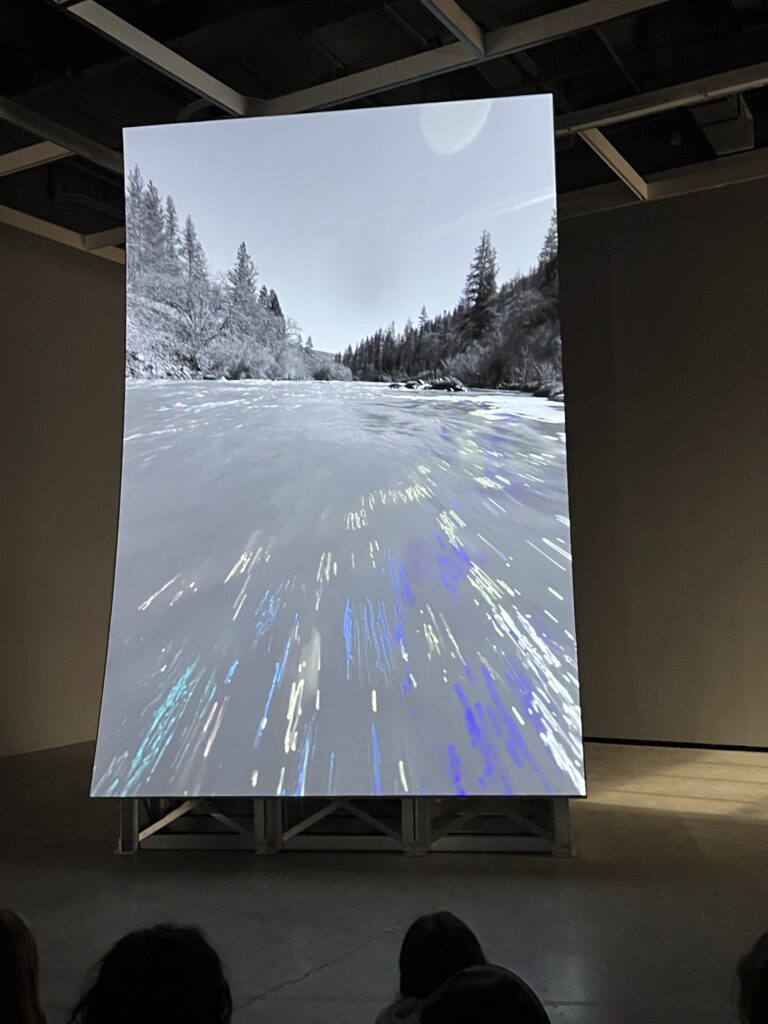
    I chose to walk for a 1 km and show how the person becomes smaller with each passing time. In this busy chaotic life, we find few people we want forever in our lives, but destiny sometimes have other plans. I wanted to convey that by walking away from the camera and not looking back.

    It was quite a task to film this and make it look as I want. I did not really realise how stretched 1km actually is until I deliberately made sure I walk exactly that even after the recording got stopped. I went at that exact same location twice but different days and by then the weather had changed. That made me realise how a person’s mood changes with their surrounding and how I felt two completely different emotions walking that same distance at the same place. This assignment has a very unique title- 1KM. My video does not necessarily show exactly what I wanted to but while working on it I have had unexpected realisations which made me learn more about life. (Helped me on a good cardio session too!)

    I will attach a failed attempt in a different location because I am not afraid of failures.

  • Ashley

    About Me!

    Hello! I am in my third year in the studio arts program at the University of Guelph, and my main focus is painting. I grew up surrounded by art; my family was divided 50/50, half engineers, half artists, but I didn’t start taking my art seriously until the lockdown. My high school art teacher really encouraged this path for me, and I have stuck with it. Outside of art, I really enjoy swimming and hiking!


    Walk a Kilometer In Someone Else’s Shoes

    This project is based on the famous saying “put yourself in someone else’s shoes” meaning to see things from the point of view of others. In order to represent this, I laid out a piece of paper measured to 2 meters exactly and had various pairs of shoes walk across it equaling the distance of exactly 1 kilometer. As the shoes pass over the paper you begin to notice the wear and tear that grows each step. 

    The act of “putting yourself in someone else’s shoes” means to experience things from their perspective and to learn about them. The way we walk is something so personal to us that isn’t often represented. There are many aspects that make an individual, the way we hold ourselves, the way we write, the way we express ourselves. Walking is a small part of that, one that is often overlooked. Each person has a different one, some drag their feet, some walk on their tiptoes, some favour one leg to another. The different shoes brought different conditions aswell. Some were muddy, some had a heel, some were only meant to be worn indoors. Each variation creates different marks which are reflected through the different rips and crinkles in the paper. 

  • Audrey

    Hi, I’m Audrey a second-year studio art major on the varsity fencing team. I love doing sports like swimming or skiing also I have two cats.

    Why did you decide to take this program? What do you hope it helps you do or become?

    The Artist is Present Documentary

    What are some of your first impressions of Marina Abramovic’s performance works, based on the documentary? Use an image/example of one or two works to describe aspects you admire, and aspects you might agree are problematic?

    Some of the first impressions I got from the documentary on Abramovic’s performance works made me uncomfortable and I felt several of her works made me feel sick. A large amount of nudity is a part of her performance art which makes me feel uncomfortable seeing but the part of her art that makes me feel the most uncomfortable is the violence and harm she puts herself through. The acts of violence that was shown being done to Abramovic to herself and by others makes me feel extremely disturbed at the actions. While it’s definitely admirable that she’s tough enough to even do any of this stuff showcasing human endurance. One of the pieces of Abramovic that I find worrying is her performances in the Rhythms (1973-74) where these specific pieces brought physical harm to herself to do. In Rhythm 10 she plunged a knife between her fingers only stopping after cutting herself 20 time while in Rhythm 5 she lay in a wooden star that was set in fire where she eventually passed out due to a lack of oxygen.

    In Rhythm 0 Abramovic laid out 72 different items for the members of the audience to use any of these objects. Some of the items provided were items like a pen, bell, rose, bandages which are relatively harmless but other items were chains, saw, axe, and a loaded gun. While the beginning of the performance started relatively tame though still something I find to be inpatriate it quickly turned more and more violent,

    “When a loaded gun was thrust to Marina’s head and her own finger was being worked around the trigger, a fight broke out between the audience factions.” – Mc Evilley

    What have you learned about features of performance art based on Abramovic’s work? Name a few key features according to her examples. Include an image to illustrate. Consider her quote, “When you perform it is a knife and your blood, when you act it is a fake knife and ketchup.”

    To me this quote means that what Abramovic work is the real connection between the audience and herself as well the real pain and discipline she uses to create these performances. That performance art should be real no using fake blood or knives like in acting where the audience knows everything is performed. While in performance art it’s supposed to bring out a real sense of discomfort that the Abramovic is could bring real harm to herself in the process of the performance. I think a really good example of this is the pain Abramovic had to endure for The Artist is Present performance where people were able to genially connect with her in a real way that wasn’t just superficial and performance.

    Discuss the ways performance art resists many museum and commercial artworld conventions. How does Abramovic solve/negotiate some of these challenges, and do you find these compromises add to, or undermine the ideas at play in her work?

    Performance art pushes the boundaries of what has been considered art. Usually art is something physical that can be displayed in art museums however with performance art usually requires immediate interaction with the audience which questions the conventional way art has a physical object. Performance art asks the audience to sometimes even become a part of the art which can be seen in performance. Abramovic is able to do this with her audience, challenging them to interact with her art even when it makes audiences uncomfortable. However, she also is able to work with these museums by documenting her performance art through videos allowing a much wider audience able to experience her art.

    1 Kilometer

    The Kilometer Hunt

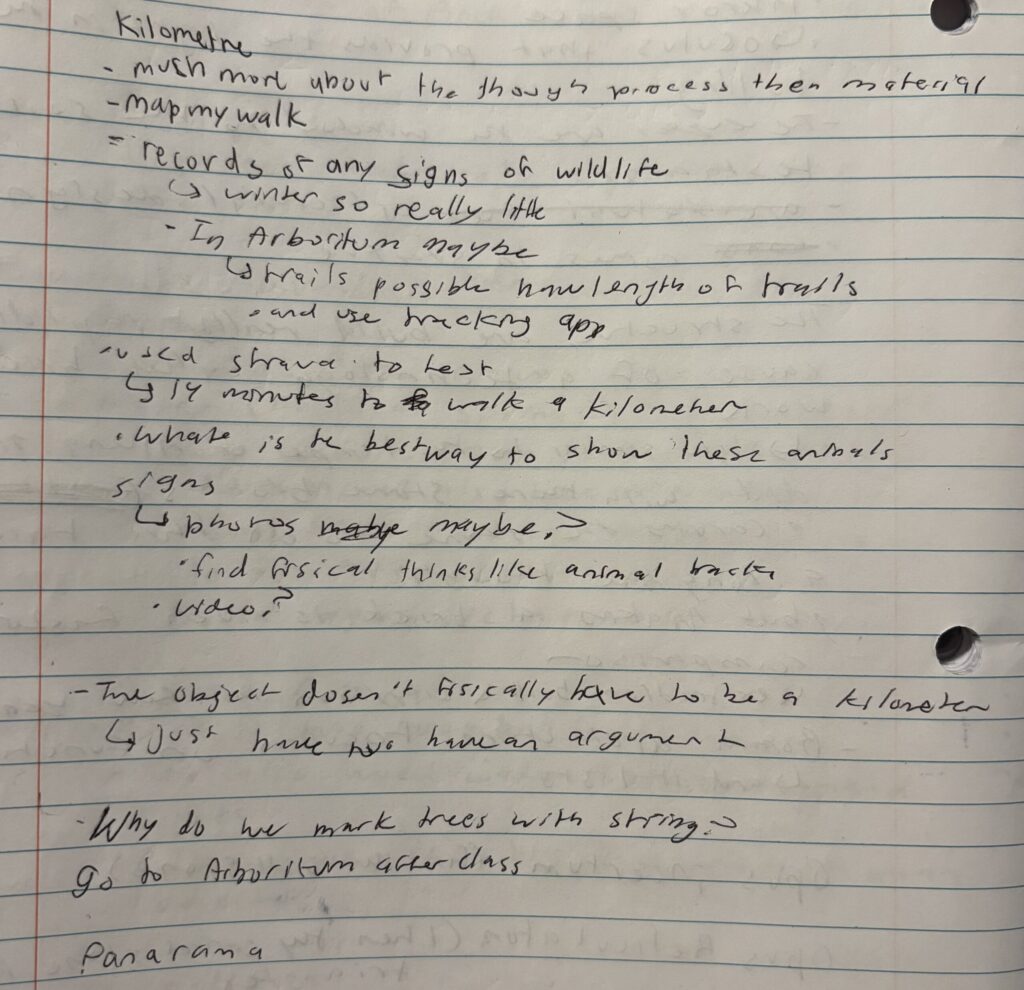
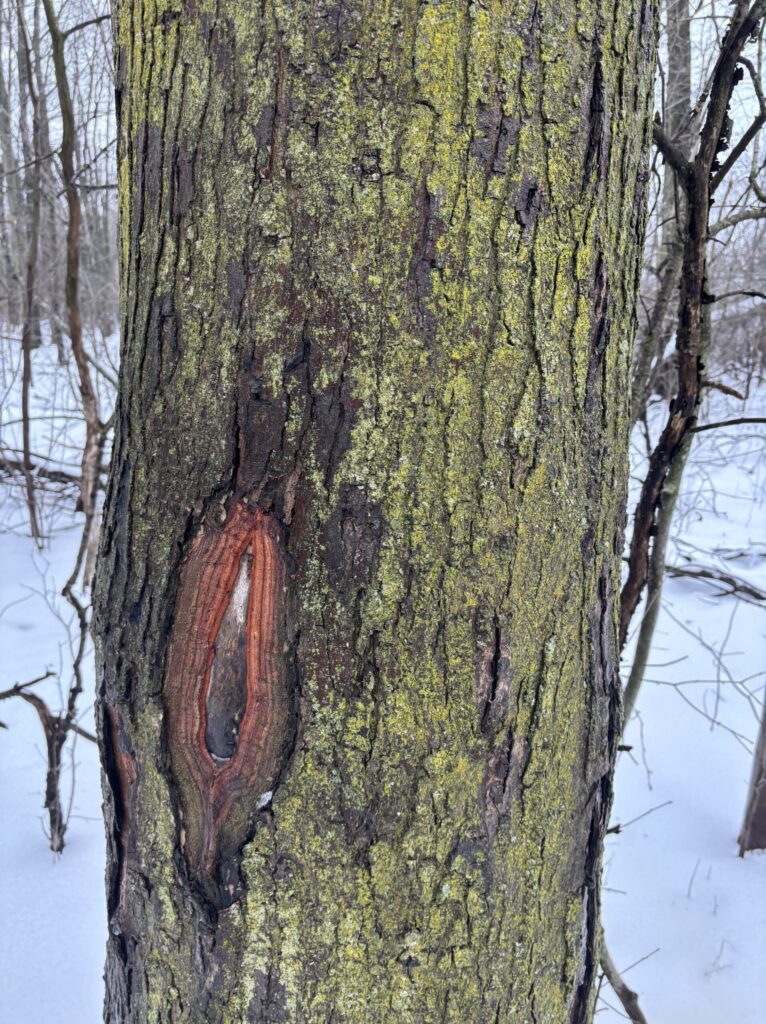
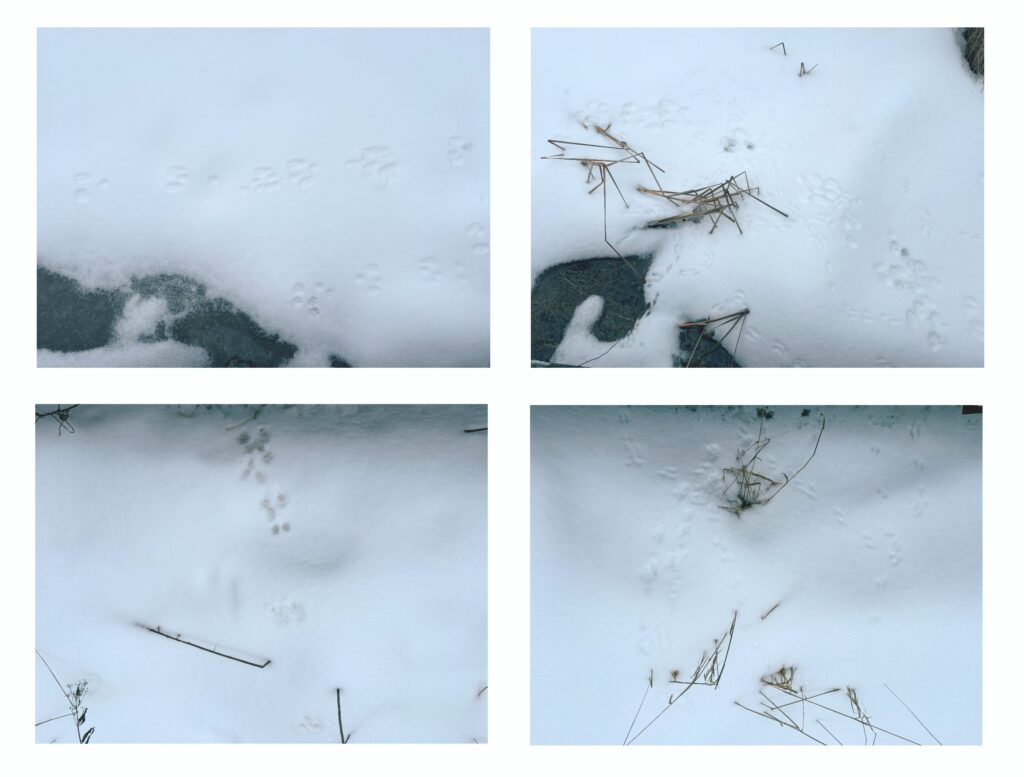
    For this project I wanted to focus on something that I could do physically, and my initial ideas were sports related or perhaps to make something physical. But I decided that my ideas to make something physical would be too expensive and there would just be not enough time. I didn’t really like my initial sports ideas very much and could not think of how I would execute them. The idea I eventually decided to do was a kilometer walk of wildlife. Basically, the original idea was to look for animals and take pictures of them. Due to it being winter the chances of finding and spotting animals lessened, so I decided to look for any traces of life in the winter.

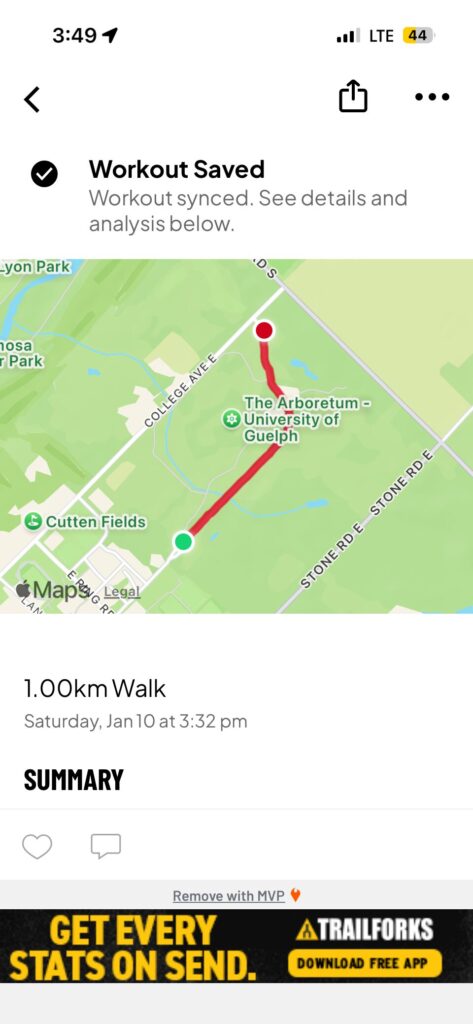
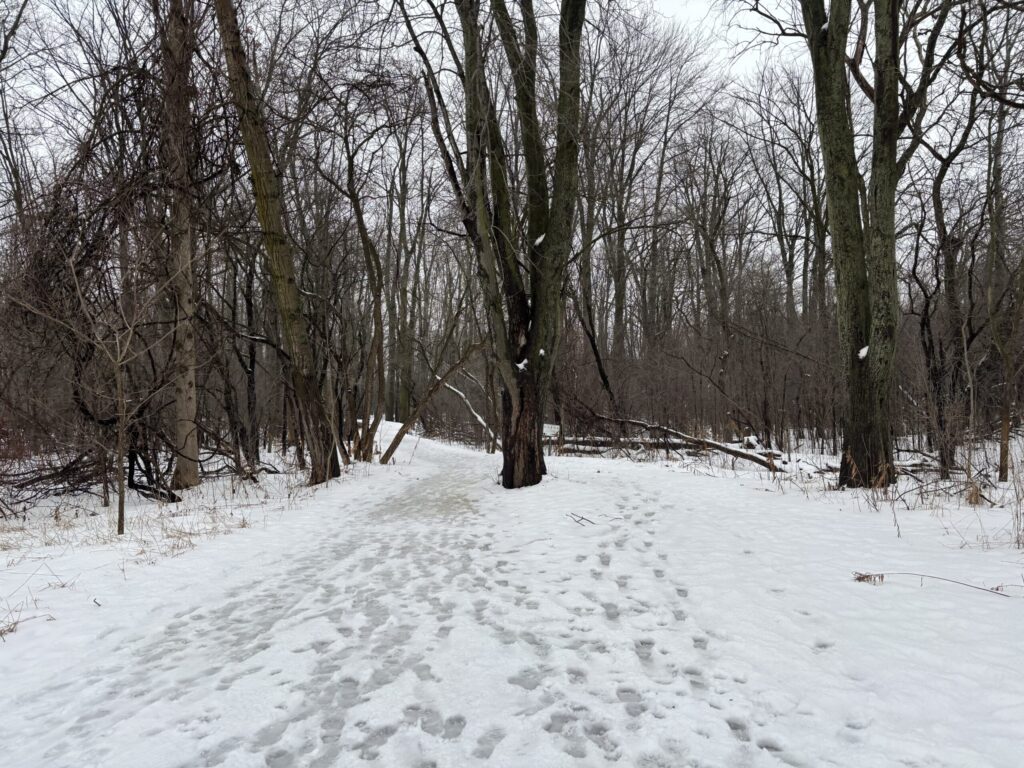
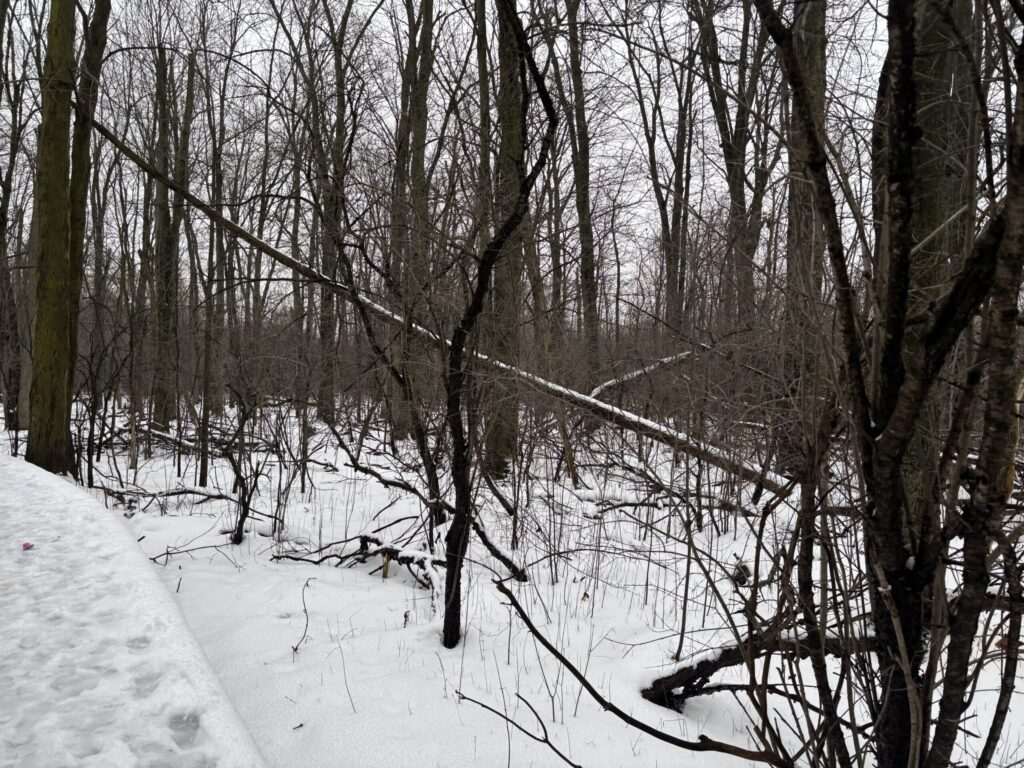
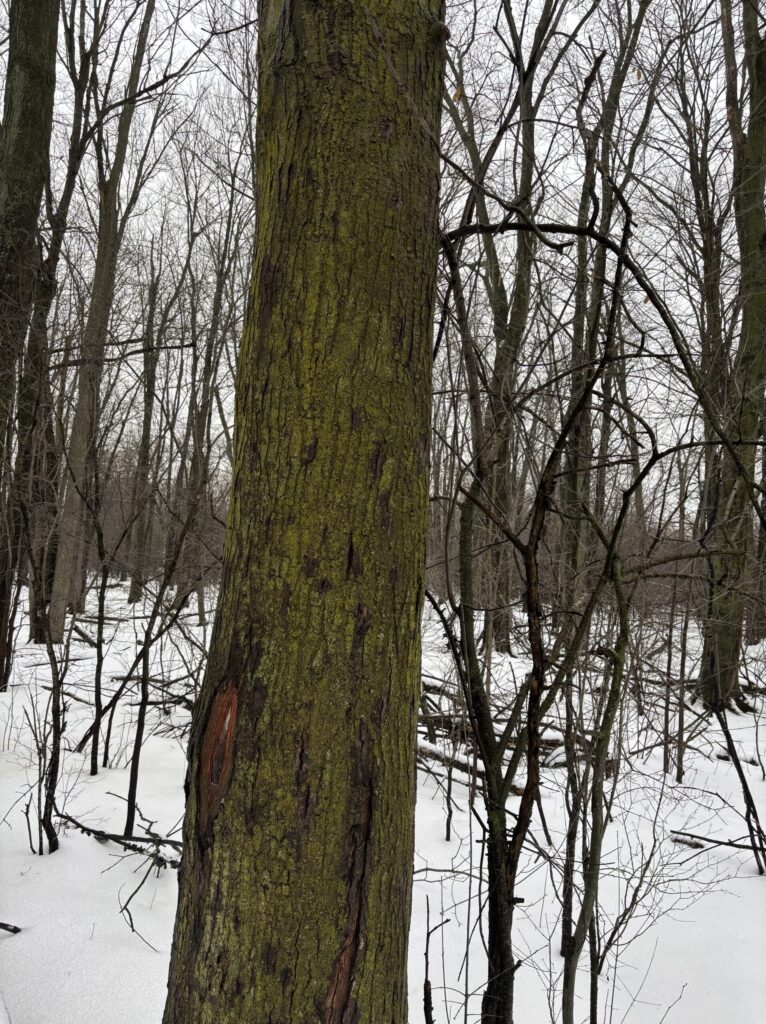
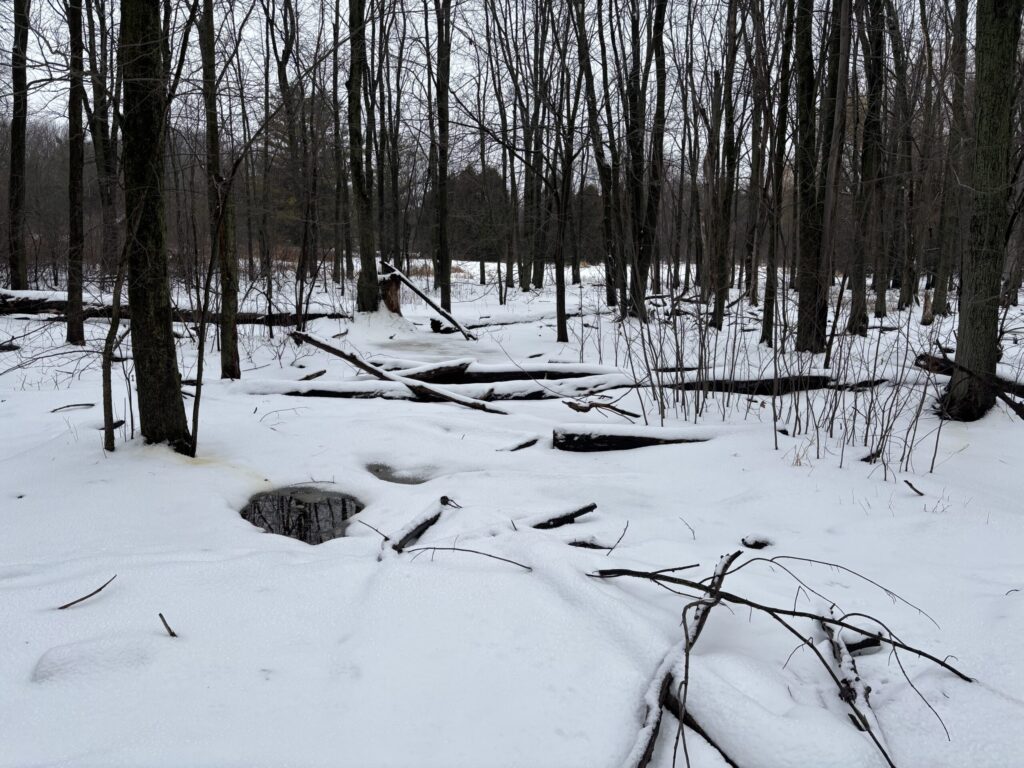
    The process to actually execute my idea involved me to actually be able to see any signs that animals were there, which meant I needed to go to a place that is abundant with animals despite it being the winter and involved me having to be more observationally aware on my kilometer walk. I decided to walk in the arboretum which is known to be a haven to wildlife and offers a diverse range of habitats for these animals. Initially I blindly walked through the Arboretum and didn’t really have a plan taking pictures of trees and videos of noises I heard but soon found it to not be what I wanted as my final piece.

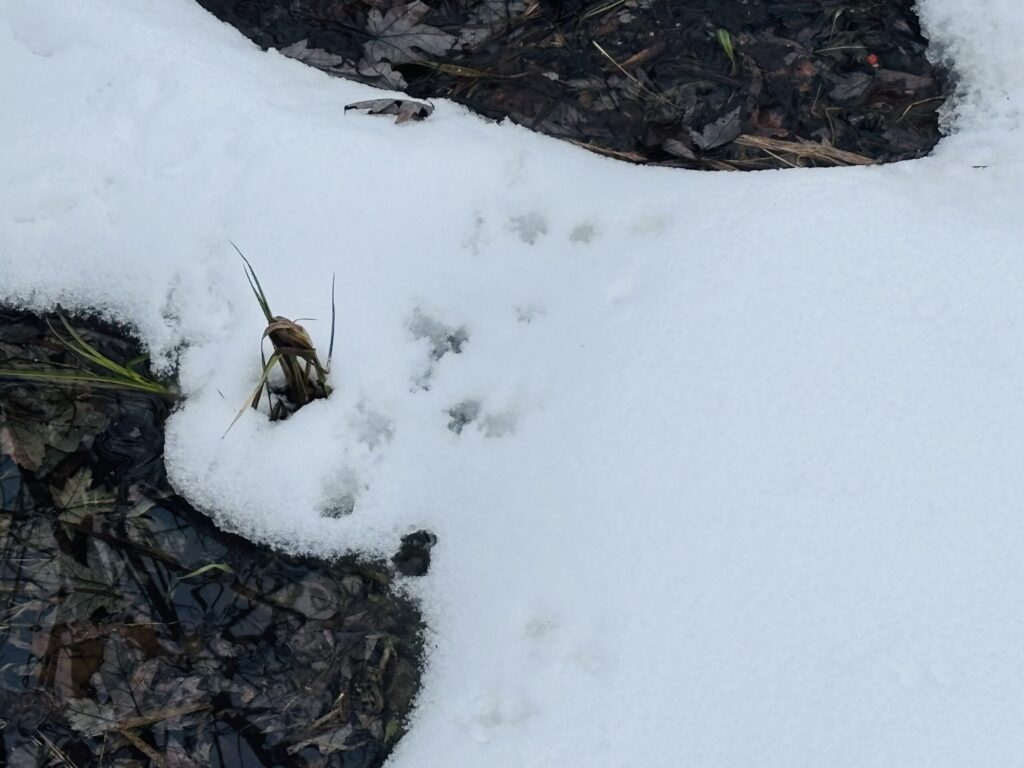
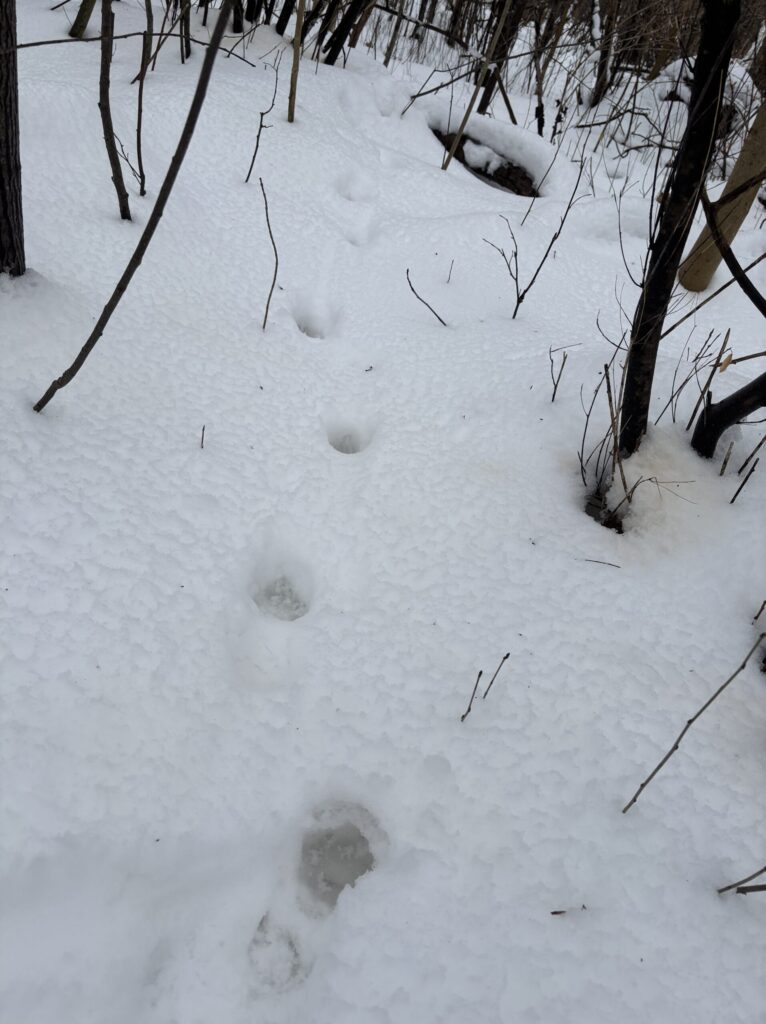
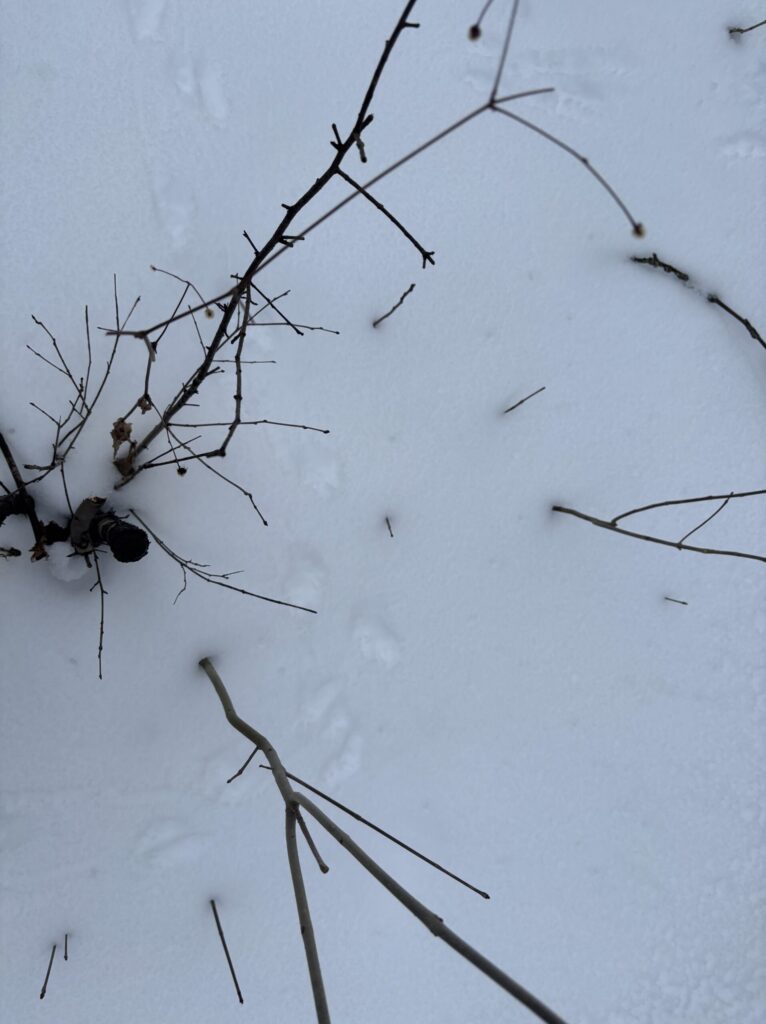
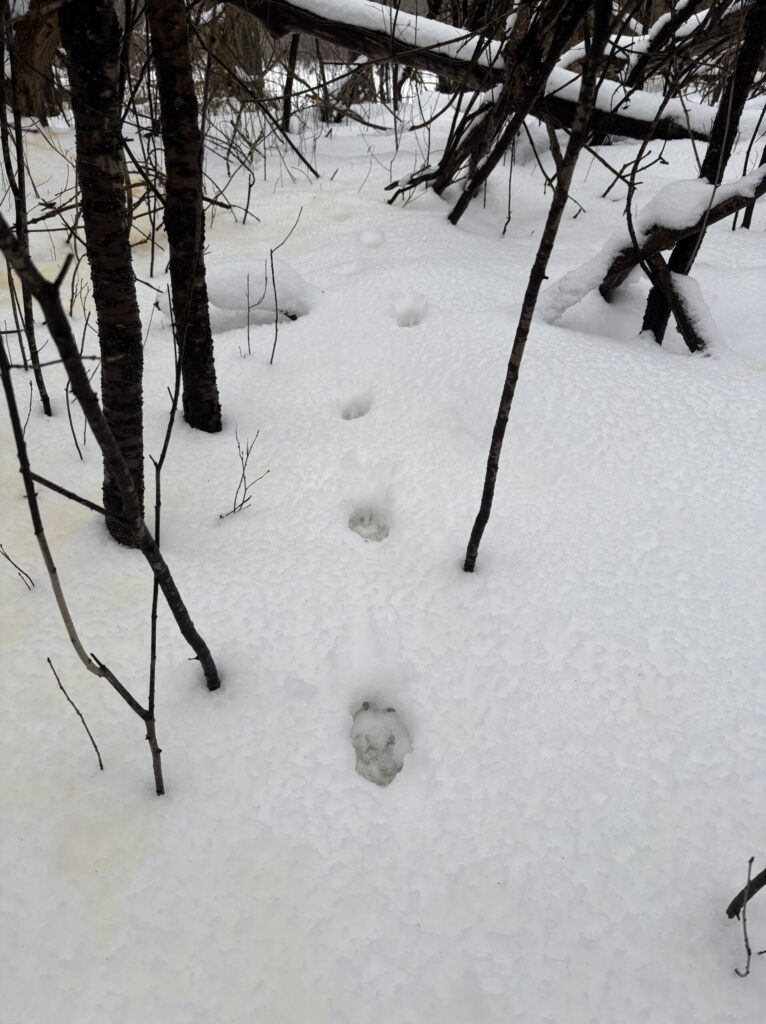
    To increase my chances of finding wildlife I decided to use some methods that hunters will use in the winter to hunt their prey. Firstly, I went to the part of the arboretum with lots of wetlands that would eventually lead me to a small lake, as all animals need food and water even during the winter. I thought that would be my best bet for finding any wildlife in winter and on the way, I was actually going to look for signs of wildlife using the fresh snow to look for any animal tracks from walking around in the snow. As a way of showing the wildlife I found I decided to document these footprints by taking pictures of them as I didn’t want to destroy the tracks by touching them. What I wound up with is that the animal tracks were in fact more concentrated where any water was.

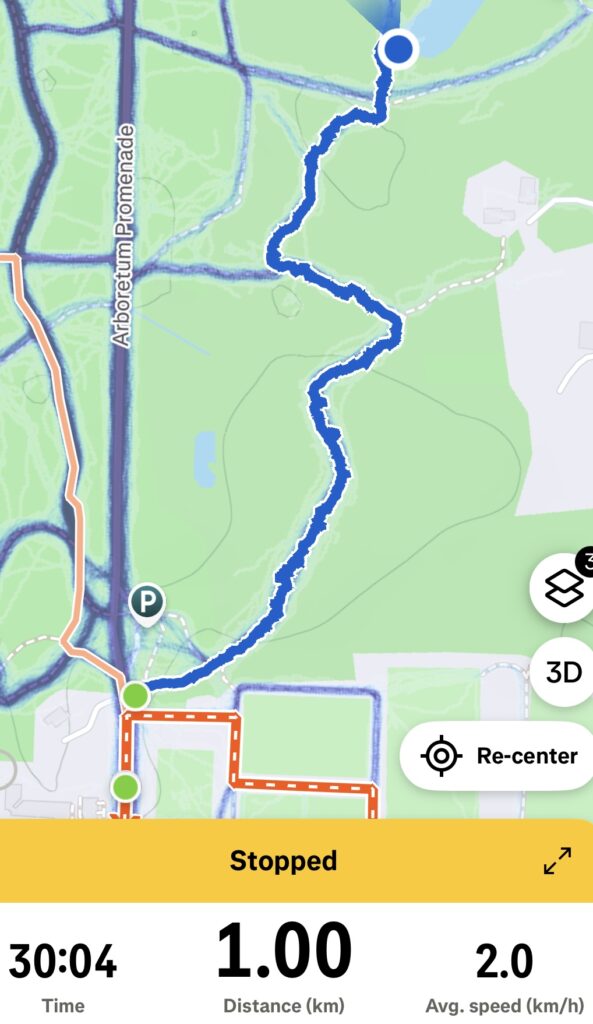
    Screenshot

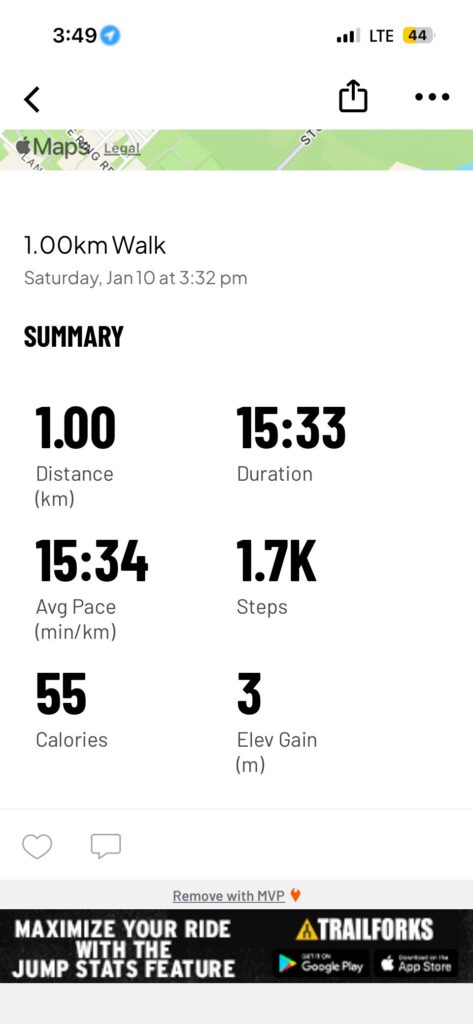
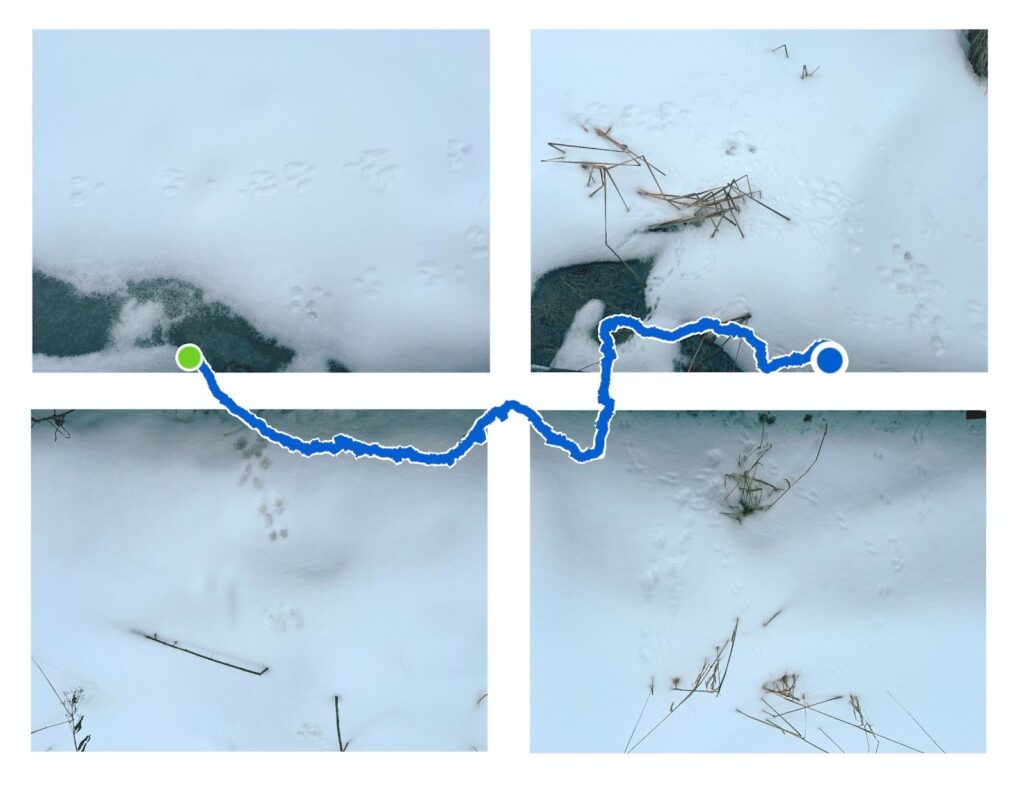
    To track my walk while looking for signs of wildlife I used the Strava app to measure my walk in the arboretum to exactly 1 kilometer and to help me not get lost. At the end of my walk, I had found a variety of different animal footprints from rabbits, birds, and other wildlife like foxes.

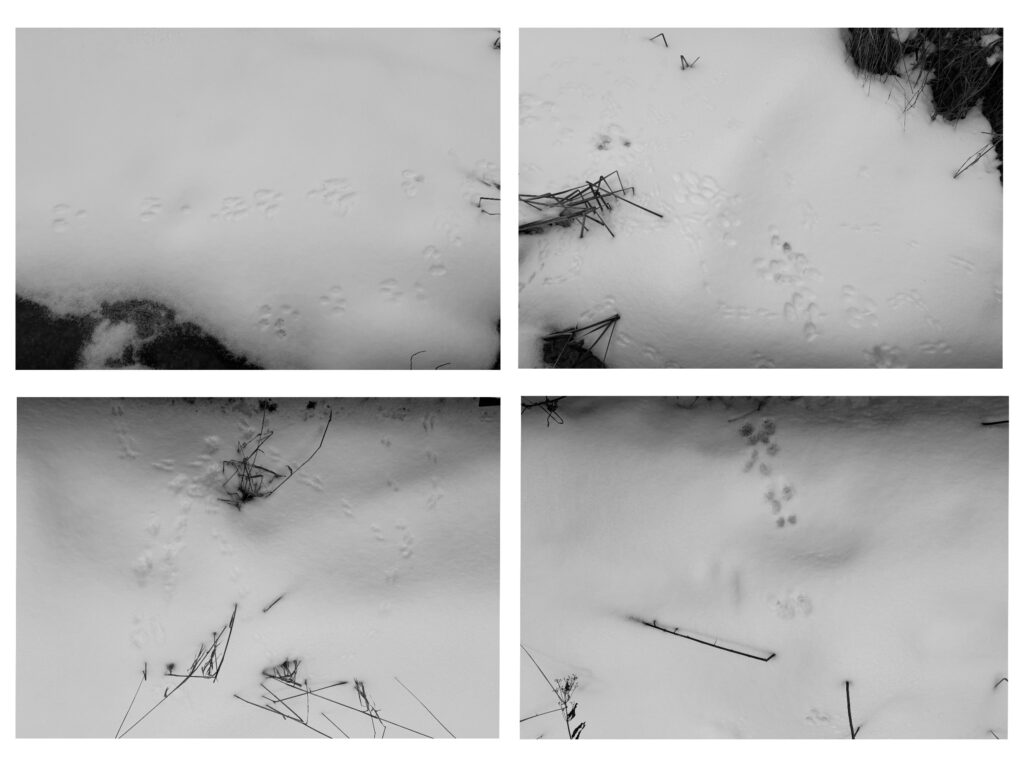
    My final piece was created after gathering up all the photos I took on the walk and decided to use the best-looking ones to me and make them into a sort of collage or quadriptych to show the different places the animals where and the variety that were there. Initially I thought to make all the photos black and white but decided to go against it to emphasize the idea that life still persists even in the winter rather than it being bleak and gray.

    I chose this idea of finding wildlife specifically because I wanted to really challenge my observational skills to spot these tracks and not mistake them for just water that had warped the snow. To see if I could really pay attention to the environment around and that even in the dead of winter life still lives on even if it might be harder to see.

    Final Image for the Kilometer Project

    Then in the end I choose my 4 favorite images from the photos I took and using the Strava app I overlaid my own trail on top of my images to show my own path on top of the animals. If I were to ever show it in a gallery, I would most likely print the work as it is to hang it up.